What Spiders Can You Keep as Pets Besides Tarantulas?
You can keep numerous enchanting spiders as pets besides tarantulas. Jumping spiders, with their curious nature and lively personalities, make great companions. Wolf spiders are fascinating with their speed and hunting abilities. Orb weavers are perfect if you're charmed by intricate webs and need natural pest control. Peacock spiders draw attention with their brilliant colors and low maintenance. Hobo spiders are also an exotic and easily manageable choice. Each spider has unique care requirements, so it's essential to set up the right habitat, feeding schedule, and environment to guarantee their well-being. Uncovering these details can enrich your pet-keeping adventure.
Key Takeaways
- Jumping spiders are ideal for beginners, known for their engaging personalities and low venom potency.
- Wolf spiders are appreciated for active hunting behavior and require a secure, spacious habitat.
- Orb weavers are non-aggressive, require ample space for webs, and are natural pest controllers.
- Hobo spiders are low-maintenance, with unique behaviors, suitable for those seeking exotic options.
- Peacock spiders captivate with their brilliant colors and low maintenance needs, gaining popularity among enthusiasts.
Popular Pet Spider Species
Choosing the right spider species as a pet can be an exciting adventure, as there are several intriguing options available. Among these, jumping spiders are popular for their engaging personalities and remarkable ability to interact with their environment. They offer a delightful display of unique behaviors and are relatively easy to care for, making them ideal for beginners. Meanwhile, wolf spiders, known for their prowling hunting tactics, are ground-dwellers that fascinate with their size and agility. They don't require webs, simplifying their care requirements, and are appreciated by those who enjoy observing active hunters.
Orb weavers, on the other hand, present a different challenge with their need for ample space to spin intricate webs. Their web-building nature means they require a more spacious habitat, making them a bit more demanding regarding setup. If you're interested in something more exotic, the Hobo spider and Peacock spider are gaining popularity. The Hobo spider is easy to maintain, and the Peacock spider boasts brilliant colors and low maintenance needs. Each of these pet spiders offers its own set of unique behaviors and characteristics, ensuring there's a perfect option for every spider enthusiast.
Jumping Spiders
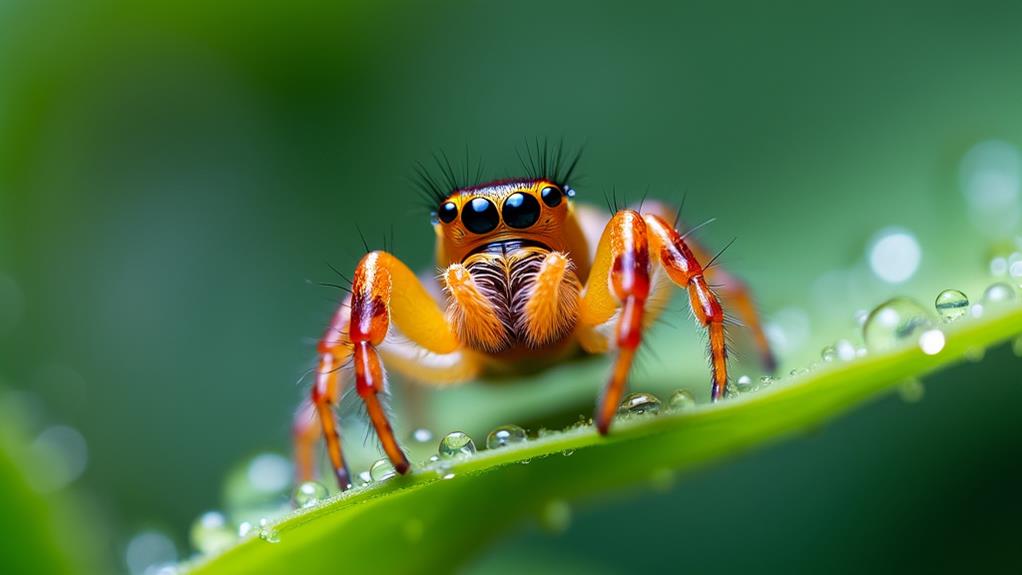
Jumping spiders often intrigue pet enthusiasts with their exceptional vision and agility. These tiny arachnids can leap up to 50 times their body length, making them fascinating creatures to watch. As a pet, a jumping spider offers an engaging experience thanks to its curious and interactive nature. You'll find yourself entertained as it stalks and pounces on prey, providing a unique observational opportunity.
Most jumping spiders are harmless, with low venom potency, making them an ideal choice if you're hesitant about keeping more dangerous arachnids. Their small size, typically between 1 to 2 centimeters, allows for easier management and flexibility in creating their habitat. A well-ventilated space with plenty of climbing structures will keep your spider active and healthy.
Feeding your jumping spider is straightforward. Their diet should mainly consist of small insects like fruit flies and pinhead crickets. Offering these foods every few days guarantees they receive the necessary nutrition. With their minimal space requirements and intriguing behavior, jumping spiders make an excellent pet for anyone interested in observing the intricate world of spiders without the intimidation factor of larger species.
Orb-Weaving Spiders
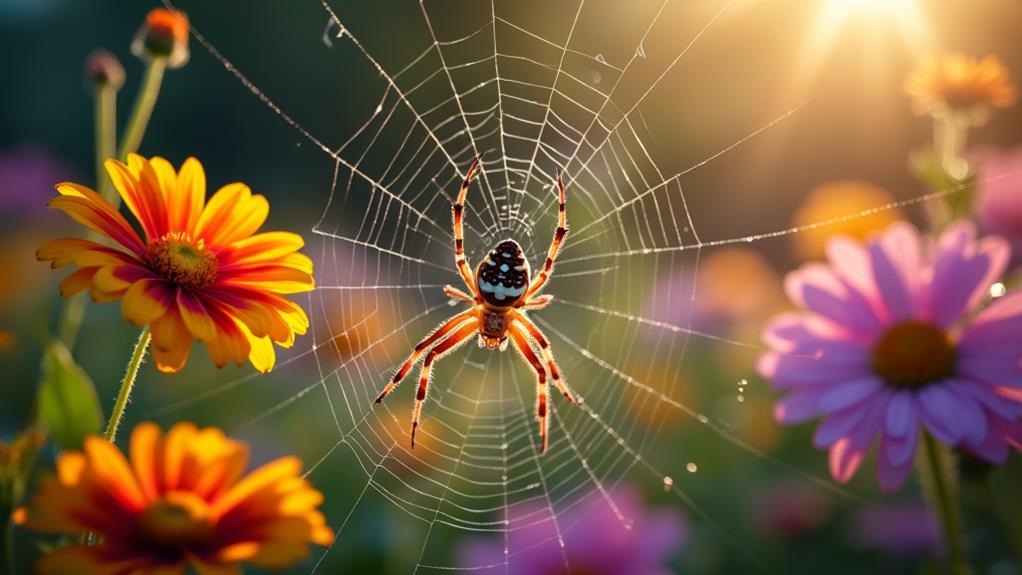
In relation to orb-weaving spiders, you're in for a visual treat thanks to their intricate and expansive webs. These webs can span several feet in diameter and are known for their unique spiral shape. If you're considering an orb-weaving spider as a pet, you'll find that their non-aggressive nature makes them a safe choice. They pose little threat to humans, as their venom is typically harmless unless an allergic reaction occurs.
When housing orb-weaving spiders, providing a spacious enclosure is essential. This allows them ample room for web construction, mimicking their natural environment. Make sure their habitat has adequate ventilation and humidity to keep them thriving. As natural pest controllers, orb-weavers have a diet consisting mainly of insects, which they skillfully capture in their webs.
Common species such as the garden spider and the golden orb-weaver are particularly popular among enthusiasts. Their distinctive web designs and striking colors add aesthetic appeal to any space. Regardless of your interest in their ability to control pests or simply enjoying watching their web-building skills, orb-weaving spiders make fascinating and low-maintenance pets that can coexist peacefully with humans.
Wolf Spiders
Wolf spiders, with their speed and agility, make for fascinating pets that enthrall enthusiasts who appreciate active and interactive species. Unlike many spiders, wolf spiders don't rely on webs; instead, they actively hunt their prey. You'll find them chasing down insects like crickets and roaches, showcasing their impressive hunting skills. This behavior not only makes them interesting to watch but also highlights their agility.
When considering a wolf spider as your pet spider, it's significant to understand their unique lifestyle. They exhibit fascinating maternal behavior, as female wolf spiders carry their young on their backs. This enthralling trait contributes to their allure, offering a glimpse into their life cycle that's quite different from other arachnids.
To guarantee your wolf spider thrives, you'll need to provide a habitat that's secure and spacious enough for their active nature. Proper humidity and temperature are vital, as these conditions mimic their natural environment. Remember, wolf spiders can vary in size, with some reaching up to 1.5 inches. Their distinctive hairy appearance makes them particularly appealing to keep as pets. With the right setup, these spiders can be incredible enhancements to your home.
Care Requirements
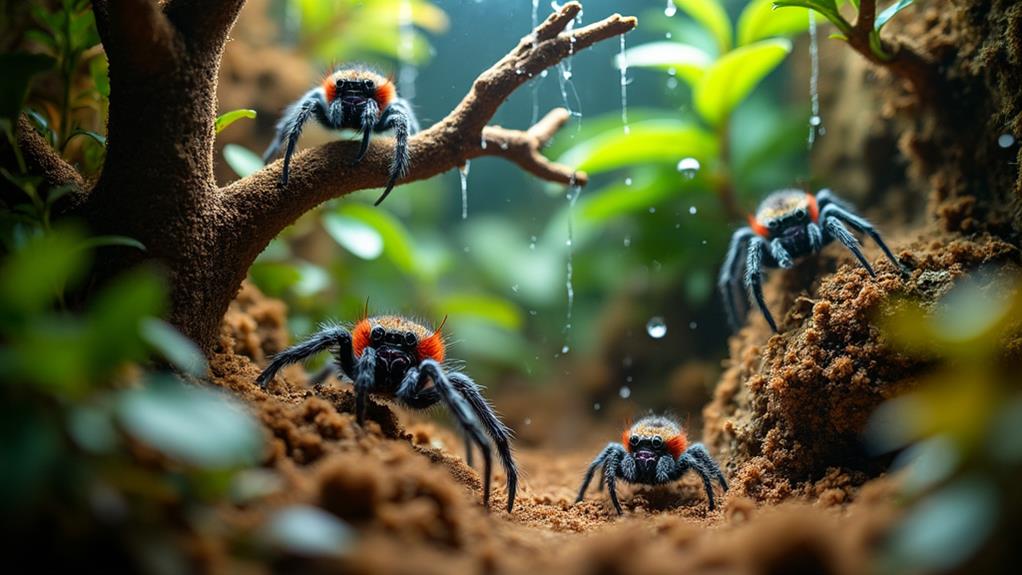
Understanding the specific care requirements of your pet spider is vital to guaranteeing its well-being and longevity. Jumping spiders, for instance, need well-ventilated enclosures with plenty of climbing space. Maintain their habitat's humidity levels between 50-70%, and feed them small insects such as fruit flies and crickets. Regular health monitoring is essential, so watch for any signs of stress or dehydration.
Wolf spiders thrive in terrestrial habitats with ample hiding spots, like caves or logs. Use a substrate that retains moisture to help maintain the right humidity levels. Their diet should consist of insects like crickets and roaches, and they should be fed every few days. It's significant to keep their habitats clean and secure to prevent any escapes.
Orb weavers require larger enclosures to support their web-building behavior. Aim to maintain humidity levels between 60-80% in their environment. Their diet primarily includes flying insects caught in their webs, so make sure these are available regularly. Health monitoring for your orb weaver includes checking for web damage or signs of illness.
Habitat Setup
Creating the ideal habitat for your pet spider plays a significant role in its total health and happiness. Start by choosing an enclosure that's at least 2-3 times the spider's leg span. This guarantees they have enough space to move and investigate, which is essential for their well-being. For the substrate, use soil, coconut fiber, or peat moss. These materials help maintain the necessary humidity levels and provide a natural environment for burrowing or hiding.
Incorporating hiding spots is imperative for creating a comfortable environment. Use flower pots, pieces of wood, or rocks to give your spider secure places to retreat when needed. Proper ventilation is just as important; create small holes in the enclosure's lid or sides. This prevents mold growth and guarantees adequate airflow, keeping your spider safe.
Monitoring humidity and temperature levels is critical, as different spider species require varying conditions for ideal health. Regular checks help you maintain the right balance, guaranteeing your pet thrives. By paying attention to these details, you'll create a habitat setup that meets your spider's needs, promoting a healthy and happy life for your eight-legged friend.
Feeding Guidelines
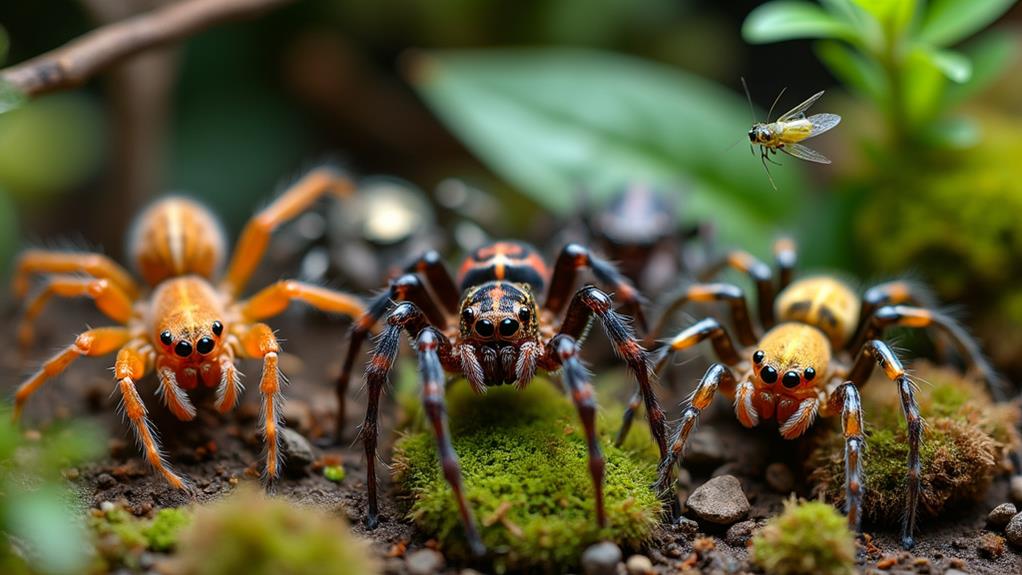
Nourishment plays a vital role in your spider's health and well-being. Regarding feeding your pet spiders, it's important to provide a diet of live insects, such as crickets and fruit flies. These should be pesticide-free to guarantee they don't harm your spider's health. Here are some feeding guidelines to keep in mind:
- Feeding frequency: Smaller spiders might need food every 1-2 days, while larger species can be fed once or twice a week.
- Portion control: It's important to avoid overfeeding. An overfed spider faces risks like an abdomen burst, which can be fatal.
- Fresh water: Always have fresh water available in shallow dishes or caps. Change it regularly to prevent contamination and safeguard your spider's health.
- Live insects: Only provide live, pesticide-free insects to avoid exposure to harmful chemicals.
- Health monitoring: Keep an eye on your spider's abdomen size. A healthy spider has a balanced abdomen, not too swollen or thin.
Safety Considerations
When keeping spiders as pets, prioritizing safety is vital for both you and your arachnid companion. True spiders like jumping or wolf spiders are fascinating but remember they can be poisonous to some degree. Their bites, though rare, can cause allergic reactions, so always handle spiders with caution. Researching the specific venom potency of your spider is imperative, especially if you or anyone in your household is allergic to spider venom.
A spider requires little space, but its enclosure must be properly sealed. Many species are escape artists and need secure habitats to prevent them from roaming your home. An escape-proof environment not only protects you but also guarantees your spider's safety.
Before acquiring a spider, check local regulations regarding spider ownership. Some areas have restrictions that could lead to legal issues if not followed.
Regularly monitor your spider to confirm it remains healthy and stress-free. Maintaining their well-being helps prevent defensive behaviors that could result in bites. Minimizing direct contact will reduce stress and the risk of injury. By taking these precautions, you'll guarantee a safe and enjoyable experience for both you and your spider.