What Should You Never Feed Your Cat? Toxic Foods to Avoid
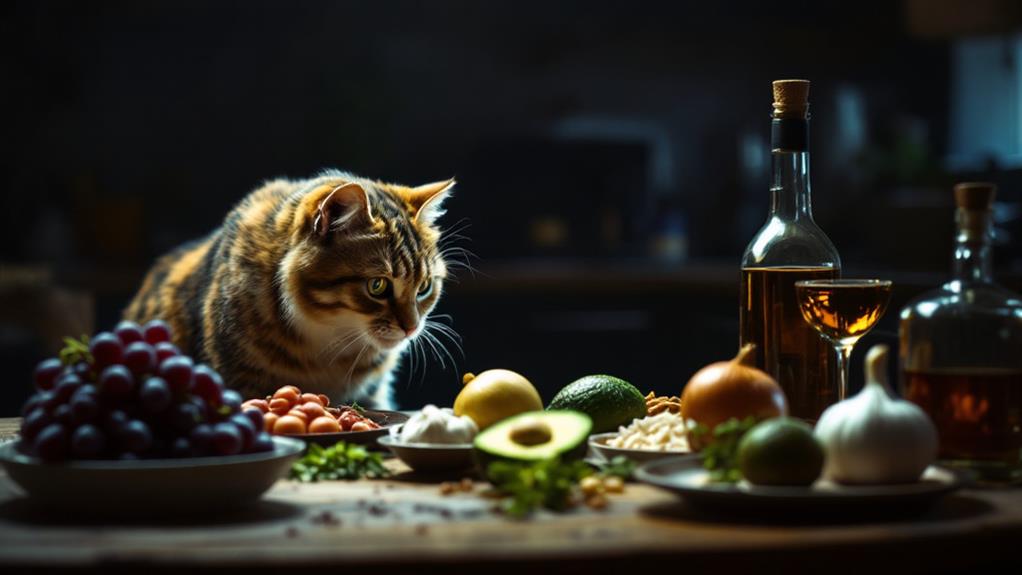
Never feed your cat onions, garlic, chocolate, grapes, raisins, or alcohol. These foods are highly toxic and can cause severe health issues like anemia, kidney failure, or even death. Caffeine and yeast dough are just as dangerous, leading to symptoms such as seizures and respiratory depression. Many cats are lactose intolerant, so avoid giving them milk. Raw eggs and meat may contain harmful bacteria and disrupt nutrient absorption. Even certain human medications and plants can be fatal. Keeping these away from your feline will guarantee their safety and well-being. There's more to learn about protecting your furry friend from these dangers.
Onions and Garlic
Onions and garlic, along with their relatives like shallots and chives, are something you should never feed your cat. These foods contain thiosulfate, a compound toxic to cats. It causes oxidative damage to their red blood cells, leading to anemia. When your cat ingests onions or garlic, symptoms often appear, including lethargy, weakness, vomiting, pale gums, and dark red urine. Garlic is particularly dangerous, being five times more toxic than onions, and all forms—raw, cooked, or powdered—pose a threat.
Even small amounts can be harmful, but the risk increases with larger quantities or concentrated forms, such as onion soup mix. If you notice any symptoms in your cat after they've consumed these foods, it's important to seek immediate veterinary help. An untreated case of onion or garlic toxicity can result in serious health complications for your furry friend. The sooner you get veterinary assistance, the better the chances of avoiding long-term consequences.
To protect your cat, keep onions, garlic, and their relatives out of reach, and be cautious with any food or seasoning that might contain them. Your vigilance is essential to ensuring your cat's health and safety.
Chocolate and Caffeine
In regard to substances that are harmful to your cat, chocolate and caffeine top the list due to their toxicity. Chocolate contains methylxanthines, specifically theobromine and caffeine, which are highly toxic to cats. Even a small amount, like 0.5 oz. of dark chocolate, can induce toxic effects in an 8 lb. cat. Symptoms include vomiting, diarrhea, and seizures, and if left untreated, they can be fatal. Dark chocolate is particularly dangerous due to its higher methylxanthine content, making it vital to keep all forms of chocolate out of your cat's reach.
Caffeine, found in common beverages like coffee, tea, and energy drinks, poses similar risks to your feline friend. It can lead to restlessness, rapid breathing, heart palpitations, and muscle tremors. There's no safe amount of caffeine for cats, so it's important to prevent them from accessing any caffeinated substances. If your cat ingests chocolate or caffeine, immediate veterinary attention is necessary. Quick action can greatly improve recovery outcomes, reducing the risk of severe health issues. Always err on the side of caution by ensuring these toxic substances are nowhere near your curious companion.
Grapes and Raisins
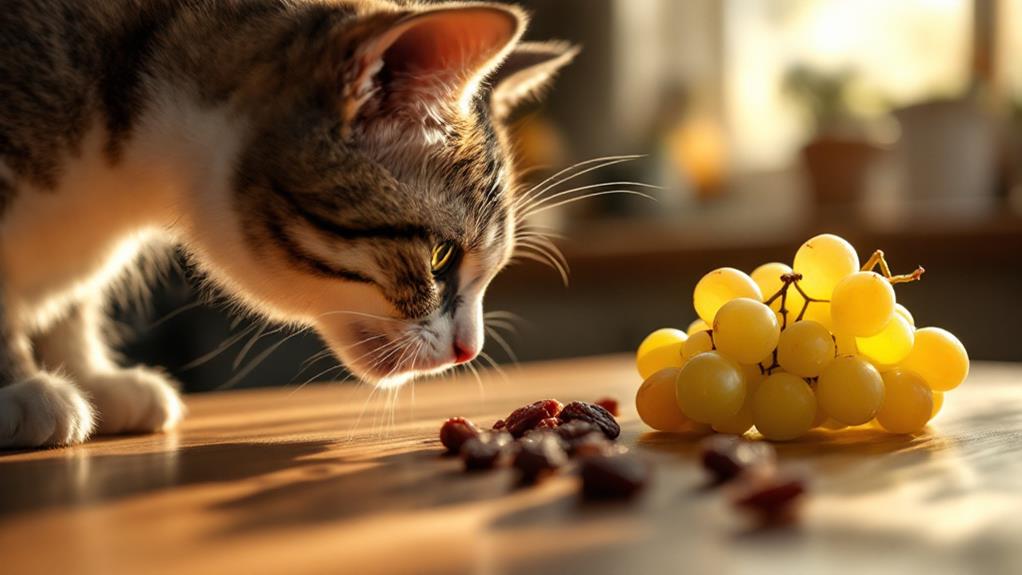
Feeding your cat grapes or raisins can lead to serious health issues, primarily acute kidney failure. While the specific toxic substance causing this reaction is unknown, even small amounts can trigger harmful symptoms. You might notice your cat experiencing vomiting and becoming lethargic shortly after ingestion. The ASPCA strongly advises against giving these foods to your feline friend due to their potential toxicity.
There isn't a known safe quantity of grapes or raisins for cats, making prevention absolutely essential. You should guarantee these foods are kept out of reach, as accidental ingestion can result in severe consequences. If you suspect your cat has ingested any amount of grapes or raisins, immediate veterinary care is critical. Time is of the essence since the damage to your cat's kidneys can continue even after they've stopped consuming the toxic food.
Make your home a safe environment by storing grapes and raisins securely, and educate anyone who interacts with your pet about these dangers. Remember, regarding your cat's health, vigilance and prompt action can make all the difference in preventing an emergency situation.
Alcohol and Yeast Dough
With regard to your cat's safety, keeping alcohol and yeast dough far from their reach is fundamental. Alcohol, even in tiny amounts, is harmful to cats and can lead to severe poisoning. If your cat ingests alcohol, symptoms like vomiting, disorientation, and respiratory depression can quickly develop. Imagine just two teaspoons of whisky being enough to induce a coma in a 5-pound cat. Such extreme reactions make immediate veterinary care imperative to prevent life-threatening health complications.
Yeast dough poses a dual threat. When ingested, it can expand in your cat's stomach during fermentation, leading to painful bloating and twisting. This dangerous situation might necessitate emergency surgery. But that's not all—fermentation of raw yeast dough produces alcohol, introducing the same toxic risks as direct alcohol consumption. This combination of factors makes yeast dough particularly hazardous for your feline friend.
If you suspect your cat has consumed alcohol or yeast dough, don't hesitate to seek veterinary care. Quick action is key to mitigate the risks of severe health complications or even death. By understanding these dangers, you can better protect your cat from these toxic substances.
Milk and Dairy Products
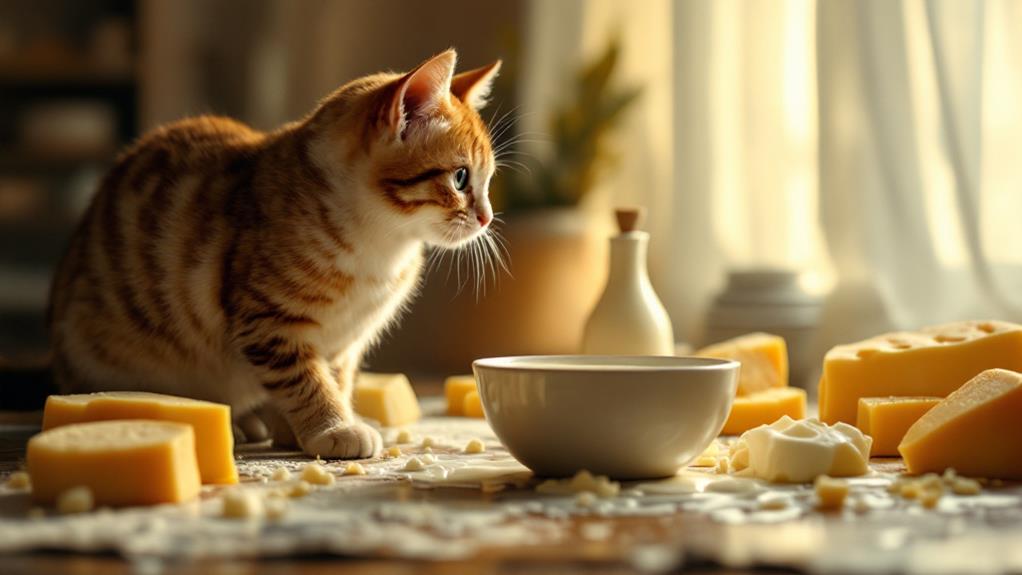
Surprisingly enough, many cat owners might not realize that milk and dairy products aren't the treats they seem to be for their feline companions. Although we've often seen images of cats lapping up milk, the reality is that many cats are lactose intolerant. Once cats are weaned, they generally lose the enzyme needed to digest lactose. This means that consuming milk and dairy products can lead to gastrointestinal issues such as upset stomach, diarrhea, and vomiting. Unfortunately, the discomfort and digestive upset overshadow any perceived nutritional benefits these treats might offer.
To guarantee your cat's health, consider the following:
- Recognize the Symptoms: If your cat shows signs of bloating, diarrhea, or vomiting after consuming dairy, they're likely lactose intolerant.
- Limit Dairy Intake: Even if your cat can tolerate small amounts, it's best to avoid offering dairy products to prevent potential digestive upset.
- Explore Alternatives: If your cat craves that creamy texture, opt for lactose-free milk or specially formulated cat treats instead. These options are safer and designed to cater to a cat's nutritional needs without causing harm.
Raw Eggs and Meat
While many people might already know about the risks of dairy for cats, another dietary pitfall involves raw eggs and meat. Raw eggs can pose a significant risk due to Salmonella contamination, which can lead to severe gastrointestinal distress in your cat. Symptoms like vomiting and diarrhea might occur, making your feline friend quite uncomfortable. Furthermore, raw eggs contain the enzyme avidin, which can interfere with biotin absorption. Over time, this can result in skin and coat issues.
Similarly, raw meat is no safer. It can harbor harmful bacteria such as Salmonella and E. coli, which can cause serious health complications for cats. These bacterial infections aren't just a mild inconvenience; they can lead to severe illness in your pet. In addition, if you feed cats raw fish, it can destroy thiamine (Vitamin B1), potentially causing neurological problems like seizures and loss of appetite.
The best way to avoid these dangers is through proper cooking. Thoroughly cook eggs and meat to eliminate any harmful bacteria before serving them to your cat. By doing so, you'll be ensuring your pet stays healthy and happy, free from unnecessary health risks.
Unsafe Vegetables
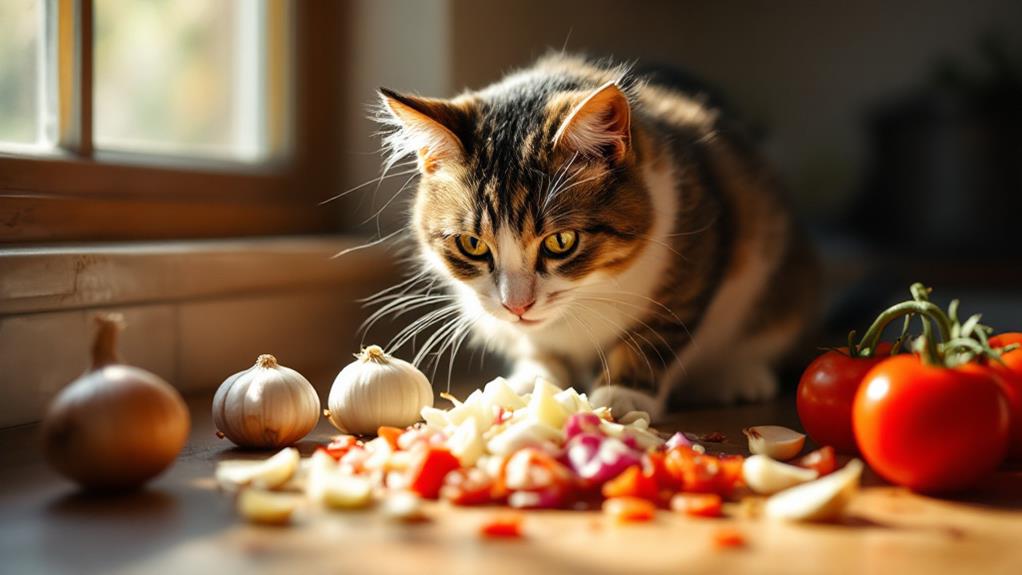
Certain vegetables pose hidden dangers to your cat's health that you might not expect. While you might think natural foods are safe, some can actually be toxic foods for your feline friend. Here's a list of unsafe vegetables to keep away from your cat:
- Onions, Garlic, and Chives: These common kitchen staples contain thiosulfate. This compound is particularly harmful to cats, as it can damage their red blood cells, leading to anemia. Even small amounts can cause serious harm, including gastrointestinal distress and oxidative damage to red blood cells.
- Avocado: Though popular among humans, avocados contain persin, which is toxic to cats. Consuming any part of the avocado, particularly the leaves and pits, can lead to vomiting and diarrhea.
- Tomato Plants and Uncooked Potatoes: Both contain solanine, a compound that causes gastrointestinal distress. While cooked potatoes are safe, raw ones, along with tomato plants, can lead to severe health issues for your cat.
Always keep these unsafe vegetables out of your cat's reach to guarantee they stay healthy. By understanding which foods are toxic to cats, you can prevent unnecessary health complications and keep your furry friend safe.
Human Medications
Beyond vegetables, another significant threat to your cat's health lies in human medications. These substances are more than just toxic food; they can lead to severe complications for your feline friend. Acetaminophen, commonly found in Tylenol, is particularly dangerous. Just a single dose can cause fatal liver damage, and symptoms like vomiting, swelling, and a slow heart rate may appear quickly. Ibuprofen and other common drugs, including antidepressants, antihistamines, and certain heart medications, are similarly hazardous. They can cause gastrointestinal bleeding, lethargy, seizures, and in severe cases, death.
Human medications rank high among cat poisoning incidents, emphasizing the need for caution. Always keep medications securely stored away from curious paws. If you suspect your cat has ingested any human medication, immediate veterinary attention is critical. Quick action can make a significant difference in your pet's recovery chances. Recognizing the symptoms of poisoning early—such as vomiting, lethargy, or unusual behavior—can be lifesaving. Never underestimate the danger these substances pose to your cat. By staying vigilant and acting swiftly, you can help protect your beloved pet from the harmful effects of human medications.
Dangerous Plants
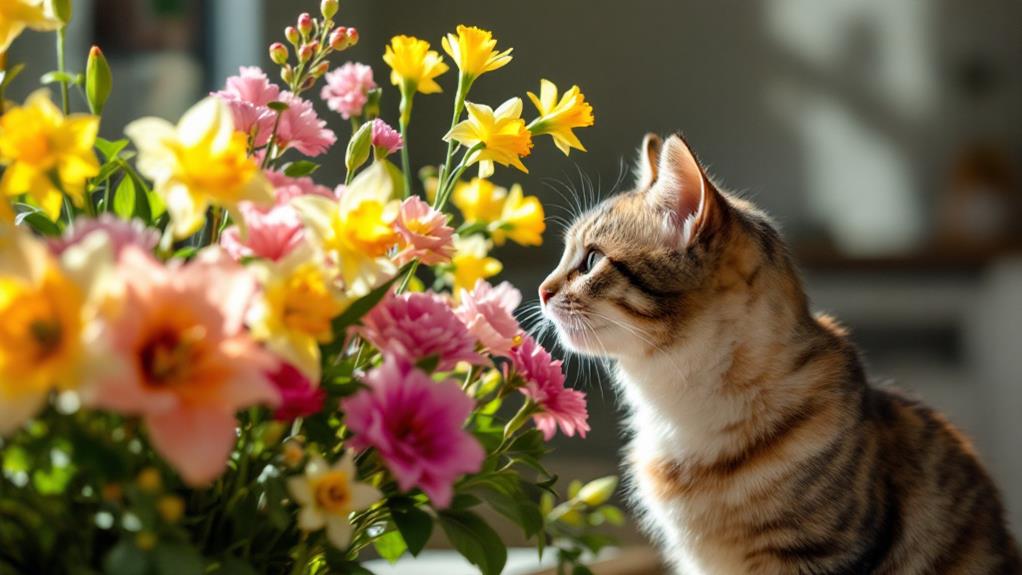
Plants can be a hidden danger in your home or garden, posing serious risks to your cat's health. You might be surprised at how many common plants are toxic to cats. Understanding these dangers can help protect your furry friend from harm.
- Lilies - These beautiful flowers are highly toxic to cats. Even a small amount of ingestion can lead to acute kidney failure. It's essential to keep lilies out of your home entirely if you have a cat.
- Sago palms - All parts of this plant contain toxins that can severely affect your cat's liver. Ingestion can be fatal, making it imperative to avoid having sago palms in your home or garden.
- Azaleas - These plants can cause severe gastrointestinal distress in cats, including vomiting and diarrhea. If consumed in larger quantities, azaleas can be lethal.
Additionally, tomato plants contain solanine, which can lead to gastrointestinal upset and neurological issues. Oleander is extremely toxic, even in small amounts, causing serious cardiac issues and potentially death. By being aware of these dangerous plants, you can create a safer environment for your cat, reducing the risk of toxic ingestion and its harmful effects.