What Is Safe to Feed a Pet Parrot? Essential Diet Tips
To keep your pet parrot healthy, focus on a diet of 70-90% high-quality pellets and 10-30% fresh vegetables and fruits. Opt for pellet brands like Lafeber and Harrisons, avoiding those with additives like sugar. Include veggies such as carrots and leafy greens, and limit fruit to low-sugar options like berries. Avoid toxic foods like avocado, onions, and raw beans. Gradually shift from seeds to pellets, and monitor your parrot's health by observing their droppings and weight. Consulting an avian vet can offer personalized advice, ensuring your feathered friend thrives. Uncover more about crafting the perfect diet and see how it alters their health.
Understanding Parrot Nutrition
Understanding your parrot's nutritional needs is fundamental for its general health and longevity. When feeding your bird, it's imperative to provide a balanced diet that meets its specific dietary requirements. For pet parrots, fresh foods play a significant role in delivering the necessary vitamins and minerals. Aim to include organic vegetables and a limited amount of fruits, making up about 30-50% of their diet. These fresh foods are key for ensuring your bird receives the nutrients it needs to thrive.
Parrots, like all birds, require a diet tailored to their species and individual needs. For example, breeding females may need more calcium, while young or molting birds might require adjusted feeding practices. Paying attention to these needs helps maintain a balanced diet that supports their health.
Recommended Pellet Choices
As you focus on fulfilling the nutritional needs of your parrot, selecting the right pellets becomes an important step in guaranteeing a balanced diet. Recommended pellets should make up 50-70% of your parrot's diet, providing the balanced nutrition necessary for long-term health benefits. High-quality pellets are specifically designed to deliver vital nutrients often missing from seed-based diets, supporting your parrot's general health and longevity.
When choosing pellets, look for trusted brands like Lafeber, Harrisons, Roudybush, Zupreem Naturals, and TOPS. These brands offer formulations tailored to different parrot species, making certain that your feathered friend receives the ideal nutritional profile. However, avoid pellets with additives such as sugar or dyes, as these can lead to serious health issues over time.
A gradual change to a pellet diet is advisable to ease your parrot into this new way of eating. Consulting with an avian veterinarian can provide valuable guidance during this change process, helping you guarantee your parrot adapts smoothly to its new diet. By prioritizing recommended pellets and expert advice, you're setting your parrot up for a healthier, happier life.
Safe Fresh Foods
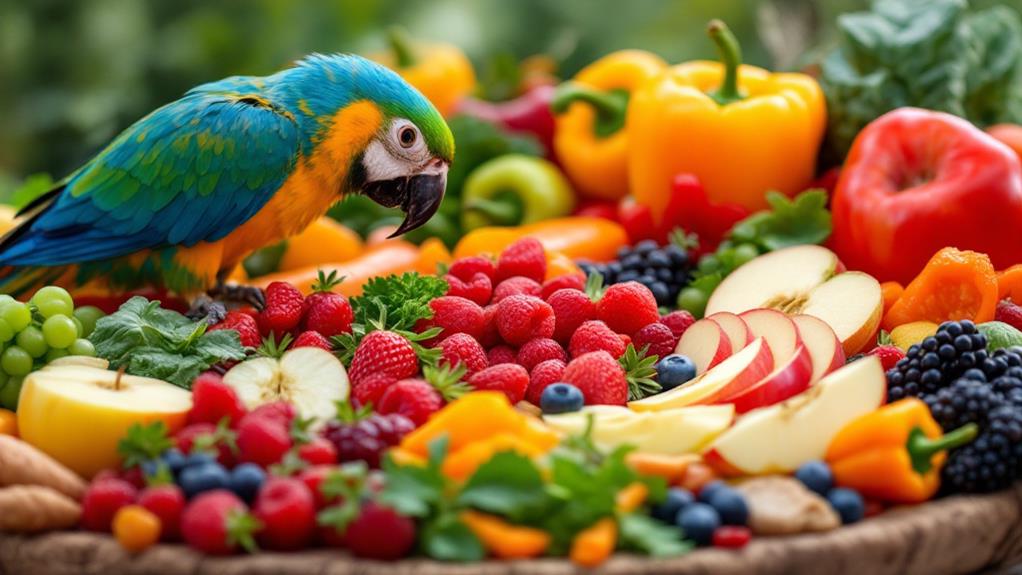
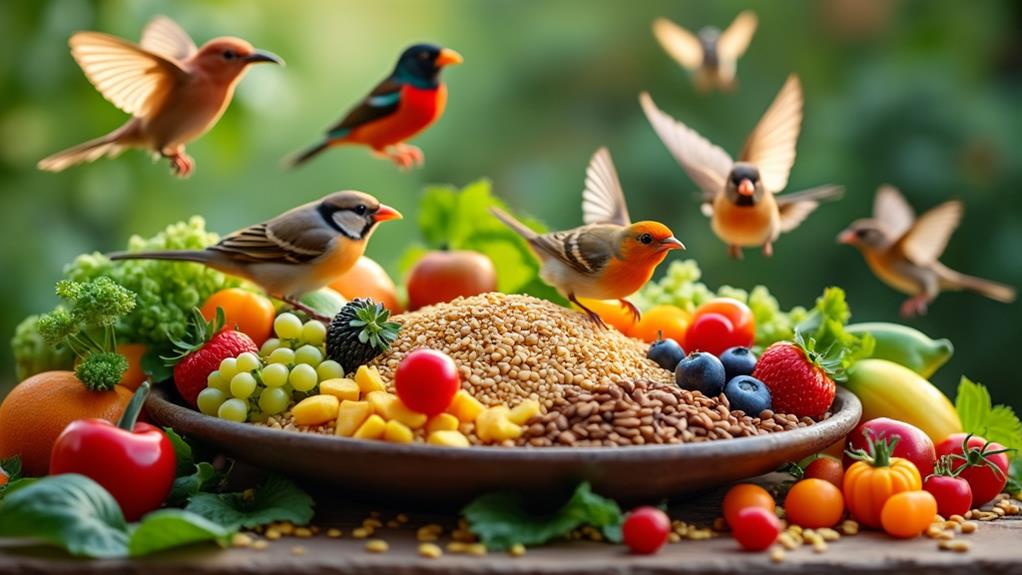
In regard to providing a balanced diet for your parrot, incorporating safe fresh foods is fundamental. Fresh vegetables and fruits should make up a significant portion of your pet parrot's diet. Aim for 30-50% of their meals to consist of fresh vegetables like carrots, bell peppers, and leafy greens. These veggies are packed with essential vitamins and minerals that contribute to a good diet. Remember to offer them raw or lightly steamed to preserve their nutritional value.
While fresh fruits are also significant, they should be limited to about 10-20% of the diet. Choose nutritious options like berries, apples, and oranges, while avoiding fruits high in sugar, such as bananas and grapes. It's critical to maintain a variety of foods to guarantee a balanced intake of different nutrients.
Alongside fruits and vegetables, cooked whole grains and pseudo-grains like quinoa and barley add beneficial nutrients without being high in fat. Always rinse all fresh produce thoroughly to remove any pesticides, opting for organic when possible. Avoid using added butter, oil, or seasonings when you feed your parrots to keep their diet healthy and safe.
Preparing Parrot Chop
Creating a nutritious parrot chop is an excellent way to guarantee your feathered friend receives a balanced diet. This tasty blend combines fresh vegetables, cooked grains, and legumes, making certain a varied and nutritious mix for your pet parrot. Start by cooking grains like quinoa or brown rice. These grains provide crucial nutrients and make a great base for your chop. Next, chop a variety of safe vegetables such as carrots, bell peppers, and leafy greens. These veggies offer vitamins and minerals that are essential for your parrot's health.
To keep things interesting and prevent dietary boredom, consider customizing ingredients to match your parrot's preferences. This not only encourages your bird to investigate new flavors but also helps guarantee they receive a wide range of nutrients. Here's how you can make the process easier:
- Store parrot chop in individual servings in the refrigerator for up to a week.
- Regularly update ingredients to maintain interest and prevent waste.
- Mix in legumes like lentils for added protein.
Toxic Foods to Avoid
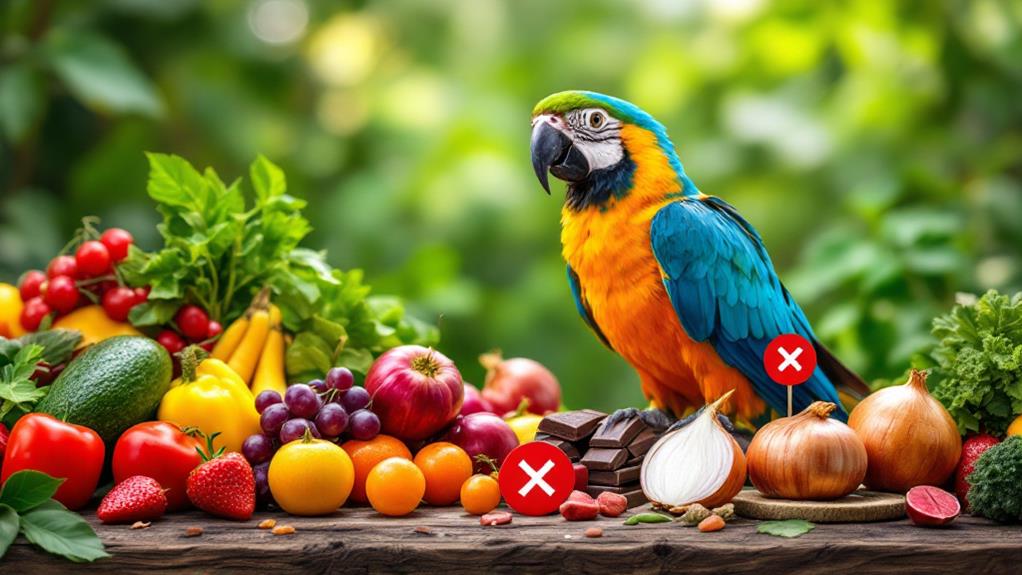
When caring for your parrot, it's crucial to be aware of foods that can harm them. Some foods are downright dangerous and should never be part of your parrot's diet. Avocado tops the list of toxic foods for parrots; it contains harmful toxins that can cause respiratory distress and even sudden death, so you must avoid giving it to your feathered friend. Likewise, onions and garlic are hazardous for parrots. They can lead to hemolytic anemia, resulting in weakness and lethargy, which can severely affect your parrot's health.
Raw beans, especially kidney beans, contain toxins that can be lethal to parrots. Confirm any beans are thoroughly cooked before offering them to your bird. Moreover, foods containing caffeine, like coffee and tea, should be avoided, as they can increase your parrot's heart rate and potentially lead to seizures.
Lastly, be cautious of fruit seeds and pits. Apple seeds and cherry pits contain cyanogenic compounds, which can be fatal if ingested by parrots. By steering clear of these toxic foods, you're taking a significant step in safeguarding your parrot's well-being and longevity.
Feeding Guidelines
To guarantee your parrot's health and vigor, it's vital to follow proper feeding guidelines. A balanced diet for adult parrots consists of 70-90% pellet diets and 10-30% fresh foods. These percentages affirm your feathered friend gets necessary nutrients. Confirm fresh foods are replenished daily and follow the packaging instructions for pellet portion sizes to support a healthy diet.
Different bird species have unique nutritional needs, so it's significant to monitor weight regularly. This helps you adjust their diet if necessary, especially since overfeeding can lead to high fat intake and obesity. Keep a record of your parrot's feeding habits for ongoing health assessments. Consulting a veterinarian can provide tailored advice for your specific species and any health concerns.
Young parrots need more frequent feedings compared to adults, who typically require food replenishment once or twice a day. Always provide fresh water to keep them hydrated and aid in digestion.
Remember these key points:
- Balance diet: Follow the 70-90% pellet and 10-30% fresh food ratio.
- Monitor weight: Regularly weigh your parrot to avoid obesity.
- Fresh water: Confirm a constant supply of clean water.
Transitioning Diets
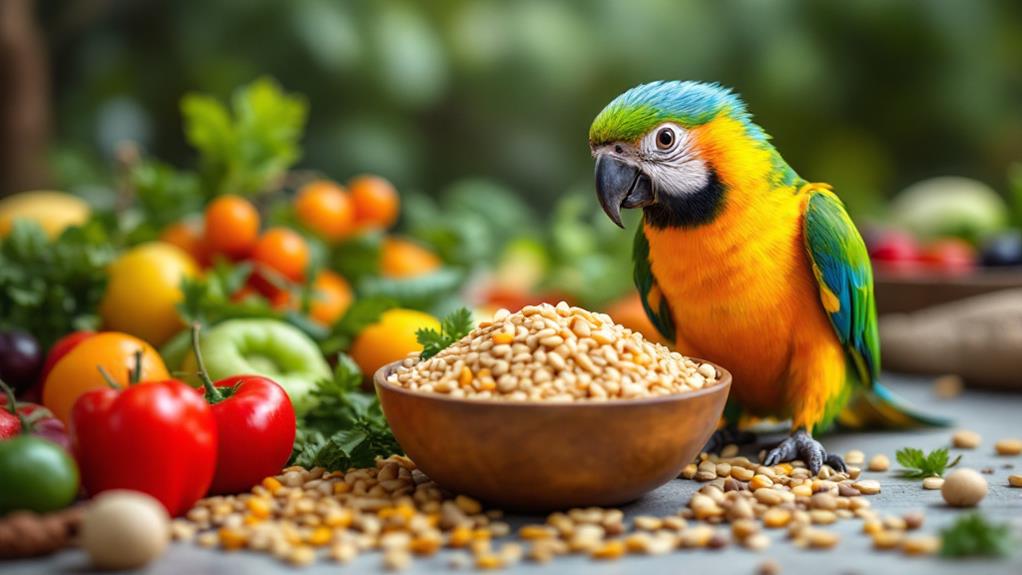
Moving from the basics of feeding guidelines, let's investigate how to shift your parrot's diet from seeds to pellets in a way that's gentle on their digestive system. Altering diets should be a gradual process to prevent any digestive upset. Start by mixing a small amount of pellets with your parrot's current seed diet. Over the course of several weeks, slowly increase the pellet portion while decreasing the seeds. This gradual change gives your parrot's digestive system time to adjust, reducing the risk of health issues.
To encourage acceptance of the new pellets, you might warm them slightly or add a bit of fruit juice. Doing so can make them more appealing, helping your parrot adapt more easily. Throughout this process, it's essential to monitor your parrot's weight and general health. Changes in weight can indicate how well they're adapting to the new diet. If concerns arise, adjusting the alteration pace can help better meet your parrot's nutritional needs.
Consulting with an avian veterinarian offers personalized advice to ensure that the diet change is suitable for your parrot's species. Their expertise can guide you in making informed decisions for your feathered friend's health.
Monitoring Health Through Diet
A essential aspect of ensuring your parrot's well-being is closely monitoring their health through diet. Regularly observing your pet bird's droppings can offer valuable insights. Changes in color, consistency, or frequency might indicate issues within the birds diet or potential health problems. Monitoring your parrot's weight is similarly essential. Aim for weekly weigh-ins to prevent obesity, which can lead to serious health issues.
Consider keeping a feeding log to track what your parrot eats. This helps identify patterns and any adverse reactions to new foods, allowing you to make better dietary choices for your pet birds. Furthermore, pay attention to any behavioral changes. Increased lethargy or reduced activity could signal dietary deficiencies, requiring a closer look at their nutrition.
To help maintain your parrot's ideal well-being, consider these actions:
- Monitor weight weekly: Adjust the diet as needed to prevent obesity and associated health problems.
- Track feeding habits: A detailed feeding log provides insights into dietary trends and potential issues.
- Observe behavioral changes: Changes in activity levels can indicate health concerns.
While it's significant to consult with an avian veterinarian regularly, these steps can greatly improve your parrot's health management through diet.
Consulting an Avian Veterinarian
Taking proactive steps in monitoring your parrot's diet lays a strong foundation for their health, but consulting an avian veterinarian improves this approach. It's important to establish a suitable diet tailored to your parrot's specific species and nutritional needs. By doing so, you'll guarantee your pet gets the right balance of nutrients. Regular veterinary check-ups are fundamental, as they help monitor your parrot's health and allow for timely dietary adjustments based on weight, stage of life, and health status.
An avian veterinarian is invaluable when shifting your parrot from a seed-based diet to a more balanced pellet-based diet. This change is essential for improving the quality of bird food your parrots eat, guaranteeing they receive peak nutrition. Veterinarians can recommend specific brands of pellets and fresh foods that avoid harmful additives like sugar and dyes, which can be detrimental to their health.
Additionally, consulting an avian veterinarian helps identify any food allergies or intolerances your parrot may have. This knowledge is key to crafting a safe and healthy diet for your feathered friend. Remember, a balanced diet and expert guidance are the cornerstones of a long, healthy life for your parrot.