What Is Dressage? A Beginner’s Guide to This Equestrian Discipline
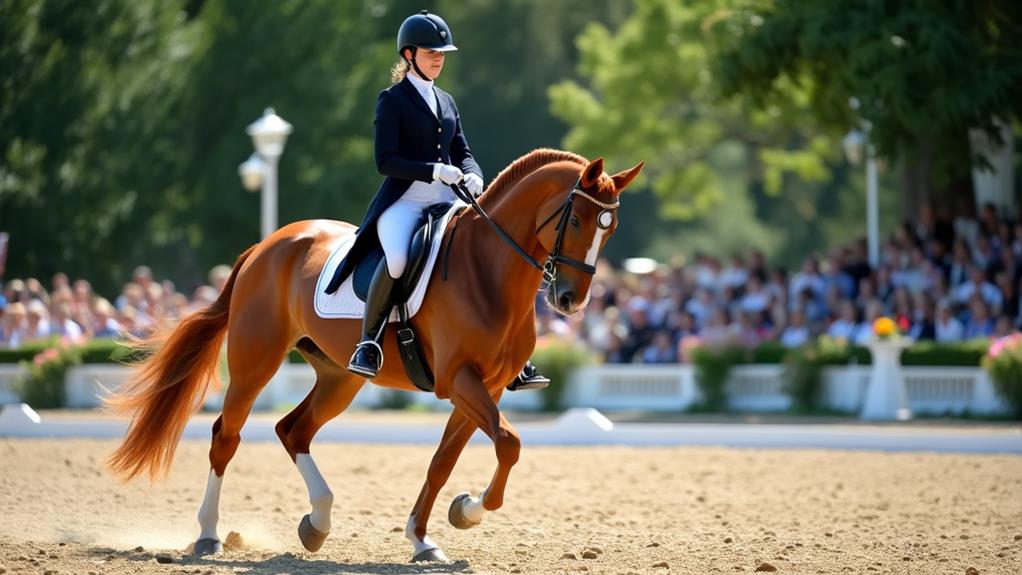
Dressage is a graceful equestrian discipline that emphasizes the harmony between you and your horse through precise movements. You'll communicate with your horse using subtle cues, aiming for seamless performances. Begin with mastering the basic movements of the Introductory level, gradually progressing to more challenging levels like Grand Prix. You need consistent training aligned with the six Scales of Training—Rhythm, Suppleness, Contact, Impulsion, Straightness, and Collection. Equip yourself with crucial gear like a dressage saddle and snaffle bit. As you prepare for your initial test, focus on understanding the specific movements required. There's much more to investigate in this elegant sport.
Key Takeaways
- Dressage is an equestrian sport focused on precise, harmonious movements between horse and rider.
- It emphasizes communication through subtle cues for seamless performance and artistry.
- Training follows the Scales of Training: Rhythm, Suppleness, Contact, Impulsion, Straightness, and Collection.
- Competitions involve performing predetermined sequences judged on accuracy and overall impression.
- Equipment includes an English dressage saddle and snaffle bit for effective communication and stability.
Understanding Dressage Basics
Dressage is an elegant equestrian sport where you and your horse perform a series of precise movements, judged on accuracy and execution. It's not just about riding—it's about building a harmonious partnership with your horse. As a rider, you'll guide your horse through different movements, each requiring specific training and practice. Communication is key in dressage; subtle cues and signals between you and your horse guarantee a seamless performance.
Training for dressage involves mastering the Scales of Training, which help develop your horse systematically. These scales include Rhythm, Suppleness, Contact, Impulsion, Straightness, and Collection. They're crucial for improving the horse's athletic ability and honing your communication skills. Dressage tests feature predetermined sequences of movements, testing you and your horse's precision and artistry.
Dressage has multiple levels, from Introductory to Grand Prix, each demanding increased technical skills. Your performance is evaluated based on the accuracy of the movements and the complete harmony between you and your horse. Mastering the basics of dressage lays a solid foundation, not just for this discipline but for other equestrian activities, enhancing the overall connection between rider and horse.
Dressage Levels and Progression
Starting on your dressage expedition, you'll navigate through different levels that challenge both you and your horse in unique ways. Dressage levels range from Introductory to Grand Prix. Each level is designed to progressively improve your technical skills and build a strong partnership between horse and rider. At the Introductory level, you'll focus on mastering basic walk and trot movements. As you progress, more complex tasks await, culminating in the Grand Prix level with advanced movements like piaffe and passage.
To move up the dressage levels, you need to achieve consistent scores of 60% or higher at your current level, proving your readiness for progression. Training at each level aligns with the six Scales of Training: Rhythm, Suppleness, Contact, Impulsion, Straightness, and Collection. These scales build on each other, providing a framework for systematic improvement in both horse and rider.
Understanding the movements required at each level is essential for your preparation and competition success. Governing bodies like British Dressage offer test sheets, detailing these movements. With persistent dedication and practice, you'll find yourself advancing through the levels, achieving milestones in your dressage expedition.
Dressage Tests and Scoring
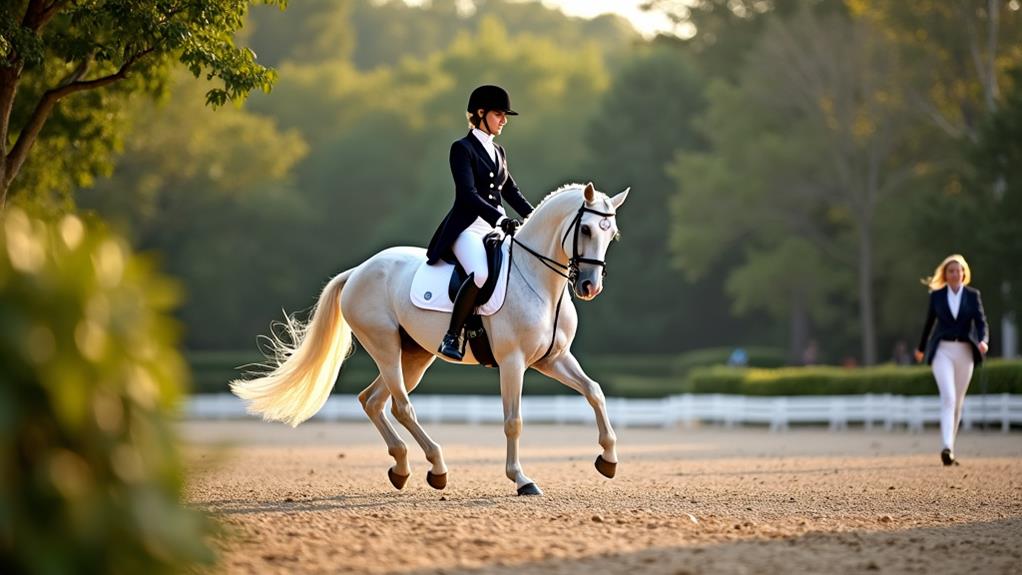
When participating in a dressage test, you and your horse will perform a series of predetermined movements judged on accuracy, precision, and harmony. These dressage tests are structured events where the performance of both horse and rider is assessed. Each movement you execute is scored on a scale from 0 to 10, with judges evaluating the execution of specific tasks and the comprehensive impression of your performance.
To excel, you'll need to focus on:
- Familiarizing yourself with test movements: Each test is tailored to your skill level and requires thorough practice.
- Achieving high accuracy and precision: This is vital for scoring well, especially in British Dressage level competitions.
- Creating a harmonious comprehensive impression: This reflects the connection between you and your horse.
In British Dressage competitions, scoring above 60% is fundamental to earn points. The scores vary according to the level of complexity, ranging from introductory tests with basic walk and trot movements to advanced tests like the Grand Prix, which includes complex maneuvers such as flying changes and piaffe. Remember, understanding the specific requirements of your test and practicing diligently will set you up for success in dressage.
Essential Dressage Equipment
To excel in dressage, you'll need a few significant pieces of equipment that guarantee both you and your horse are prepared for the demands of the sport. Initially and foremost is the English dressage saddle. This saddle is designed with a deeper seat and longer flaps, offering the stability and support necessary for executing precise movements. Alongside the saddle, you'll need a riding helmet. This isn't just a safety measure; it's part of the mandatory attire dictated by competition dress codes from governing bodies such as the US Equestrian Federation.
For effective communication with your horse, a snaffle bit is fundamental at the Preliminary and Novice levels. Choose from styles like loose ring or eggbut to suit your horse's needs. During training sessions, leg wraps or boots provide crucial joint support and injury protection but remember, they're prohibited in competitions.
Equally significant are grooming tools, which guarantee your horse is clean and well-presented. A well-groomed horse positively impacts the judges' general impression during competitions. By investing in the right dressage equipment, you guarantee both readiness and adherence to the standards expected in this elegant sport.
Preparing for Your First Test
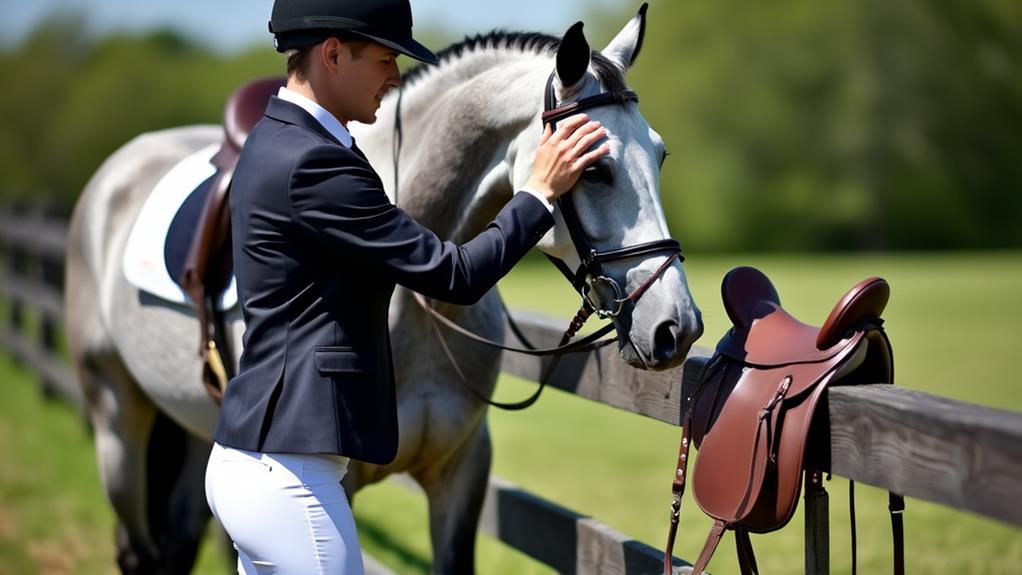
As you prepare for your initial dressage test, it is essential to familiarize yourself with the specific movements required. The Introductory dressage test includes walk/trot changes and 20m circles, lasting around three minutes. Regular practice is important for both you and your horse to become more responsive and execute each movement with precision and confidence. Consulting with a qualified instructor can provide valuable feedback on your performance, helping you make necessary adjustments before the competition.
Entering the arena straight and halting squarely at the judge demonstrates your horse's obedience and your control as a rider. These elements are significant in showcasing your horse riding skills during the dressage test. A well-prepared checklist is indispensable to guarantee everything goes smoothly on the competition day. It should include:
- Grooming and hoof care to improve your horse's appearance.
- Confirming your horse is relaxed and responsive to aids.
- Reviewing the test movements to elevate your confidence.
These steps will positively impact your complete performance. Remember, successful training leads to a successful competition. With dedication and the right preparation, both you and your horse can excel in the dressage arena.