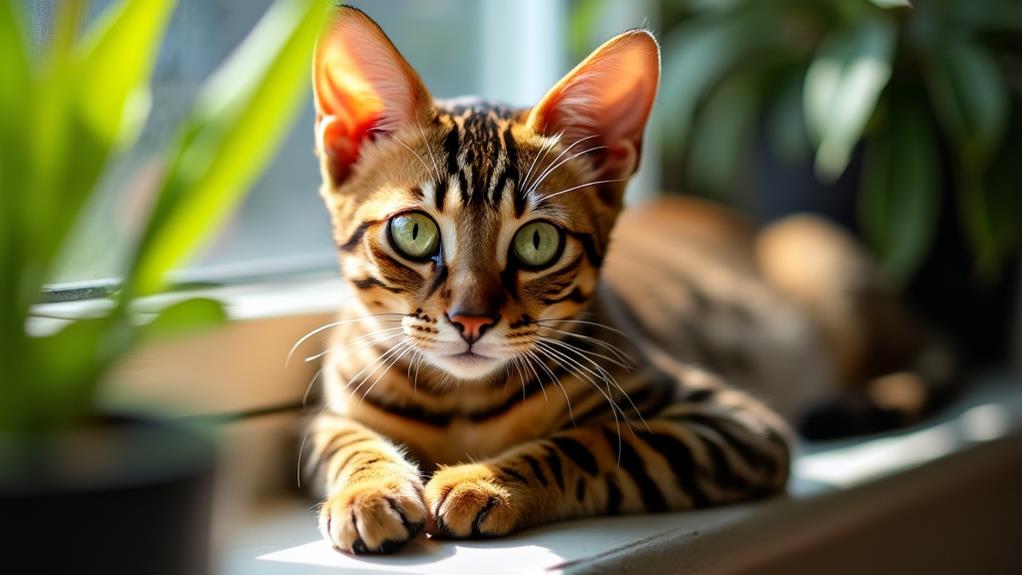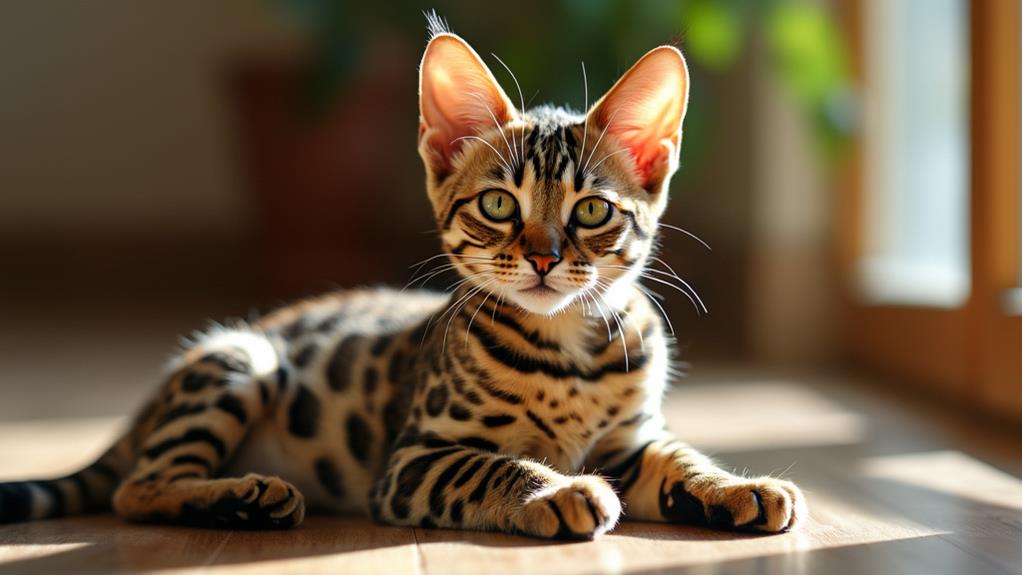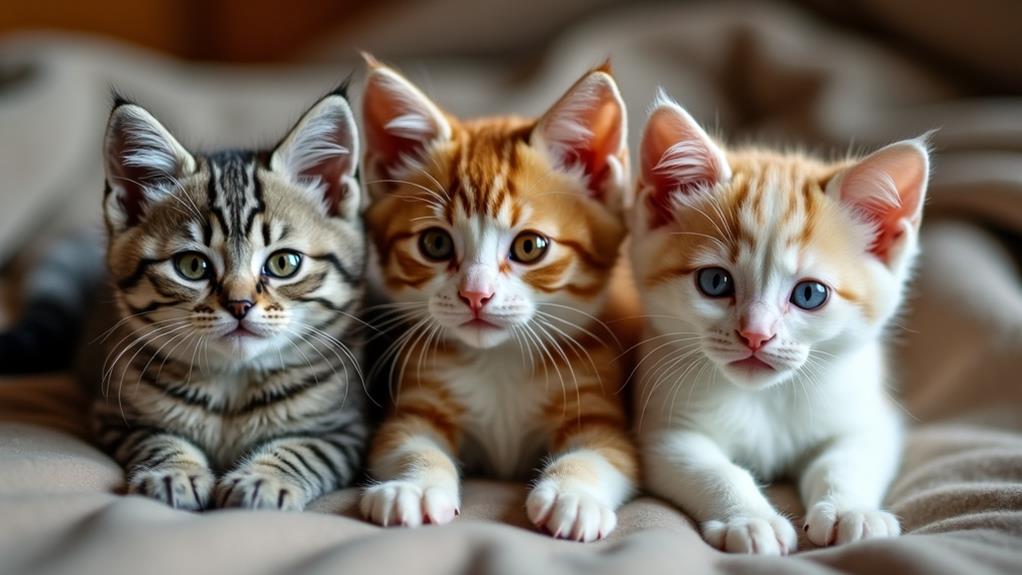
What Is a Feral Cat? Understanding and Helping Wild Cats

A feral cat is an unsocialized domestic cat living in the wild. Unlike stray cats, ferals avoid human contact and prefer forming colonies in hidden places like vacant lots. They survive on human refuse and the environment, facing short lifespans due to harsh conditions. Their behavior includes caution and silence, steering clear of people. Trap-Neuter-Return (TNR) programs effectively manage their populations, enhancing their health while easing local impact. Understanding how feral cats differ from strays guides community efforts in humane management. By exploring further, you'll uncover strategies to support and coexist with these wild cats effectively.
Defining Feral Cats
What exactly are feral cats? They're unsocialized domestic cats that typically avoid human contact. Unlike stray cats, which may have once had homes and can often be re-socialized, feral cats are usually born in the wild or are the offspring of lost or abandoned pets. These cats form feral colonies, often in vacant lots or abandoned buildings, where they find shelter and a food source, primarily from human refuse.
Feral cats are often mistaken for community cats, a term that encompasses both feral and stray cats living in a specific area. However, feral cats are distinct due to their lack of socialization and reluctance to interact with humans. Their behaviors are driven by survival instincts, which include nocturnal hunting and seeking refuge, making them quite adept at maneuvering harsh environments.
To manage feral cat populations, many communities implement TNR (Trap-Neuter-Return) programs. These programs aim to reduce feral colonies' numbers humanely by trapping the cats, neutering them, and then returning them to their original locations. Understanding the nature of feral cats is essential for effectively managing and helping these wild cats coexist within our communities.
Feral vs. Stray Cats
When you're trying to identify if a cat is feral or stray, it can be challenging but essential for their care. Feral cats are unsocialized, avoiding human contact, while stray cats are lost or abandoned pets more comfortable around people. Understanding these differences helps you decide the best care approach. Feral cats typically live in colonies and rely heavily on their hunting instincts for survival. They're unlikely to approach humans and often display fearful behaviors, staying silent and out of sight.
On the other hand, stray cats might approach you, vocalize, and seek interaction. They usually make homes near human dwellings and may be re-socialized with patience and care, eventually becoming suitable for adoption. However, if stray cats lack socialization over time, they can revert to feral behaviors.
Adult feral cats are generally not suited for indoor living, so they benefit from humane population control methods like Trap-Neuter-Return (TNR). This method helps manage their numbers without forcing them into an environment they're not comfortable in. Stray cats, being more socialized, can often find new homes, making it essential to identify these differences for effective intervention.
Identifying Feral Cat Behavior
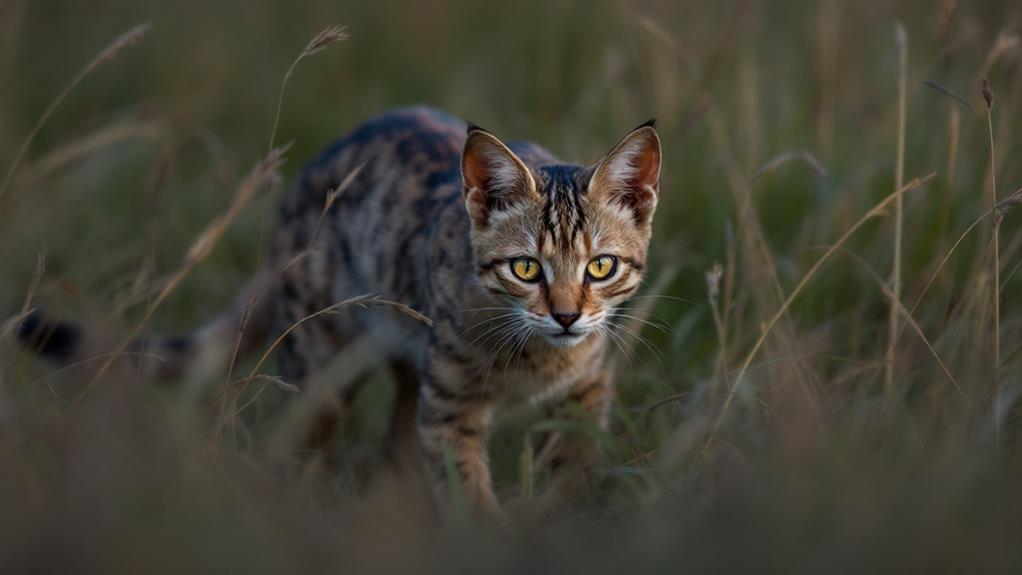
Many people struggle to distinguish feral cats from their stray counterparts, but understanding specific behaviors can help. Feral cats are typically unsocialized, exhibiting a noticeable fearful behavior towards humans. They'll often avoid contact, choosing to hide or flee when you approach. Unlike stray cats that might meow to get your attention, feral cats generally remain silent to avoid interaction. This vocalization difference is key in identifying them.
Feral cats tend to form colonies, which are groups relying on shared resources and social structures for survival. Despite this communal living, they're generally solitary in their individual interactions, rarely displaying the friendly demeanor of domesticated cats. Observing their body language can also be telling; look for signs like crouching, hissing, or a general tense posture. These behaviors contrast sharply with the more relaxed, approachable stance of strays.
Physical appearance can be deceptive, but it's worth noting that feral cats often look well-groomed and intact. Understanding these behaviors aids in assisting them; by recognizing their fear and need for solitude, you can approach feral cat management with empathy and effectiveness. Identifying these traits guarantees you're better equipped to assist these wild cats.
Challenges Faced by Feral Cats
Facing a myriad of challenges, feral cats have markedly shorter lifespans, averaging just 2-3 years due to harsh environmental conditions. They endure health risks like disease, starvation, and predation, compounded by exposure to extreme weather and lack of veterinary care. Sadly, nearly 50% of feral kittens don't make it to their initial birthday, primarily because of these harsh living conditions and widespread disease.
Feral cats often originate as abandoned or lost pets, struggling to adapt to the wild. Their existence is fraught with danger, not only from natural predators but also from human cruelty. Some people resort to poisoning or inhumane trapping methods, leading to injury or death for these vulnerable animals.
Communities sometimes rely on outdated and lethal methods to control the feral cat population, despite the proven effectiveness of humane approaches like Trap-Neuter-Return (TNR). TNR helps manage cat populations more ethically, improving the lives of these animals. By understanding the challenges feral cats face, you can advocate for better solutions within your community. Supporting humane approaches not only benefits the cats but also fosters a compassionate environment, reducing harm and promoting coexistence.
Trap-Neuter-Return Explained

Trap-Neuter-Return (TNR) offers a compassionate and effective solution to managing feral cat populations. This humane method involves trapping feral cats, having them spayed or neutered, vaccinating them, and then returning them to their original habitats. By doing so, TNR helps stabilize feral cat populations and greatly reduces the number of kittens born each year. Without intervention, a single female cat could produce up to 420,000 descendants in just seven years.
Sterilized feral cats often receive an eartip, a small cut on the ear, which serves as a visual indicator that they have been vaccinated and neutered. This helps caretakers and community members easily identify and monitor these cats. Community involvement is essential for TNR's success. Volunteers are needed to trap the cats, provide care, and monitor their well-being in managed colonies.
Studies show that TNR not only improves the health and lifespan of community cats but also reduces nuisance behaviors often associated with unaltered feral cats, such as fighting and spraying. This, in turn, benefits both the cats and the community, creating a more harmonious coexistence.
Caring for Feral Cats
Caring for feral cats requires a community-driven approach to secure their well-being and survival. Feral cats often depend on human-provided food and shelter, making community involvement vital. By organizing feeding stations and constructing outdoor shelters, such as those made from Rubbermaid totes, you can guarantee these cats have protection from harsh weather and access to nourishment.
Implementing Trap-Neuter-Return (TNR) is a fundamental strategy for managing feral cat populations. Through humane trapping methods, you can sterilize and return cats to their colonies. This reduces reproduction rates and improves the health of feral cats, leading to a more stable population. As a community participant, monitoring the health of feral cats becomes part of your role. Make sure they receive veterinary care when necessary and keep an eye on their general condition.
Educational resources, like the Neighborhood Cats TNR Handbook, provide valuable guidance on how to effectively manage feral cat colonies. They offer insights into compassionate care strategies and can be a great starting point for those new to TNR and feral cat care. By getting involved and staying informed, you contribute greatly to the well-being of these wild cats, helping them thrive in their environments.
Impact on Wildlife
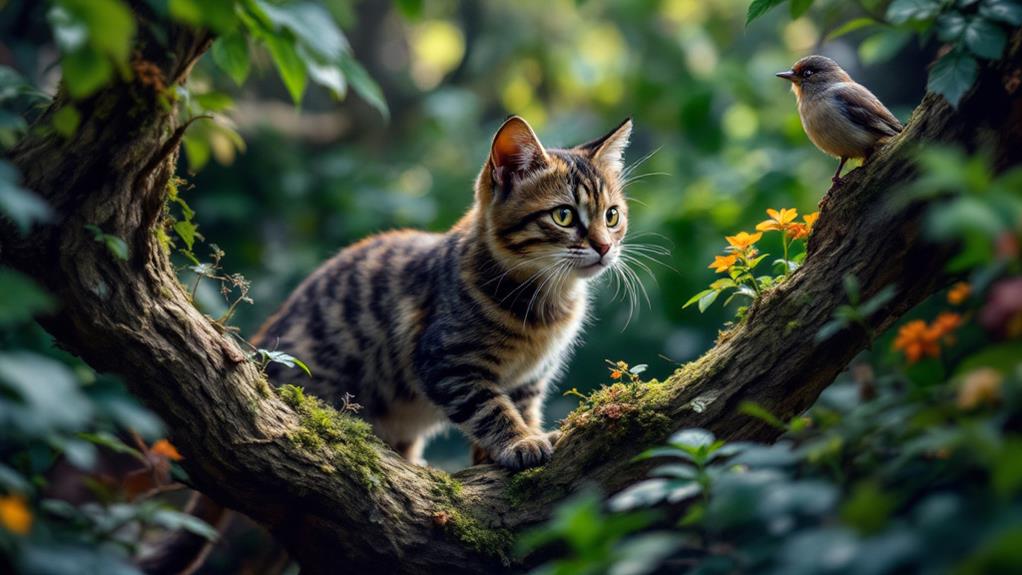
Feral cats, as natural hunters, can drastically alter local wildlife populations. They're particularly impactful on birds, small mammals, and reptiles, hunting them for survival. In fact, studies show feral cats are responsible for billions of bird and small mammal deaths each year in the United States, leading to declines in certain species. This significant predation can disrupt ecosystems, making the impact on wildlife considerable. When you remove feral cats without sterilization, a vacuum effect occurs, inviting new, unsterilized cats into the area, which perpetuates predation and disrupts local wildlife populations even further.
To tackle these issues, community efforts are vital. Trap-Neuter-Return (TNR) programs present a humane population control method by gradually reducing feral cat numbers. These programs allow feral cats to remain in managed colonies, minimizing their impact on wildlife over time. Educating the public and raising awareness about feral cats and their ecological roles are fundamental components of successful community efforts. By understanding and participating in TNR and educational awareness, you can contribute to reducing the negative impact on wildlife and promote coexistence with feral cats in a more balanced and humane way.
Relocation and Eradication Issues
Relocating feral cats often proves ineffective due to the persistent "vacuum effect." When cats are moved, unsterilized newcomers quickly fill the vacant, resource-rich areas, continuing the cycle of predation and population growth. Additionally, relocated feral cats frequently try to return to their original territory, risking injury or death in the process. This can result in established colonies in new areas facing increased resource competition and potential conflict with existing cat populations.
Instead of relocation, many advocate for humane management strategies like Trap-Neuter-Return (TNR), which help stabilize feral cat populations without the negative consequences of relocation. Public support for eradication remains low, with a growing preference for compassionate approaches. Engaging community involvement through education can shift perceptions and promote more effective methods.
- Relocation risks: Cats may return to their original territory, facing dangers along the way.
- Resource competition: New colonies can clash with existing ones over limited resources.
- Public support: Many favor humane solutions over eradication.
- Community involvement: Education on relocation challenges encourages support for humane methods.
Community Support Strategies

In relation to supporting feral cats, getting involved in community efforts can make a world of difference. Providing food, water, and shelter, especially during harsh weather, greatly improves their quality of life. You can join Trap-Neuter-Return (TNR) programs to help control feral cat populations humanely. TNR not only prevents overpopulation but guarantees that cats receive vaccinations and medical care. By participating, you contribute directly to their well-being.
Financial contributions to local animal organizations can also make a considerable impact. With spaying and neutering costs as low as $17, your donations help manage feral cat colonies effectively. These organizations rely on community support to sustain their efforts.
Volunteers are essential in these initiatives, offering time and resources to monitor the health of feral cats and maintain feeding programs. Your involvement could include helping with TNR operations or evaluating the cats' health to guarantee they thrive.
Public education is another important component. Raising awareness about feral cats fosters compassion and encourages responsible actions. By educating others, you help build a community that values humane and effective management strategies, ultimately benefiting both the cats and your neighborhood.
Educational Resources
The Neighborhood Cats TNR Handbook is an excellent starting point for anyone looking to get involved in the humane management of feral cat colonies. This resource offers thorough guidance on implementing Trap-Neuter-Return (TNR) programs effectively. By exploring educational materials, you'll gain insights into the humane treatment of feral cats, shifting public perceptions and encouraging responsible community initiatives.
Various organizations provide resources to support those interested in helping feral cats. These include feeding programs, veterinary care, and volunteer opportunities. To foster compassion and community involvement, consider engaging with public education efforts. These initiatives can greatly impact how feral cats are perceived and treated within your community.
Online platforms and local animal organizations often host workshops and provide free downloadable resources. These tools are designed to educate the public on feral cat management strategies and best practices. Here are some resources you might find helpful:
- Neighborhood Cats TNR Handbook: Thorough guide for effective TNR programs.
- Local animal organization workshops: Learn best practices through interactive sessions.
- Free downloadable resources: Access materials to educate yourself and others.
- Community feeding programs: Support feral cats with safe and nutritious meals.