Using Drones Without Disturbing Wildlife: Best Practices
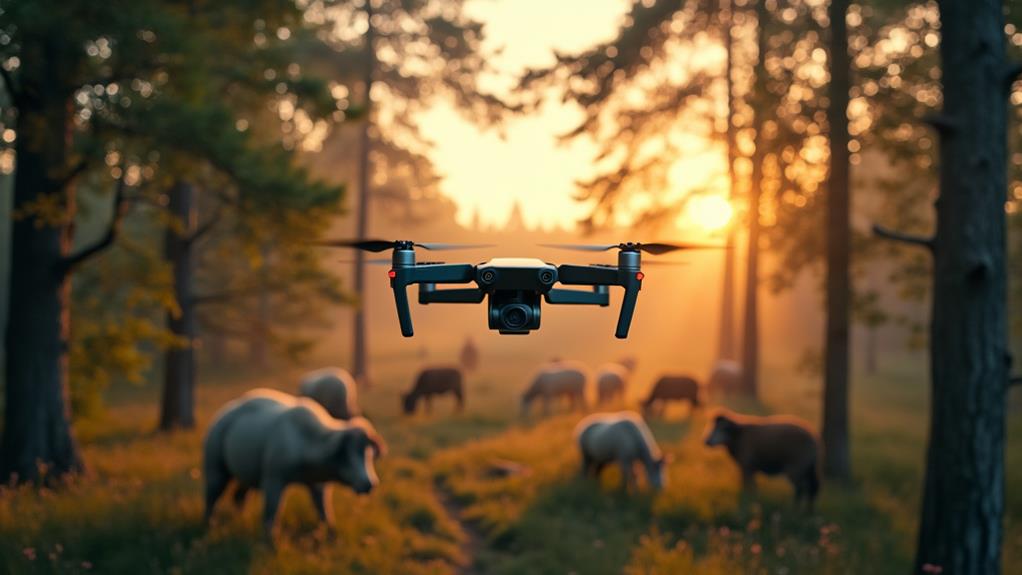
To use drones without disturbing wildlife, you need to prioritize species sensitivity and legal guidelines. Maintain a minimum 100-meter distance and choose quieter drones to reduce stress. Fly during off-peak seasons and use stable, lightweight drones to minimize noise and abrupt movements. Before flying, analyze local wildlife activity and secure necessary permits, especially in protected areas. Engage with local communities and respect their insights and concerns. By following these practices, you can enjoy successful and ethical drone operations while protecting wildlife. Investigate ideal methods and engage communities for improved conservation efforts.
Key Takeaways
- Maintain a minimum distance of 100 meters from wildlife to reduce stress and disturbance.
- Use drones with quiet operation and stabilization technology to minimize noise and sudden movements.
- Schedule flights outside breeding and nesting seasons to avoid wildlife disruption.
- Engage local communities for transparency and respect cultural values in drone operations.
- Obtain necessary permits and respect legal guidelines to ensure ethical wildlife monitoring.
Understanding Wildlife Sensitivity
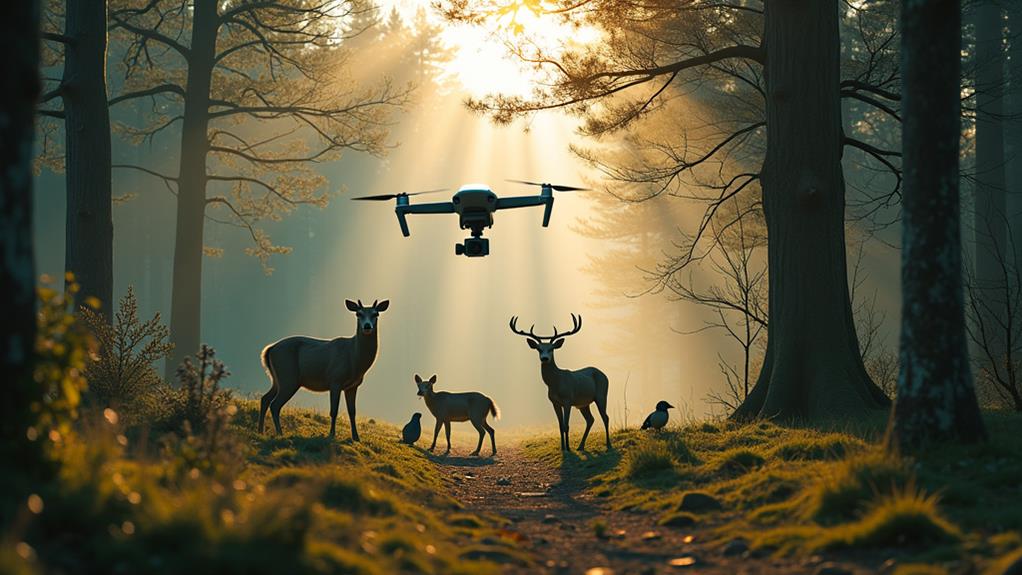
When you're flying drones around wildlife, it's crucial to understand their sensitivity to these devices. Different species react distinctly, with factors like breeding season, nesting behaviors, and the surrounding environment playing significant roles in their stress levels. Birds, for example, are particularly sensitive, especially during nesting periods. They often perceive drones as predators, which can lead to heightened stress and protective behaviors.
Even if animals seem undisturbed from a distance, they're not always calm. Physiological responses such as increased heart rates can occur, signaling stress even without visible signs. This means as a drone operator, you must be aware of these invisible stress indicators. One of the best practices is to maintain a minimum distance of 100 meters to lessen disturbance and stress, helping preserve natural behaviors.
Choosing quieter drones can reduce disturbances, as noise levels impact wildlife sensitivity. Understanding these nuances guarantees you're not inadvertently causing harm. By being informed and cautious, you can minimize stress and disturbance to wildlife, allowing them to continue their behaviors naturally, and contributing positively to their environment. Always prioritize best practices for a harmonious interaction between drones and wildlife.
Guidelines for Drone Selection
Understanding wildlife sensitivity is just the beginning; selecting the right drone is likewise vital to minimize disturbances. You should opt for drones specifically designed to minimize noise, as quieter models are fundamental for reducing wildlife disruption during your operations. Noise reduction is a key aspect of best practices when working near wildlife habitats. Moreover, consider drones capable of high-altitude flights. These help maintain a safe distance from sensitive wildlife, reducing stress and allowing for effective monitoring.
Stabilization technology is another significant feature to prioritize. Drones with this technology guarantee steady flight patterns, minimizing sudden movements that might startle animals. This helps maintain a calm environment, essential for accurate data collection. In addition, lightweight and compact drones are ideal for working in remote areas. They're easier to transport and operate, thereby reducing human disturbance on the ground.
Real-time data transmission is also critical. Choose drones that offer this feature to improve monitoring without needing frequent low-altitude flights over wildlife. This allows for efficient data collection while maintaining a respectful distance. By following these guidelines, you can greatly minimize your impact on wildlife and adhere to best practices in drone usage.
Optimal Flight Practices
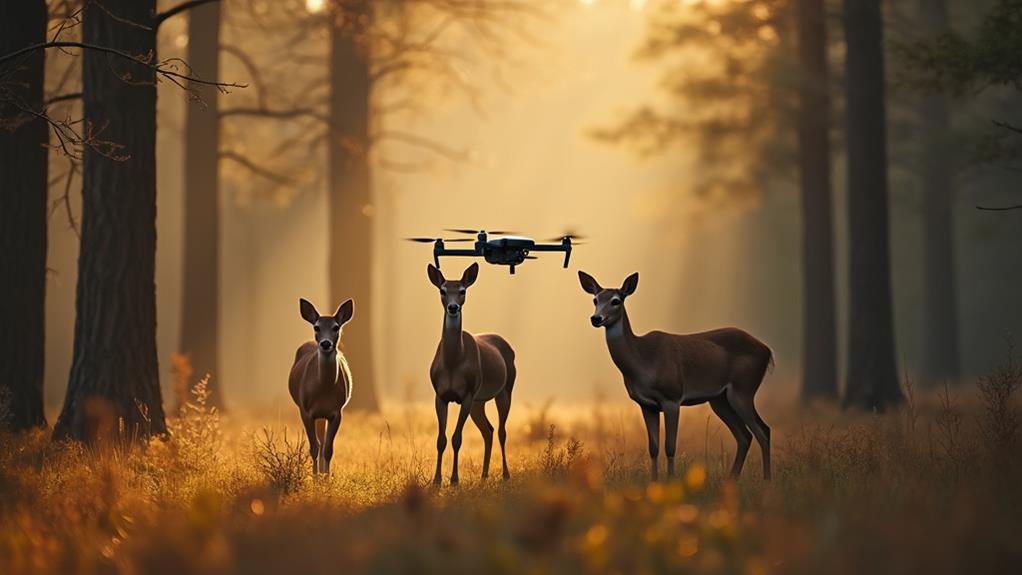
To guarantee ideal flight practices when operating drones near wildlife, it is vital to maintain a safe distance of at least 100 meters. This distance helps minimize stress and disturbance to wildlife, making sure that your operations don't negatively impact their natural behaviors. Scheduling your drone flights during off-peak seasons or at non-sensitive times is another important step. By avoiding breeding and rearing periods, you greatly reduce the risk of interfering with wildlife activities.
Opt for low-noise drone models to limit the noise pollution that can startle animals. Choose flight altitudes that are high enough to prevent startling wildlife but low enough for effective monitoring. Before you launch your drone, conduct a pre-flight assessment of local wildlife activity. This practice helps you identify high-risk areas and avoid potential disturbances.
Implement steady flight patterns and steer clear of abrupt movements during your operations. This approach contributes to a calmer environment, allowing wildlife to remain undisturbed while you carry out your monitoring tasks. By incorporating these practices, you make sure that your drone operations are respectful and considerate of the wildlife you're observing, fostering a more harmonious interaction with nature.
Legal and Ethical Compliance
Maneuvering the legal and ethical landscape is a vital part of drone operations in wildlife areas. As a drone operator, ensuring legal compliance is fundamental to protect habitats and species. Here's how you can align your operations with wildlife protection laws and ethical standards:
- Permitting: Before flying drones in protected areas, obtain necessary permits. This prevents legal issues and shows respect for conservation efforts. Permits help you stay within the boundaries of wildlife protection laws, ensuring you're on the right side of the law.
- Respect Seasons: Always consider nesting and breeding seasons. Operating drones during these times can disturb wildlife and negatively impact populations. By respecting these sensitive periods, you contribute to the ethical compliance of drone usage.
- Engage Locally: Involve local communities and stakeholders. This engagement fosters transparency and accountability, vital for responsible operation. Their input can guide you in aligning your activities with conservation goals.
Violations of drone regulations can result in fines from $70 to $125,000 or even equipment seizure. As a result, adhering to legal and ethical guidelines isn't just wise; it's imperative. By following these practices, you help preserve the balance between technology and nature.
Data Collection Techniques
Drones have become essential tools for collecting data on wildlife, offering a way to observe without intruding. By utilizing UAVs equipped with thermal imaging cameras, you can effectively track wildlife movements while minimizing disturbance. This approach allows for remote monitoring, reducing the need for intrusive ground presence. To improve your data collection techniques, consider utilizing high-resolution imagery. This method greatly enhances habitat mapping, providing detailed insights into wildlife distributions and aiding conservation efforts without disturbing ecosystems.
Incorporating Geographic Information System (GIS) technology with your drone data is another best practice. It enables spatial analysis of wildlife habitats, helping identify critical areas for conservation. This powerful combination lets you pinpoint crucial habitats and guarantee effective protection strategies. Before deploying drones, conduct pre-flight assessments of local wildlife activity. Understanding sensitive periods, like breeding seasons, allows you to schedule flights strategically, reducing disturbance during these important times.
Opt for low-noise drones to further minimize auditory disturbance. These quieter UAVs guarantee more accurate data collection during monitoring efforts by protecting wildlife from unnecessary stress. By integrating these best practices, your drone-based data collection will greatly contribute to wildlife conservation with minimal impact on natural habitats.
Engaging With Local Communities
Many people recognize the significance of engaging with local communities before initiating drone operations for wildlife monitoring. By consulting with Indigenous peoples and local residents, you guarantee that drone usage aligns with cultural values and land rights. This approach fosters mutual respect and collaboration, which is crucial for successful conservation efforts. Here are three key practices to evaluate:
- Consultation and Community Input: Engage local communities by actively seeking their perspectives and concerns. This consultation process not only respects cultural values but also improves the acceptance of drone technology. Listening to their input helps make monitoring practices culturally sensitive and ethically sound.
- Transparency and Shared Ownership: Involve local stakeholders in the decision-making process to improve transparency and accountability. When communities feel a sense of shared ownership, they're more likely to support and participate in conservation initiatives actively.
- Post-Flight Engagement: Once drone operations are complete, share the collected footage and data with the community. Conduct post-flight consultations to build trust and support for ongoing drone use in conservation efforts. This transparency reinforces your commitment to ethical practices and strengthens the partnership with local communities.