Unusual Dog Breeds That Can Be Trained as Sled Dogs
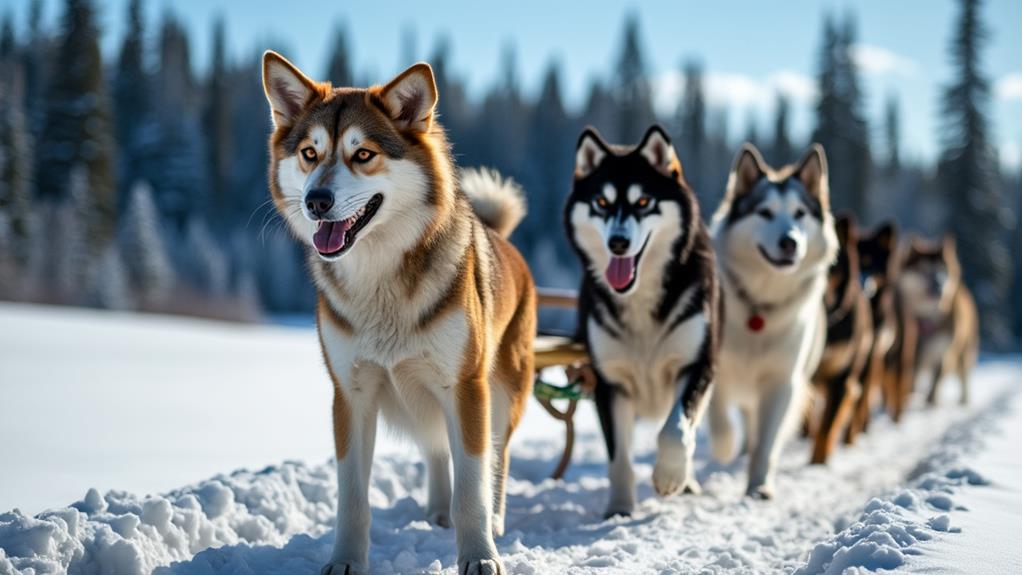
You can successfully train unusual dog breeds, like Border Collies and Retrievers, to excel in the exhilarating world of sledding. While they lack the cold-weather adaptations of traditional Arctic sled dogs, their high energy and strong work ethic make them excellent sledding companions. Using positive reinforcement and involving experienced sled dogs in training can improve their sledding skills. Regular practice builds their endurance, and socialization enhances teamwork. Non-Arctic breeds have even competed in historical sledding events. Recreational mushing is an excellent starting point for these breeds. There's more to uncover about training these remarkable dogs for the sledding expedition.
Key Takeaways
- Non-Arctic breeds like Border Collies and Retrievers can be trained for sledding.
- Successful training involves positive reinforcement and experienced sled dogs.
- Poodles and Irish Setters have been historically used in sledding.
- Recreational mushing events showcase the sledding capabilities of diverse breeds.
- Training focuses on endurance, socialization, and adapting pulling techniques.
Diverse Breeds in Sledding
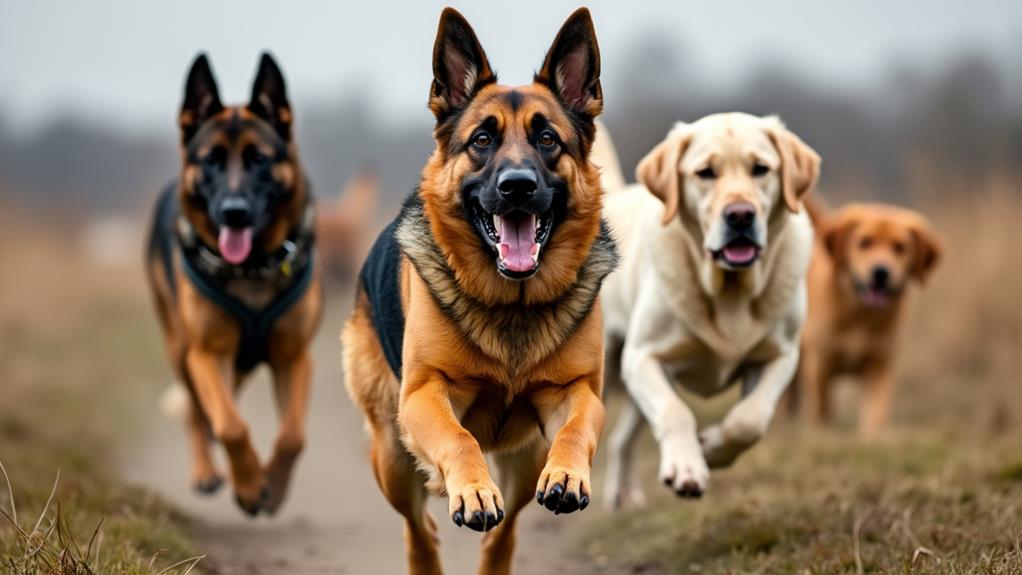
Regarding sledding, many people think only of traditional Arctic breeds like Huskies and Malamutes. However, you'd be surprised to learn that many non-Arctic breeds, such as Border Collies and Retrievers, have excelled in this dynamic sport. These dogs bring their unique strengths to sledding, demonstrating the versatility and adaptability of diverse breeds. While traditional sled dog breeds are known for their endurance and cold-weather resilience, non-Arctic dogs can also be trained to participate in mushing activities. Their athletic prowess can shine, especially when paired with experienced sled dogs.
Training non-Arctic breeds for sledding requires a strategic approach. You can improve a dog's pulling abilities by combining them with seasoned sled breeds. This training method not only highlights the non-traditional breed's potential but also emphasizes the importance of mentorship from traditional sled dogs. Recreational mushing events provide an excellent platform for non-Arctic breeds to showcase their athletic capabilities, offering them a chance to engage in vigorous physical activity. Although regulations in competitive racing often favor traditional sled breeds, non-Arctic dogs continue to find their place in the world of sledding, proving their worth and versatility.
Historical Sledding Examples
Throughout history, sledding has showcased an impressive array of dog breeds, breaking the stereotype of Arctic-exclusive participants. Historical records reveal fascinating examples that challenge conventional notions. John Lyman famously used Irish Setters in competitive sledding events, demonstrating that non-Arctic sled dog breeds have left their mark on sledding history. Likewise, John Suter's use of poodles in races highlights the involvement of unusual dog breeds in these challenging activities.
Inuit communities have relied on sled dogs for centuries, integrating them as essential partners in hunting and transportation across unforgiving Arctic terrains. However, the participation of unconventional breeds didn't end there. The 1925 serum run to Nome, Alaska, stands as a poignant example. Multiple sled dog teams, including non-traditional breeds, played a significant role in delivering life-saving medicine over vast, icy landscapes.
Consider these intriguing historical sledding facts:
- The initial formal sled dog race in 1850 ran from Winnipeg to St. Paul, featuring diverse breeds.
- Irish Setters and poodles have both competed in sledding events, proving adaptability.
- The serum run to Nome showcased the critical role of diverse sled dog teams in essential missions.
These examples illustrate the rich tapestry of sledding history and its diverse participants.
Effective Training Techniques
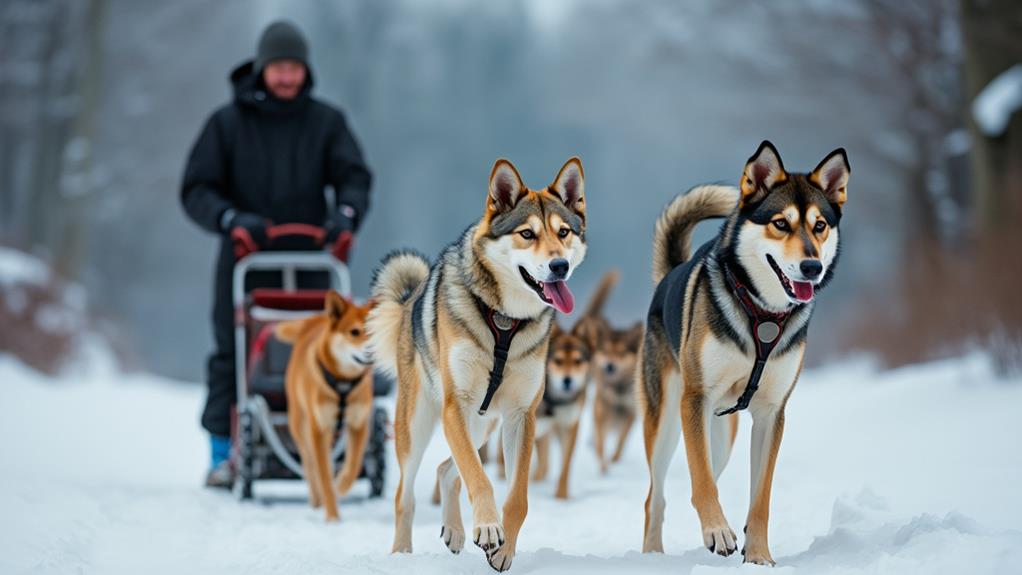
Training unusual dog breeds for sledding requires a focused approach to help them thrive in this demanding role. Initially, adopt positive reinforcement as your primary tool. Reward your dog with treats or praise when they master new pulling techniques or adapt well to harness use. It's the cornerstone of effective training, especially for unusual breeds who may need extra encouragement.
Next, involve an experienced sled dog in your sessions. This seasoned partner offers guidance and can greatly improve your dog's pulling ability. By observing and interacting with a veteran, your unusual breed will learn the ropes faster and more efficiently.
Consistent practice is essential. Build endurance and strength gradually, helping your dog develop the stamina necessary for sledding activities. It's not just about pulling; it's about maintaining energy over long distances.
Socialization plays a key role, too. Train your dog alongside others to enhance teamwork skills, fundamental for a well-functioning sled dog team.
Unique Traits and Health
Regarding unusual sled dog breeds, they're often brimming with energy and a strong work ethic, traits that make them surprisingly adaptable to sledding. However, they might lack certain physical adaptations found in traditional sled dogs. For example, breeds like Border Collies may not have double coats, impacting their ability to withstand extreme cold. Despite this, their high energy levels and enthusiasm make them viable sledding partners if managed correctly.
To guarantee these unusual sled dog breeds thrive, focus on:
- Health Considerations: Regular vet check-ups are imperative for monitoring joint health and addressing any breed-specific genetic issues. This proactive approach helps prevent potential problems.
- Nutrition: A tailored, high-energy diet is fundamental for maintaining their vitality. Proper nutrition supports their active lifestyle, assuring they have the stamina needed for sledding activities.
- Socialization and Harness Training: These dogs require careful socialization and acclimatization to harness training. Developing these skills fosters mental toughness, which can vary greatly among different breeds.
Recreational Mushing Benefits
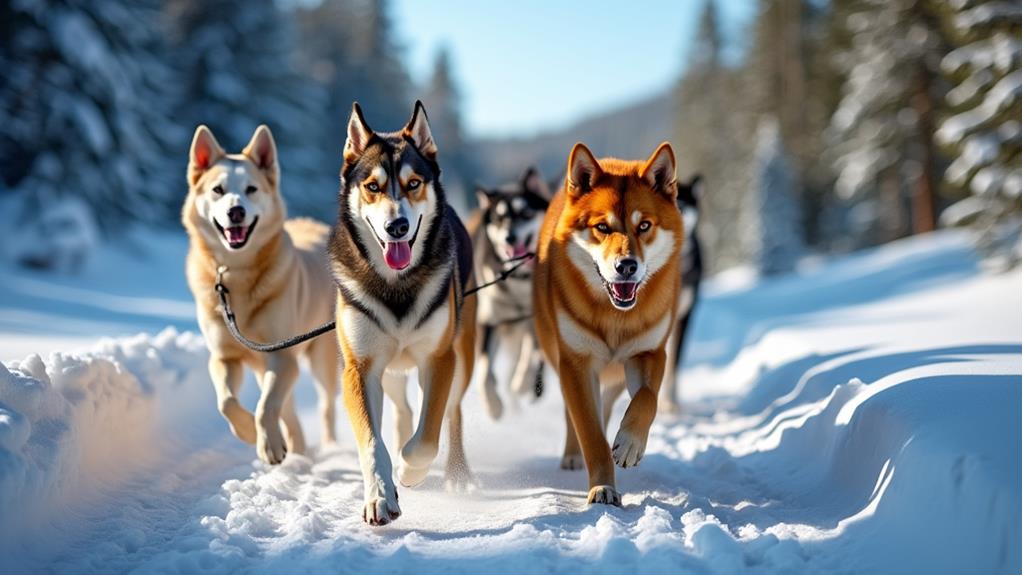
For many high-energy, non-Arctic dog breeds, recreational mushing offers an exciting outlet that combines physical activity with the joy of companionship. It's a fantastic way for you and your dog to engage in a shared adventure that promotes well-being. By participating in dog-powered sports, your dog gets to channel its energy into a productive and fun activity, enhancing its fitness and mental stimulation.
Training for recreational mushing isn't just about the thrill of the race; it's an opportunity to improve teamwork and obedience. As you work together, your bond with your dog strengthens, resulting in better behavior and communication. Short races, typically up to six miles, are perfect for these non-traditional sled dogs, showcasing their versatility and skills in a supportive environment.
Community events surrounding recreational mushing aren't just about the competition; they're social gatherings that foster camaraderie among participants. You'll find yourself sharing experiences, tips, and stories, creating a network of like-minded dog enthusiasts. These events celebrate the athletic abilities of diverse dog breeds, proving that with the right training and dedication, any dog can excel in the world of recreational mushing.
Community and Cultural Impact
Recreational mushing not only benefits you and your dog's physical and mental well-being but also creates a ripple effect in the broader community. When you incorporate uncommon breeds into sled dog racing, you contribute to a diverse and inclusive environment. This acceptance encourages more participation from a range of dog owners, expanding the community. Embracing breeds like Border Collie crosses, which excel in competitive settings, showcases the athletic abilities of these non-traditional sled dogs. This diversity inspires breeders to investigate new combinations, enhancing performance and community interaction.
Community events and festivals celebrating sled dog culture now highlight the versatility of different breeds. They promote awareness and appreciation for both traditional and uncommon sled dogs, fostering a shared narrative. This increased engagement leads to camaraderie among participants in local racing clubs. Here's how you can get involved:
- Attend community events to learn more about uncommon breeds and their capabilities.
- Participate in sled dog racing with your own dog, regardless of breed.
- Support breed preservation initiatives, emphasizing responsible ownership.