Understanding Cat Behavior: A Comprehensive Guide for Cat Owners
To truly connect with your cat, understanding their behavior is vital. Pay attention to their body language: a high tail shows confidence, while flattened ears may reveal anger or fear. Notice vocalizations too, since meows can range from simple greetings to distress signals. Enhancing your cat's environment with interactive play, consistent routines, and scratching posts can ease behavioral issues and prevent territory markers. Patience is essential when addressing concerns, like litter box problems or unwanted scratching. By decoding these cues, you'll support your cat's emotional well-being and foster a harmonious household with your furry companion. There's much more to discover.
Feline Body Language
When trying to understand your cat's behavior, paying attention to feline body language is crucial. Cats communicate a lot through their bodies, and knowing what to watch for can deepen your bond. Start by observing tail position. A cat holding their tail high usually feels confident and happy. If the tail puffs up, your cat might be frightened or agitated. A low or tucked tail can indicate fear or submission.
Next, consider ear orientation. Forward-facing ears typically signal curiosity or contentment, while ears that are flattened back against the head often suggest anger or fear. Subtle ear movements can also indicate a heightened level of attentiveness or agitation.
Whisker movement is another significant clue. Whiskers pushed forward suggest excitement or hunting mode, while whiskers pulled back may indicate a sense of caution or fear.
Lastly, eye contact can be telling. Slow blinking is often a sign of trust and affection, like a kitty kiss. On the other hand, if your cat stares without blinking, it could be a sign of aggression or dominance. Understanding these signals can help you respond appropriately to your feline friend's needs and emotions.
Understanding Cat Vocalizations
In conjunction with body language, vocalizations are a key part of how cats express themselves. Understanding your cat's sounds can improve your bond and help you meet their needs effectively. Meowing is the most common vocalization, and its meanings can vary greatly. A short, soft meow might be a simple greeting, while a loud, insistent meow could signal hunger or a demand for attention. Pay attention to the pitch and frequency; a high-pitched meow often indicates distress, whereas a low, drawn-out meow might convey displeasure.
Purring is another significant vocalization, typically associated with contentment. However, purring patterns can also be more complex. Cats may purr when they're anxious or in pain, using the soothing vibrations as a self-comforting mechanism. Observe the context to interpret these patterns accurately. If your cat purrs while relaxed in your lap, it's likely a sign of happiness. But if they're purring during a vet visit, it might be more about self-soothing.
Decoding Common Behaviors

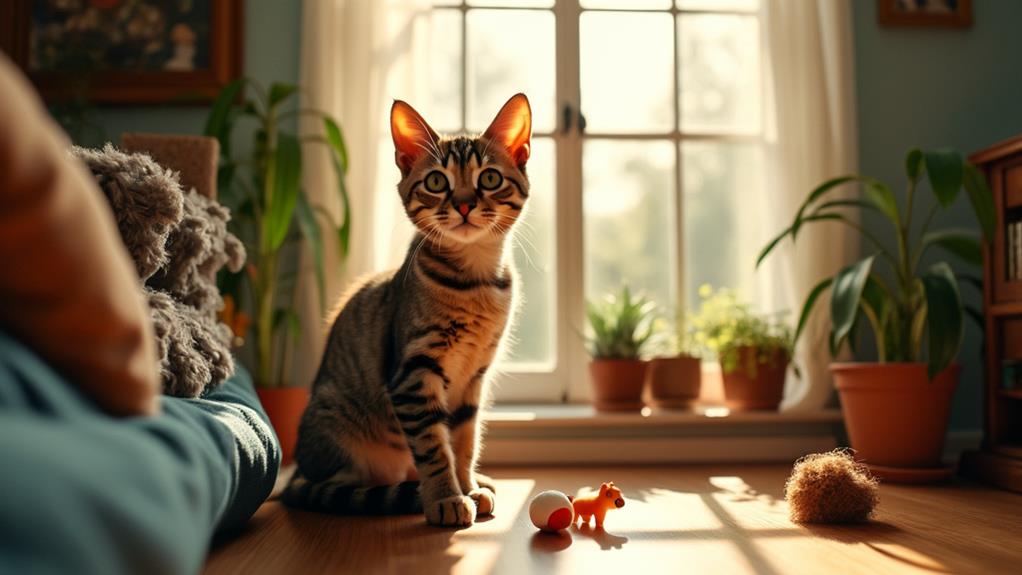
Observing your cat's common behaviors can reveal insights into their needs and emotions. When your cat engages in playful pouncing, it's not just about having fun. This behavior is deeply rooted in their instincts as hunters. By pouncing on toys or even your moving feet, your cat is honing their skills and releasing pent-up energy. Providing interactive toys can satisfy this instinct and keep them mentally stimulated.
On the other hand, if you notice your cat rubbing their face against furniture or objects around the house, they're likely engaging in territorial marking. Cats have scent glands located on their cheeks, and by rubbing them on surfaces, they're leaving behind pheromones that mark their territory. This is a natural way for cats to establish ownership and feel more secure in their environment. You might find that they do this more frequently when a new pet or person enters your home.
Understanding these behaviors can strengthen your bond with your cat. By recognizing playful pouncing as a need for stimulation and territorial marking as a way to feel secure, you can better support their emotional well-being and create a harmonious living environment.
Addressing Behavioral Issues
At times, even the most well-behaved cats can develop behavioral issues that perplex and frustrate their owners. If your cat's suddenly ignoring the litter box, it's crucial to initially rule out any medical issues by consulting your vet. Once health concerns are off the table, consider if anything's changed in their environment. Cats are creatures of habit, and even minor changes can upset them. Verify the litter box is clean, accessible, and placed in a quiet area. You might need to experiment with different types of litter to find one your cat prefers.
Scratching is another common issue. Cats scratch to mark territory, stretch, and maintain their claws. Instead of trying to stop this natural behavior, provide appropriate scratching solutions. Invest in sturdy scratching posts or pads, and place them near your cat's favorite scratching spots. You can encourage their use by sprinkling catnip or using toys to draw their attention. If your cat insists on scratching furniture, deter them with double-sided tape or furniture protectors. Addressing behavioral issues requires patience and understanding, but with the right approach, you can help your feline friend feel more comfortable and secure.
Enhancing Your Cat Bond

Building a strong bond with your cat often helps in addressing and preventing behavioral issues. By investing time in understanding their needs, you create a more harmonious relationship. Incorporating playtime activities into your daily routine is a fantastic way to strengthen this bond. Cats are natural hunters, so toys that mimic prey can stimulate their instincts and provide both exercise and enjoyment. Spend at least 15-20 minutes daily engaging in interactive play, using wand toys or laser pointers, to foster trust and companionship.
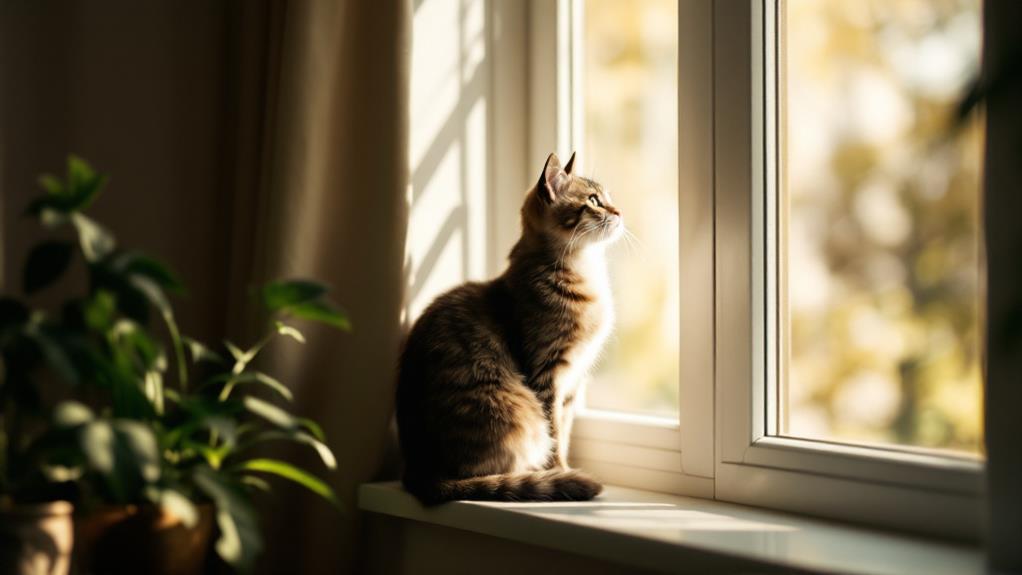
Enrichment strategies are also fundamental in enhancing your connection. Providing a stimulating environment keeps your cat mentally and physically active, reducing boredom-related behaviors. Introduce puzzle feeders or treat-dispensing toys to make mealtime more engaging. Rotate toys regularly to maintain their interest. Setting up perches near windows offers your cat a chance to observe outdoor activities, satisfying their curiosity and need for mental stimulation.
Don't underestimate the power of routine. Cats thrive on consistency, so try to feed, play, and groom your cat at similar times each day. This predictability helps them feel secure, ultimately strengthening your bond. With dedication and patience, you'll enjoy a rewarding and lasting relationship.