Tropical Fish Care: Essential Tips for Keeping Your Aquarium Healthy
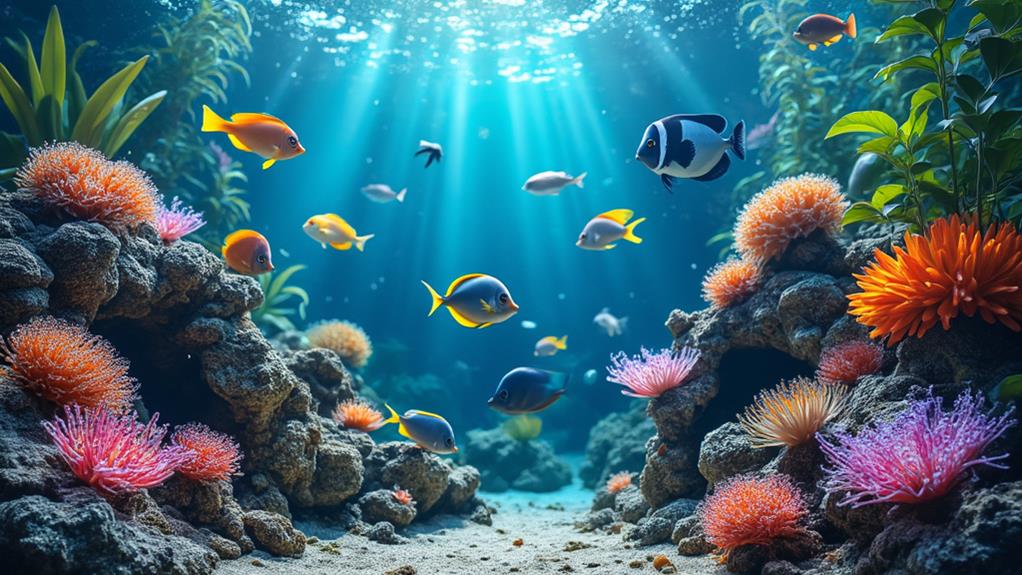
To keep your tropical fish thriving, start by setting up a minimum 20-gallon tank away from sunlight and heat. Cycle it for at least a week, then install a water filter. Perform weekly water changes and test water parameters regularly. Verify fish compatibility by choosing hardy species and avoid overcrowding. Feed them a balanced diet, offering high-quality flakes or pellets, and incorporate occasional live food. Watch for signs of health issues and quarantine new fish. Clean the tank regularly but avoid full cleanouts to preserve beneficial bacteria. There's so much more to investigate about maintaining a healthy aquarium environment.
Key Takeaways
- Ensure minimum tank size is 20 gallons to provide adequate space for tropical fish.
- Cycle the aquarium for at least a week to establish beneficial bacteria.
- Perform weekly water changes, replacing 10-15% to maintain water quality.
- Feed fish high-quality flakes or pellets and include nutritional variety with frozen or live food.
- Conduct daily health checks for abnormal behavior or appearance changes in fish.
Aquarium Setup Essentials
When setting up an aquarium, a few vital steps guarantee you create a healthy environment for your tropical fish. Initially, choose the right tank size; a minimum of 20 gallons is recommended for most tropical species. Larger tanks help maintain stable water conditions by diluting waste more effectively. Don't forget to cycle the aquarium for at least a week before introducing fish. This process establishes the beneficial bacteria necessary to convert harmful ammonia into nitrates, ensuring better water quality.
Position your aquarium away from direct sunlight and heating vents to avoid temperature fluctuations and excessive algae growth. Installing a reliable water filter is fundamental to maintain a healthy aquarium. It circulates the water, removes debris, and supports the growth of beneficial bacteria. Make sure you also have a heater to keep the water at ideal temperatures, typically between 75-80°F.
Regular cleaning of the tank's decorations and substrates will prevent the buildup of harmful substances without disrupting the ecosystem. Gravel or sand should be clean, supporting beneficial bacteria. By following these steps in your aquarium setup, you'll create a thriving environment for your tropical fish.
Maintaining Water Quality
Now that your aquarium setup is complete, it's essential to maintain water quality to guarantee your tropical fish thrive. Start by performing regular water changes, replacing 10-15% of the aquarium water weekly. This reduces harmful waste accumulation and keeps pollutants at bay. Use water testing kits to monitor important parameters like pH levels, ammonia, nitrite, and nitrate. Aim for a pH between 6.5-7.5, and verify ammonia levels are at 0 ppm, with nitrite between 0-0.5 ppm, and nitrate below 5-10 ppm.
Before adding new water, treat your tap water with a dechlorinator. Chlorine and chloramine present in untreated tap water can harm your fish. Establishing the nitrogen cycle is essential before introducing any fish. Use cycling aids to promote the growth of beneficial bacteria, which convert ammonia into less harmful nitrates. Healthy bacteria are your allies, guaranteeing a balanced environment for your fish.
Be cautious during water changes. Avoid drastic fluctuations in water conditions, as sudden shifts can stress your fish and lead to health issues. By following these steps, you'll maintain superior water quality, creating a healthy, thriving habitat for your tropical fish.
Selecting the Right Fish
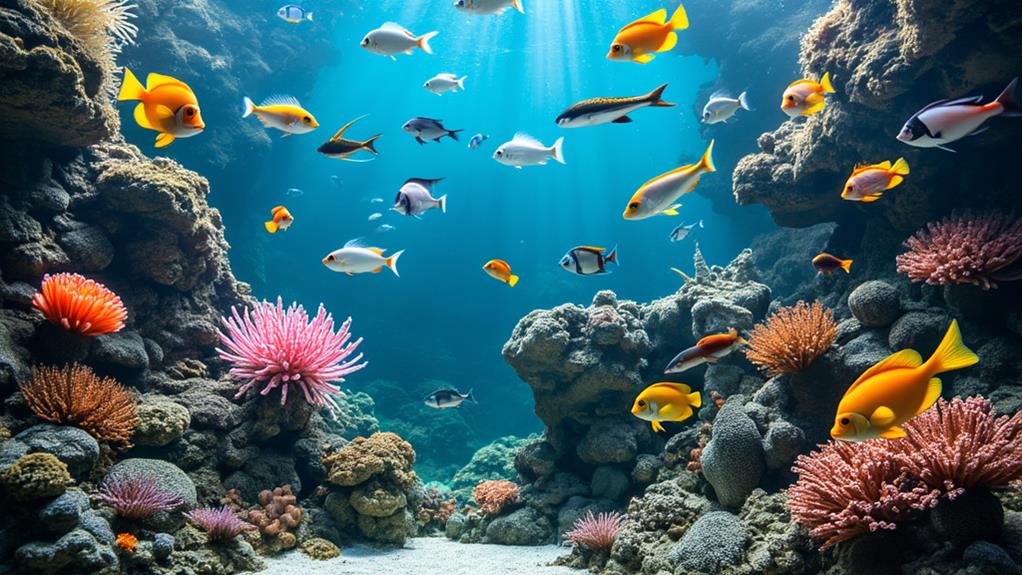
Choosing the right fish for your aquarium is vital to creating a harmonious and thriving environment. When selecting the right fish, start by researching fish compatibility. This helps avoid mixing aggressive or territorial species, guaranteeing a peaceful community tank. For beginners, hardy species like guppies and tetras are ideal as they adapt well to different water conditions and are easy to care for. Always consider the adult size of fish to confirm your tank can accommodate their growth over time. This prevents overcrowding and maintains a healthy habitat.
Group social fish, such as certain tetras or barbs, should be kept in schools of at least 5-6 individuals. This promotes natural behavior and reduces stress, contributing to the general well-being of your aquarium's residents.
When sourcing fish, choose reputable suppliers to minimize the risk of disease and guarantee healthy specimens. This step is vital for establishing a stable tank environment. Here's a quick checklist to guide you:
- Research fish compatibility
- Choose hardy species for beginners
- Consider the adult size of fish
- Keep group social fish in schools
- Source from reputable suppliers
Feeding Tropical Fish
After selecting the right fish for your aquarium, proper feeding becomes a key aspect of maintaining their health and well-being. Feeding tropical fish a balanced diet is essential. Start by providing high-quality flakes or pellets suitable for their dietary needs—whether they're carnivores, herbivores, or omnivores. Feeding once or twice daily is ideal, and only give them what they can consume in a few minutes. This practice prevents overfeeding and helps maintain good water quality.
To guarantee your fish get a variety of nutrients and avoid nutritional deficiencies, occasionally include frozen or live food in their diet. This variety of food stimulates natural feeding behaviors and keeps your fish engaged. Always monitor fish behavior during feeding times. If they refuse food or seem stressed, it might signal health issues or poor water quality, which you'll want to address promptly.
Incorporating a weekly fasting period—where you don't feed them for one day—can also benefit your fish. It helps maintain a healthy digestive system and reduces risks associated with overfeeding. By following these guidelines, you'll keep your tropical fish healthy and thriving in their aquatic home.
Monitoring Fish Health
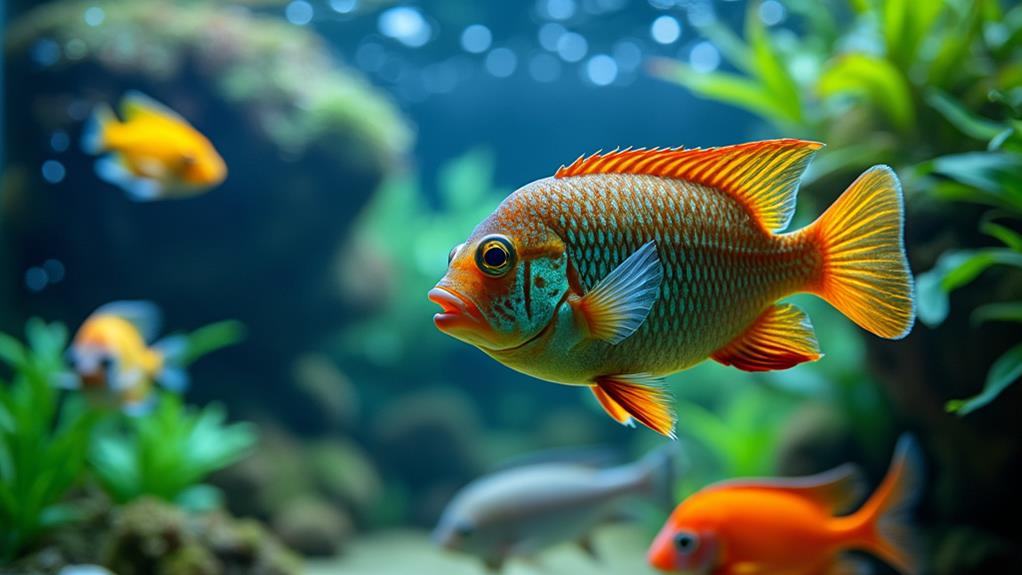
Monitoring the health of your tropical fish is an vital part of ensuring they lead long, healthy lives. Start by performing daily health checks to catch early signs of illness. Look for abnormal swimming, color changes, or lesions. Recognizing these symptoms quickly can prevent the spread of diseases and keep your fish healthy.
Common diseases may manifest as food refusal, irritated scales, or cloudy eyes. If you notice any of these signs, it's time to take action. Quarantine any new fish for at least two weeks before adding them to your main tank. This step helps you monitor for diseases and protect your existing fish.
Keep an eye on water quality by regularly checking ammonia, nitrite, and nitrate levels. Poor water conditions can stress your tropical fish and lead to illness. Ensuring compatibility among species is also fundamental to maintaining a harmonious environment.
Here are key steps to monitoring fish health:
- Daily health checks for signs of illness or injury.
- Quarantine new fish to prevent disease spread.
- Monitor water quality: ammonia, nitrite, nitrate.
- Watch for signs of common diseases.
- Ensure species compatibility to reduce stress.
Regular Tank Cleaning
Keeping your tropical fish's tank clean is fundamental for their health and happiness. You should change the water by replacing 20% of it every two weeks. This helps maintain peak water quality and reduces harmful toxins. Regularly clean the tank walls and decorations to prevent algae buildup. This not only improves the visual appeal but also guarantees a healthier environment for your fish. Avoid complete tank cleanouts, as these can disrupt the beneficial bacteria essential for your fish's well-being. Instead, focus on spot cleaning and partial water changes to preserve these helpful microorganisms.
To keep the tank's substrate clean, monitor and vacuum it during water changes. This removes waste and debris, promoting a healthier environment. Conduct monthly inspections of your water filter. Check and replace cartridges as needed to ensure effective filtration and water clarity. This step is critical for maintaining the overall health of your aquarium.