Top Tips for Keeping Spiders as Pets: Care and Maintenance
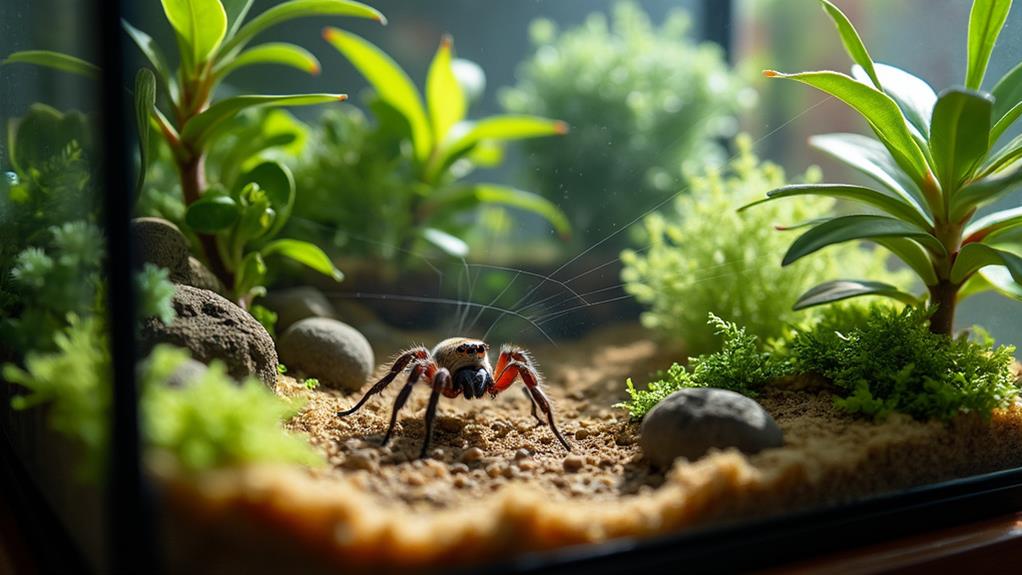
Keeping a spider as a pet is rewarding, but initially, choose a beginner-friendly species like a pink-toed or Chilean rose tarantula. Set up a suitable enclosure with the right substrate, humidity, and temperature. Offer live insects as food, ensuring they match your spider's size. Limit handling to reduce stress and always wash your hands afterward. Secure the habitat to prevent escapes and be mindful of species-specific venom. Engage with online communities for tips and insights. As you get more details on these aspects, you'll be better prepared to create a thriving environment for your arachnid companion.
Key Takeaways
- Choose a beginner-friendly species and ensure compliance with local regulations before acquiring a pet spider.
- Set up a well-ventilated enclosure with appropriate substrate and hiding spots matching the spider's natural habitat.
- Feed your spider live insects weekly, ensuring prey size is suitable, and provide a shallow water dish for hydration.
- Handle spiders minimally to reduce stress, and document their habits and preferences for tailored care.
- Join online forums for support and advice from experienced spider keepers on care practices and handling techniques.
Choosing Your Spider
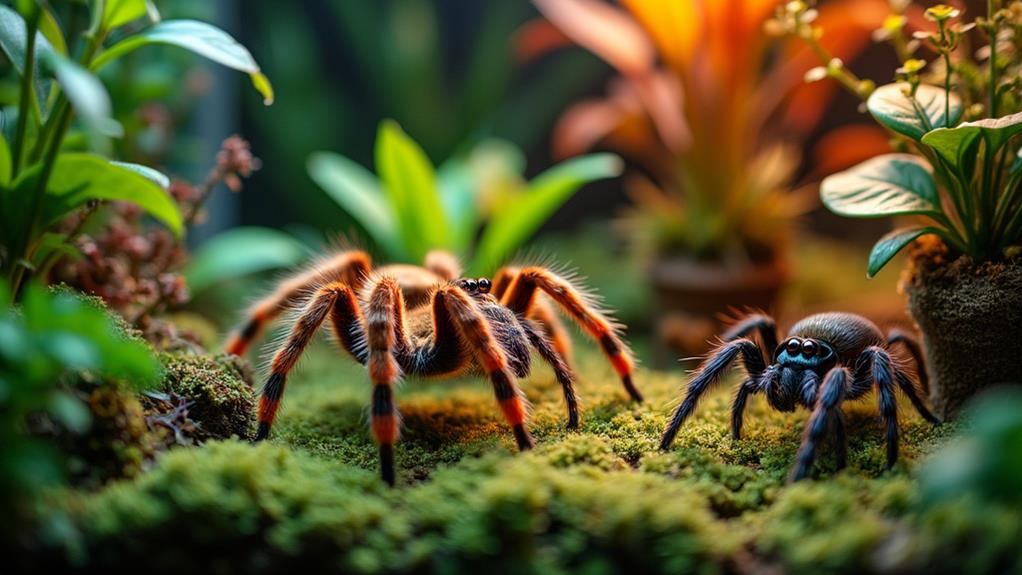
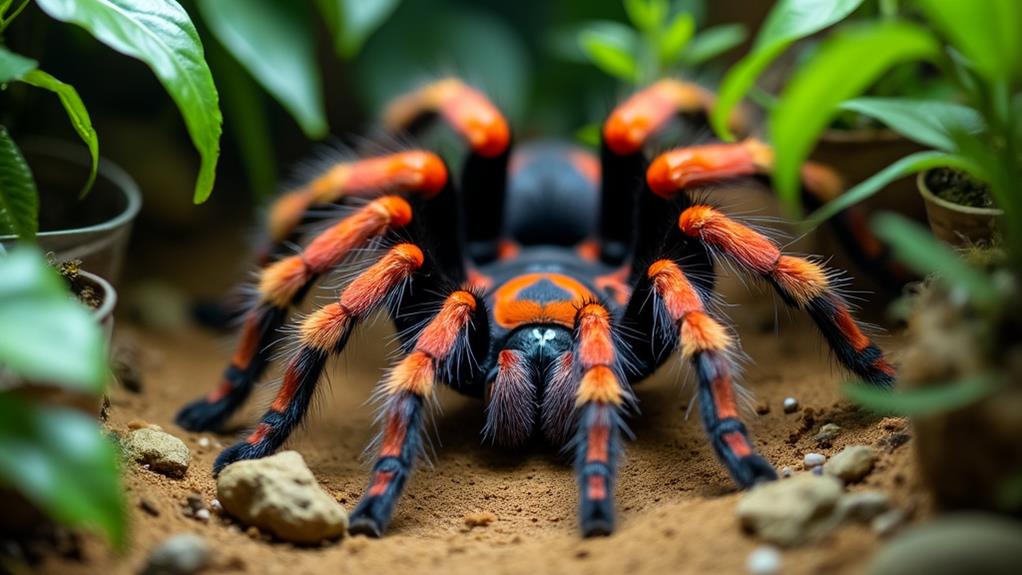
When it pertains to selecting your spider, it's important to take into account species like pink-toed, curly-haired, or Chilean rose tarantulas, known for their docile nature and suitability for beginners. These species make good initial choices for pet spiders due to their calm demeanor and ease of care. As you investigate spiders as pets, consider your experience level; some species can be more aggressive or demand specific environmental conditions.
A significant step in choosing your spider is researching its lifespan. Tarantulas can live between 10 to 30 years, which means you're in for a long-term commitment. Make certain you're ready to care for your new pet for the entire duration of its life. Also, it's wise to check local regulations regarding spider ownership. Some areas may have restrictions or necessitate permits for certain species.
To guarantee you get a healthy spider, buy from reputable sources. Local pet stores or online breeders specializing in tarantulas can offer healthy specimens. Avoid wild-caught individuals, as they might carry parasites and contribute to the decline of natural populations. With careful consideration, you'll find the right arachnid companion.
Setting Up the Habitat
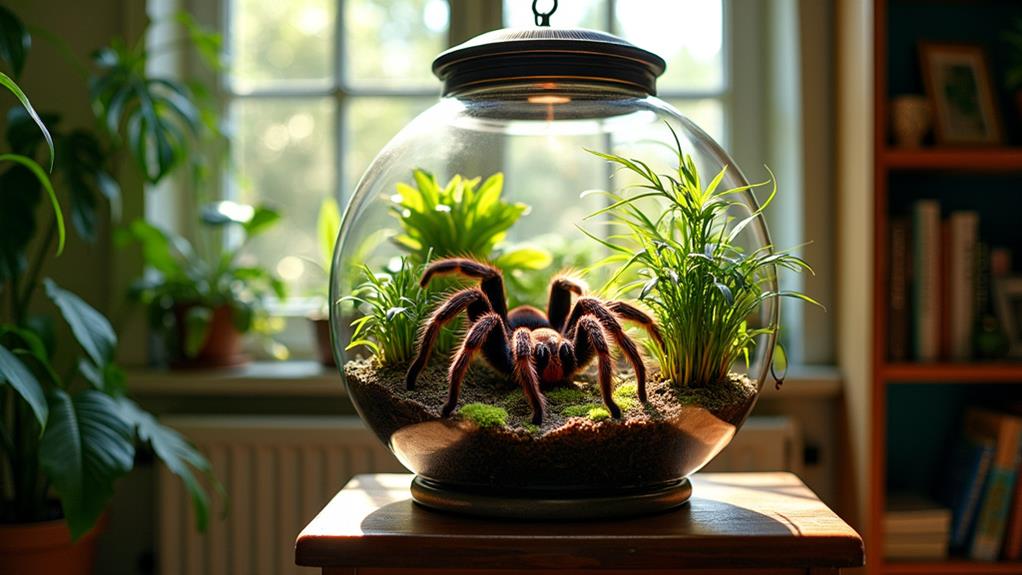
Now that you've chosen your spider, it's time to create a suitable home for your new arachnid friend. Start by selecting an enclosure that's 2-3 times your spider's leg span. A terrarium or aquarium works well, offering both space and required ventilation. Confirm the enclosure has small holes that allow air circulation without compromising security, as proper ventilation prevents mold and bacteria.
Next, choose a substrate like potting soil, coconut fiber, or peat moss. This not only supports burrowing but also helps maintain the right humidity levels for your spider's species. The ideal humidity and temperature for tropical species are generally 60-80% and 70-80°F, but adjust according to your spider's specific needs.
To create an enriching environment, add hiding spots and climbing structures. Use flower pots, sticks, or other natural elements to mimic their natural habitat.
- Terrestrial species benefit from a flat substrate with more hiding spots.
- Arboreal species appreciate vertical climbing structures.
- Confirm temperature and humidity align with species-specific requirements.
Providing these necessities guarantees your spider receives the best care and thrives in its new habitat.
Feeding and Hydration
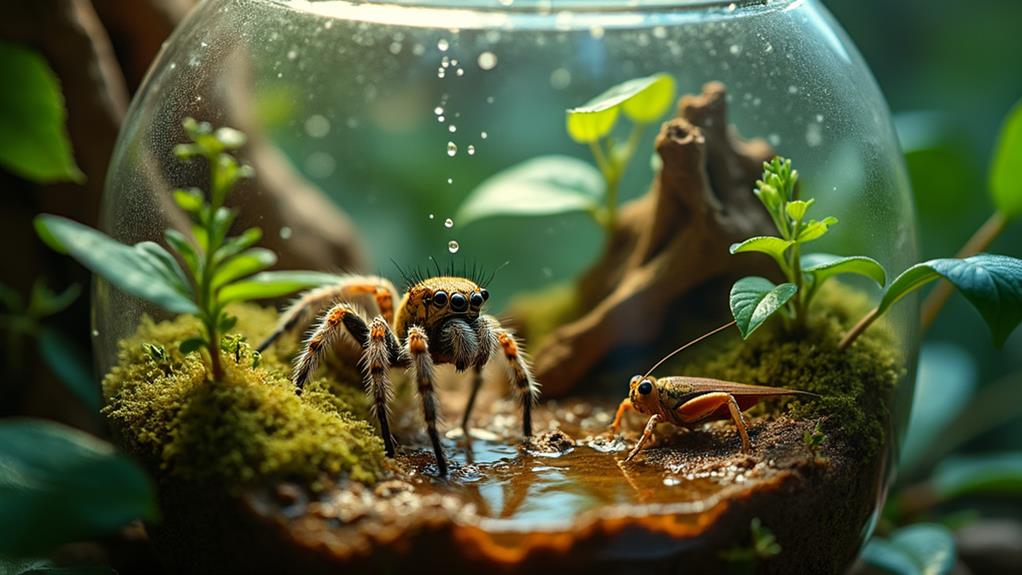
Although keeping spiders as pets might seem straightforward, feeding and hydration are critical aspects that require careful attention. To feed your spider properly, offer live insects like crickets or mealworms once or twice a week. Make certain the prey is appropriately sized to avoid health issues such as an abdomen burst. A shallow water source is vital; use a plastic bottle cap or small bowl and refill it every few days. While spiders can drink from damp webbing, direct access to water prevents dehydration.
Monitor the humidity levels in the habitat, especially for tropical species where 60-80% is ideal. Excessive dryness can lead to dehydration, impacting your spider's health. If you notice any uneaten prey, remove it within 24 hours to avoid decay and odors. Regularly check the water level to make certain your spider remains hydrated. An abdomen that appears crumpled is a warning sign of potential starvation or dehydration. In such cases, feed your spider immediately to prevent severe health consequences. By maintaining proper feeding and hydration routines, you'll make certain your spider thrives in its environment, staying healthy and active.
Handling and Observation
Having established a solid routine for feeding and hydration, let's focus on the careful handling and observation of your spider. Handling should be minimal, especially for fragile species, to reduce stress and avoid injury. For sturdier species like tarantulas, limit handling to once a week. Always grasp them gently by the leg between the second and third fingers over a soft surface to prevent injury from falls.
Observation is key to understanding your spider's behavior and health. Pay attention to their feeding preferences and activity patterns. Noticing changes can help identify stress or potential health issues early. Keeping a notebook near the enclosure is a great way to document their habits, such as sleeping patterns and times of increased activity. This documentation aids in tailoring care to their specific needs. Remember:
- Minimize handling to reduce stress and prevent injury, especially for fragile spiders.
- Observe behavior closely to monitor feeding and identify health issues.
- Keep a notebook for recording habits and tailoring care.
Always prioritize safety by washing your hands after handling spiders. This simple step protects your health, especially when dealing with potentially venomous species.
Safety Precautions
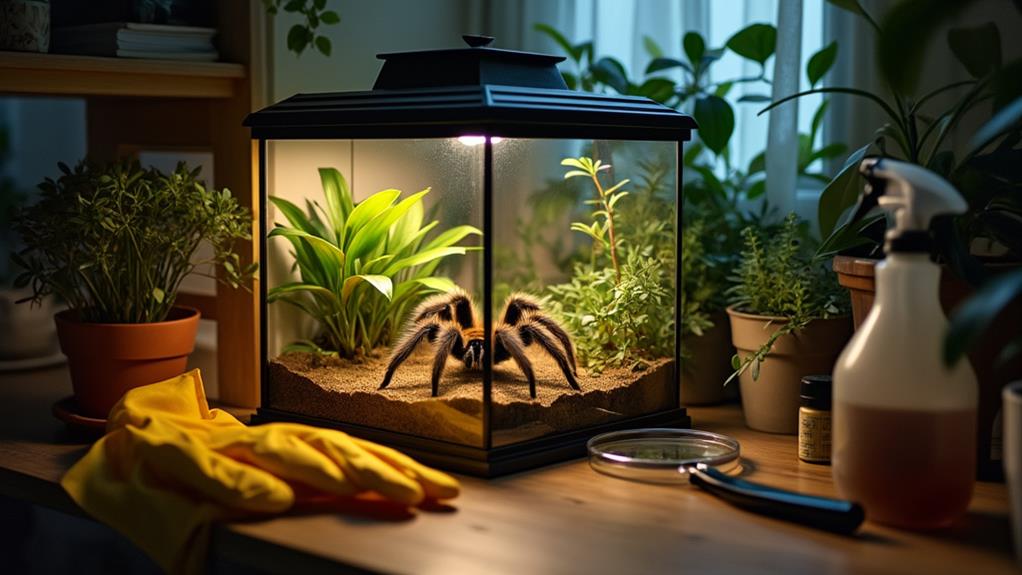
When keeping spiders as pets, prioritizing safety precautions is imperative to protect both you and your arachnid companions. Spiders need a secure enclosure with appropriately sized ventilation holes to prevent escapes and minimize stress from external threats. Before introducing any new insects for feeding, confirm they're safe, especially during molting periods, at which point your spider is most vulnerable.
Handling safety is also significant. Always research the specific species you're interested in to understand its care requirements and venom toxicity. Some spiders may have venom that poses risks, making it important to handle them carefully. Wearing gloves can protect your skin from bites and urticating hairs, which some species use as a defense mechanism.
Ensure your spider has a clean water bowl, as hydration is key for their health. Regarding handling, avoid unnecessary risks by limiting direct contact, especially with more venomous species. If bitten by an unidentified spider, seek medical attention immediately and familiarize yourself with symptoms of venom reactions. By taking these precautions, you can create a safe environment that benefits both your spider and yourself, ensuring a harmonious living arrangement.
Community Insights
After ensuring your spider's safety, connecting with fellow enthusiasts can greatly improve your pet-keeping experience. Online forums and groups are valuable sources of community insights. You'll find that many seasoned keepers enthusiastically share their knowledge on proper hydration and habitat conditions, essential for maintaining your spider's health. They often recommend species like pink-toed and curly-haired tarantulas due to their docile nature, especially for novice owners.
By engaging with these communities, you'll uncover valuable tips on:
- Observing spider behavior: Understanding your spider's actions can help you cater to its needs and improve your bonding experience.
- Handling techniques: Advice from experienced keepers often stresses the importance of minimizing handling to reduce stress, while also sharing safe methods when necessary.
- Water dish maintenance: Ensuring proper hydration is critical, so learn how to keep this important part of the habitat clean and accessible.
Community members also recommend feeding small flies for certain spider species, providing supplementary insights into dietary needs. Sharing your experiences and success stories can foster a supportive environment, making spiders fascinating and rewarding pets. Accept the collective wisdom and uplift your spider-keeping experience.