Top Things to Consider Before Getting a Cat: What Every Future Cat Owner Should Know
Before getting a cat, verify your home is cat-proofed, protecting it from hazards like toxic plants and unsecured cords. Create a cozy space with necessities like a litter box and scratching post. Regular veterinary visits are crucial, starting vaccinations early and considering spaying or neutering by six months. Factor in costs, from adoption fees to monthly expenses, and think about getting pet insurance. Address litter box needs with proper placement and hygiene. A nutritious diet and plenty of playtime help keep them healthy and happy. Exploring these aspects more deeply will prepare you for a fulfilling pet ownership experience.
Preparing Your Home
Before bringing a new cat home, it's vital to verify your space is cat-proofed to prevent any accidents or injuries. Start by securing hazardous items like toxic plants, chemicals, and electrical cords. Verify all windows and balconies are secure to maintain a safe indoor environment, preventing any potential escapes. Cat-proofing your home is fundamental for your new feline friend's safety.
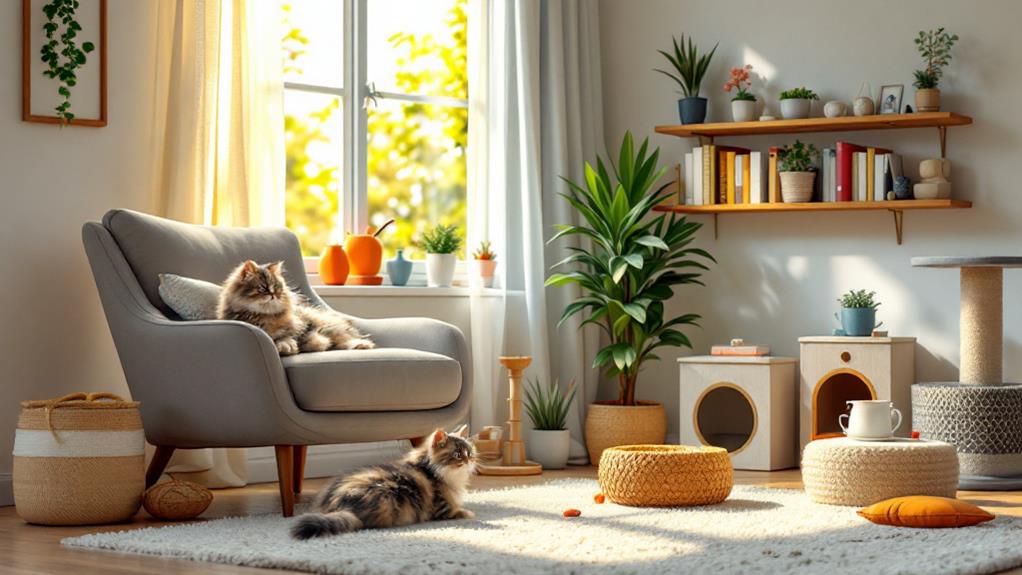
Designate a quiet, accessible area for your cat. This should include a litter box, food and water bowls, and a comfortable bed. These necessities help your cat feel safe and secure during their adjustment period. Incorporate multiple hiding spots, such as cardboard boxes or covered beds, so your cat can retreat and feel secure as they acclimate to their new surroundings.
Stock up on high-quality cat food and provide scratching posts and engaging toys to create a stimulating environment. These items not only meet your cat's basic needs but also offer mental and physical stimulation, keeping them healthy and happy. Preparing your home with these considerations guarantees a smooth adjustment and helps your cat quickly adapt to their new living space.
Health and Vet Visits
Taking care of your cat's health is an important responsibility that guarantees they live a long and happy life. Regular veterinary check-ups play a fundamental role in maintaining your cat's well-being. Annual visits are a must for adult cats, while kittens and senior cats require more frequent check-ups to monitor growth and catch any potential health issues early.
Initial vaccinations are essential, typically starting between 6 to 8 weeks of infancy, protecting your cat from common feline diseases such as feline panleukopenia, feline calicivirus, and feline herpesvirus. Keeping up with booster shots guarantees long-term immunity. Another crucial step in preventive care is spaying or neutering, usually recommended by six months of infancy. This procedure helps control the pet population and decreases the risk of reproductive cancers and certain behavioral problems.
Flea and tick prevention is also important to avoiding serious health issues like anemia or skin infections. Consult your veterinarian for the best treatments. Microchipping is a wise precaution; it greatly increases the chances of reuniting with your cat if they get lost, with a high success rate of return. Addressing these health aspects guarantees your cat stays healthy and happy.
Financial Considerations

Owning a cat comes with several financial responsibilities you should consider before making the commitment. Initial adoption fees can range from $50 to $200, covering vaccinations and spaying/neutering. If you opt for a breeder, those costs can skyrocket to over $1,000 depending on the breed. But it's not just about the initial cost. Ongoing monthly expenses for food, litter, and routine vet visits typically run between $100 to $200. Keep in mind, unexpected health issues could dramatically increase these costs.
Planning for the financial commitments doesn't stop there. It's wise to set aside an emergency fund of at least $500 for unforeseen veterinary expenses or health crises that might arise over your cat's average lifespan of 15 years or more. Investing in pet insurance, which ranges from $20 to $60 per month, can offer financial relief for veterinary bills, ensuring your cat receives necessary medical care without breaking the bank.
Litter Box Essentials
When setting up your home for a new cat, understanding litter box necessities is essential for their comfort and hygiene. Start with providing one litter box per cat, plus one extra. This helps reduce territorial disputes, especially in multi-cat households. Experimenting with different types of cat litter, like clumping or non-clumping, can help you find out what your cat prefers, ensuring a more satisfying experience for them.
Placement of litter boxes is significant. Keep them in quiet, accessible areas away from disturbances to encourage your cat to use them properly and maintain general cleanliness. A hygienic environment is important, so commit to daily spot cleaning and weekly deep cleaning of the litter boxes. This prevents odors and keeps your home fresh.
Monitoring your cat's litter box habits is a key aspect of responsible pet ownership. Pay attention to any changes in usage or behavior, as these might signal health issues or stress. Early detection can prevent more serious problems. By prioritizing your cat's comfort and hygiene with the right litter box setup, you'll create a harmonious living space for both you and your feline friend.
Socialization Tips
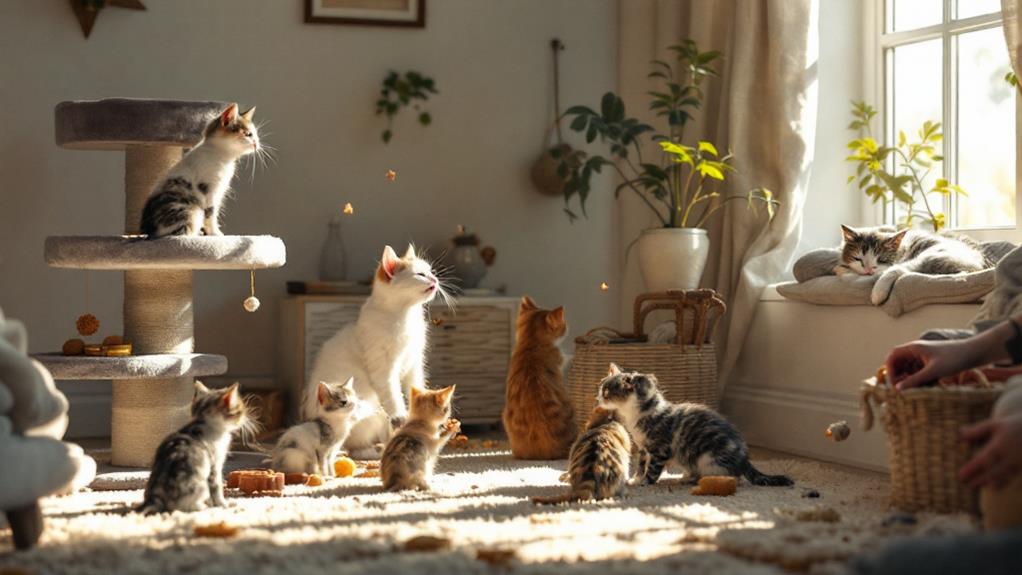
Bringing a new cat into your home can be a rewarding experience, but it's crucial to ease them into their new environment to foster positive relationships, especially with other pets. Start by keeping your new cat and existing pets in separate spaces. This allows them to get used to each other's scents. You can introduce your cat to their future friends by swapping blankets or toys between them. Watch their body language closely; if you notice hissing or growling, give them more time before direct interactions.
Use these socialization tips to create a harmonious household:
- Positive Associations: Feed your pets on opposite sides of a closed door. Gradually move food bowls closer to encourage comfort with each other's presence.
- Bonding Activity: Engage in interactive playtime with all pets. Fun games can help establish trust and comfort.
- Personal Space: Some cats prefer solitude. Make sure they have personal space and resources to minimize conflicts.
- Monitor Progress: Keep an eye on body language and adjust your approach as needed.
Nutrition and Diet
A cat's diet is essential to its health, and understanding their nutritional needs is fundamental. As obligate carnivores, cats need a diet primarily composed of meat. This guarantees they receive crucial nutrients like taurine, arachidonic acid, and vitamins A and B, important for their overall well-being. Selecting high-quality cat food that incorporates these nutrients is key. Always check labels to verify the food meets these dietary requirements.
Portion control plays a significant role in maintaining your cat's health. Overfeeding can lead to obesity, a serious risk factor for various health issues. Monitor your cat's weight and adjust food portions as necessary. Regular consultations with a veterinarian can provide guidance on proper portion sizes and any dietary adjustments needed based on your cat's health status.
Hydration is another key component. Confirm fresh water is always available to your cat. Proper hydration helps prevent urinary tract issues and supports kidney health. Cats can be naturally reluctant drinkers, so consider using a pet fountain to encourage them to drink more. By focusing on these aspects of nutrition and diet, you'll be setting your cat up for a healthy, happy life.
Enrichment and Play
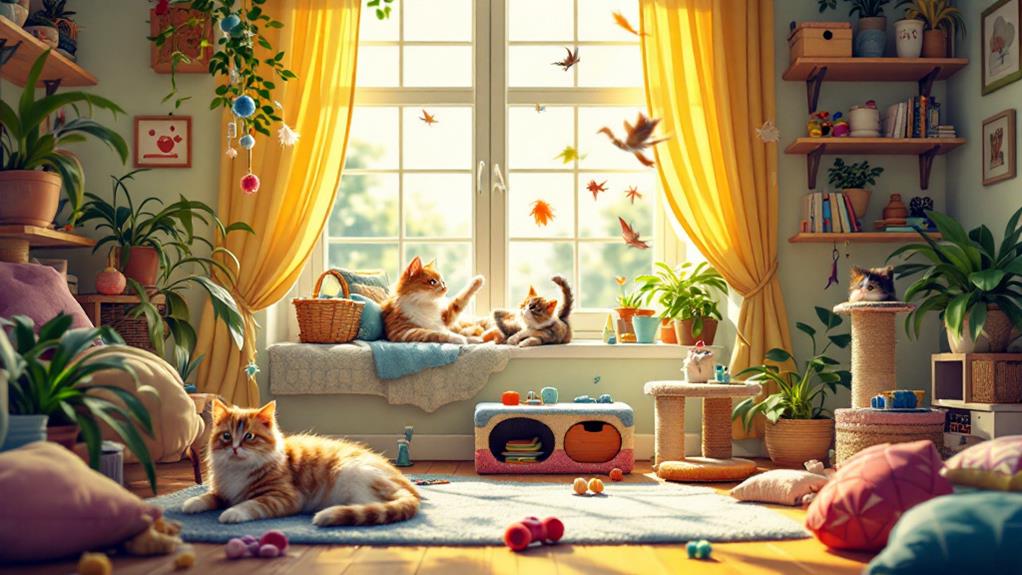
To truly improve your cat's quality of life, providing enrichment and play is crucial. Engaging your feline friend with a variety of toys stimulates their natural hunting instincts and keeps them mentally sharp. Interactive toys, such as feather wands and laser pointers, not only offer physical health benefits but also help strengthen the bond between you and your cat during playtime. Mental stimulation is key, and puzzle toys are perfect for challenging your cat's problem-solving skills and preventing boredom.
To keep your cat interested, remember to rotate their toys regularly. This simple strategy guarantees they remain engaged and don't get bored with the same old playthings. Setting up climbing structures, like a cat tree or a condo, encourages exercise and satisfies their desire for vertical space.
Here are some quick tips to improve your cat's enrichment and play experience:
- Interactive Toys: Use feather wands or laser pointers to engage in active play.
- Puzzle Toys: Provide mental stimulation by challenging their problem-solving abilities.
- Cat Tree: Offer climbing structures for exercise and exploration.
- Toy Rotation: Keep things exciting by regularly changing the toys available to your cat.
Indoor and Outdoor Safety
When considering a safe environment for your cat, it's vital to weigh the benefits and risks of indoor versus outdoor living. Indoor cats typically enjoy a longer lifespan since they're less exposed to dangers like traffic, predators, and diseases. By keeping your cat indoors, you can greatly reduce the risk of injury, while still allowing them to exhibit natural hunting behaviors through interactive play. This approach helps satisfy their instincts while maintaining indoor safety.
To guarantee your cat acclimates to their environment, keep them indoors for at least 3-4 weeks. This period helps them establish territory markers, making them feel more secure in their new home. However, if you're interested in providing outdoor experiences, consider secure spaces like catios or supervised walks with a harness and leash. These options allow for safe exploration without the associated dangers.
Regularly assess and secure potential escape routes in your home, as curious cats might seek ways to get outside. Securing windows, doors, and balconies is pivotal to prevent outdoor accidents. By balancing their need for exploration with safety measures, you can create a nurturing environment for your feline friend.