Tips on Raising Kittens: A Complete Guide for New Cat Owners
Raising kittens is exciting and rewarding with the right foundation. Start by setting up a cozy bed, food and water bowls, and a clean litter box. Nutrition is key, so choose high-protein kitten food and maintain a regular feeding schedule. Guarantee their safety at home by removing hazards and securing windows. Veterinary visits are essential, starting within the initial week, for vaccinations and preventive care. Gradually introduce other pets and establish grooming routines early. Building trust through play and affection strengthens your bond. Uncover how you can create a nurturing and enriching environment for your kitten.
Essential Kitten Supplies
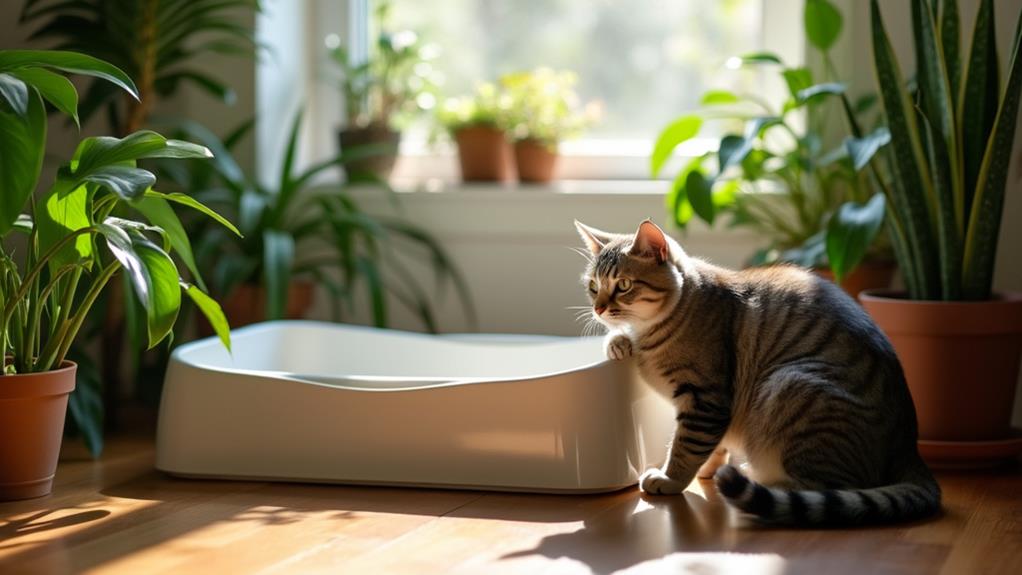
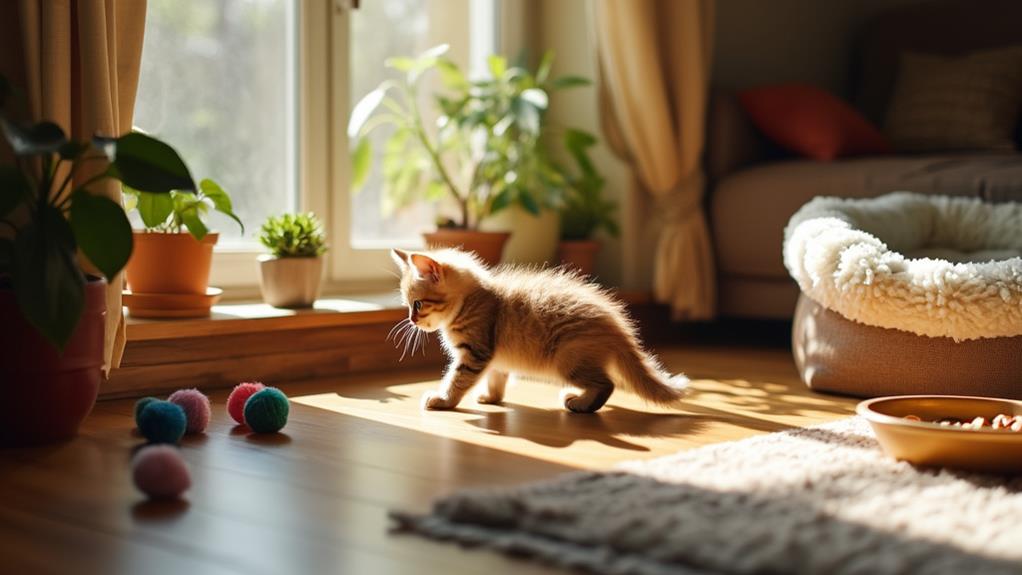
When you bring home a new kitten, setting up their environment with important supplies is key to their comfort and well-being. Start by providing a cozy bed where they can rest and feel safe. Place small food and water bowls nearby for easy access, ensuring your kitten stays nourished and hydrated. A litter box with appropriate litter is fundamental for maintaining hygiene. Remember to position the litter box in a quiet area, and make cleaning the litter box a daily routine to keep it fresh.
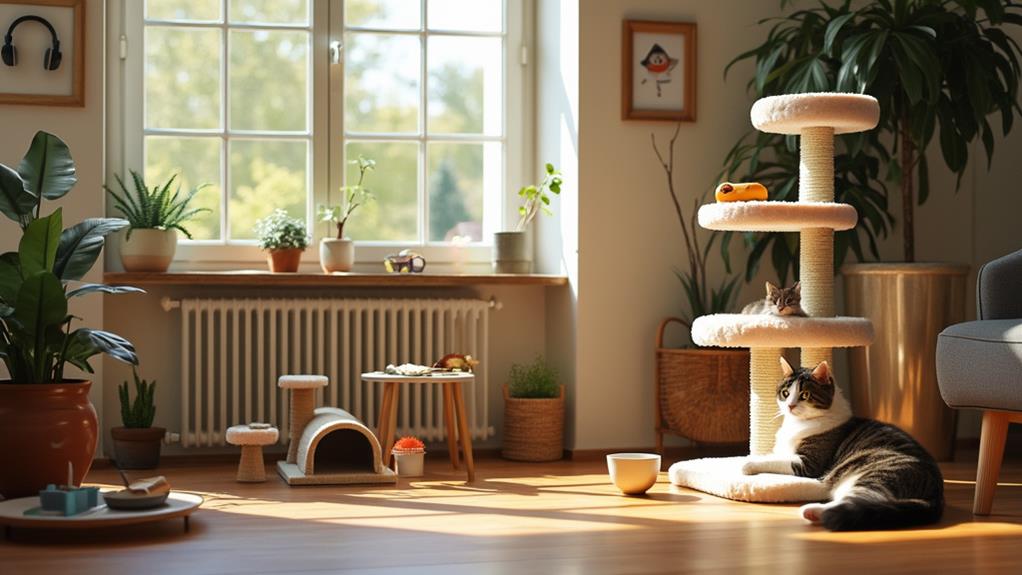
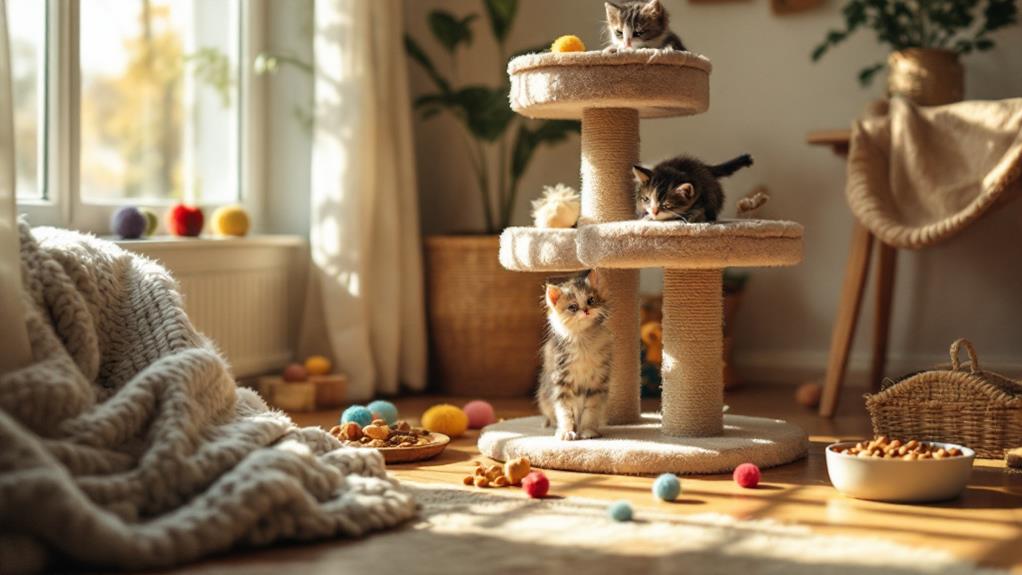
A scratching post is a must-have to satisfy your kitten's natural scratching instincts and to protect your furniture. Locate it in a secure environment where your kitten feels comfortable. Toys are significant for mental stimulation and physical exercise, especially since kittens have high energy levels. Rotate these toys regularly to keep your kitten engaged and entertained.
Ensure that all supplies are placed in low-traffic areas to help your kitten feel secure and settled. Regularly check and replace supplies as needed, ensuring your kitten's environment remains clean and inviting. With these fundamental supplies, you'll create a nurturing space for your lively new companion.
Nutrition and Hydration
After setting up your kitten's environment with the right supplies, it's vital to focus on their nutrition and hydration needs. Kittens need a high protein diet to support their rapid growth, so choosing a commercial kitten food meeting AAFCO nutritional standards is fundamental. A consistent feeding schedule is significant—aim for 3-4 meals daily for kittens up to 6 months old. As they mature, gradually reduce this to 2-3 meals a day.
Incorporating wet food into their diet can be advantageous. Most kittens prefer moist food, and it improves hydration, which helps prevent urinary tract issues. Always provide fresh water, ensuring it's accessible at all times. A water fountain can encourage regular drinking habits, which is vital for maintaining proper hydration.
Keep an eye out for any signs of food allergies or sensitivities, such as vomiting or diarrhea. If you notice any issues, consult your veterinarian for tailored dietary recommendations. They might suggest an alternative diet or specialized kitten formula. By focusing on these nutritional aspects, you'll help your kitten grow strong and healthy, setting a solid foundation for their future.
Veterinary Care Schedule
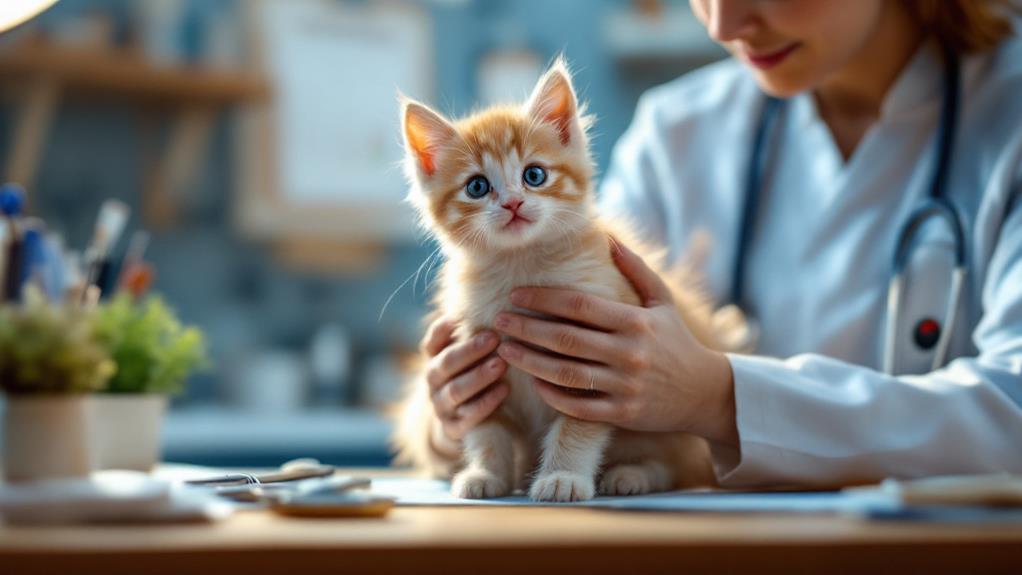
Ensuring your kitten's health starts with a well-planned veterinary care schedule. Begin with an initial veterinary visit within the primary week of bringing your kitten home for a thorough health screening. This visit is essential to discuss vaccination schedules, ensuring your kitten receives protection against core diseases like panleukopenia, feline herpesvirus, and calicivirus.
Here's a simple breakdown of what to expect:
- Vaccination Schedules: Administer vaccinations at 6-8 weeks, 10-12 weeks, and 14-16 weeks to guard against core diseases.
- Regular Vet Check-ups: Schedule follow-up visits every 2-4 weeks until your kitten is about 16 weeks old. These visits are important for monitoring growth and administering necessary shots.
- Preventive Care: Talk to your vet about preventive care, including flea, tick, and heartworm prevention. Discuss spay/neuter options, often recommended around 4-6 months.
- Ongoing Health Advice: Establish a relationship with your vet for ongoing health advice, addressing any behavioral concerns or health issues as your kitten matures.
Home Safety Preparation
Bringing a new kitten home is an exciting time, but it's vital to prepare your space to guarantee their safety. Start your home safety preparation by inspecting your living areas for potential hazards. Remove small objects that a curious kitten might swallow. Secure loose wires to prevent chewing and potential electrocution. Lock away chemicals and sharp tools to avoid any dangerous accidents.
Create a designated quiet area to help your kitten acclimate to their new environment. Equip this space with a cozy bed, a litter box, and food and water bowls. This setup gives them a sense of security and meets their basic needs right from the start.
Ensure your windows and balconies are secure. This is significant to prevent your kitten from escaping or falling, as indoor cats tend to live longer, healthier lives. Check your home for toxic plants and hazardous materials. Many common houseplants can be poisonous to cats, so it's imperative to remove them or keep them out of reach. If your kitten ingests something harmful, seek veterinary attention immediately. By taking these steps, you'll create a safe haven for your new furry friend.
Introducing Other Pets

As you prepare your home for your new kitten, it's also vital to think about how they'll get along with other pets in the household. Introducing a new kitten to existing pets requires a thoughtful approach to guarantee a smooth changeover. Here are some steps to help:
- Scent Exchange: Start by swapping blankets or toys between your existing pets and the new kitten. This familiarizes them with each other's smells and reduces anxiety before any face-to-face meeting.
- Controlled Environment: Let them sniff each other through a closed door initially. This method helps establish familiarity and comfort without direct contact, maintaining a controlled environment.
- Supervised Introductions: Conduct the initial meeting in a neutral space. Keep dogs on a leash to manage safety. Supervised introductions allow you to control interactions and address any signs of aggression immediately.
- Patience and Time: Remember, gradual introductions are key. It might take several days or weeks for both the kitten and existing pets to adjust. Patience is vital to guaranteeing comfort and acceptance.
If you notice persistent tension or aggressive behavior, consider consulting a professional trainer. They can offer strategies to ease the integration process and reduce anxiety.
Grooming Basics
Getting your kitten accustomed to grooming early on is vital for both their health and comfort. Starting the grooming process when your kitten is young helps reduce anxiety and resistance as they grow. Begin by using a soft brush to gently remove loose fur from their coat. Regular brushing sessions are fundamental, especially for long-haired breeds, to minimize hairballs and keep your kitten's coat healthy.
Incorporate dental care into your grooming routine. Use specialized cat toothpaste and brushes to maintain your kitten's dental health. Ideally, aim for daily brushing, but weekly sessions are more realistic for most owners. This practice helps prevent dental issues and keeps your kitten's teeth and gums in good condition.
Trimming your kitten's claws is another significant aspect of grooming. Regularly trim their claws to prevent injury and promote comfort. Introduce claw trimming gradually, so your kitten becomes comfortable with the process.
During grooming sessions, monitor your kitten's skin and coat for any changes or issues. This regular attention not only keeps them clean but also strengthens the bond between you and your pet. With these grooming basics, you'll set your kitten on a path to a healthy and happy life.
Building a Strong Bond
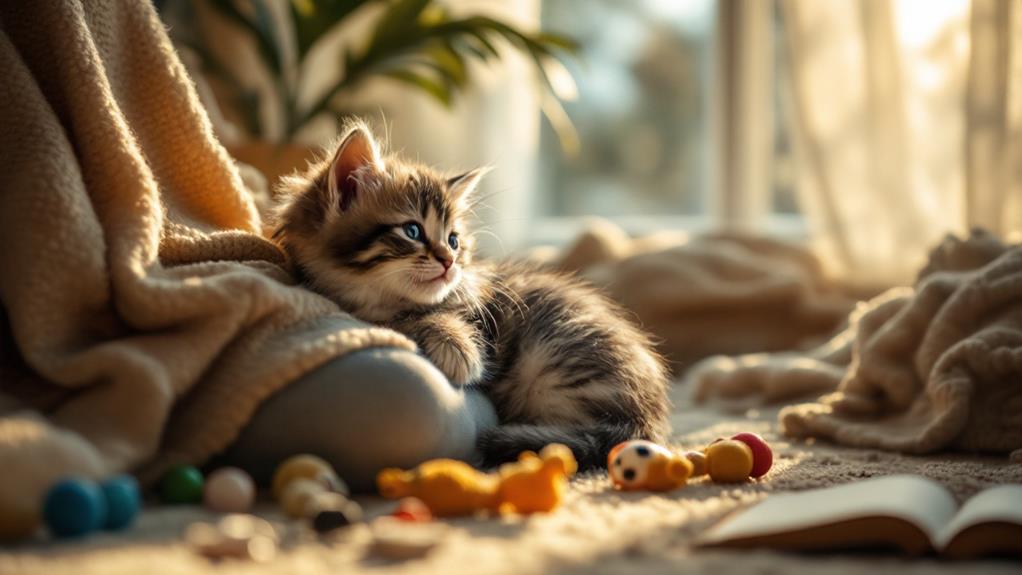
After establishing a grooming routine, it's time to focus on building a strong bond with your kitten. Strengthening this connection involves fostering trust, offering comfort, and creating a secure environment. Here's how you can achieve this:
- Interactive Play Sessions: Engage in daily playtime to build both a physical and emotional connection. This activity not only helps your kitten investigate their surroundings but also strengthens the bond and trust between you.
- Positive Reinforcement: Use treats and praise as positive reinforcement to encourage good behavior. This approach improves your bond and promotes a trusting relationship, making your kitten feel more secure and comfortable around you.
- Cuddle Time: Spend quiet moments cuddling with your kitten. This helps them feel secure and nurtures an emotional connection, providing comfort as they adjust to their new home.
- Consistent Routine: Establish a consistent routine for feeding, playtime, and grooming. Stability is vital for their emotional well-being and helps them form a secure attachment to you.
Allow your kitten to investigate and approach you at their own pace. Respecting their comfort level is key in developing a trusting relationship over time.
Playtime and Enrichment
Playtime and enrichment are significant components of raising a happy and healthy kitten. Engaging in interactive play sessions for at least 15-30 minutes daily is key for your kitten's physical health and mental stimulation. These sessions help channel their high energy levels effectively. Use toys like feather wands, laser pointers, and puzzle feeders to encourage exercise and prevent boredom. Boredom can lead to destructive behaviors, so keeping your kitten entertained is important.
Rotating toys every few days keeps your kitten's interest piqued and promotes mental engagement. They're less likely to tire of their playthings when there's always something new to investigate. Incorporate climbing structures and scratching posts into your home. These allow your kitten to express their natural instincts to climb and scratch, contributing to their complete well-being and preventing furniture damage.
Scheduled playtime not only fosters bonding between you and your kitten but also helps socialize them. A well-socialized kitten becomes more adaptable and confident around people and other pets. By investing in varied and stimulating play, you guarantee your kitten grows into a well-rounded and happy adult cat.