Tips for Training Your Cat to Use a Scratching Post: Save Your Furniture
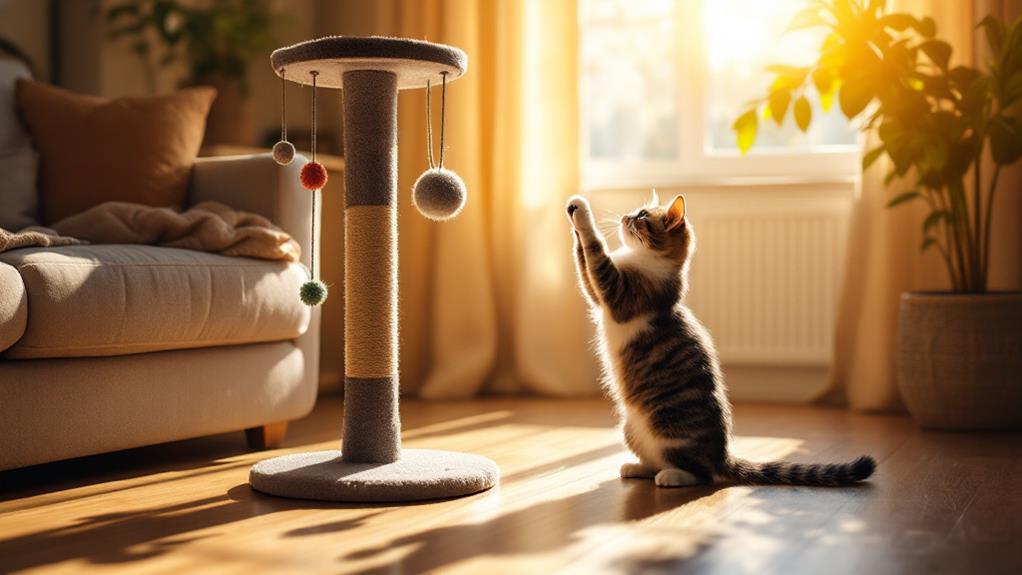
To train your cat to use a scratching post and save your furniture, consider their natural scratching instincts and select the right post. Choose a sturdy post made from sisal or cardboard that's tall enough for your cat to stretch fully. Place it in high-traffic areas near furniture your cat loves scratching. Attract your cat with catnip and reward them with treats or praise when they use the post. If they scratch furniture, redirect them immediately to the post. Variety keeps things exciting, so offer different surfaces and styles. By doing so, you'll uncover effective methods to protect your furniture.
Understanding the Scratching Instinct
In relation to understanding your cat's scratching instinct, it is essential to recognize that this behavior isn't just a random act. Scratching is a natural instinct that serves multiple purposes for your cat. It plays an important role in claw maintenance by removing the outer layers of dead claw sheaths, ensuring healthy claw growth. Beyond claw care, scratching is a way for your cat to mark their territory. Cats have scent glands in their paws, so when they scratch, they're also depositing their scent, which is a fundamental part of feline behavior.
Vertical scratching is particularly appealing to many cats, simulating tree climbing and stretching in the wild. This natural behavior is also a form of self-soothing that helps alleviate stress and anxiety, especially in unfamiliar environments. As you engage in training your cat, understanding these instincts can guide you in providing the right outlets for their scratching needs.
Selecting the Perfect Scratching Post
Choosing the right scratching post for your cat is crucial for satisfying their natural instincts and maintaining harmony in your home. Start by selecting the perfect scratching post that meets your cat's needs. Opt for sturdy scratching posts made from durable materials like sisal or cardboard, as these textures cater to your feline friend's claw maintenance. Verify the post is tall enough—ideally 28-36 inches—to allow your cat to stretch fully. Stability is key, so choose a design that won't tip over easily, encouraging your cat to use the post regularly.
Variety is also significant. Incorporate both vertical and horizontal scratching posts to align with your cat's individual preferences and habits. This variety helps train your cat by providing multiple options for scratching, which keeps them engaged and lessens the chance they'll target your furniture. When you place the post, make certain it's in high-traffic areas or near your cat's favorite resting spots. This increases visibility and accessibility, making it more inviting.
To further encourage your cat's interest, use positive reinforcement when they engage with the scratching post. With these steps, you'll create a satisfying environment that meets your cat's needs while protecting your home.
Strategic Placement for Success
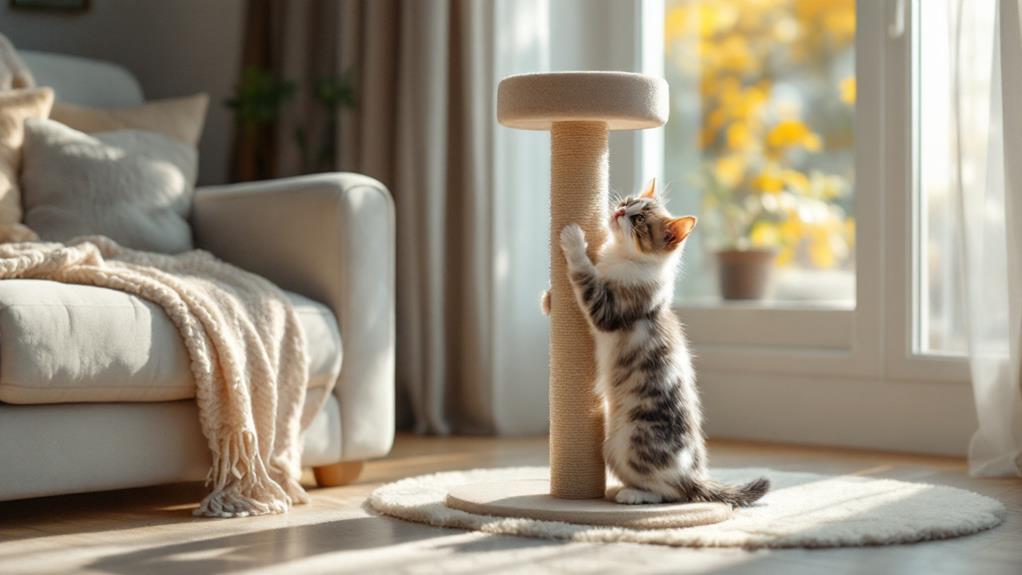
When you're planning where to place your cat's scratching post, think like a cat. Your feline friend loves to lounge and scratch in high-traffic areas, so it's wise to position scratching posts near your living spaces or their favorite resting spots. This strategic placement encourages frequent use and helps protect your furniture from unwanted claw marks. If your cat has a habit of scratching certain pieces of furniture, place the scratching posts nearby to redirect their behavior effectively.
Ensure the scratching post is tall enough for your cat to stretch comfortably—ideally, two to three feet high. This height accommodates their natural instincts and provides a satisfying scratching experience. Don't forget to experiment with both vertical and horizontal options to see which your cat prefers. It increases the likelihood of engagement and keeps them entertained.
Visibility and access are key. Avoid putting scratching posts in hidden or out-of-the-way locations. Instead, keep them easily accessible and in plain sight to your cat. By doing so, you create an inviting environment that encourages positive scratching behaviors and keeps your furniture safe from damage. With strategic placement, you'll set your cat up for success and peace of mind.
Encouraging Positive Scratching Behavior
Creating a positive scratching environment for your cat is vital for redirecting their natural behavior and protecting your furniture. Start by using catnip to draw your cat's attention to the scratching post. Sprinkle it directly on the post or place catnip toys nearby to encourage exploration. This can help create a positive association with the post, making it more appealing for your cat to use.
Incorporate interactive playtime around the scratching post to further engage your cat. This not only offers physical activity but also reinforces the post's purpose. When your cat uses the scratching post, offer immediate rewards such as treats or praise. This reinforces the behavior and encourages repetition.
Position the scratching posts in high-traffic areas and near your cat's favorite resting spots. This makes them accessible and increases the likelihood of regular use. It's crucial to monitor scratching habits and adjust the type and placement of posts to suit your cat's preferences. Providing a variety of options guarantees they have choices that match their scratching style. By actively training your cat with these techniques, you'll foster a habit that benefits both your feline friend and your furniture.
Discouraging Furniture Scratching
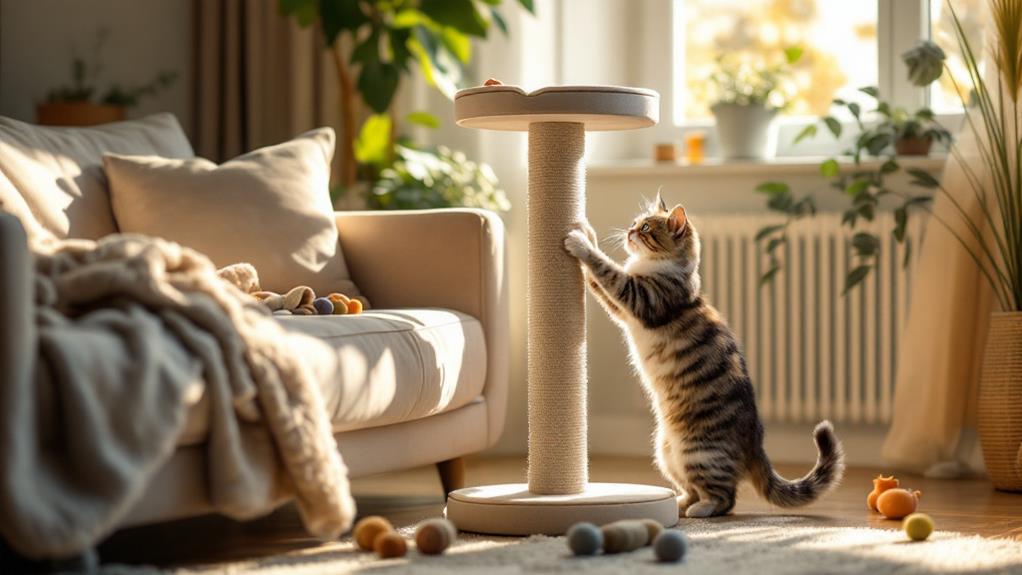
Why does your cat persistently scratch the furniture despite having a scratching post available? It could be that the furniture offers a more appealing texture or position. To prevent furniture scratching, try draping a heavy blanket over your couch or apply Sticky Paws tape, making these surfaces less enticing.
When your cat scratches the furniture, use a negative stimulus like a loud noise or a quick spray of water to startle them. Immediately redirect their attention to the scratching post, encouraging them to use it instead. This technique helps your cat associate the unpleasant experience with furniture and the positive act of scratching with the post.
Position scratching posts strategically near or on top of current scratching spots. Doing so encourages redirection and makes it easier for your cat to choose the correct option. Consistently reward your cat with treats and praise when they use the scratching post, reinforcing the behavior with positive association.
Utilize cat products that aid in training and deterrence. Consistency in these methods will help discourage scratching, guide your cat to the right habits, and ultimately protect your furniture from future damage.
Maintaining Interest and Engagement
Once you've successfully redirected your cat away from the furniture, it's essential to keep their interest in the scratching post alive. To maintain interest and prevent boredom, rotate scratching posts and pads, offering a mix of surfaces like sisal and cardboard. Each type presents a new challenge and texture for your cat, keeping them engaged. A great place to put a scratching post is near their favorite resting or playing spots. Sprinkle a bit of catnip on the base to make it even more appealing.
Interactive playtime is another fantastic way to engage your cat with their scratching area. Use toys to encourage them to play around the post, creating a fun and positive association. This will teach your cat that scratching posts are part of their play routine. Don't forget to reward your cat with treats or praise as soon as they use the post, reinforcing positive behavior.
Lastly, monitor the wear and tear on your scratching posts. Over time, they may lose their appeal, so replace or refresh them as needed. Keeping the posts in good condition guarantees they remain enticing, keeping your cat's claws off your furniture.