Tips for Tracking Your Cat With GPS: Keeping Your Feline Safe
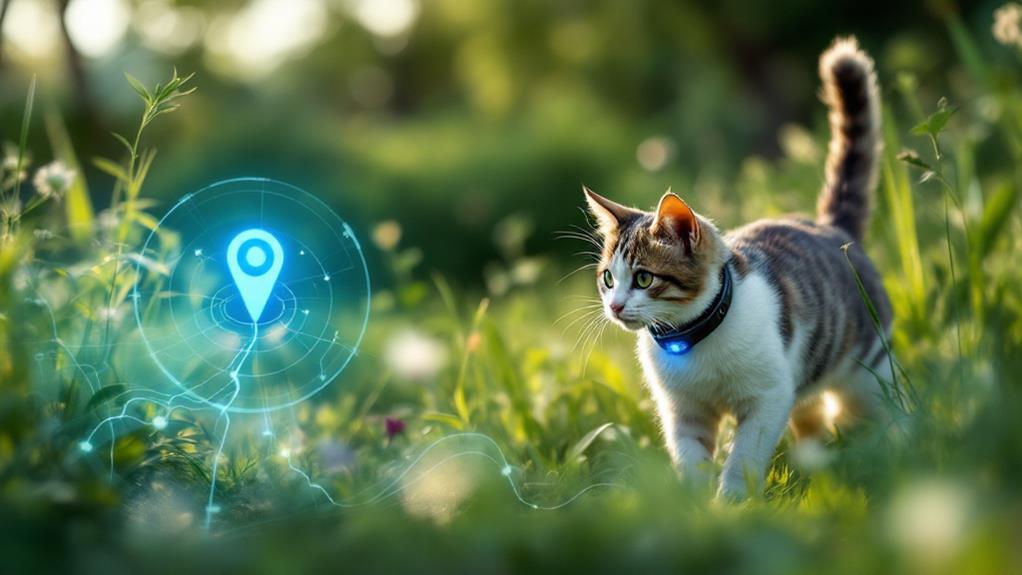
To keep your feline safe, choose the right GPS tracker by considering factors like comfort, battery life, and durability. Opt for GPS trackers for adventurous cats requiring real-time updates, and Bluetooth for indoor cats with limited range needs. Train your cat to wear the collar gradually using positive reinforcement, and verify the collar is lightweight and adjustable for comfort. Regularly monitor battery life, update your tracking app, and maintain the collar to prevent dirt buildup. By doing so, you'll gain peace of mind knowing your cat's whereabouts. There's more to uncover about effectively using GPS to guarantee your cat's safety.
Choosing the Right Tracker
Selecting the perfect GPS tracker for your feline companion involves a blend of practicality and thought for your cat's comfort. You'll want a lightweight and cat-friendly GPS tracker that won't bother your furry friend as they roam. An important factor to take into account is battery life. Opt for a tracker offering at least 7 days of battery life. This guarantees you can track your cats without the hassle of frequent recharging, giving you peace of mind during their outdoor adventures.
Durability is another key aspect. A durable, waterproof tracker is significant, especially if your cat ventures outdoors. They might encounter rain or rough terrain, and a robust tracker will withstand these conditions. You don't want a GPS tracker that fails when you need it most.
Lastly, think about the accuracy and range of the GPS tracker. Real-time updates can be critical for outdoor cats, guaranteeing you always know their location. While Bluetooth trackers might suffice for indoor cats, a GPS tracker provides broader coverage when your cat roams further. Balancing these features with any subscription fees guarantees you make a wise investment for your cat's safety.
Understanding Tracker Types
In relation to tracking your cat, understanding the different types of trackers is essential. You'll find three main tracker types to evaluate: GPS trackers, Bluetooth trackers, and Radio Frequency (RF) trackers. Each type offers distinct functionalities tailored to different tracking needs.
GPS trackers are perfect for adventurous cats that roam far and wide. They use cellular or satellite technology to deliver real-time location updates over long distances. However, keep in mind that these typically require a subscription for cellular data access. If your cat enjoys the great outdoors, a GPS tracker might be the safest bet.
Bluetooth trackers, on the other hand, are small, affordable, and easily attachable to your cat's collar. They're great for indoor cats or those that prefer to stick close to home. However, their range is limited, relying on line-of-sight for effective tracking.
Lastly, Radio Frequency trackers offer high accuracy within short distances, making them ideal for finding pets in close proximity without needing subscription fees. They're excellent for indoor cats or those that tend to hide in nearby areas.
Deciding among these tracker types depends largely on your cat's lifestyle and your specific needs.
Training Your Cat for Wear

Getting your cat comfortable with wearing a collar is a process that requires patience and consistency. Start by creating a calming environment, free from distractions and stressors, to improve their receptiveness during training your cat for wear. Introduce the collar gradually, letting your cat investigate it initially. Use positive reinforcement—like favorite treats or engaging activities—to build a positive association with the collar. This step is significant for making the experience enjoyable and stress-free.
Limit the initial collar-wearing sessions to about 10-15 minutes. As your cat starts feeling more at ease, gradually increase the duration. Watch your cat's behavior closely. If they show any signs of anxiety or discomfort, remove the collar immediately and try again later. This approach guarantees a stress-free experience, crucial for successful training.
Patience is fundamental because every cat adapts at their own pace. Some might take to the collar quickly, while others need more time. Consistently reward your cat for positive interactions, reinforcing their comfort and acceptance of the collar over time. With persistence and positive reinforcement, you'll help your cat adjust to wearing a collar, making GPS tracking a feasible and safe option.
Enhancing Collar Comfort
Once your cat's comfortable wearing a collar, it's important to focus on improving collar comfort to guarantee a positive experience. A well-chosen collar can make all the difference when using a cat tracker. Look for a lightweight option designed specifically for cats to make sure it doesn't cause stress or discomfort. A collar that's too heavy might discourage your cat from wearing it, so prioritize comfort and ease.
Here's how you can improve collar comfort:
- Adjustable Sizes: Opt for collars with adjustable sizes to achieve a perfect fit. A snug fit prevents chafing and guarantees your cat can move freely without restriction.
- Soft, Breathable Materials: Choose collars made from materials that minimize irritation. Soft fabrics allow your cat's skin to breathe, reducing the risk of discomfort or skin issues.
- Waterproof Design: Make sure the cat tracker collar is waterproof. This feature not only improves durability but also guarantees comfort during outdoor adventures, regardless of weather conditions.
- Regular Fit Checks: As your cat grows or loses weight, regularly check the collar's fit. Adjust it as needed to maintain both comfort and security, making sure of a consistent and worry-free experience for your feline friend.
Monitoring and Maintenance
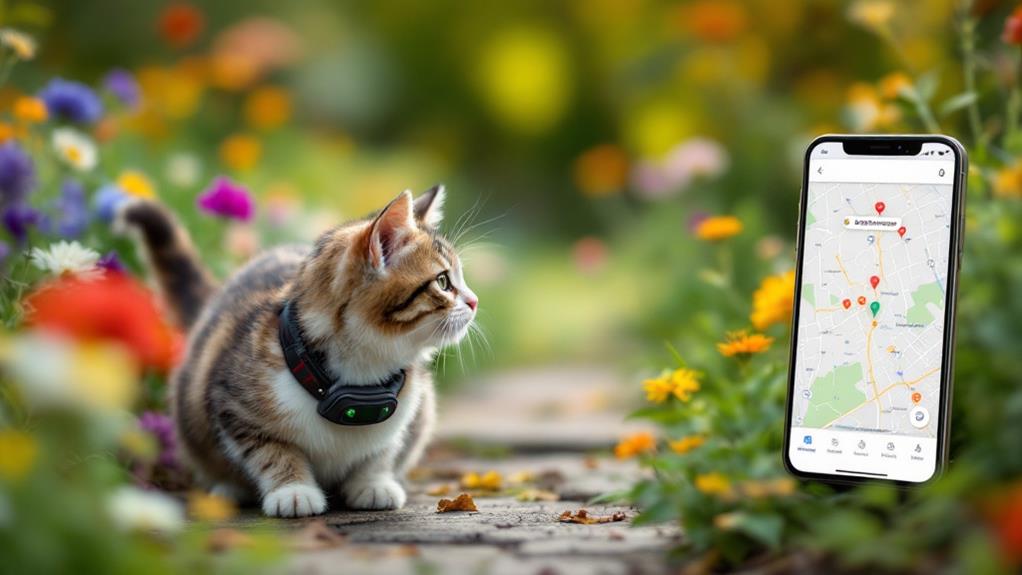
Keeping your cat's GPS collar in prime condition requires regular monitoring and maintenance. Start by checking the battery life, which is essential for guaranteeing the tracker for your cat remains operational. Aim for a minimum of seven days of battery life to maintain peak tracking functionality. Different types of trackers may have varying battery capacities, so it's significant to choose one that meets your needs.
Regularly clean the collar to prevent dirt buildup. This maintenance step not only prolongs the device's functionality but also guarantees comfort for your cat. A clean collar is less likely to irritate your cat's skin or become uncomfortable.
Monitor the collar's fit, making sure it's snug yet not too tight. An ill-fitting collar can cause discomfort or even injury. It should fit just right, allowing you to slip two fingers between the collar and your cat's neck.
Keep your tracking app updated on your smartphone to access the latest features and improvements for real-time location tracking. Regularly conduct checks on the GPS device's functionality to guarantee it provides accurate location data and alerts for safe zone breaches. This proactive approach helps monitor your cats effectively.
Safety and Tracking Benefits
Losing a beloved pet cat can be a heart-wrenching experience, but GPS tracking offers a tangible solution to prevent such distress. With approximately 15% of cat owners losing their pets at least once every five years, using a GPS tracker can be a game-changer for your cat's safety. These devices provide real-time insights into your cat's outdoor adventures, enhancing your peace of mind by keeping you informed of their whereabouts.
Here are several key benefits of employing a GPS tracker for your cat:
- Real-time Location: You'll have immediate access to your cat's location, which is essential if they escape or go missing. This quick response capability can greatly reduce anxiety.
- Safe Zone Alerts: By setting customizable safe zones, you can receive alerts if your cat ventures beyond these boundaries, ensuring they don't wander too far.
- Enhanced Bond: Prioritizing your cat's safety strengthens the bond and trust between you and your feline companion, knowing they're protected.
- Peace of Mind: Knowing exactly where your cat is at all times provides a comforting reassurance, allowing you to focus on other aspects of pet care.
With a GPS tracker, you're not just keeping track of your cat; you're safeguarding their well-being and nurturing your relationship.
Troubleshooting Common Issues
Running into common issues with your cat's GPS tracker can be frustrating, but understanding how to troubleshoot them can make all the difference. If your pet tracker is showing inaccurate location data, check that the collar is properly fitted on your cat. It's essential to have a clear line of sight to the sky for ideal satellite connection. Connectivity issues might arise if tall buildings or dense foliage are present, so verify your cat's environment isn't obstructing the GPS signal.
For a battery that drains quicker than expected, look at the tracking frequency settings. Frequent updates can consume more power, so adjust them if needed. Make certain the pet tracker is fully charged before you put it on your cat. If the collar slips off often, the size and weight might not be suitable for your cat. Consider a more secure fastening mechanism to prevent loss.
If you're not receiving alerts for boundary breaches, double-check the geofence settings in the app. Confirm these are correctly configured and that the app has necessary permissions enabled. With these tips, you can keep your cat safe and your tracker functioning smoothly.