Tips for Photographing Your Favorite Furry Friend Like a Pro
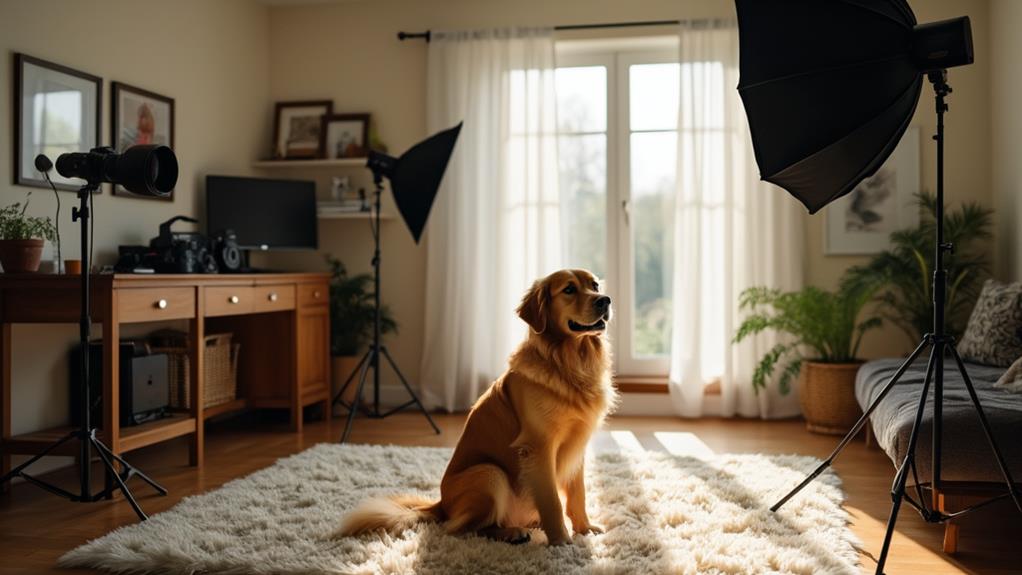
To photograph your furry friend like a pro, start by grooming them and choosing a familiar setting to guarantee they feel comfortable. Bring treats and toys for natural, candid moments. Use a quality DSLR or mirrorless camera with a fast autofocus and a telephoto lens for action shots. Shoot during calm energy periods and utilize natural lighting, such as golden hours, for flattering portraits. Focus on capturing expressions at eye level and use the rule of thirds for balanced composition. Remember to be patient for those authentic shots. There's more to uncover about capturing perfect pet photos.
Key Takeaways
- Use natural light and avoid harsh shadows for flattering pet photos.
- Focus on your pet's eyes to capture their personality effectively.
- Engage in eye-level shooting for authentic and intimate expressions.
- Utilize a fast shutter speed to freeze action and enhance clarity.
- Incorporate toys and treats to elicit genuine reactions and candid moments.
Preparing Your Pet
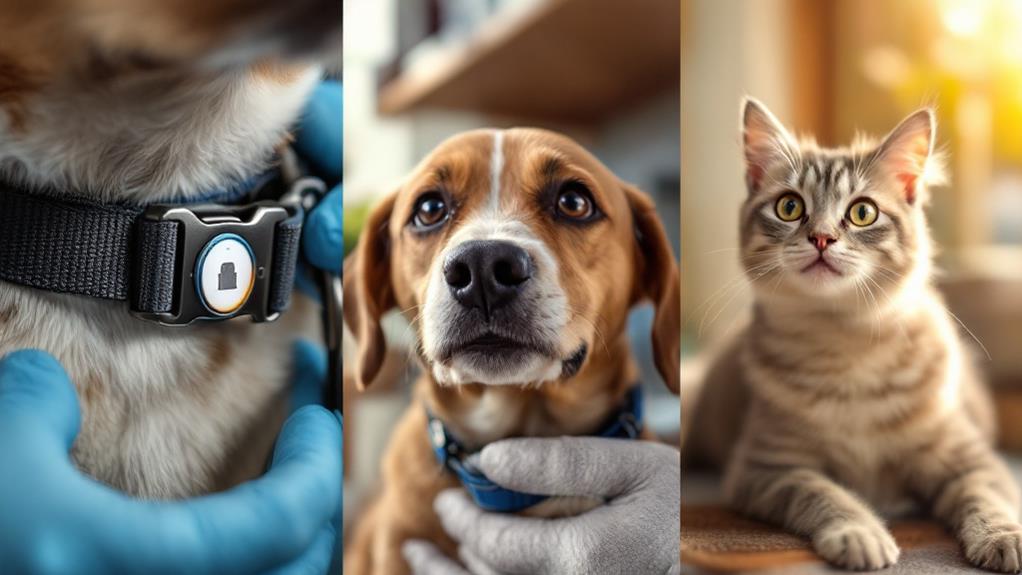
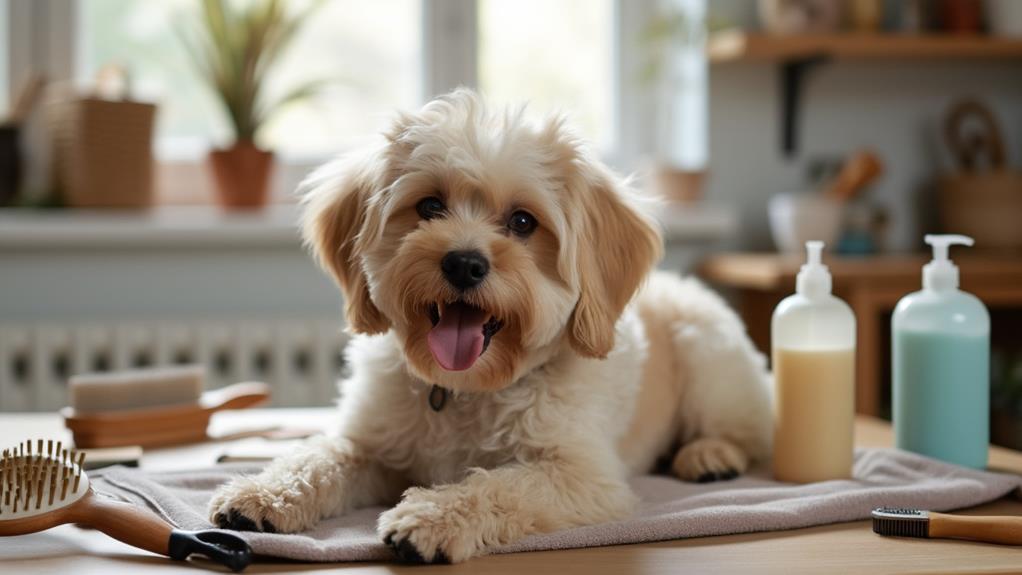
Getting your pet ready for a photoshoot is all about preparation and setting the right mood. Start by grooming your furry friend to improve their appearance. A good bath, brushing, and nail trimming can make a big difference, ensuring they look their best in photos. Once they're all spruced up, focus on the environment. A familiar setting will help your pet feel comfortable and reduce anxiety, so choose a place they know well. Allow them 30-40 minutes to acclimate to any new surroundings, as this will help them relax and show off those natural expressions you love.
To keep the mood light and fun, bring along their favorite treats and toys. These can be great tools to engage your pet and encourage candid, joyful moments. Pay close attention to their energy levels; shoot during a time when they're naturally calm. A tired pet is less likely to cooperate, so avoid high-energy periods. By ensuring your pet is relaxed and comfortable, you'll capture their true personality in every shot. Remember, the goal is to create an enjoyable experience that results in beautiful and authentic photographs of your beloved pet.
Choosing the Perfect Setting
Selecting the perfect setting for your pet's photoshoot is crucial for highlighting their natural charm. When choosing a location, consider environments that complement your pet's features while avoiding busy or distracting backgrounds. This keeps the focus solely on your furry friend. For outdoor shoots, opt for safe and accessible environments. Confirm the area is free from hazards like traffic or sharp objects, allowing your pet to roam safely while you capture their personality.
Indoor settings can be just as effective. Use neutral-colored backgrounds, which help in maintaining focus on your pet and allow for controlled lighting conditions. This reduces the risk of harsh shadows or other distractions that might detract from the image.
Lighting plays a significant role in photography, so aim for the golden hours of early morning or late afternoon. During these times, natural light is softer and more flattering, enhancing your pet's appearance. Before you start snapping away, give your pet 30-40 minutes to acclimate to the new surroundings. This guarantees they feel secure and comfortable, which translates into more natural and engaging photos. Remember, a relaxed pet makes for a perfect photoshoot!
Essential Photography Gear
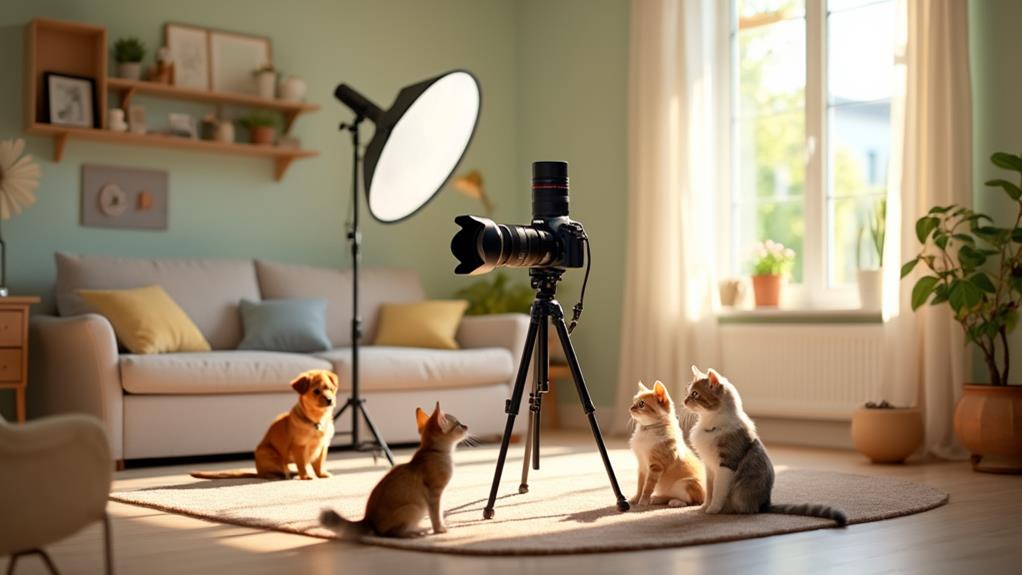
When you're photographing pets, having the right gear can make all the difference in capturing those perfect shots. A quality DSLR or mirrorless camera with interchangeable lenses is crucial for high-resolution images, allowing you to adapt to different shooting styles and conditions. Fast autofocus is a must, especially for action shots, as it helps you quickly focus on your moving furry friend for sharp captures.
For outdoor photography, a telephoto lens, like a 70-200mm, lets you snap photos from a distance without disturbing your pet. This lens is especially useful when your pet is active and you need to maintain a certain distance. A tripod is invaluable for stabilizing your camera, particularly in low light or when you're using slower shutter speeds. This guarantees your photos remain sharp and clear.
Utilizing natural light can greatly improve your images. When shooting indoors, consider using reflectors to soften shadows on your pet's face, enhancing image quality. Accessories like these are what often separate a professional photographer from an amateur. While camera settings are also necessary, focusing on the right gear initially can set the foundation for stunning pet photography.
Mastering Camera Settings
Now that you've got the right gear, let's focus on mastering camera settings to capture your pet's personality in every shot. Start by using a fast shutter speed of at least 1/500 seconds to freeze any action, ensuring your furry friend remains sharp in every frame. Engage burst mode or continuous shooting mode for those high-energy moments, capturing multiple frames and increasing your chances of getting that perfect shot.
Aperture settings play an essential role in achieving a shallow depth of field. Adjust your aperture between f/5.6 and f/8 to keep your pet in sharp focus while softly blurring the background, making them the star of the photo. Don't forget to focus on the eyes, as they're the windows to your pet's personality.
ISO settings should match the lighting conditions. Keep it low (100-400) in bright environments to reduce noise, but increase it (800-1600) in dimmer settings for clarity. Autofocus is handy, but there are times when manual focus gives you more control, especially in tricky lighting. By mastering these settings, you'll be well on your way to capturing stunning, professional-quality photos of your beloved pet.
Utilizing Natural Light
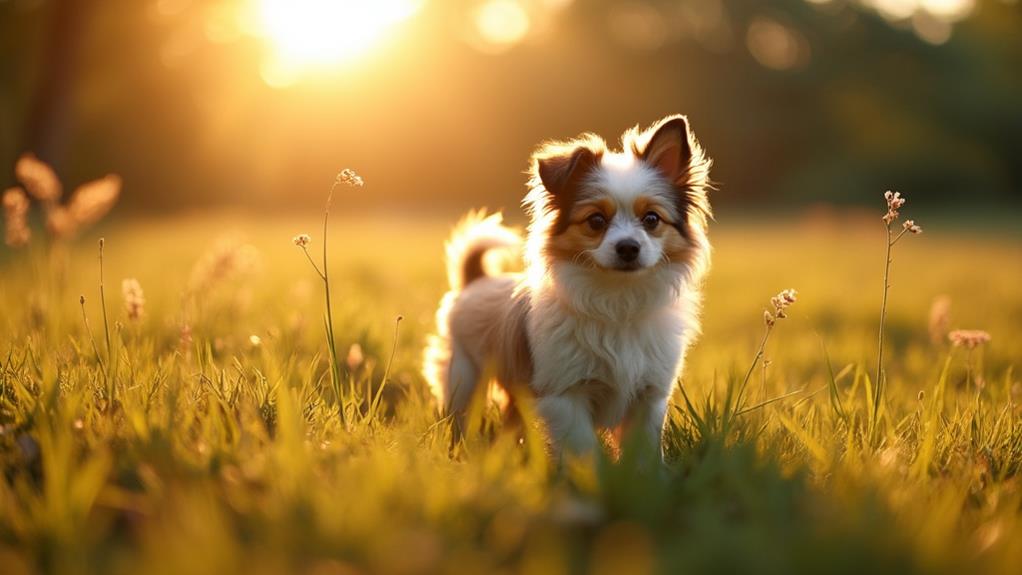
Sunlight can be your best friend when photographing pets, especially during the golden hours. These times, shortly after sunrise or before sunset, provide soft lighting that improves your pet's appearance and helps avoid harsh shadows. When photographing your pet indoors, position them near windows to utilize diffused indoor light. This prevents the unflattering highlights and deep shadows that direct sunlight can cause.
If you need to shoot outside during midday, find open shade to keep the lighting on your pet's fur even. This approach helps you maintain natural light without the harshness of the direct sun. You can also experiment with reflectors to bounce light onto your pet, softening shadows on their face and achieving a more balanced exposure.
Pay attention to the direction of light, as this is key in capturing texture and detail in your pet's fur. Positioning your pet with the light source at their side can improve these elements beautifully. This technique also helps avoid the green-eye effect that often happens with direct flash. By considering these tips, you'll create stunning images of your furry friend with natural light.
Creative Composition Techniques
How can you raise your pet photography to the next level? Start by adding a creative touch to your composition. Use the rule of thirds by positioning your pet off-center. This technique creates a balanced and engaging image, making your furry friend the focal point. Experiment with different angles, especially shooting at eye level. This approach captures your pet's authentic emotions, which resonate with viewers.
Incorporate leading lines in your composition to guide the viewer's attention directly to your pet. Regardless of whether it's a path, a fence, or a row of trees, these lines improve the visual impact of your photo. Don't forget the power of negative space. By surrounding your pet with empty areas, you emphasize their presence, creating a more artistic and evocative image.
Context is similarly significant. Include elements of your pet's environment in the frame to tell a story about their personality and surroundings. Regardless of whether it's their favorite toy or a familiar spot in the garden, these details add depth to your composition. By weaving these techniques together, you'll create photographs that not only capture your pet's likeness but also their spirit.
Capturing Authentic Expressions
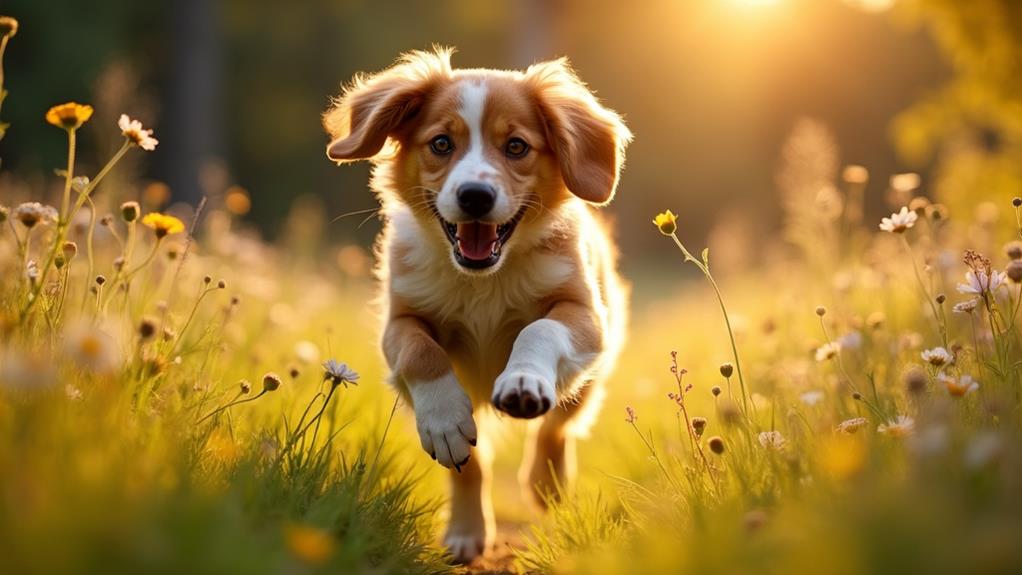
Building upon creative composition techniques, capturing authentic expressions in pet photography breathes life into your images. Engaging your pets with their favorite toys or treats is a surefire way to elicit genuine reactions. When pets are engrossed in playtime, you capture candid moments that showcase their unique personality. Familiar sounds can also encourage spontaneous behaviors, leading to memorable and heartfelt photos.
Patience is your best friend in these situations. Observe your pet's natural behaviors and wait for that perfect moment to click the shutter. Fleeting expressions often require timing and stillness, but the results are worth the wait. Shooting at eye level can create a more intimate connection with your pet, highlighting their unique expressions and personality traits. This perspective helps bring out the emotion in your photos, making them more relatable and engaging.
Incorporate the pet-owner bond by having owners interact with their pets during the shoot. This interaction can evoke natural, heartfelt expressions that are difficult to capture otherwise. By focusing on these techniques, you'll be able to photograph your furry friends with authenticity, ensuring that each shot is infused with their true spirit.
Post-Processing Essentials
In the world of pet photography, post-processing plays a crucial role in transforming your raw images into polished masterpieces. After capturing your pet portrait with a camera and using natural light, the next step is refining your photos to guarantee they truly shine. Start by utilizing editing software like Adobe Lightroom or Photoshop to adjust brightness and contrast. These adjustments improve a good photo by accentuating details and bringing out the best in your pet's features.
Cropping is another important tool that can dramatically enhance your composition. By eliminating distractions and using the rule of thirds, you focus attention squarely on your pet, making the image more engaging. Basic retouching techniques, such as removing blemishes or correcting exposure, can also improve the professionalism of your pet portraits.
When it comes to filters, apply them sparingly. While they can add an artistic touch, over-processing might detract from the natural beauty of your pet. Ultimately, always save your images in high resolution. This guarantees that when you print them for display or gifts, every detail is preserved, resulting in high-quality, stunning pet photos. With these post-processing fundamentals, your pet photography will reach new heights.