Tips for Caring for Your Cat’s Teeth: Maintaining Oral Health
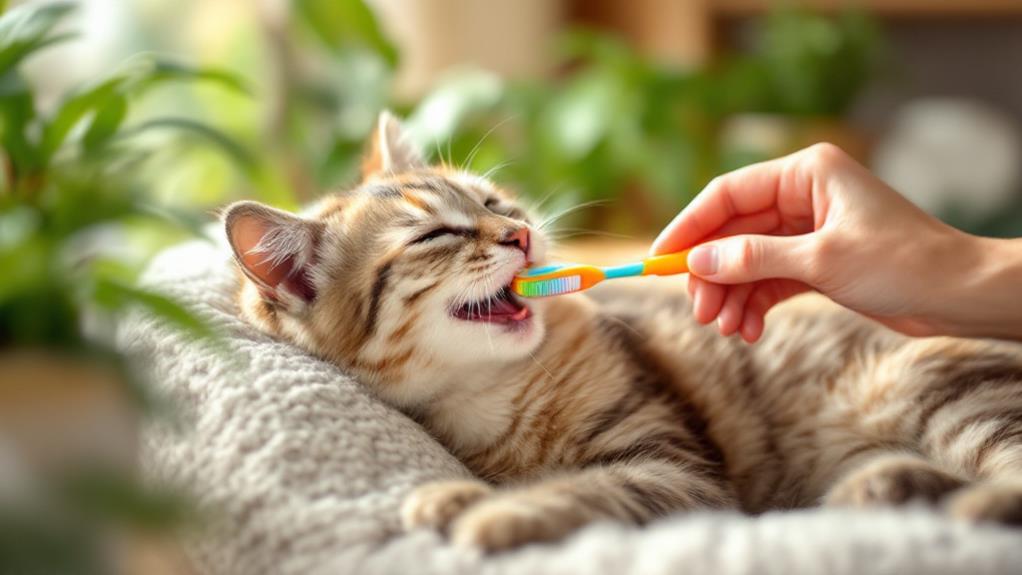
To keep your cat's teeth in top shape, brush them regularly using cat-safe toothpaste and a soft-bristle brush. Focus on the outer surfaces and brush daily if possible. Monitor their oral health by checking gums for redness or swelling and watching for bad breath, which can indicate issues. Schedule annual vet check-ups to catch any dental problems early. You can also investigate dental diets and treats that help reduce plaque. Dental toys are excellent for engaging your cat in healthy chewing habits. Following these tips will help maintain your cat's oral health and uncover even more effective strategies.
Brush Your Cat's Teeth
Brushing your cat's teeth is vital for maintaining their oral health and preventing periodontal disease. As a cat owner, you play an important role in your pet's dental care routine. Daily brushing is the most effective way to remove plaque, which can lead to periodontal disease if not addressed. Aim to brush your cat's teeth at least 2-3 times a week to keep their oral health in check.
Start by using cat-safe toothpaste since human toothpaste contains fluoride and other ingredients harmful to cats. Choose a soft-bristle brush designed specifically for pets to guarantee a gentle yet effective cleaning. Introduce the brushing process gradually. Let your cat taste the toothpaste and reward them with praise and treats to build a positive association.
Focus on brushing the outer surfaces of their teeth, especially the canine teeth, premolars, and molars, where plaque tends to build up. Even brushing the front teeth can benefit your cat's oral health. Regularly check their mouth for any signs of dental issues. Remember, maintaining your cat's oral health with daily brushing will complement regular veterinary care, helping to preserve the good bacteria in their mouth.
Recognize Bad Breath
Awareness of your cat's breath can be a crucial indicator of their oral health. If you've noticed persistent bad breath, it might be time to investigate further. Bad breath in cats often signals an imbalance of bacteria in the mouth. This imbalance can lead to dental diseases like gingivitis and periodontal disease if not addressed promptly. When plaque builds up on your cat's teeth, it can cause gum inflammation, contributing to the development of tartar and worsening the bad breath issue.
It's essential to recognize that persistent bad breath isn't just a minor inconvenience; it should prompt you to seek a veterinary dental evaluation. Early detection of potential dental problems through recognizing bad breath can prevent more severe conditions, including tooth loss and even systemic health issues that might affect your cat's heart and kidneys.
To manage and reduce bad breath, incorporate regular dental care into your cat's routine. This includes brushing their teeth and providing dental treats designed to combat plaque and bacteria. These steps not only improve oral health but also help maintain your cat's general well-being. Remember, staying proactive about your cat's dental care can make all the difference.
Schedule Annual Checkups
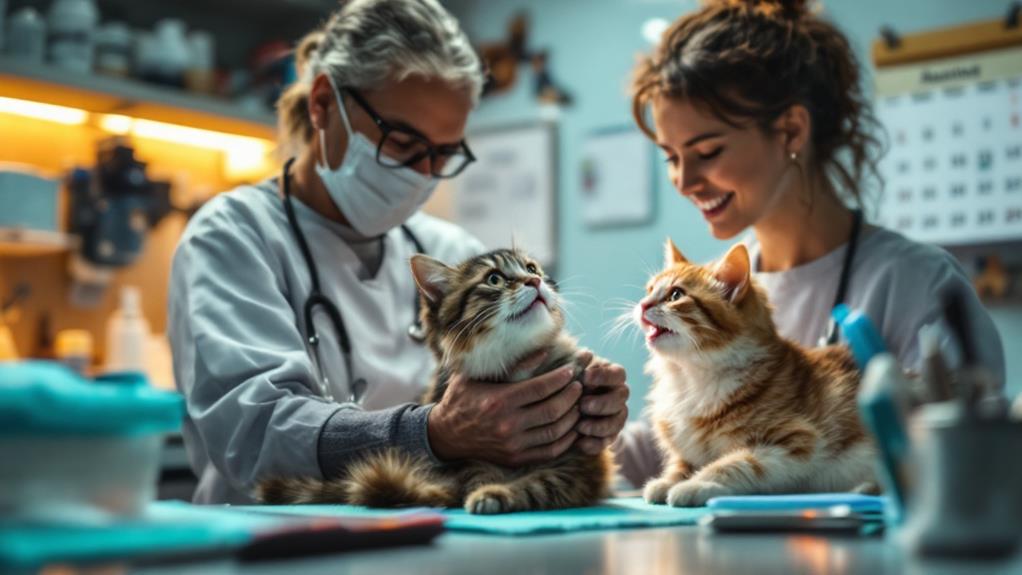
An significant part of maintaining your cat's dental health is scheduling annual check-ups. These visits are important as they help detect dental issues early, particularly periodontal disease, which affects 50-90% of cats by four years old. During these veterinary visits, professionals assess your cat's oral health by examining gum health, checking for plaque buildup, and noting any signs of bad breath or loose teeth.
Regular annual check-ups play an important role in preventing severe dental problems. Cats are experts at hiding discomfort, so these visits are key for uncovering hidden issues that might otherwise go unnoticed. By identifying dental problems early, you can avoid painful and costly procedures, like tooth extractions, later on.
A professional dental cleaning is often recommended by two years old, marking the start of ongoing dental care to guarantee your cat's teeth remain healthy as they get older. These cleanings, paired with annual veterinary visits, maintain gum health and prevent plaque buildup. By committing to regular check-ups, you're supporting your cat's general health and wellbeing. Don't wait for symptoms to appear—schedule those annual check-ups to keep your feline friend healthy and happy.
Explore Dental Diets
Exploring dental diets is a proactive way to support your cat's oral health. Prescription dental diets are specifically formulated to reduce plaque and tartar buildup. These diets use specialized kibble textures that mimic the action of a toothbrush when your cat chews, helping maintain oral hygiene. High-quality dry food is another effective option, as it can help scrape plaque off your cat's teeth, promoting general dental health.
Incorporating dental diets into your cat's routine can be improved with water additives, which supplement oral care by reducing plaque and bacteria levels. Furthermore, these diets often contain antioxidants that support overall health while specifically targeting oral hygiene. To guarantee that the dental diet you choose meets your cat's specific needs, consulting a veterinarian is vital. They can provide tailored dietary options that best suit your cat's dental requirements.
Here are some tips to keep in mind:
- Choose high-quality dry food to help scrape plaque off teeth.
- Consider water additives to improve home oral care.
- Look for diets with antioxidants for overall health benefits.
- Always consult a veterinarian for personalized advice on dental diets.
Offer Dental Treats

Regularly offering dental treats to your cat is an effective way to support their oral health. These treats have a crunchy texture that helps mechanically remove plaque and tartar as your cat chews. By reducing plaque and tartar buildup, dental treats play an essential role in maintaining your cat's overall dental health. Products like Greenies™ are clinically proven to be effective, making them a great supplement to your cat dental care routine. Ideally, you should offer these treats twice daily to optimize their benefits.
Look for VOHC-approved dental treats, as they've been tested for effectiveness in reducing dental disease. These treats often contain specific ingredients, such as antioxidants, that help maintain gum health. Incorporating them into your cat's diet not only promotes better oral health but also improves your cat's enjoyment of their dental care routine. While dental treats are beneficial, they should complement regular brushing and professional cleanings, not replace them.
Introduce Dental Toys
To improve your cat's dental hygiene, introducing dental toys is a smart move. These toys encourage chewing, which naturally reduces plaque buildup on your cat's teeth, supporting better oral health. Dental toys aren't just good for your cat's mouth; they also enrich your cat's environment by offering mental stimulation and physical activity. This added engagement can make dental care more enjoyable and less stressful, helping to establish a consistent oral health routine. Chewing on these toys can also improve gum health by increasing blood flow and reducing inflammation in the oral cavity.
Dental toys are designed with specific textures that help scrape away plaque and tartar, effectively complementing regular brushing routines. Integrating these toys into your cat's playtime is an excellent way to maintain their dental hygiene without much hassle. Here are some benefits of dental toys:
- Encourage Chewing: Helps reduce plaque buildup and promotes oral health.
- Enrich Environment: Provides mental stimulation and physical activity for your cat.
- Improve Gum Health: Increases blood flow and reduces inflammation.
- Support Consistent Care: Makes dental care enjoyable and complements brushing routines.
Incorporating dental toys into your cat's life can lead to healthier teeth and gums, making it a win-win for both you and your feline friend.
Monitor Oral Health
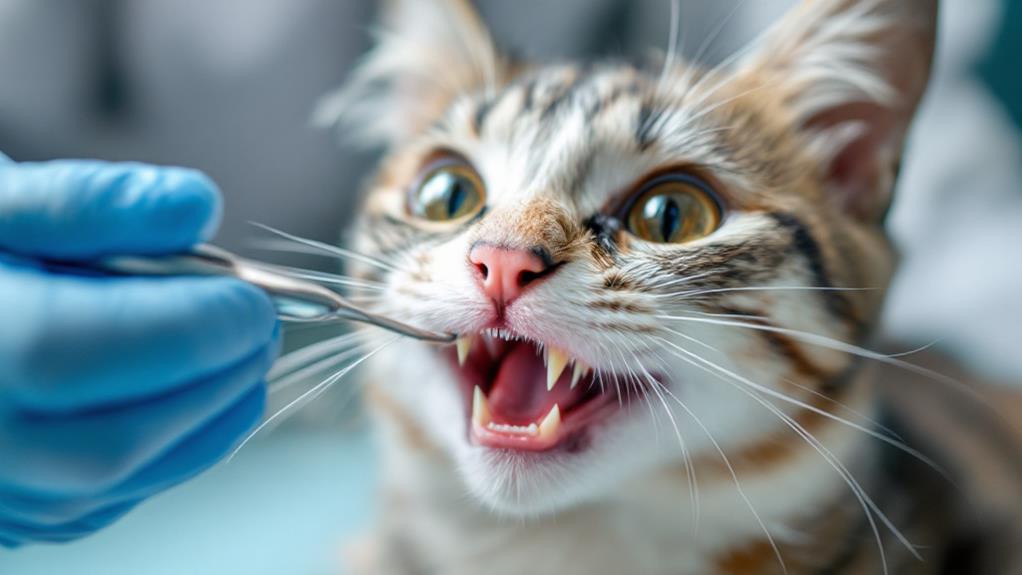
How often do you take a good look inside your cat's mouth? Regularly checking your feline's oral health is essential in preventing dental disease. Examine their gums for signs of swelling or redness, which could indicate dental problems. Healthy gums should be pink and smooth, not swollen or bleeding. Keep an eye out for plaque buildup, as it can lead to more serious issues if left untreated.
Persistent bad breath might seem like a minor inconvenience, but it can signal underlying dental disease. If your cat's breath doesn't improve despite maintaining good oral hygiene, it's time for a veterinary evaluation. Pay attention to your cat's eating habits as well. Hesitance to eat or difficulty chewing might mean they're experiencing oral discomfort, which could stem from dental issues.
Watch for excessive drooling or pawing at the mouth, as these behaviors can also indicate discomfort. Regularly monitoring your cat's oral health can help detect problems early, preventing unnecessary pain and complications. By taking these precautions, you guarantee your cat's teeth and gums stay healthy, reducing the risk of dental disease and promoting general well-being.
Consult Your Veterinarian
A proactive approach is key regarding your cat's dental health, and that means consulting your veterinarian regularly. Regular veterinary check-ups play an important role in monitoring your cat's dental health and catching potential issues early. Since 50-90% of cats show signs of periodontal disease by four years old, these appointments are significant. During annual exams, your vet can perform professional dental cleanings to tackle plaque and tartar that home care might miss. These cleanings are critical for maintaining your cat's oral health.
Your veterinarian can also guide you on the best dental diets and treats to help reduce plaque buildup. This proactive approach supports comprehensive oral health and keeps periodontal disease at bay. When you consult your veterinarian, you guarantee that any behavioral changes or signs of discomfort in your cat are addressed promptly. This vigilance helps in identifying underlying dental problems that require immediate attention, safeguarding your cat's long-term oral health.
Here's a quick checklist to remember:
- Schedule regular veterinary check-ups for your cat.
- Discuss any signs of discomfort or eating habit changes with your vet.
- Consider professional dental cleanings for thorough plaque removal.
- Ask your vet about dental diets and treats for your cat.