Tips and Techniques for Training a Well-Behaved Dog
To train a well-behaved dog, start by understanding their breed traits and emotional cues, which influence their behavior. Begin with basic commands like "sit" and "stay," using positive reinforcement such as treats or praise. Maintain consistency with a regular training schedule and use uniform commands to prevent confusion. Early socialization is key, so plan playdates and expose your dog to different environments. Address common issues like leash manners and barking through rewarding good behavior. With dedication, you'll build a stronger bond and foster an obedient dog. There's a lot more to uncover about turning your furry friend into the perfect companion.
Understanding Your Dog's Behavior
Understanding a dog's behavior is crucial for training them effectively. When you're trying to communicate and work with your furry friend, their body language is your best clue into what they're feeling. Dogs communicate through their tails, ears, and even the position of their bodies. A wagging tail might suggest excitement, but a tucked tail can indicate fear or anxiety. By observing these cues, you can tailor your training approach to match your dog's emotional state.
It's also significant to take into account breed traits when understanding your dog's behavior. Each breed comes with its own set of characteristics and instincts. For example, herding breeds like Border Collies are naturally inclined to chase and control movement, while a Labrador Retriever might be more focused on retrieving objects. Knowing these traits helps you anticipate how your dog might react in certain situations and allows you to create a training routine that aligns with their natural instincts.
Establishing Basic Commands
Mastering basic commands is the cornerstone of effective dog training and builds a strong foundation for more advanced skills. By focusing on fundamental commands, like the sit command and stay command, you're setting your dog up for success. Start with the sit command, as it's straightforward and vital for managing your dog's behavior. Hold a treat close to your dog's nose, then move your hand upward, allowing their head to follow the treat and naturally lower their bottom. Once they're in the sitting position, reward them immediately with the treat and verbal praise.
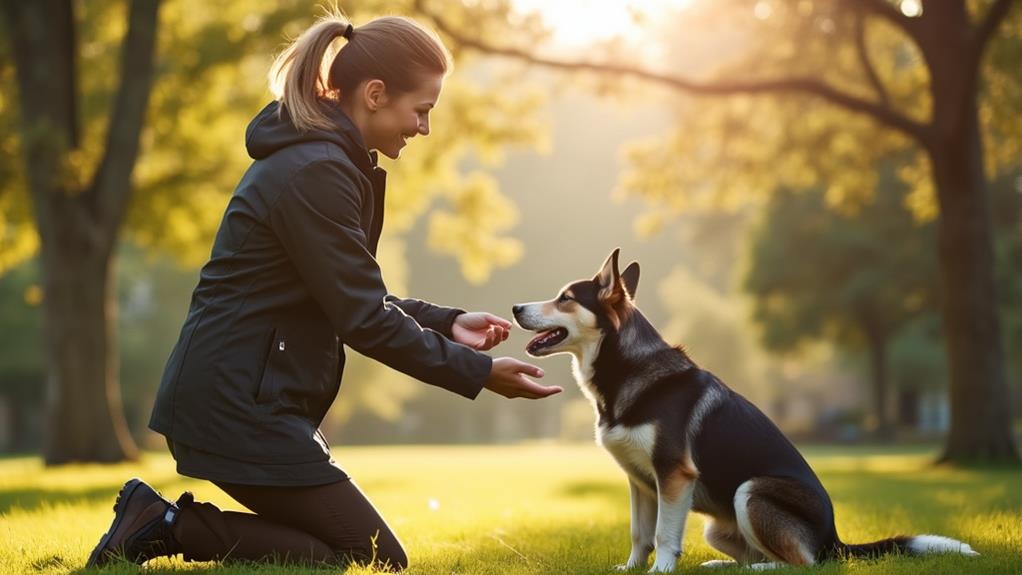
Next, work on the stay command. Ask your dog to sit, then open your hand in front of them, like a stop signal, and say "stay." Take a few steps back. If they remain in place, return and praise them. Gradually increase the distance and duration of the stay, ensuring you reward them each time they succeed. Consistency is key, so practice these commands daily in different environments to strengthen their understanding and reliability. By mastering these basic commands, you're not only enhancing communication but also building trust and respect between you and your dog.
Positive Reinforcement Techniques
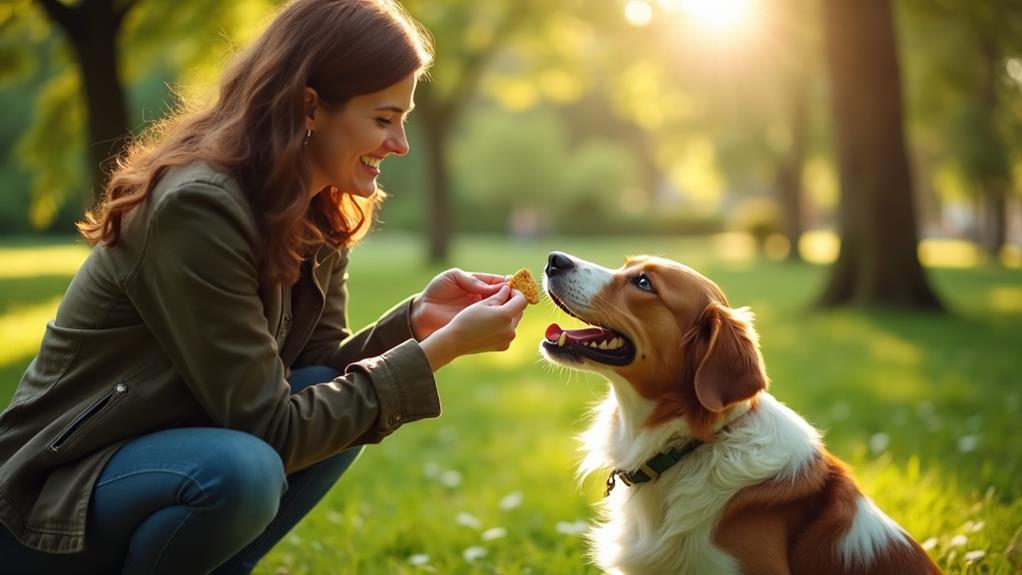
Regarding training your dog, positive reinforcement is an invaluable tool that encourages good behavior and strengthens your bond. By using this method, you focus on rewarding your dog for actions you want to see repeated. Start by establishing a reward system that includes treats, praise, or toys your dog loves. Consistency in rewarding guarantees your dog understands which behaviors earn them positive attention.
Clicker training is a popular and effective technique within positive reinforcement. With a clicker, you mark the exact moment your dog completes a desired action. The click sound becomes a cue that a reward is coming, creating a strong association in your dog's mind. Initially, you'll want to click and reward immediately to solidify this connection. Over time, your dog will begin to associate the click with positive outcomes, making training more effective and enjoyable for both of you.
Always remember to keep your training sessions short and engaging. This prevents your dog from losing interest and helps maintain their focus. By using positive reinforcement techniques, you're not only teaching your dog good manners but also building a trusting and loving relationship.
Consistency in Training
Consistency is vital when training your dog, as it establishes clear expectations and helps reinforce desired behaviors. When you maintain a regular training schedule, your dog knows what to expect and feels more secure. Begin with short, daily sessions, gradually increasing their duration and complexity. Consistency in reward timing is just as significant. Reward your pet immediately after they perform the desired action, ensuring they connect the reward with the behavior. This connection strengthens their understanding and encourages repetition of the good behavior.
Using consistent commands and cues is also critical. If you use different words or signals for the same behavior, your dog might become confused. Stick to one word or gesture for each command, and make sure everyone in your household does the same.
Remember, consistency isn't just about training sessions. It applies to all aspects of your dog's life.
- Show unconditional love: Your pet relies on your affection.
- Celebrate small victories: Each step forward is progress.
- Be patient: It takes time for habits to form.
- Provide clear boundaries: They need to know limits.
- Stay committed: Your dedication will pay off.
Socialization Strategies
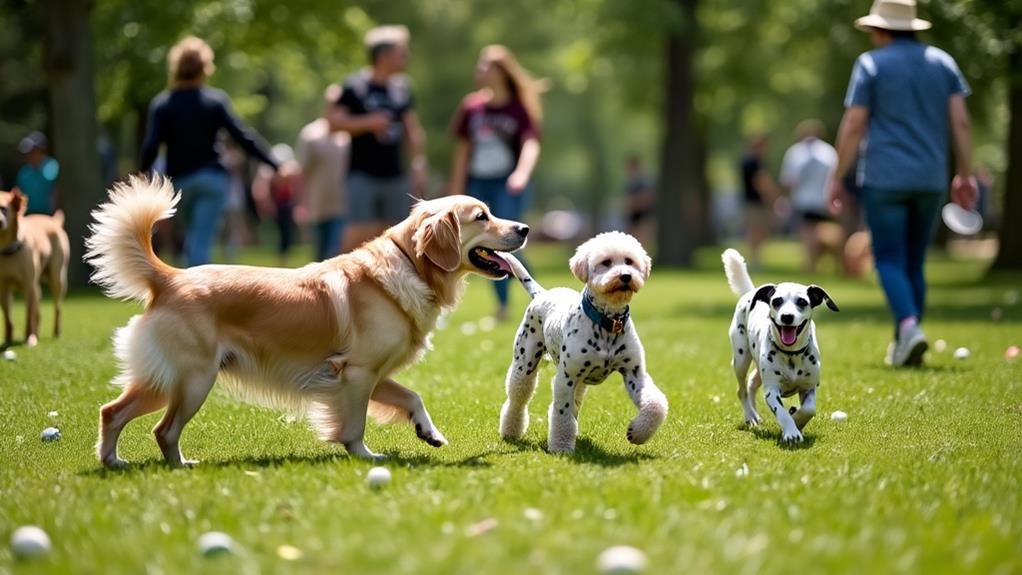
When you're training your dog, integrating socialization strategies early can make a significant difference. Socialization is essential for a well-rounded and confident dog. Start with playdate planning by arranging meetings with other dogs and their owners. This helps your dog learn appropriate behaviors and communication skills with their peers. Choose a neutral location, like a park, to guarantee both dogs are comfortable. Gradually introduce them and supervise interactions to prevent any negative experiences.
Public exposure is just as vital in your dog's socialization process. Take your dog to places with different stimuli, such as busy streets, pet-friendly stores, or outdoor cafes. This helps them get used to diverse noises, people, and environments. Make these outings positive by offering treats and praise for calm behavior. Don't rush; let your dog investigate at their own pace.
Addressing Common Behavioral Issues
While socialization lays the groundwork for a balanced dog, it's common to encounter behavioral issues that need addressing. Tackling these challenges with patience and consistency guarantees a harmonious relationship with your furry companion. Leash manners are essential; practice walking with your dog, rewarding them when they stay close without pulling. This builds a positive association with staying by your side.
Barking control can be managed by identifying triggers and redirecting their attention with commands or treats. Consistent training helps them understand when barking is unnecessary. Chewing prevention involves providing appropriate toys and guaranteeing your dog doesn't have access to items they shouldn't chew.
Jumping prevention requires teaching your dog to sit or stay when they get excited. Rewarding calm behavior reinforces that jumping isn't the way to get attention. Separation anxiety can be minimized by creating a safe space for your dog and gradually increasing the time they spend alone, reassuring them of your return.
Resource guarding often stems from insecurity. Slowly desensitize your dog by trading items they guard for treats, showing them sharing isn't a threat.
- Frustration when they pull on the leash
- Embarrassment from incessant barking
- Heartbreak seeing chewed personal items
- Annoyance at being jumped on
- Concern over their anxiety when left alone
Advanced Training Methods
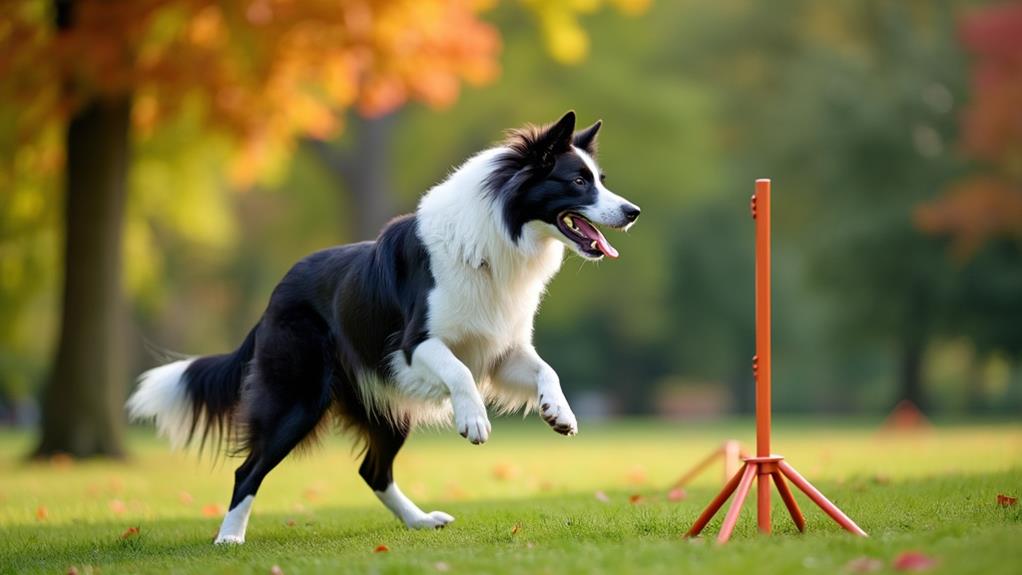
Once your dog has mastered basic commands and behaviors, it's time to improve their skills with advanced training methods. Start with clicker training to refine your dog's timing and precision. The clicker serves as a clear marker for desired behaviors, making it an effective tool for advanced obedience and trick training.
Incorporate scent work to challenge your dog's nose. This not only sharpens their natural abilities but also provides mental stimulation. Scent work can be a fun and rewarding activity, often used in problem-solving games that keep your dog's mind sharp.
Agility exercises are perfect for those energetic pups. Set up an obstacle course in your backyard or join a local agility class to enhance your dog's coordination and confidence. These exercises are also a gateway to canine sports, which are great for physical fitness and mental engagement.
Impulse control is essential in advanced training. Teach your dog to resist temptations and respond calmly to commands, even in distracting environments. This skill is critical for success in any advanced obedience setting.