Things You Didn’t Know About the Easter Bunny: Fun Facts and Legends
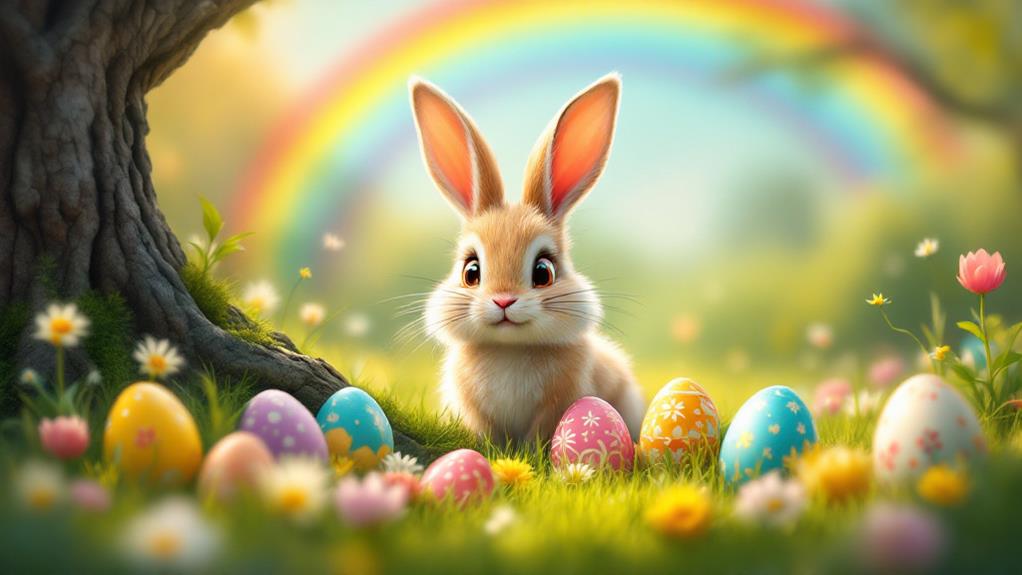
You might be surprised to learn that the Easter Bunny originated in 16th-century Germany as the Oschter Haws, a character linked to colorful eggs for well-behaved children. This fluffy icon is tied to Eostre, a goddess of fertility, and symbolizes spring's renewal. Legends suggest a magical transformation of a bird into a rabbit that could lay eggs. Around the world, the Easter Bunny takes different forms, like the Easter Bilby in Australia. There's even a tradition of flying church bells delivering treats in France. Uncover the many global variations and the delightful customs associated with the Easter Bunny. Are you look for the perfect pet? Learn three reasons French Bulldog Puppies are the best choice. Find french bulldog for sale sacramento.
Origins of the Easter Bunny
The Easter Bunny, known in its early days as Oschter Haws, primary hopped into history in Germany during the 1500s. This charming character was originally documented in German writings, where it was tied to Easter celebrations. The origins of the Easter Bunny are fascinating, linking back to a blend of cultural traditions and mythologies. In 1682, Georg Franck von Franckenau wrote about the tradition of the Easter Bunny laying colorful eggs for well-behaved children, adding a magical element to the holiday.
As German immigrants made their way to America in the 1700s, they brought with them the beloved Oschter Haws. It wasn't long before the Easter Bunny evolved into a central figure in American Easter celebrations, capturing the imaginations of children across the country. The symbolism of rabbits, associated with the pagan festival of Eostre, a goddess of fertility, underscores the connection to spring and new life.
Children would prepare nests made from leaves or grass, enthusiastically anticipating the Easter Bunny's arrival with its colorful eggs. This tradition highlights the Easter Bunny's role in childhood imagination and adds a touch of whimsy to the holiday.
Myths and Folklore
Many fascinating myths and folklore surround the Easter Bunny, weaving a tapestry of enchanting tales. One intriguing legend involves the goddess Eostre, who, according to myth, transformed her pet bird into a rabbit. This magical creature, retaining its bird-like ability to lay eggs, entertained children and laid the foundation for Easter traditions involving egg-laying hares. Another version of the story tells of a more vengeful Eostre, who punished her bird by turning it into a hare. This tale further cements the association between the Bunny, fertility, and the rejuvenating spirit of spring.
In folklore, rabbits possess a mystical reputation for their perceived ability to reproduce without mating, symbolizing abundance and fertility. This belief made them perfect icons for the season of renewal, and their imagery often appears in religious art depicting the Virgin Mary. The juxtaposition of the virgin birth and the prolific nature of rabbits adds another layer to their symbolic meaning. Some historians suggest that the myth of the egg-laying rabbit might have originated from Ukrainian folktales, rather than ancient pagan traditions, showing how legends can evolve and blend across cultures, enriching the Easter Bunny's fascinating narrative.
Global Easter Variations
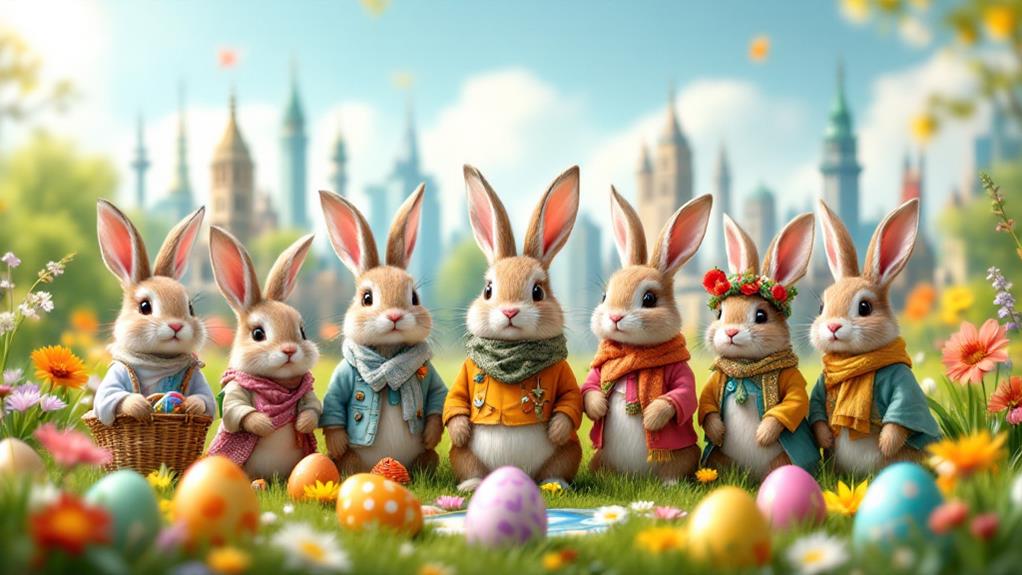
Around the world, Easter traditions differ widely, reflecting the diverse cultural landscapes that immerse into this festive season. In the United States, children enthusiastically anticipate the arrival of the Easter Bunny, who is believed to deliver colorful eggs and chocolate treats. These delightful Easter events ignite joy and excitement each spring. However, not every culture accepts the Easter Bunny.
In Australia, the Easter Bunny has been replaced by the Easter Bilby. This endearing native marsupial helps raise awareness about the environmental impact of invasive rabbit species. By choosing the Easter Bilby, Australians support local wildlife and enjoy chocolate bilbies instead.
Meanwhile, in France, it's not the Easter Bunny but flying church bells that are believed to deliver chocolate. After being blessed in Rome, these bells return home, dropping chocolate treats for children. This unique tradition adds a spiritual twist to the Easter celebrations.
In Sweden, children dress as witches and partake in "Easter witch" customs, going door-to-door seeking candy. Switzerland celebrates with the Easter Cuckoo bringing colored eggs, showcasing different animal representations. In Italy, rolling decorated eggs down hills symbolizes the rolling of the stone from Jesus' tomb, adding a historical touch to Easter traditions.
Modern Easter Bunny Celebrations
Easter today bursts with lively celebrations that blend tradition and modernity. You'll find community celebrations filled with colorful eggs and exciting Easter egg hunts. On Easter Sunday, the Easter Bunny becomes the star, delivering chocolate and Easter candy to enthusiastic children. In the U.S., the anticipation builds for the White House Easter Egg Roll, a tradition since 1878, where families gather on the lawn for egg-rolling games. This historic event draws around 40,000 visitors each year, showcasing how deeply rooted these traditions are.
Here are some highlights of modern Easter celebrations:
- Easter Bunny Visits: Children across the U.S. eagerly await the Easter Bunny, who leaves behind a trail of eggs and treats. Meanwhile, in France, kids look forward to flying church bells bringing chocolate gifts.
- Easter Parades: New York hosts an extravagant parade where participants flaunt intricate Easter bonnets, celebrating spring's arrival.
- Marshmallow Peeps: These have become a non-chocolate staple, with over 1.5 billion consumed each spring.
- Easter Bilby in Australia: Promoted since 1991, this native alternative to the Easter Bunny raises awareness about the environmental impact of invasive rabbits.
These celebrations reflect a lively mix of old and new, ensuring Easter remains a cherished holiday.
Economic Influence of Easter
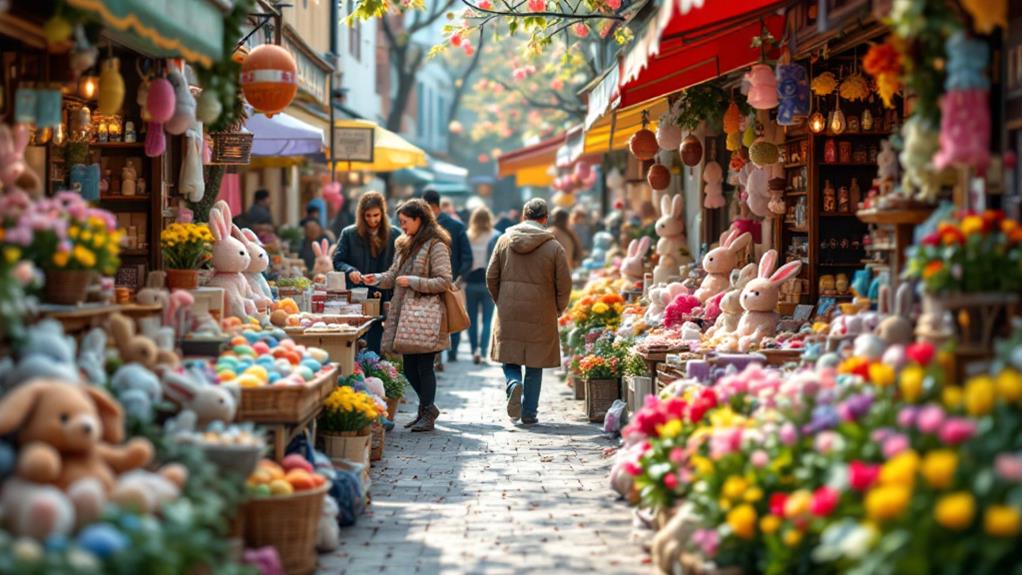
The financial impact of Easter celebrations is undeniable, with Americans expected to spend about $18.1 billion on festivities. This economic influence is largely driven by the Easter Bunny's popularity, as 87% of Americans plan to purchase candy, making Easter candy sales a significant force in the market. Surprisingly, these sales often surpass those of Halloween, showing how crucial Easter is for confectionery businesses.
You might be intrigued to know that approximately 90 million chocolate bunnies are produced annually, highlighting their vital role in stimulating candy sales. This high demand leads to increased seasonal employment opportunities in the confectionery industry, providing jobs during the Easter period. Local businesses also reap the benefits of holiday shopping, as consumers flock to stores, invigorating the economy and fostering community engagement.
Interestingly, the tradition of the Easter Bunny has roots in Pennsylvania Dutch heritage, where the "Osterhase" or Easter Hare was believed to lay eggs for children. This cultural influence continues to improve Easter celebrations, bringing people together and supporting local economies. By participating in these festivities, you're not only enjoying the holiday but also contributing to a larger economic cycle that supports jobs and local businesses.
Chocolate and Candy Traditions
Amidst the joyful chaos of Easter celebrations, chocolate and candy traditions hold a cherished place, enchanting sweet tooths of all generations. You've likely encountered the beloved chocolate bunnies that hop into stores each spring. With over 90 million chocolate bunnies produced annually, they're a staple of the season. Regardless of being hollow or solid, these chocolate treats honor the Easter Hare and bring smiles to many faces.
Easter is one of the top holidays for candy sales, with a wide array of sweets competing for your attention. Here are some delightful tidbits:
- Chocolate Bunnies and Eggs: These timeless icons remain at the heart of Easter baskets, with chocolate eggs adding to the festive charm.
- Marshmallow Peeps: As a top non-chocolate candy, these colorful, marshmallow treats see over 1.5 billion consumed each spring.
- Jelly Beans: They add lively hues and fruity flavors, complementing the colorful eggs of Easter.
- Candy Sales Surge: Americans spend considerably on Easter-themed confectionery, reflecting this holiday's sweet allure.
Enjoying these treats connects you to a colorful, delectable tradition that has delighted generations, making Easter a confectionery wonderland.
Unique Easter Records
Imagine standing in front of a massive structure that defies the typical Easter egg expectations. Meet the Vegreville Pysanka in Canada, the world's largest Easter egg. This astonishing creation weighs 5,000 pounds and reaches a towering 31 feet, crafted from 3,500 aluminum pieces. It's a marvel that showcases the creativity behind Easter celebrations, much like the famous chocolate bunnies and eggs we've come to love.
Speaking of chocolate, Easter holds some remarkable records. The largest chocolate bunny ever crafted measured a jaw-dropping 14.8 feet and weighed 9,359 pounds. Created by nine dedicated chocolatiers in Brazil, it holds a Guinness World Record, demonstrating the sweet side of Easter. With approximately 90 million chocolate bunnies produced annually, these treats are crucial to the holiday, though they're often hollow for safety reasons.
In the U.S., Easter candy sales sometimes even surpass Halloween, enhancing the candy industry considerably. Beyond candy, the White House Easter Egg Roll remains a cherished tradition where children gather to roll eggs, a nod to the playful spirit of Easter. From rabbits and hares to the largest chocolate creations, Easter's unique records are full of fun facts and legendary feats.