The Ultimate Guide to Choosing the Right Dog Crates and Kennels
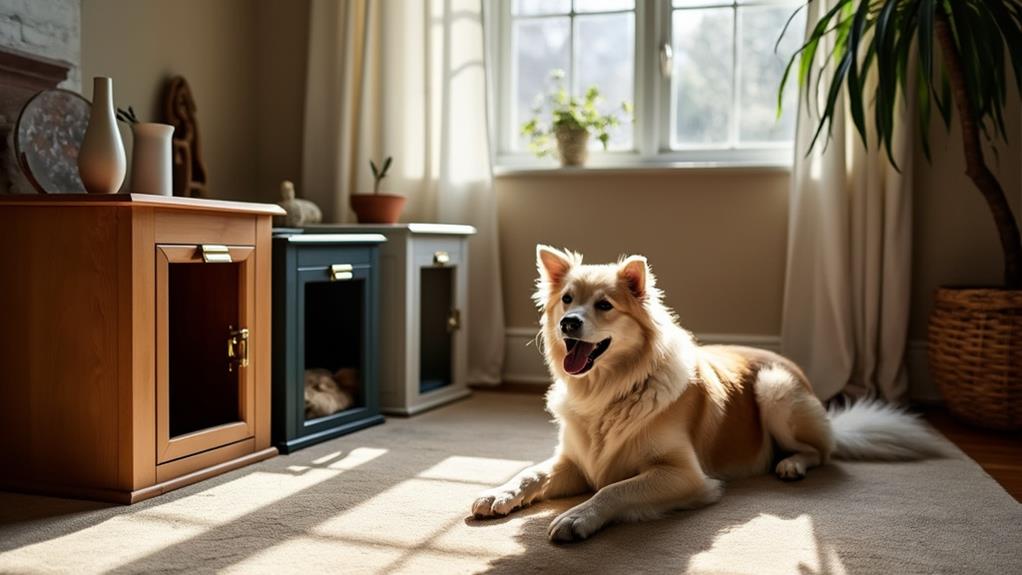
Choosing the right dog crate or kennel involves considering your dog's preferences and your lifestyle. Start by evaluating crate types, such as wire for airflow and visibility, or covered options for a cozy den-like feel. Consider size by measuring your dog and anticipating growth, ensuring comfort and safety. Materials matter too; wire, plastic, and soft-sided crates have different benefits. For travel, lightweight options with secure locks are key. Don't overlook features like ventilation and stable construction. Budget wisely by comparing costs without sacrificing quality. By exploring further, you'll uncover detailed tips for making the best choice for your furry companion.
Understanding Dog Crate Types
In relation to understanding dog crate types, you'll find there's a variety to choose from, each designed to cater to different needs. Wire crates, for instance, offer excellent airflow and visibility, making them ideal for dogs that prefer open spaces. However, if your dog experiences crate anxiety, a covered option like a plastic or fabric crate might be more comforting. These types provide a more den-like environment which can help soothe stressed dogs.
When considering breed specific needs, think about the nature and temperament of your dog. For smaller breeds, soft-sided crates are convenient and portable, perfect for travel. On the other hand, larger breeds might require sturdy, heavy-duty crates that can withstand more wear and tear. Breeds prone to anxiety or escape attempts may benefit from crates with reinforced locks and durable construction.
It's essential to match the crate type to your dog's personality and behavior. An anxious dog might feel calmer in a cozy, enclosed space, while an energetic breed may appreciate the openness of a wire crate. By aligning the crate type with your dog's unique needs, you're ensuring a safe, comfortable space that they'll consider their own.
Choosing the Right Size
Once you've identified the type of crate that suits your dog's temperament and needs, the next step is finding the right size. Getting the size right is essential for your dog's comfort and safety. Start by considering dog breed sizes; smaller breeds like Chihuahuas require less space, while larger breeds like Great Danes need more room to stretch and turn around comfortably.
To guarantee a perfect fit, use precise measuring techniques. Measure your dog from the tip of the nose to the base of the tail, adding a few inches for movement. Then, measure from the floor to the top of their head when sitting. This guarantees the crate allows them to stand, lie down, and turn easily. If your dog is still growing, factor in their expected adult size.
Exploring Material Options
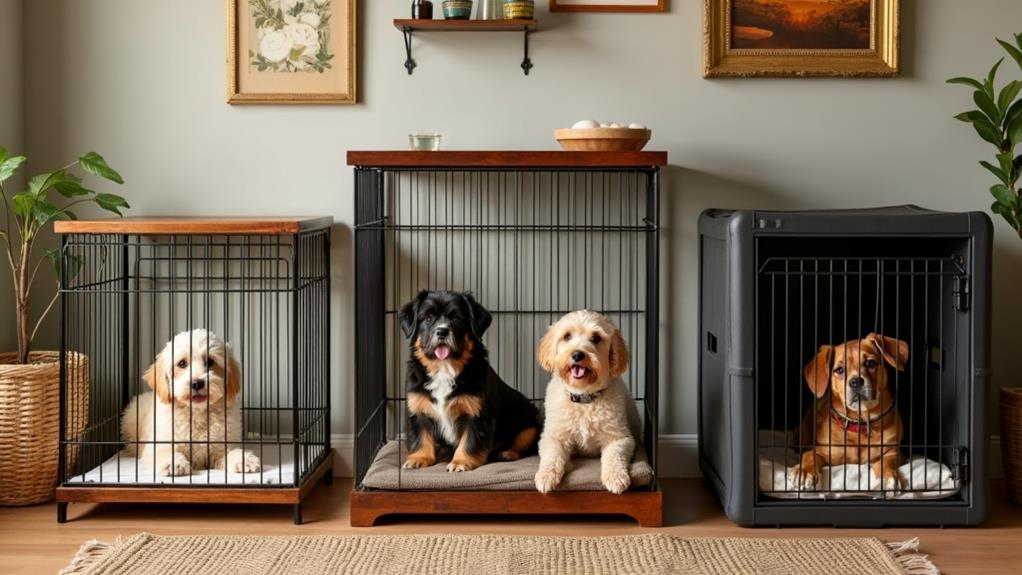
When selecting a dog crate or kennel, understanding the material options is crucial for both durability and your pet's comfort. You'll mainly encounter two popular choices: wire and plastic. Each has its pros and cons, so it's vital to reflect on your dog's needs and your lifestyle.
Wire crates offer excellent ventilation and visibility, allowing your dog to feel part of the household while maintaining a secure environment. They're also easy to clean and provide flexibility with removable dividers, making them perfect for growing puppies. However, wire crates can be heavier and noisier, which might not be ideal for every pet.
On the other hand, plastic crates are often more enclosed, offering a cozy, den-like atmosphere that some dogs find comforting. They excel in providing privacy and are generally quieter due to their solid walls. While they're typically lighter and easier to transport, they may lack the ventilation that wire crates offer.
For colder climates, reflect on insulated options to keep your pet warm and comfortable. Insulated crates can be particularly beneficial for outdoor kennels or when your dog spends time in cooler environments. Balancing these factors will help you choose the right crate for your furry friend.
Portability and Travel Needs
Frequently, portability is a key consideration when choosing a dog crate or kennel, especially if you travel often or need to move the crate around the house. It's crucial to look for travel-friendly options that cater to both your and your dog's needs. If you're planning on taking flights with your furry friend, verify the crate complies with airline regulations. Airlines have specific requirements regarding size, ventilation, and security, so double-check these before making a purchase.
Look for crates that are lightweight yet sturdy enough to handle frequent handling. Soft-sided crates are great for short trips and can be easily folded for storage. They're also easier to carry and often fit well in car trunks or airplane cargo holds. However, if your dog is an escape artist or likes to chew, a solid, hard-sided crate might be a better option.
For car travel, consider crates that fit securely in your vehicle and offer your pet comfort and safety. Some crates come with wheels and handles, making them easier to transport. Ultimately, the right choice will depend on your travel habits and your dog's specific needs. Choose wisely to guarantee smooth, stress-free travels.
Assessing Durability Features
Selecting a dog crate or kennel with durable features is vital to guaranteeing it withstands the test of time and your dog's activities. When evaluating durability, focus on materials and construction. Look for crates made from heavy-duty steel or reinforced plastic, as these materials meet high durability standards. Check the joints and seams; they should be sturdy and well-constructed to prevent wear and tear.
Consider the environmental factors your crate will encounter. If you plan to use the crate outdoors, it should be weather-resistant. UV protection and rust-proof coatings are important for preventing damage from sun and rain. For indoor use, verify the crate can withstand your dog's chewing and scratching, particularly if your dog is still a puppy or an aggressive chewer.
Examine the crate's stability. A durable crate shouldn't wobble or tip easily, even if your dog moves around inside. Test the locks and latches to verify they're strong and secure. Flimsy locks can lead to quick escapes and possible damage. By paying attention to these details, you'll find a crate that not only lasts but also provides a safe, comfortable space for your furry friend.
Safety Considerations
Guaranteeing your dog's safety is paramount when choosing a crate or kennel. Start with dog crate safety by selecting a model with secure enclosure features that prevent escape. A strong latch system is essential for kennel escape prevention. Consider the material and construction quality to guarantee your dog remains safe inside. Furthermore, pay attention to crate ventilation considerations. Proper airflow guarantees your pet stays comfortable and reduces anxiety.
Dog anxiety management is another significant aspect. Choose a crate that offers visibility or a cover option if your dog feels more secure when shielded from view. This helps alleviate stress and makes the crate a safe haven rather than a source of fear.
Safe travel practices are indispensable if you plan to transport your dog. Validate the crate or kennel is designed for travel, with secure tie-down points and handles for easy carrying. It should be sturdy enough to protect your dog in case of sudden stops.
When deciding on crate placement tips, avoid areas prone to drafts or direct sunlight. Finally, include emergency preparedness by familiarizing your dog with the crate, guaranteeing quick and calm responses during urgent situations. A well-chosen crate supports your dog's safety and well-being.
Comfort and Accessories
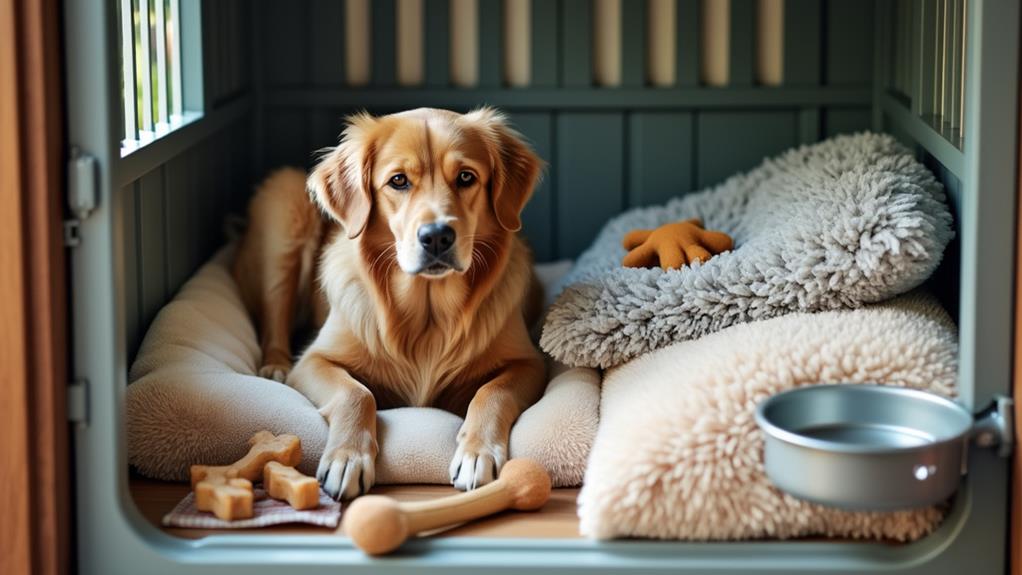
While safety is vital, comfort is also significant when selecting a dog crate or kennel. Start by choosing a cozy dog bed that fits snugly inside the crate. This guarantees your furry friend has a soft place to relax. Add crate blankets for extra warmth and comfort, especially in colder months. Including comfort toys can help ease anxiety and make the space feel more inviting.
Temperature control is another important factor. Look for crates with good ventilation options to maintain a comfortable environment. If your crate lacks built-in airflow, consider adding a fan or positioning it near a window. During hotter months, a cooling mat can help regulate temperature.
Crate dividers are useful if you have a growing puppy, allowing you to adjust the space as they grow. This prevents them from feeling overwhelmed in a too-large area. A crate cover can also provide a sense of security by simulating a den-like atmosphere, which can be especially comforting during stressful times.
Lastly, consider using calming sprays to create a soothing environment. These sprays can help your dog feel more at ease, making the crate a pleasant space they'll enjoy.
Crate Training Tips
Once you've set up a comfortable and inviting space for your dog, it's time to focus on effective crate training. Start by introducing your dog to the crate slowly. Let them investigate it without pressure, using treats and toys to create positive associations. Gradually increase the time they spend inside, ensuring they feel secure and relaxed.
Crate training has numerous behavioral benefits. It provides your dog with a safe, quiet space to retreat, reducing stress and promoting relaxation. This sense of security can help manage crate anxiety, a common issue if not addressed early. To minimize anxiety, avoid using the crate as a punishment tool. Instead, make it a pleasant experience by maintaining a consistent routine.
Consistency is key. Establish a schedule for feeding, potty breaks, and crate time. This helps your dog understand what to expect, reducing anxiety and promoting good behavior. Always reward calm behavior with praise or treats when they're in the crate.
Budget and Value
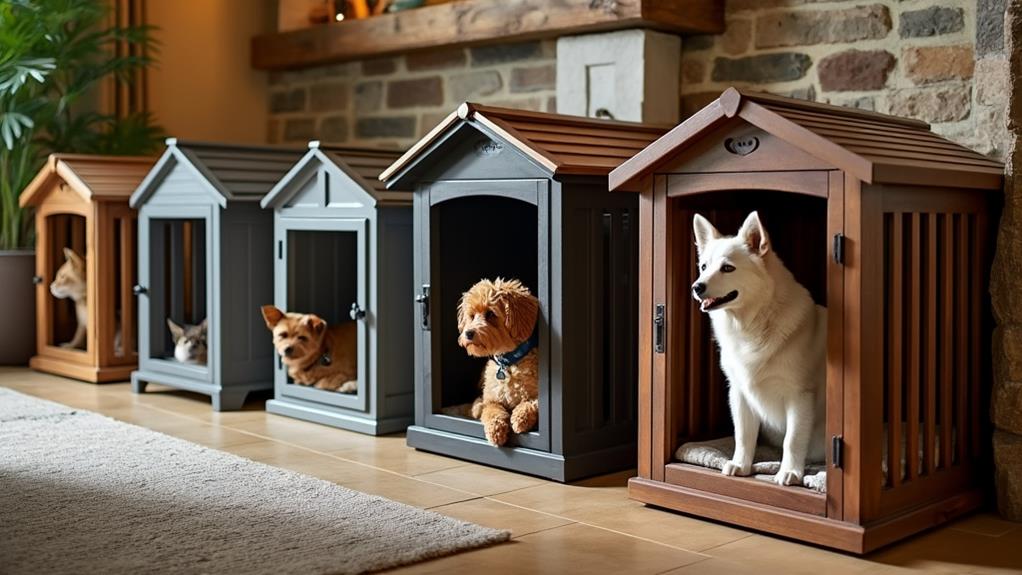
How do you confirm you're getting the best value for your money when purchasing a dog crate or kennel? Start by conducting a cost comparison. Look at different brands and models to see which offers the best price without compromising on quality. A thorough value assessment will help you balance quality and cost effectively. Don't just grab the cheapest option; consider if it's a long-term investment that will withstand wear and tear.
Explore budget tips like setting a price range before you start shopping. This helps narrow down affordable options that meet your needs. Remember, sometimes spending a little more initially can save money in the long run by avoiding frequent replacements. Check for discount shopping opportunities, such as seasonal sales or coupon codes, to stretch your budget further.
Brand reliability is another significant factor. A reputable brand often guarantees better quality and longer-lasting products. Read reviews and ask for recommendations to confirm you're choosing wisely. Ultimately, finding a balance between cost and quality guarantees you're making a smart investment. With these strategies, you'll find the right crate or kennel that offers great value without breaking the bank.
Related posts