The Spotted Ocicat: a Wild Look With a Loving Heart
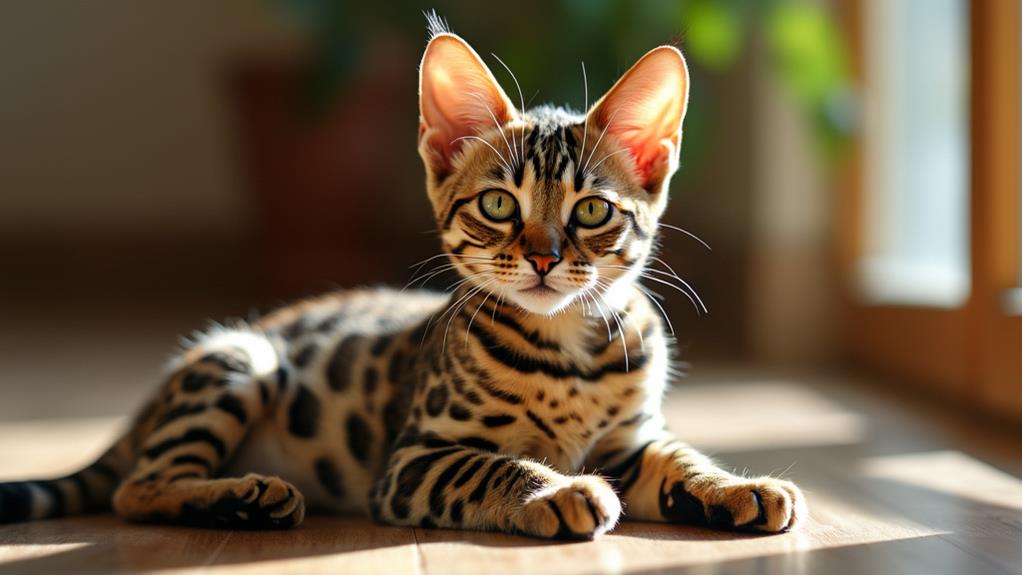
Meet the Ocicat, a feline wonder with the exotic spots of a wild ocelot and the heart of a devoted friend. Originating from a 1964 breeding experiment, the Ocicat sports a muscular build, almond-shaped eyes, and a stunning spotted coat in 12 color variants. Their confident, social nature means they'll thrive in a lively household with plenty of playtime and companionship. Intelligent and curious, they're always ready to learn new tricks. Though they may face some genetic health issues, regular vet check-ups can keep them thriving. Uncover more about this extraordinary breed with a one-of-a-kind blend of traits.
Key Takeaways
- The Ocicat boasts a wild, ocelot-like spotted coat while maintaining a loving and social temperament.
- This medium to large-sized breed is muscular, with males weighing 9-14 pounds and females 6-9 pounds.
- Known for its intelligence, the Ocicat can learn tricks and thrives in interactive, social environments.
- Health concerns include hypertrophic cardiomyopathy and renal amyloidosis, requiring regular veterinary check-ups.
- Minimal grooming is needed; weekly brushing helps maintain the Ocicat's coat health and reduces shedding.
Origins and Development
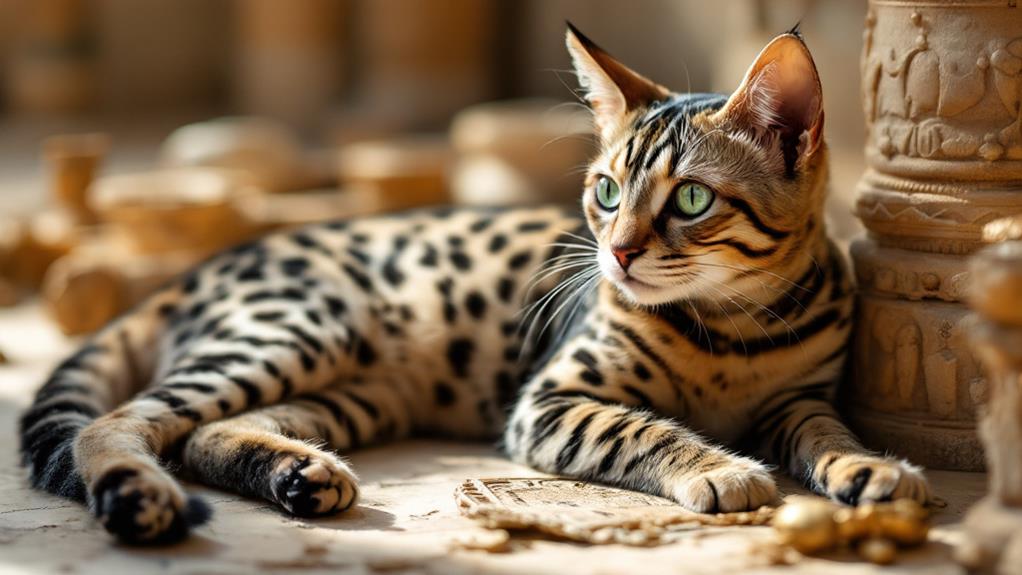
The Ocicat's origins trace back to 1964 when Virginia Daly unintentionally created the breed during a breeding experiment with a ruddy Abyssinian male and a seal point Siamese female. Her goal was to develop a cat with a wild appearance, and the initial notable kitten, Tonga, did just that with its striking resemblance to an ocelot. This spotted coat captured the imagination, prompting further breeding efforts to refine the Ocicat's unique look.
Dr. Clyde Keeler, a geneticist, encouraged Daly and others to continue breeding the Ocicat, hoping to recreate the Egyptian Spotted Fishing Cat. The breed's lineage expanded to include contributions from American Shorthairs, enhancing their genetic diversity and solidifying their stunning wild appearance.
The Ocicat's expedition to recognition took time. In August 1986, The International Cat Association (TICA) granted them championship status, a significant milestone that solidified their growing popularity. Just a year later, the Cat Fanciers Association followed suit, acknowledging the Ocicat's place in the cat fancy community. Today, the Ocicat stands out not just for its exotic appearance but also for its loving nature, a reflection of Virginia Daly's accidental yet impactful breeding experiment.
Distinctive Physical Traits
When you initially set eyes on an Ocicat, its muscular build and athletic grace immediately stand out. This medium to large-sized breed showcases a physical presence that's both powerful and elegant, with males weighing between 9-14 pounds and females between 6-9 pounds. Their athletic build is complemented by an elongated body structure, deep chest, and moderately long limbs, exuding a sense of strength and agility.
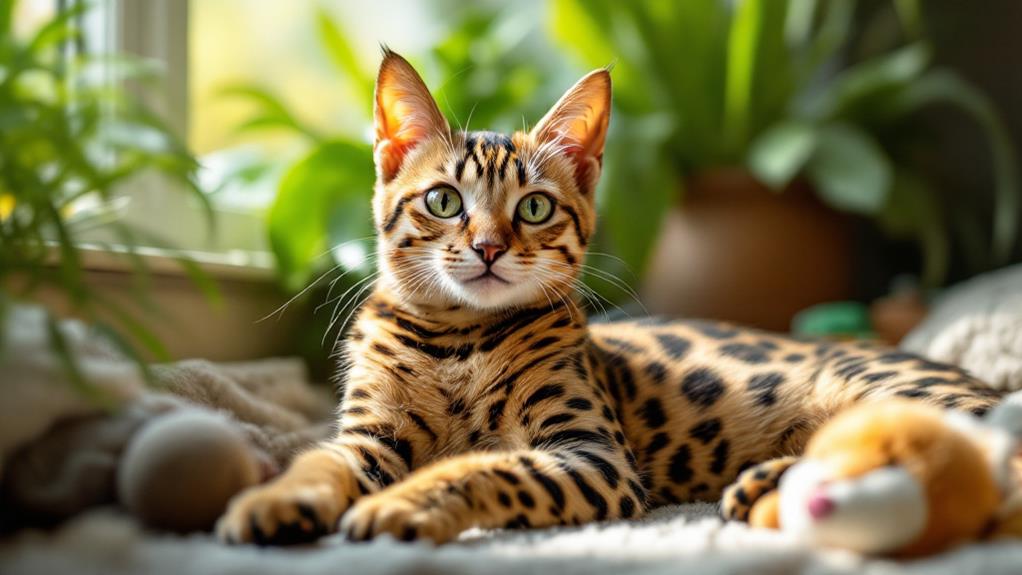
One of their most striking physical characteristics is their unique coat. The Ocicat's short coat is adorned with a distinctive spotted pattern that mimics the appearance of wild cats. This attention-grabbing design comes in 12 color variants, such as Brown, Chocolate, Cinnamon, Blue, Lilac, and Fawn, with each available in both solid and silver versions. Despite its exotic look, the coat requires minimal grooming. A weekly brushing with a rubber brush is sufficient to keep it shiny and healthy.
Adding to their exotic allure are their large, almond-shaped eyes. Slightly slanted, these eyes improve the Ocicat's wild cat resemblance, making them truly enchanting. With such remarkable features, the Ocicat is a breed that commands attention and admiration.
Personality and Behavior
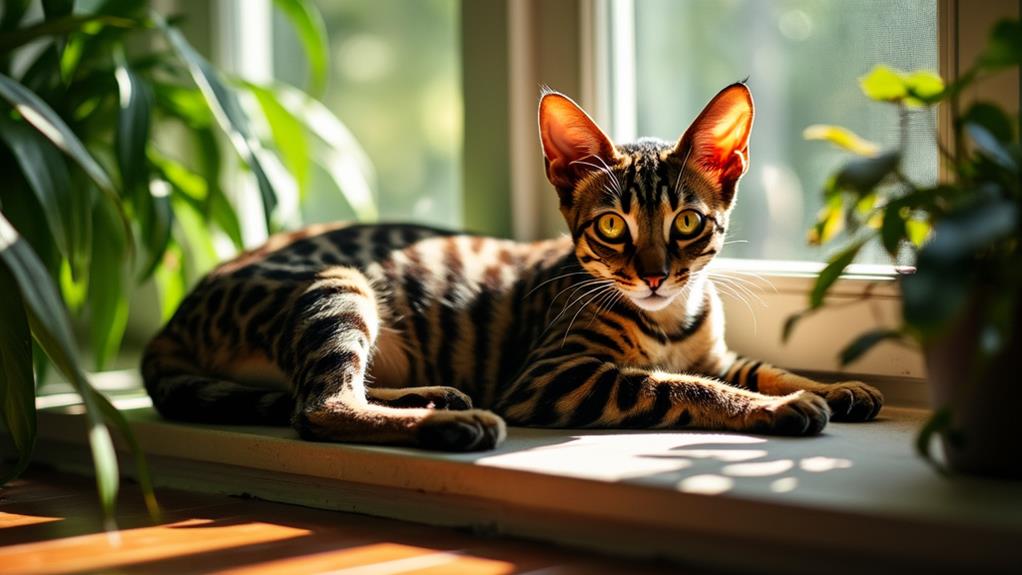
Beyond their striking appearance, Ocicats captivate with their vivacious personality and engaging behavior. These confident cats are known for their outgoing personalities, thriving in social environments where they can interact with both family members and guests. Their highly intelligent nature makes them quick learners, capable of mastering tricks like fetching and playing tug-of-war. You'll find that their playful nature makes them perfect companions for an active household.
Ocicats love to engage in active play, often displaying high energy levels balanced with a calm temperament. This makes them delightful pets for those who enjoy a lively home atmosphere. Their social nature means they don't like being left alone for long periods, so their need for companionship is paramount.
Ocicats are also incredibly expressive pets, communicating through charming vocalizations inherited from their Siamese ancestry. These sounds add to their interactive charm, making them not just pets, but active members of your family.
- Engage in spirited games and tricks, showcasing intelligence.
- Thrive in energetic homes, seeking companionship.
- Express themselves with vocalizations, adding to their charm.
With their engaging and dynamic personalities, Ocicats truly bring joy to any household.
Common Health Concerns
Diving into Ocicats' health concerns, you'll find that they're genetically predisposed to several conditions that require vigilant monitoring. Hypertrophic cardiomyopathy (HCM) is the most prevalent heart disease in these cats, potentially leading to heart failure if not kept in check. Regular veterinary check-ups, including annual heart screenings, are vital for early detection and management of this hereditary condition.
Renal amyloidosis also poses a notable threat, causing organ dysfunction from protein deposits. Symptoms like excessive thirst and frequent urination may indicate this condition, so staying alert and consulting your vet at the initial signs is critical. Routine assessments help in catching these health issues early on, ensuring your Ocicat stays healthy.
Another hereditary condition to watch for is pyruvate kinase deficiency, which can lead to intermittent anemia. Fortunately, DNA testing can identify this issue early, enabling timely intervention. Also, don't overlook progressive retinal atrophy, which might affect your Ocicat's vision as soon as 1.5 to 2 years of maturity. Routine eye examinations can detect this condition before it greatly impacts your pet's quality of life. Proactive monitoring and early intervention are key to managing these common health concerns in Ocicats.
Optimal Living Conditions
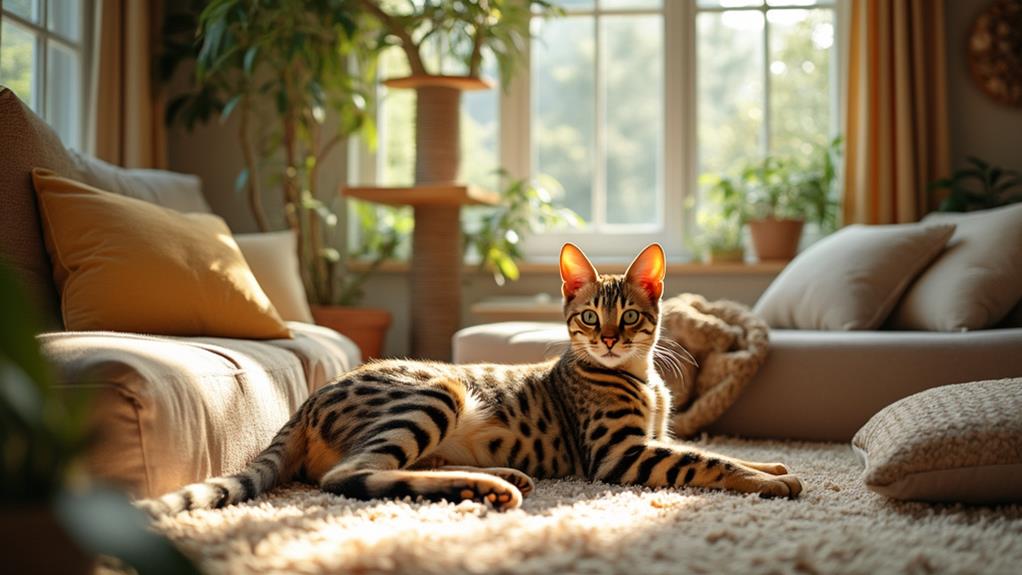
While monitoring health concerns in Ocicats is fundamental, creating the right living environment also plays a significant role in their general well-being. These cats, with their wild appearance but domestic nature, thrive in active and energetic social environments. They love interaction, so it's best to have them in lively households where they can engage with family members, other pets, and children. Their adaptable nature makes them suitable for both apartments and houses, but you'll need to watch out for their inquisitive nature around fragile items.
To keep an Ocicat happy, regular playtime and exercise are essential. They need interactive toys and space for jumping to satisfy their energy levels and prevent boredom. A clean litter box and consistent grooming routines are also critical, as these cats appreciate a tidy living space. Their love for social activities means they easily adjust to new environments, making them perfect companions for families who travel or have frequent visitors.
Here's what to keep in mind for ideal Ocicat living conditions:
- Guarantee regular interaction in a lively household.
- Provide ample playtime and exercise opportunities.
- Maintain cleanliness with a clean litter box and grooming routines.
Care and Maintenance
Caring for an Ocicat, with its elegant spotted coat and lively demeanor, involves a few straightforward steps. Ocicats have a low-maintenance coat that benefits from weekly brushing. This not only reduces shedding but also keeps their fur in a healthy shine. Given their active lifestyle, you'll want to guarantee they receive regular physical activity. Interactive toys are perfect for engaging their curious minds and keeping them physically and mentally stimulated.
Diet plays a significant role in their care. A high-protein diet is important, so opt for high-quality cat food, feeding your Ocicat 10-15 small meals daily. This supports their energy needs and general well-being. Routine veterinary check-ups are crucial too. Aim for biannual visits to monitor their health and screen for hereditary conditions prevalent in the breed.
Hygiene is another key aspect of Ocicat care. A clean litter box is important, as they are sensitive to cleanliness. Regular cleaning will keep your Ocicat comfortable and healthy. By focusing on these elements—brushing, play, diet, check-ups, and hygiene—you'll guarantee your Ocicat leads a happy, healthy life, full of vigor and affection.