The Most Dangerous Pets in Pop Culture: Fascinating Animals From TV and Film
You're about to investigate iconic pets that become dangerous creatures in pop culture. Remember Cujo from the 1983 film? The loyal St. Bernard turned nightmare illustrates how domesticated animals can transform into fearsome threats. Plunge into the ocean with Jaws, the great white shark that redefined ocean predators. It's classic, just like Hitchcock's "The Birds," where our feathered friends become menacing attackers. Alligators in "Crawl" and giant crocodiles in "Lake Placid" highlight nature's unpredictability. These tales capture our imagination by blurring lines between adorable and terrifying. Uncover how unexpected threats can emerge from the most familiar places.
Key Takeaways
- "Cujo" showcases a rabid St. Bernard, highlighting the terrifying potential of domestic pets.
- "Jaws" embeds fear of ocean predators into culture, portraying a great white shark as a monstrous threat.
- "Arachnophobia" blends humor with horror, focusing on deadly spiders invading a town.
- "The Birds" portrays birds as menacing attackers, instilling fear of avian threats in viewers.
- "Anaconda" confronts audiences with a giant snake, illustrating the lethal capabilities of reptiles.
Iconic Killer Animals in Film
Why do killer animals captivate our imagination in film? It's partly because they transform familiar creatures into threats, twisting our perception of the natural world. Take "Jaws" (1975), where a great white shark turns a serene beach town into a scene of terror. This film not only established the summer blockbuster genre but also made us wary of the ocean's depths, forever associating sharks with fear.
Then there's "Cujo" (1983), which takes man's faithful companion, a dog, and turns it into a nightmare. Trapped in a car by a rabid St. Bernard, a mother and son face intense isolation and fear. This film distorts the notion of pets as protectors, leaving you questioning the safety of even the most loyal animals.
In stark contrast, "Night of the Lepus" (1972) presents killer rabbits—yes, you read that right. These mutated bunnies humorously challenge the horror genre's seriousness. The film's absurdity underscores how seemingly harmless animals can become sources of terror.
Each of these films employs killer animals to investigate deeper themes of fear, survival, and the unpredictable nature of the world, ensuring they stick in our minds long after the credits roll.
Modern Killer Animal Films
In modern cinema, killer animal films continue to thrill and terrify audiences by tapping into our primal fears and fascination with nature's unpredictability. "Crawl" (2019) engages you in a nerve-wracking battle against alligators amidst a hurricane, reminding us of the relentless power of nature. "Nope" (2022) uses a violent chimpanzee to investigate themes of spectacle and societal fears, bringing a fresh perspective to the genre.
These films, along with other chilling tales, showcase the terrifying potential of animals on this list:
- Open Water (2003) places you in the middle of the ocean, surrounded by sharks, creating a tense atmosphere that highlights vulnerability and survival instincts.
- Arachnophobia (1990) cleverly blends humor with horror as deadly spiders invade a town, playing on our often irrational fear of creepy crawlies.
- Anaconda (1997) delivers thrills with a giant snake, making you confront the nightmarish thought of nature's most fearsome predators.
These killer animal films provide both suspense and entertainment, tapping into deep-seated fears while reminding you of nature's untamed essence. Each story distinctly examines the unpredictability and danger posed by these formidable creatures, solidifying their place in the annals of horror cinema.
Survival Against Nature
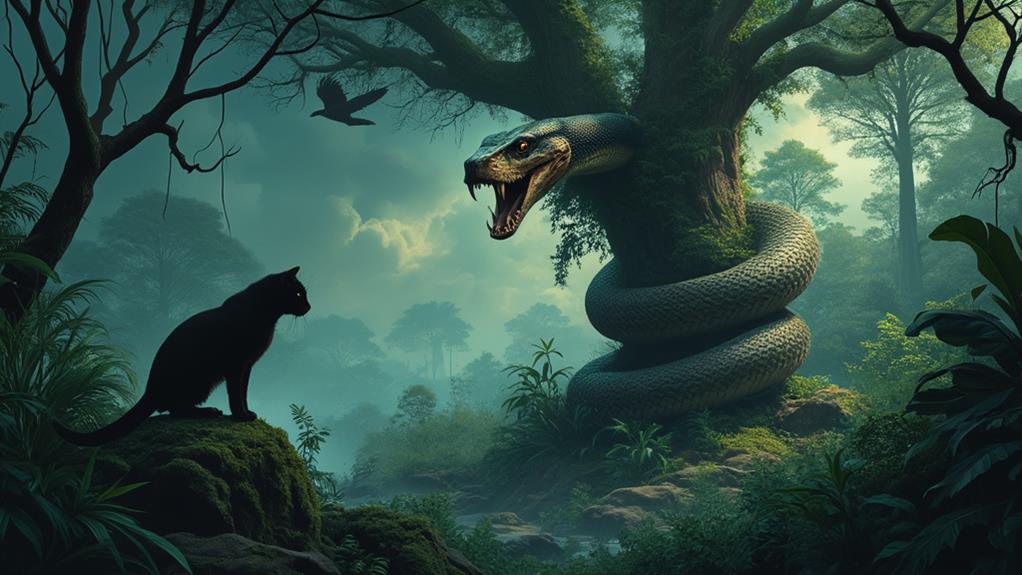
Survival against nature often tests the limits of human endurance and ingenuity, pitting you against the raw power of the natural world. In "The Grey," you find yourself amidst a snowy Alaskan wilderness, where your instincts and wits are your only allies against a relentless pack of wolves. These animals embody nature's raw, untamed force, testing your resolve and reminding you of the thin line between predator and prey.
In "The Edge," facing a bloodthirsty bear turns survival into a battle of wits and strategy. This isn't just a fight against a fearsome animal but a test of your ability to harness your environment and think like the bear itself. Your only loyal companion is your will to survive.
Meanwhile, "Lake Placid" and "Piranha" plunge you into the chaotic unpredictability of water-bound threats. Regardless of whether it's fending off a giant crocodile or genetically modified fish, these aquatic nightmares push you to adapt quickly or become nature's next victim. Survival becomes a test of both courage and creativity, where the line between humor and horror blurs. Here, the true danger lies in underestimating nature's unpredictable fury.
Dinosaurs in Pop Culture
Fascination with dinosaurs has captivated audiences for decades, largely driven by their portrayal in pop culture. You've likely encountered these prehistoric giants through numerous media, especially films like "Jurassic Park" (1993). This groundbreaking movie showcased realistic CGI dinosaurs, forever influencing how the public perceives these ancient creatures. The "Jurassic Park" franchise, grossing over $5 billion worldwide, has not only become one of the highest-grossing film franchises but also sparked immense interest in paleontology.
In addition to "Jurassic Park", there are several other notable portrayals of dinosaurs in pop culture:
- "The Land Before Time": This animated film series introduced children to dinosaurs, often depicting them as friendly and heroic, fostering early fascination.
- "Dinosaurs" (1991-1994): A television show blending humor and social commentary with a family of anthropomorphic dinosaurs, addressing themes like evolution and extinction.
- Iconic figures: Dinosaurs such as T. rex and Velociraptor have become symbols of danger and adventure, emphasizing their size and ferocity.
These portrayals have left a lasting impact, making dinosaurs an enduring topic of interest and discussion, capturing imaginations across generations. Regardless of thrilling adventures or heartwarming tales, dinosaurs continue to dominate pop culture.
Terrifying Reptiles and Amphibians
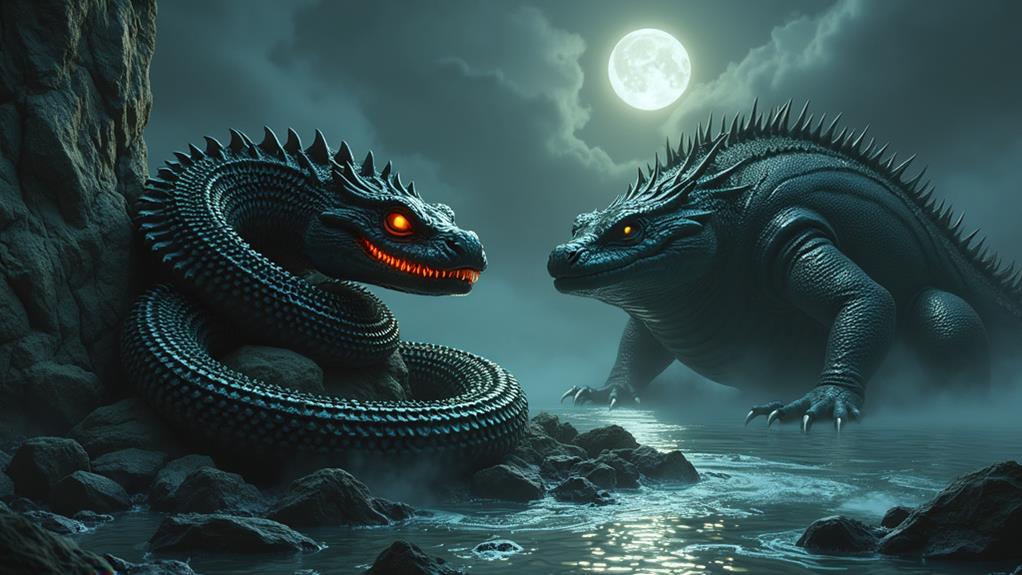
Encountering the chilling presence of nature's most fearsome reptiles and amphibians often stirs a primal fear within us. Their predatory instincts and terrifying potential have been masterfully captured in films like "Anaconda" (1997). Here, a massive snake lurks in the jungle, demonstrating the sheer power and lethal capabilities of nature's largest reptiles. You can almost feel the tension as it coils around its prey, leaving you anxious and enthralled.
In "Crawl" (2019), the horror intensifies as alligators invade a flooded home during a hurricane, vividly illustrating the dangers these reptiles pose in extreme situations. The combination of natural disaster and predatory instincts makes for a gripping watch, reminding you just how vulnerable you can be.
"Lake Placid" (1999) adds a comedic twist to the terror with a giant crocodile terrorizing a town. Despite the humor, the film effectively showcases the fear of a predatory reptile in a freshwater setting. Even "Arachnophobia" (1990), while focusing on spiders, nods to the fear of venomous reptiles and amphibians, highlighting how these creatures can elicit both laughter and dread. Each of these works underscores the enthralling, terrifying potential of these incredible animals.
Monstrous Marine Creatures
While the land-based nightmares of reptiles and amphibians have left their mark, the ocean's depths hold their own arsenal of terrifying creatures. "Jaws" (1975) set the stage with its legendary great white shark, embedding a fear of the sea's apex predators into popular culture. This film transformed the ocean into a world of killer aspirations, where monstrous marine creatures lurk beneath the waves. Such portrayals have left audiences wary of what might swim just beneath the surface.
The film "Open Water" (2003) further intensified this fear by plunging viewers into the chilling reality of being abandoned in shark-infested waters. It's a stark reminder of the ocean's unpredictable dangers and the terrifying power of its inhabitants. Likewise, "Piranha" (1978) tapped into our primal fears with mutated killer fish attacking a summer resort, blending humor with horror.
Consider these highlights from the world of monstrous marine creatures:
- "Jaws": A great white shark terrorizes a small town.
- "Open Water": Marooned divers face sharks.
- "Piranha": Mutated fish create chaos at a resort.
These films have cemented the ocean's reputation as a domain where danger lurks at every depth, reminding you that the sea's beauty is matched by its peril.
Avian Threats
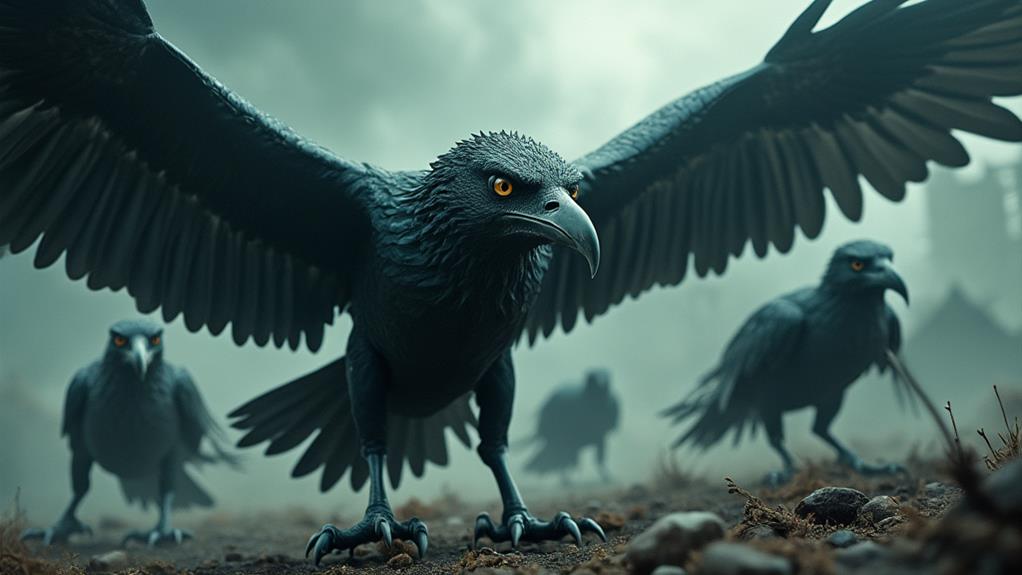
Birds, both real and fictional, have often featured as menacing figures in pop culture, challenging the notion of them as gentle creatures. In Hitchcock's classic film, The Birds (1963), you're thrust into a world where flocks of avian attackers descend upon a small town, turning innocent birds into symbols of terror. This film has forever changed how many perceive these winged creatures, instilling a fear of even the most harmless species.
In Bird Box (2018), the psychological threat is intensified by mysterious avian-like entities that drive people to madness upon sight. Here, the unseen presence of these creatures adds to the fear, highlighting the potential dangers that birds can symbolize. Meanwhile, the Angry Birds franchise brings a comedic yet dangerous twist to avian characters. These birds are depicted with exaggerated aggression and cunning, adding a humorous layer to their portrayal while still capturing their potential threat.
In the animated series DuckTales, Magica De Spell's magical birds assist in her sinister plots, blending fantasy with danger. The documentary Winged Migration (2001) contrasts these threats by showcasing the vulnerability of migratory birds, reminding you of the delicate balance in the avian world.
Ferocious Mammals
In the domain of ferocious mammals in pop culture, few creatures evoke fear quite like Cujo, the rabid St. Bernard from Stephen King's novel and film adaptation. Cujo's transformation from a beloved pet to a bloodthirsty beast showcases the terrifying potential of domestic dogs turned feral, embodying themes of fear and isolation. His story is a chilling reminder of how quickly the familiar can become deadly.
But Cujo isn't the only creature that has left a mark on audiences. While you might think of "Jaws" as a marine terror, the film's impact reaches beyond the ocean. It set the standard for summer blockbusters and influenced how audiences perceive animal threats, including those on land. Just as Jaws transformed public perception of sharks, Cujo altered how we view our canine companions.
Consider these iconic ferocious mammals in pop culture:
- Cujo: A tale of transformation and terror from Stephen King's imagination.
- Jaws: Though a marine creature, its influence on fear extends to land-based animals.
- Night of the Lepus: Mutated rabbits turning the adorable into a source of horror.
These stories remind you that danger often lurks in unexpected forms.
Alien and Mythical Beings
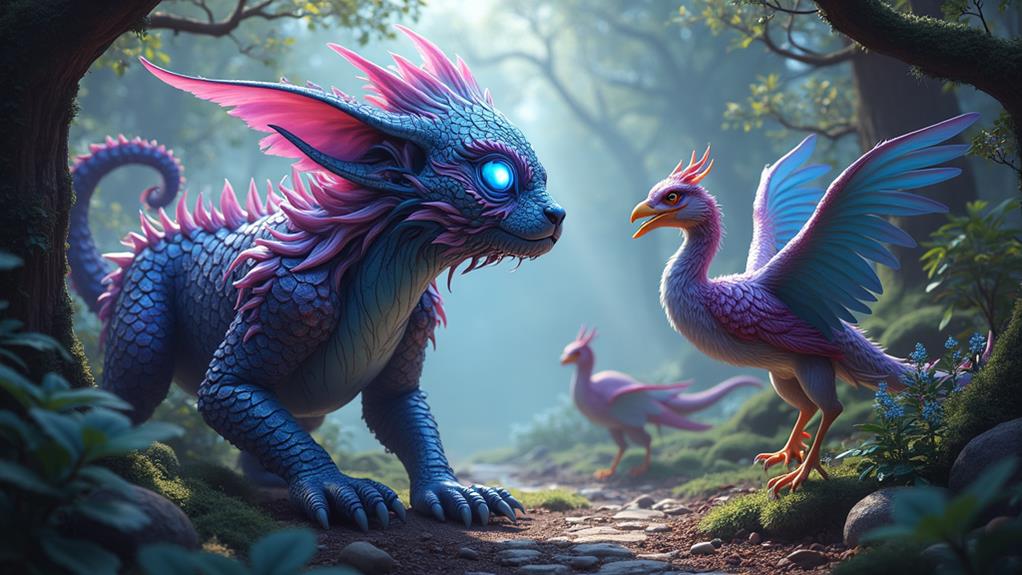
Exploring the domain of alien and mythical beings in pop culture reveals an enchanting blend of danger and companionship. Take Toothless, the Night Fury dragon from How to Train Your Dragon. He embodies a mesmerizing mix of playfulness and power. As a mythical being, his ability to soar through the skies and release fire makes him both a cherished friend and a formidable force.
Then there's Stitch from Lilo & Stitch, a genetically engineered alien designed for destruction. Despite his chaotic origins, Stitch's expedition transforms him into a creature who values family and friendship. His dual nature highlights the precarious balance between affection and danger that alien creatures often bring.
Dug from Up isn't an alien or mythical being in the traditional sense, but his talking collar introduces a quirky twist to the adventure. His loyalty is endearing, yet his humorous misinterpretations pose comedic challenges.
Hedwig, Harry Potter's snowy owl, gracefully navigates the magical dangers of the wizarding world. Her presence emphasizes the mystical allure and risks associated with such mythical beings.
Lastly, Scooby-Doo, while not an alien, blends mythological bravery and cowardice, diving headfirst into perilous mysteries with his friends.