The History of Schnauzers: From Farm Dogs to Family Pets
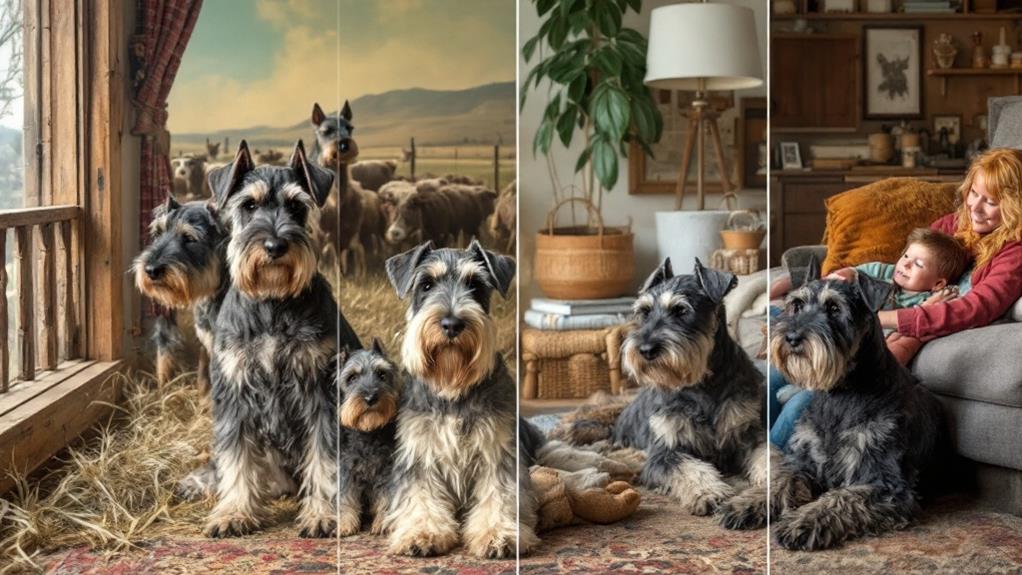
You'll find that Schnauzers have a fascinating history, originating in 15th-century Germany as versatile farm dogs. They excelled in guarding livestock and hunting pests. The Standard Schnauzer came initially, with the Miniature and Giant varieties developed for specific farm roles. By the late 19th century, these snouty companions were recognized as distinct breeds. Their intelligence and spirited nature made them excellent watchdogs and lovable family pets today. With their robust health and friendly demeanor, Schnauzers bond well with people and other pets. Uncover how their progression from farms to homes showcases their remarkable adaptability and charm.
Origins and Early Roles
Originating in 15th-century Germany, Schnauzers were versatile farm dogs known for their roles in guarding livestock and hunting vermin. You might picture them trotting around farms, tirelessly herding cattle and sheep. These dogs weren't just about herding, though; they doubled as guard dogs, ever-watchful over livestock and property. Their keen senses made them excellent at hunting vermin, keeping farms free from pesky intruders.
The Standard Schnauzer, the original breed, has deep roots in German farms, with mentions dating back to the Middle Ages. This breed's early roles encompassed a variety of tasks vital to farm life. They excelled not only in livestock guarding but also in protecting the homestead, making them invaluable to farmers.
Meanwhile, the Miniature Schnauzer, developed later through selective breeding, continued the tradition of versatility. Though smaller, these dogs retained the same spirit and drive, proving adept at rat-catching and other farm duties. Their smaller size didn't deter them from being effective farm dogs. Together, Schnauzers, regardless of being Standard or Miniature, played significant roles in the agricultural landscapes where they originated in Germany, showcasing their adaptability and unwavering dedication.
Development of Varieties
Building upon their rich history, Schnauzers have diversified into three distinct varieties: the Standard, Miniature, and Giant Schnauzers. The Standard Schnauzer, developed in the 15th century, serves as the original breed from which the other two varieties emerged. As you trace the breed development, you'll find that the Miniature Schnauzer originated from selectively breeding Standard Schnauzers with smaller breeds like the Affenpinscher. By 1899, this variety gained distinct recognition, primarily for companionship. This connection to humans has made them popular family pets.
On the other hand, the Giant Schnauzer was created by crossing Standard Schnauzers with larger breeds such as Rottweilers and Great Danes. This variety was developed for more demanding roles, including herding and guarding, turning them into formidable working dogs. Their size and strength made them suitable for police and military capacities.
Each Schnauzer variety was crafted for specific roles: the Standard Schnauzer remained versatile in farm environments, the Miniature Schnauzer excelled in providing companionship, and the Giant Schnauzer thrived in rigorous work settings. The American Kennel Club recognized the Miniature Schnauzer in 1926 and the Giant Schnauzer in 1930, solidifying their unique identities within the breed.
Breed Recognition Milestones
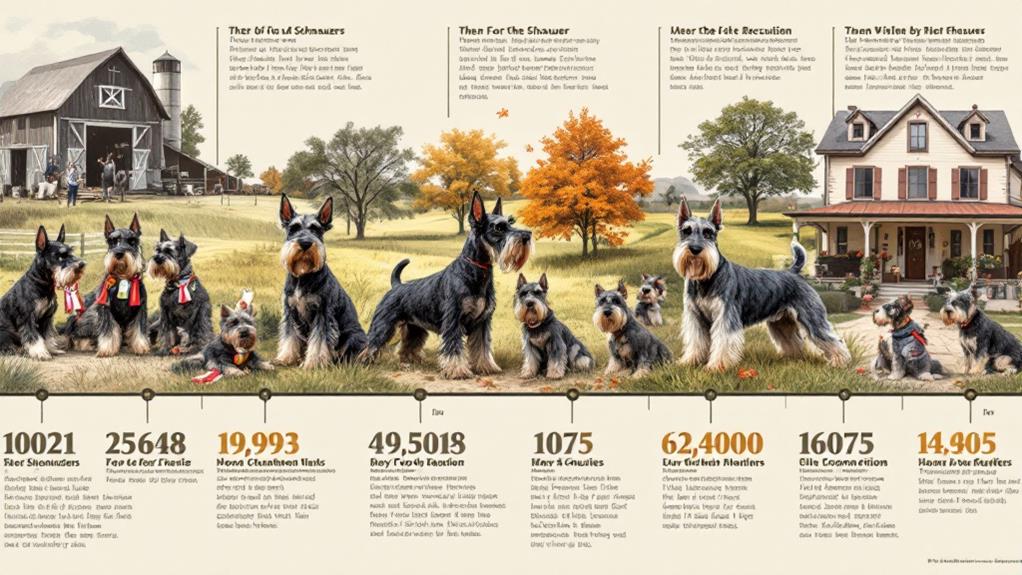
Recognizing the importance of formal breed acknowledgment, the American Kennel Club (AKC) played a crucial role in establishing the distinct identities of Schnauzer varieties. The expedition began with the Standard Schnauzer, which boasts a rich history dating back to the Middle Ages. This breed was the initial to gain official AKC recognition in 1904, setting the stage for its smaller and larger counterparts.
The Miniature Schnauzer followed, earning its AKC recognition in 1926. This milestone underscored its establishment as a distinct breed in the U.S., particularly as a member of the Terrier group. With their unique charm, Miniature Schnauzers quickly shifted from farm dogs to beloved family pets. The formation of the American Miniature Schnauzer Club in August 1933 further solidified this breed's place in the canine community, focusing on preserving its standards and characteristics.
In 1930, the Giant Schnauzer achieved AKC recognition, marking its distinction from the smaller Schnauzer breeds. Classified as working dogs, both the Standard and Giant Schnauzers have maintained their roles as reliable companions in numerous capacities throughout history, strengthening their bond with families across America.
Traits and Characteristics
While Schnauzers are well-loved for their distinctive appearance, their traits and characteristics truly distinguish them as remarkable companions. As a working breed, they boast intelligence and versatility. The Miniature, Standard, and Giant Schnauzers each bring unique qualities to the table. Miniature Schnauzers are known for their friendly and spirited nature. Their small size doesn't diminish their big personalities, making them delightful family members. Standard Schnauzers, historically ratters and herders, are versatile and excel in diverse tasks, reflecting their working breed roots. Giant Schnauzers, on the other hand, are strong and rugged, offering both protection and companionship.
Schnauzers are renowned for their distinctive wiry coats, which consist of a protective guard coat and a soft undercoat. This unique coat structure leads to less shedding compared to other breeds, a benefit for many families. Their intelligence ranks them high in obedience, with Miniatures at 12th, Standards at 18th, and Giants at 28th among dog breeds. Loyal and protective, Schnauzers possess strong instincts, often becoming vigilant guardians. However, their alert nature means they can bark excessively if not properly managed. Training and socialization are key to harmonizing their protective instincts with family life.
Transition to Family Pets
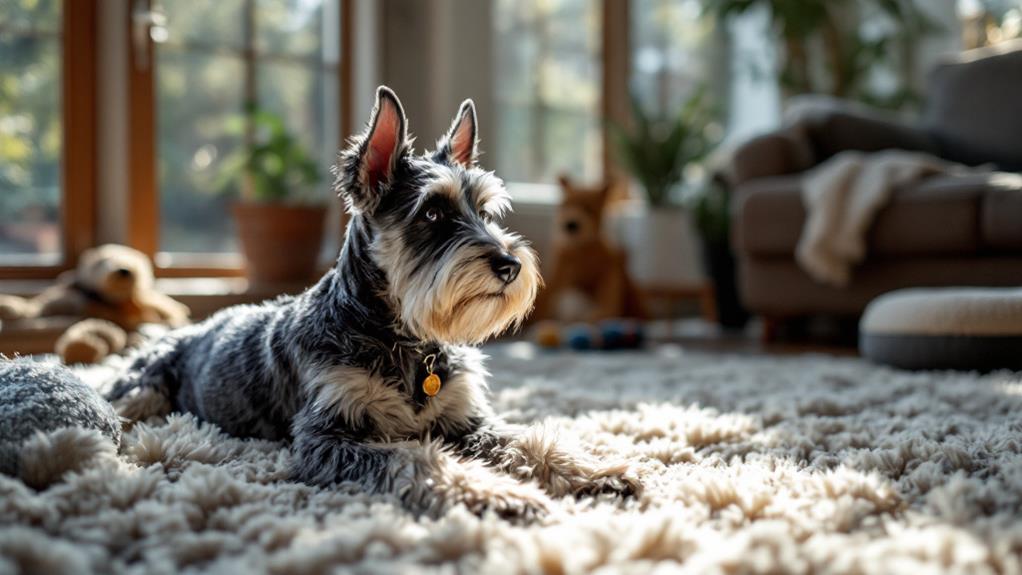
Over the years, many Schnauzers have seamlessly shifted from their origins as versatile farm dogs to cherished family pets. This change is largely due to their adaptable nature, allowing them to thrive in different environments, including vibrant urban settings. As family pets, Schnauzers retain the energetic temperament developed from their historical roles in herding, guarding livestock, and hunting vermin. This lively personality makes them excellent companions for active families who can provide the regular exercise and mental stimulation these dogs need.
You'll find that Schnauzers' sociable disposition is a significant asset, enabling them to bond well with humans and other pets. This fosters harmonious living in family households, where they are often seen as beloved members. Their strong bond with family members, combined with their intelligence, makes them highly responsive to training. This responsiveness facilitates their integration into family dynamics, helping them shift effortlessly from working dogs to affectionate family pets.
Schnauzers' ability to adapt and their willingness to learn guarantee that they remain versatile and well-suited to family life. With the right care, they'll continue to be the lively, loving companions that families cherish across generations.
Community and Enthusiast Culture
Engage yourself in the colorful world of Schnauzer enthusiasts, where a deep-rooted passion for this distinctive breed brings people together. At the heart of this community, the American Miniature Schnauzer Club, established in 1933, plays a crucial role. It not only promotes the breed's standards but also fosters a sense of belonging among enthusiasts. Schnauzer clubs organize events and competitions, providing platforms for owners to celebrate their shared love and connect with others who understand the nuances of caring for this special breed.
Within these gatherings, you'll find a wealth of personal stories and experiences that highlight the Schnauzer's impact on lives. These narratives form the backbone of a supportive network, guiding new owners through challenges. Educational resources offered by clubs emphasize responsible ownership, detailing care, training, and breed-specific traits. Such information is invaluable for both seasoned and novice owners.
Discussions often revolve around favorite Schnauzer traits, creating deeper connections among members. This dynamic community thrives on shared experiences and ongoing conversations, ensuring that Schnauzer enthusiasts have a robust support network. Regardless of whether you're a new or seasoned owner, this community stands ready to welcome you with open arms.