The History and Evolution of Domestic Dogs: From Wolves to Pets
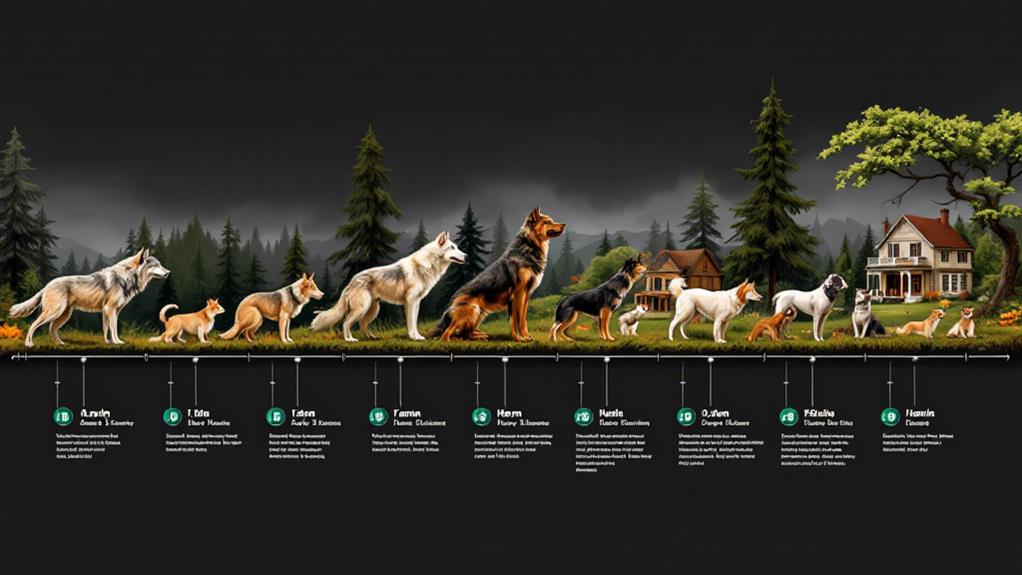
You're about to reveal how your furry friend evolved from wild wolves over thousands of years. It all started with the Canis genus, which includes wolves, dogs, and other canids. Around 20,000 to 40,000 years ago, an extinct wolf species diverged, eventually leading to the domesticated dogs you know today. Domestication began between 12,500 and 15,000 years ago, as wolves and humans began forming beneficial relationships, with evidence pointing to both Asia and Europe as origins. You'll learn how physical changes and evolving behaviors made dogs better suited to human companionship in this enthralling history.
Origins of the Canis Genus
Although the origins of the Canis genus are rooted deep in prehistoric times, their story is both fascinating and complex. You may be intrigued to learn that this genus, established by Carl Linnaeus in 1758, includes the dogs you're familiar with today, along with wolves, coyotes, and jackals. These species share a common ancestor and are capable of interbreeding due to their shared 78 chromosomes.
The evolution of Canis species traces back to North America, with their emergence as top predators in the Palearctic around 5 million years ago. This was a crucial period that eventually led to significant evolutionary events, such as the "wolf event" about 1.8 million years ago. The initial fossil evidence of Canis in Africa, dating back 3.58 to 3.2 million years ago, suggests that there were multiple colonization events from Eurasia.
Genetic studies continue to unravel the complex evolutionary relationships among these species. They highlight intriguing taxonomic ambiguities, especially between African and Eurasian golden jackals. Understanding these origins is fundamental as they set the stage for the domestication process that transformed wolves into the domestic dogs we recognize today.
Evolutionary Path of Wolves
Having investigated the origins of the Canis genus, let's now focus on the evolutionary path of wolves. The gray wolf, scientifically known as Canis lupus, emerged as a distinct species in Eurasia roughly 1 million years ago. This marked a significant point in their evolutionary path, showcasing their adaptation to a variety of environments. The Pleistocene period was essential for wolves, as they developed robust skulls and teeth, allowing them to hunt large prey effectively. This time also saw the "wolf event" around 1.8 million years ago, elevating wolves to top predator status in the Palearctic region.
Genetic studies have provided fascinating insights into the divergence between wolves and their closest relatives, including modern dogs. This split is estimated to have occurred between 19,000 and 41,500 years ago, complicating our understanding of the domestication of the dog. These genetic shifts highlight how ancient dogs began to diverge from their wild counterparts, setting the stage for domestication. While the exact timeline remains debated, this divergence marks a significant moment in canine history, bridging the gap between wild wolves and the pets we cherish today. Understanding this evolutionary path enriches our appreciation of both wolves and modern dogs.
Morphological Adaptations
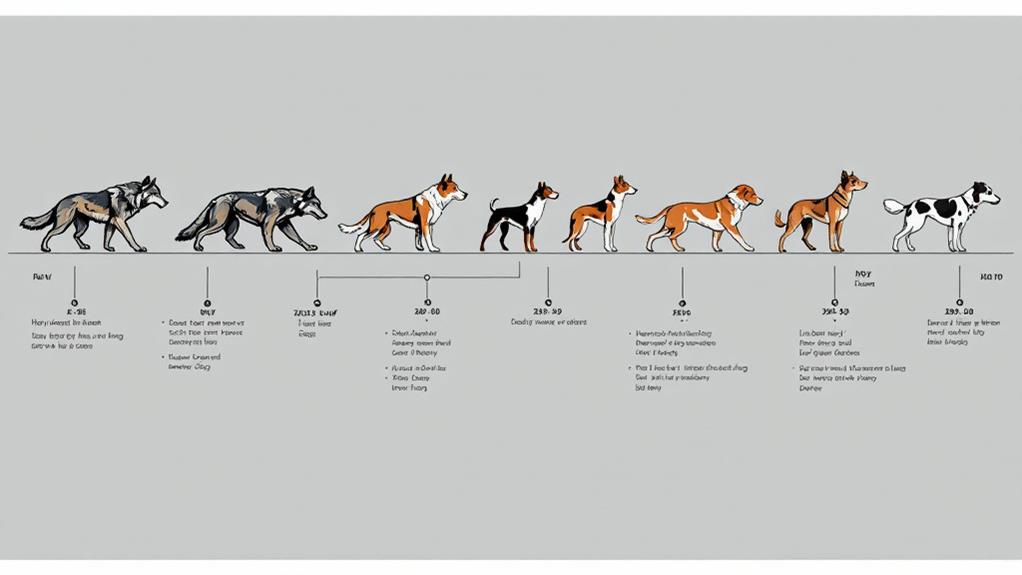
Morphological adaptations in domestic dogs highlight their significant departure from their wild ancestors, gray wolves. Through domestication, dogs have developed distinct traits like shorter snouts and smaller body size compared to their wolf counterparts. These changes aren't just aesthetic; they affect their feeding behavior too. Early domestic dogs displayed dental pathologies, suggesting a shift from the diet of wild wolves. Canine teeth in dogs have also adapted to accommodate this new diet, reflecting a significant transformation since their days as Pleistocene wolves.
Selective breeding has played an essential role in shaping these morphological adaptations. By emphasizing specific traits, humans have cultivated a variety of dog breeds with diverse coat colors, textures, and body structures. These adaptations often prioritize aesthetics and functionality over survival, demonstrating the dog's evolution from a wild hunter to a human companion.
Moreover, dogs retain juvenile traits—a phenomenon known as neoteny—that set them apart from gray wolves. These traits include a more playful demeanor and reduced aggression, making them more suitable for life alongside humans. In general, these morphological changes underscore the profound impact of domestication and selective breeding on dogs' evolution.
Social Structure and Behavior
The evolution of domestic dogs reflects a profound transformation in their social structure and behavior, moving away from their pack-oriented wolf ancestors. Unlike gray wolves, which form packs led by dominant members, dogs have adapted to more diverse social structures, often integrating into human families. Wolves showcase cooperative hunting and form monogamous pairs, emphasizing their complex social dynamics. However, dogs have developed a unique socialization pattern, heavily influenced by domestication.
You'll notice that dogs exhibit a hierarchical structure within their groups, similar to wolves, with subordinate individuals often deferring to dominant members, especially during feeding. This reflects their instinctual social dynamics. Yet, there's a notable behavioral divergence; dogs actively seek human companionship and show obedience to commands, a distinct shift from their wolf relatives.
Aggression patterns also differ. In gray wolves, male aggression increases with maturity, targeting rivals, while females maintain stable aggression levels. Dogs, however, have generally less aggressive tendencies, shaped by their history of domestication. This transformation highlights how domestication has reshaped dogs' social structures and behaviors, making them well-suited as human companions rather than mere pack animals.
Domestication Process and Timeline
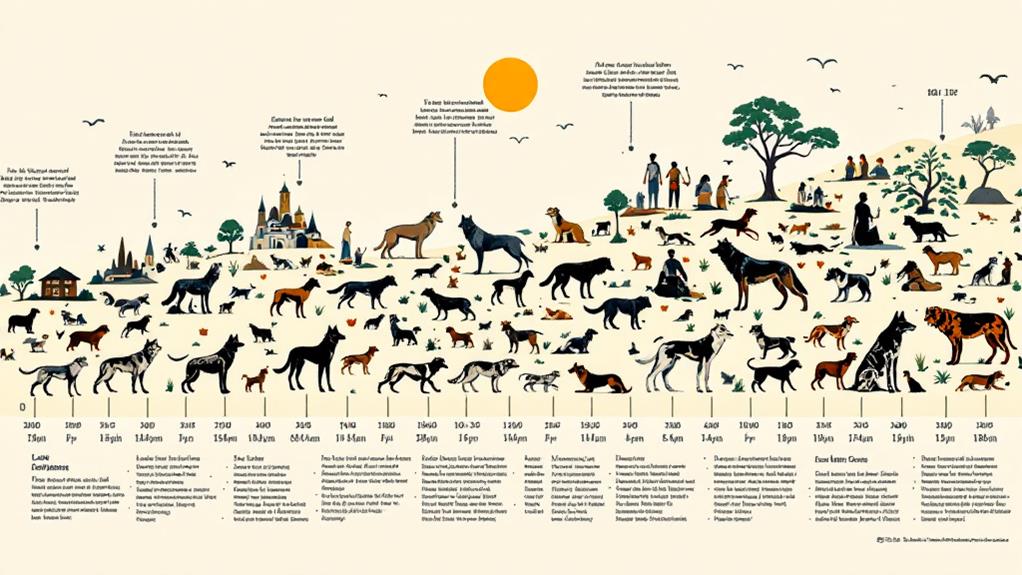
Understanding the social transformation of dogs from their wolf ancestors sets the stage to explore how this profound change began. The domestication process of dogs started between 12,500 and 15,000 years ago, likely preceding agriculture. Genetic studies reveal that all domestic dogs share a common ancestry with an extinct wolf species, rather than modern gray wolves. This suggests a unique evolutionary path that set domestic dogs apart from their wild relatives.
The divergence between domestic dogs and their wild ancestors is believed to have occurred 20,000 to 40,000 years ago. Evidence points to potential dual domestication events in Asia and Europe, indicating that these transformations might have happened independently in different regions. The initial undisputed remains of domestic dogs were uncovered in Bonn-Oberkassel, Germany, dated to approximately 14,200 years ago, offering tangible proof of early domestication.
Advances in genome analysis show that dogs may be genetically closer to ancient Asian wolves. This supports the idea of diverse origins for domestic dog lineages. These findings illustrate the complex and multifaceted nature of the domestication process, highlighting how domestic dogs evolved from their ancient ancestors through a web of genetic and geographical influences.
Early Human-Canine Interactions
Throughout history, humans and canines have formed a remarkable bond that dates back at least 27,000 years. Early human-canid interactions are evidenced by canid remains found at archaeological sites, showing these creatures were more than just wild animals; they were part of early human communities. This relationship likely began when wolves started scavenging near human camps, leading to a mutually beneficial arrangement. Over time, these interactions paved the way for the domestication process, transforming wolves into domesticated species known as ancient dogs.
Unique anatomical changes in these ancient dogs, such as shorter snouts and crowded teeth, hint at their evolving role alongside humans. As societal structures developed, so did the social status of these canines. Burial practices, particularly after 10,000 years ago, highlight this growing significance. Sites like Skateholm in Sweden reveal dogs were sometimes buried with humans, symbolizing their integral place in human life and culture.
These early interactions were more than just coexistence; they were the foundation of a deep companionship that would evolve over millennia. As humans adapted to settled lifestyles, this bond only strengthened, forever changing the trajectory of both species.
Genetic Discoveries and Insights
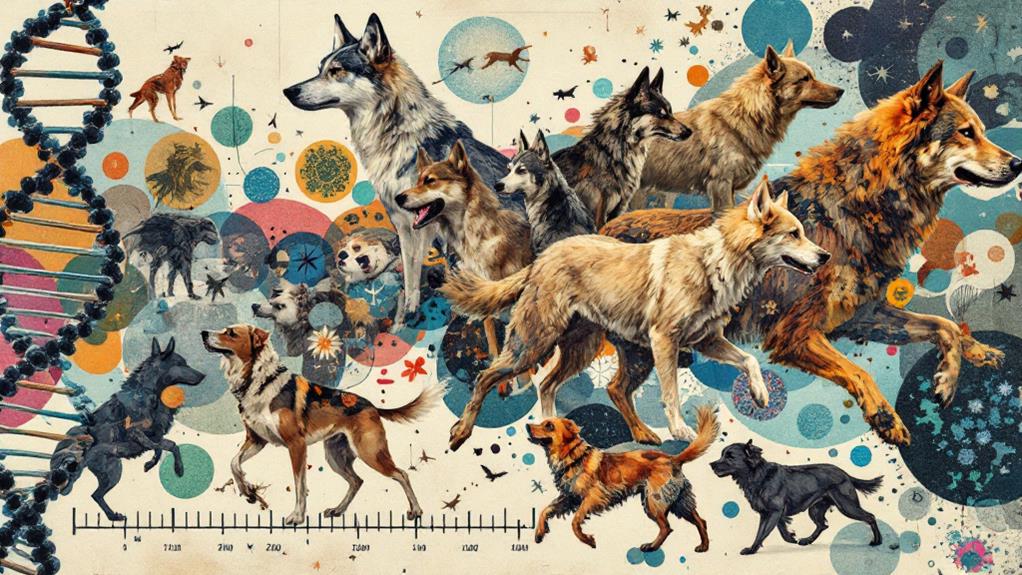
Recent genetic findings illuminate the complex ancestry of domestic dogs, revealing a captivating timeline of divergence from their wolf ancestors. Genetic studies now show that modern dogs share a common ancestry with an extinct wolf species, with divergence happening 20,000-40,000 years ago, before agriculture began. This genetic divergence paints a picture of wolves and dogs branching out much earlier than once thought.
Mitochondrial DNA sequencing further supports this, indicating that dogs and gray wolves parted ways about 19,000-32,000 years ago. Notably, genome analysis has highlighted that modern dogs are genetically closer to ancient Asian wolves, suggesting possible dual domestication events from different wolf populations. These insights challenge the straightforward narrative of domestication, hinting at a more intricate history involving diverse ancient canid populations.
However, you should know that genetic studies face limitations. They often rely on contemporary dog breeds and current wolf populations, which can obscure the precise lineage of dogs. Here, paleogenomics is invaluable, as it uncovers ancient DNA, offering a clearer view of ancient canid populations that might be more closely related to domestic dogs than today's gray wolves. This evolving field continues to reshape our understanding of dogs' genetic heritage.
Conservation and Modern Challenges
The challenges facing many Canis species today are immense, with habitat loss, hunting, and climate change posing severe threats to their survival. Conservation is imperative to counter these threats, especially as biodiversity loss accelerates. Domestic dogs, though not endangered, share evolutionary relationships with wild Canis species, making their protection significant. Legal protections vary by region, impacting how effectively we can conserve these species. This inconsistency often leads to fluctuating extinction rates and poses considerable challenges to species recovery efforts.
Recent genetic studies, like those identifying new species such as Canis othmanii, improve our understanding of evolutionary relationships and inform targeted conservation strategies. However, public awareness is fundamental. Without it, efforts to protect habitats and migratory species might falter. By raising awareness, you play a role in fostering international cooperation, which is crucial for effective conservation policies.
Ongoing research supports these policies, focusing on habitat preservation as a key element of conservation initiatives. As human activities continue to threaten wildlife, understanding and acting on these modern challenges becomes more urgent. Your involvement is significant—by supporting conservation efforts, you help guarantee these magnificent species thrive for future generations.