The Fascinating History of the German Shepherd
You're about to uncover a fascinating history behind the German Shepherd. This intelligent breed emerged in the late 1800s, when Captain Max von Stephanitz started with a dog named Hektor Linksrhein, later known as Horand von Grafrath. His vision prioritized working ability, leading to the formation of the Verein für Deutsche Schäferhunde to standardize traits. The breed's military valor during World War I and rise in global popularity were heightened by canine movie stars like Rin Tin Tin. Their intelligence and loyalty made them excellent as service and family dogs. Investigate further to reveal their enduring legacy.
Origins and Early Development
In the late 1800s, the German Shepherd breed began to take shape with a focus on developing a adaptable working dog suitable for herding and protection. You might be surprised to learn that this breed's expedition started with selective breeding of diverse regional herding dogs. These early efforts aimed to create a dog that excelled in intelligence, strength, and agility.
Captain Max von Stephanitz played a crucial role in this process. When he found a dog named Hektor Linksrhein at a dog show in 1899, he saw the potential for a new breed standard. Hektor, later renamed Horand von Grafrath, became the initial registered German Shepherd Dog. This moment marked the beginning of a popular breed's rise.
To guarantee the breed's development, von Stephanitz established the Verein für Deutsche Schäferhunde. This organization aimed to standardize the breed, focusing on traits that would produce excellent working dogs. The German Shepherd's origins are deeply rooted in these early efforts, which were initially influenced by the short-lived Phylax Society's vision of standardizing working dogs. Your understanding of this breed's early days highlights the importance of selective breeding in its evolution.
Max Von Stephanitz's Vision
Although many factors contributed to the German Shepherd's development, Max von Stephanitz's vision was essential in shaping the breed's future. Max Emil Friedrich von Stephanitz, a significant figure in the breed's history, identified the dog that set the German Shepherd standard. At a dog show in 1899, he encountered Hektor Linksrhein, whom he later renamed Horand von Grafrath. This dog became the initial registered German Shepherd, embodying the traits von Stephanitz valued: intelligence, versatility, and a strong work ethic.
Von Stephanitz founded the Verein für Deutsche Schäferhunde (SV) that same year, establishing breed standards that emphasized these attributes. His goal was to create a versatile breed that excelled in herding, protection, and companionship. Unlike other breeders, von Stephanitz prioritized functionality over appearance, guaranteeing that the German Shepherd would be recognized as a superior working dog.
His dedication to the breed's development resulted in successful lineages, with notable descendants like Hektor von Schwaben and Beowolf. Von Stephanitz's commitment guaranteed that the German Shepherd became renowned for its intelligence and loyalty, making it an ideal choice for both working and companion roles. His vision truly shaped the breed's legacy.
Standardization and Breeding
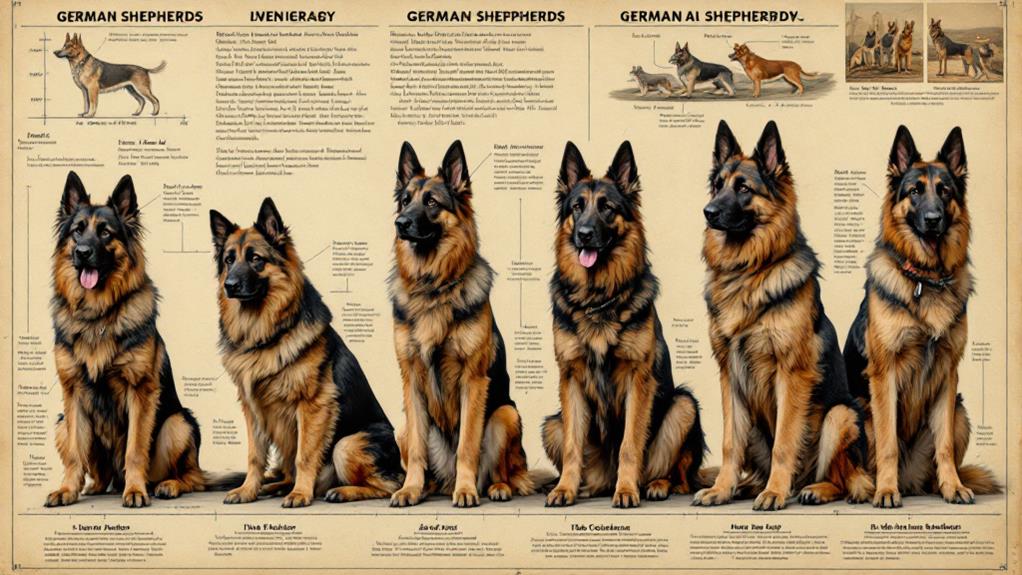
Standardization and breeding of the German Shepherd began with the ambitious goal of creating a reliable working dog. In 1891, the Phylax Society aimed to establish and regulate working dog lineages, setting the stage for breed standardization. Though the society disbanded after three years, its vision was inherited by Max von Stephanitz. In 1899, von Stephanitz purchased Hektor Linksrhein, renaming him Horand von Grafrath. This dog became the initial registered German Shepherd, laying the foundation for the breed's lineage.
To guarantee consistent breed standards, von Stephanitz founded the Verein für Deutsche Schäferhunde (SV). This organization focused on the physical and mental traits ideal for working dogs. Inbreeding practices became necessary to achieve this standardization, cementing the German Shepherd's typical body structure. However, these practices also led to temperament and health problems over time. Descendants like Hektor von Schwaben and Beowolf played significant roles in shaping the modern German Shepherd lineage.
Rise in Global Popularity
Enchanting hearts worldwide, the German Shepherd Dog (GSD) swiftly rose to fame after the American Kennel Club recognized it in 1908, followed by the UK Kennel Club in 1919. As the breed originated in Germany, its expedition to global popularity was remarkable. In the UK, registrations skyrocketed from a modest 54 in 1919 to over 8,000 by 1926, showing its increasing allure. This surge in popularity wasn't just confined to Europe; the GSD captured American interest, too.
The history of the German Shepherd's rise is closely tied to its service in the military. After World War I, the breed became synonymous with loyalty and intelligence, having served over 40,000 strong in the German army. This military service showcased their versatility and solidified their reputation as capable working dogs.
In the U.S., the GSD's appeal was further amplified by canine stars like Rin Tin Tin, whose on-screen heroics captured the public's imagination. By 2009, this incredible breed was ranked as the second most popular in the U.S., a reflection of its enduring charm and adaptability across diverse roles, from family companion to working dog.
Temperament and Traits
What makes the German Shepherd so unique? It's their remarkable blend of intelligence and loyalty that sets them apart. As a German dog breed, the shepherd is known for its exceptional working capabilities. Their intelligence is evident as they often master tasks after just five repetitions, making them incredibly trainable and adaptable. This trait is a proof of their working dog heritage, where quick learning and adaptability were crucial.
One of the most defining traits of a German Shepherd is their temperament. They possess a strong protective instinct, making them excellent guard dogs and devoted family companions. This loyalty often results in a deep attachment to their owners, sometimes bonding closely with one individual. You'll find that their devotion knows no bounds, offering unwavering companionship.
German Shepherds are high-energy dogs with a natural willingness to work. Originally bred for herding, they thrive on regular mental and physical challenges. Without these, they can become restless. Their active nature requires you to engage them in different activities, ensuring they remain both physically and mentally stimulated. Embracing these traits, you'll have a loyal, intelligent companion ready to face any challenge by your side.
Roles in Modern Society
In the current society, German Shepherds play a range of crucial roles, thanks to their remarkable intelligence and unwavering loyalty. These modern German dogs are indispensable in police and military settings. Their keen intelligence, loyalty, and trainability make them perfect for tasks ranging from detecting explosives to tracking down criminals. Throughout history, including over 40,000 serving in the German army during World War I, their value in such roles has been well-proven.
German Shepherds also excel in numerous service roles. They're often seen as guide dogs for the visually impaired, showcasing their adaptability and strong human bond. Moreover, they thrive in search and rescue operations, therapy work, and detection tasks, demonstrating their versatility across different environments.
As family companions, their popularity continues to soar. Known for their protective instincts and loyalty, these dogs make excellent family members. In fact, they ranked as the second most popular breed in the U.S. as of 2009.
- Used in police and military for their intelligence and loyalty
- Employed as guide dogs, highlighting versatility
- Popular as family companions for protective instincts
Modern breeders prioritize health and temperament, ensuring German Shepherds excel in working roles while making loving family companions.
Selecting a German Shepherd
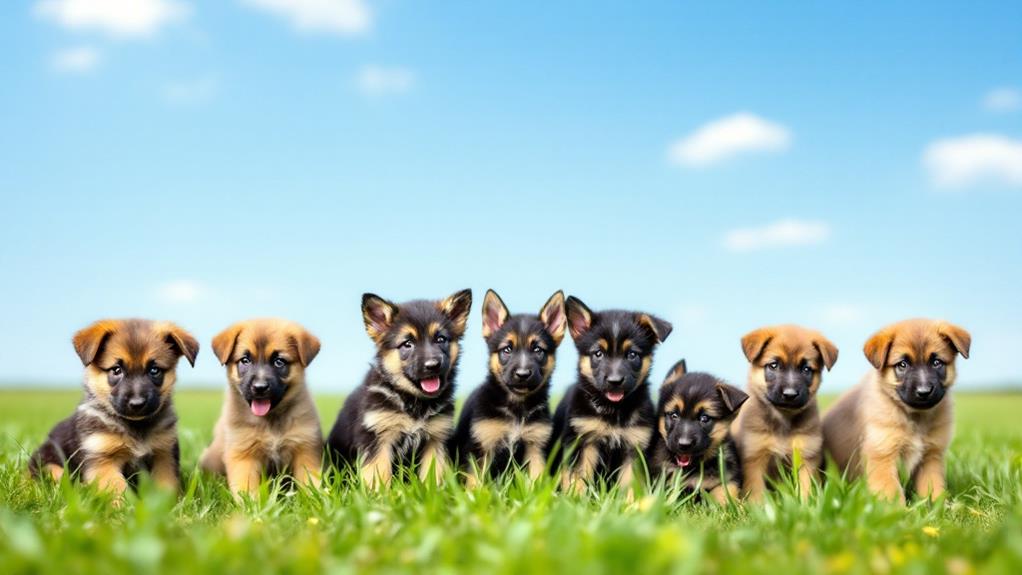
Choosing a German Shepherd puppy isn't just about picking the cutest one from the litter; it requires careful consideration to confirm the breed fits your family's dynamics and lifestyle. German Shepherds need significant mental and physical stimulation, so make certain you're ready for this commitment. Start by selecting reputable breeders who prioritize health and temperament over mere appearance. Ask key questions about the puppy's lineage, health screenings, and temperament to verify you're making a healthy acquisition.
Early training and socialization are essential for integrating a German Shepherd into your home successfully. These dogs thrive on routine and structure, so consider how you'll incorporate training and socialization into your daily life. Responsible breeding practices can help mitigate common issues such as hip dysplasia and behavioral problems. Be wary of breeders who don't focus on these aspects.
For prospective ownership, resources such as e-books can provide valuable information on puppy selection, care, and training. They offer insights that can help you make informed decisions, guaranteeing a smooth change for your new family member. By taking these steps, you're setting the stage for a rewarding experience with your German Shepherd.