The Best Diet for Your Horse: What to Feed for Optimal Health
To guarantee your horse's ideal health, prioritize a diet rich in forage, making up 50-70% of their intake, as it provides crucial fiber and nutrients. Aim for 1.5-2% of their body weight in forage daily to support their digestive system and prevent ulcers. Include carbohydrates for energy and balanced minerals like calcium and phosphorus. Limit grains to 0.5% of body weight per feeding to avoid colic. Incorporate high-quality protein for muscle development, and always supply fresh water. Tailor their diet to specific needs, like those of older horses or pregnant mares, to promote health and well-being. Uncover more on maintaining this balance.
Key Takeaways
- Ensure forage makes up 50-70% of the diet for optimal digestive health and nutrient intake.
- Maintain a balanced mineral ratio, with calcium and phosphorus at a 2:1 proportion.
- Limit grain to 0.5% of body weight per feeding to prevent digestive issues.
- Provide constant access to clean water, essential for nutrient processing and hydration.
- Tailor the diet to the horse's age, activity level, and specific health needs for optimal health.
Equine Digestive System Basics
Understanding the intricacies of the equine digestive system is vital to ensuring your horse's health. Horses have a unique digestive system that requires a specific approach to feeding. With a small stomach capacity of just 2-4 gallons, horses are designed for continuous grazing to meet their nutritional needs. This is because they constantly produce gastric acid, which necessitates a steady intake of food to prevent discomfort and potential ulcers.
The equine digestive system is comprised of the foregut, which includes the stomach and small intestine, where nutrient absorption begins. The hindgut, consisting of the cecum and large colon, is where fiber digestion takes place, aided by important microbes. This setup means your horse's diet should primarily consist of forage, such as grass or hay, making up 50-70% of their intake. Forage fulfills their need for fiber, which is vital for digesting fibrous material effectively.
Since food passage lasts 45 to 72 hours, maintaining a consistent feeding routine is significant for promoting digestive health. Keep in mind that horses lack a gallbladder, so they should be fed low-fat diets to avoid digestive issues.
Essential Nutrients for Horses
How can you guarantee your horse receives the essential nutrients it needs for ideal health? Start by making certain it gets plenty of water, as it makes up 70-75% of their body weight. Without adequate water, your horse can't process other nutrients effectively. Carbohydrates are the main energy source, so include both simple and structural carbohydrates (fiber) in the diet. Fiber specifically aids in digestive health, keeping your horse's gut in optimal condition.
Protein plays a significant role in muscle development and maintaining overall body functions. A protein deficiency can lead to problems like a rough coat and reduced performance, so be certain your horse gets enough. Vitamins are also critical, with fat-soluble ones like A, D, E, and K, and water-soluble ones like C and B-complex performing various functions. Supplement these vitamins, especially if your horse has a high-grain diet or is under stress.
Minerals like calcium and phosphorus are essential for maintaining body structure and function. It's significant to keep their ratio balanced, ideally at 2:1, to support your horse's health. By managing these nutrients, you'll guarantee your horse thrives.
Understanding Forage Importance
Recognizing the role of forage in a horse's diet is essential for maintaining its health and well-being. Forage, primarily grass or hay, should make up 50-70% of your horse's diet. This helps provide the necessary fiber for ideal digestive health. A general rule of thumb is that your horse needs at least 1.5-2% of its body weight in forage each day. So, for a 1,000-pound horse, that's about 20 lbs. Access to high-quality forage not only supports their physical health but also offers mental stimulation by encouraging natural foraging behavior.
When selecting hay, look for a fresh smell, lively green color, and confirm there's no mold or dust. Poor-quality hay can lead to health problems, so it's important to provide the best possible nutrient content. Depending on your horse's size and activity level, it might consume up to 3% of its body weight in hay daily. Proper management of forage intake guarantees your horse remains healthy and content. By understanding and prioritizing forage, you contribute greatly to their general well-being, making it a cornerstone of any well-rounded horse's diet.
Types of Horse Feeds
In regards to choosing the right feed for your horse, understanding the variety available is vital. Forage, including grass and hay, should make up 50-70% of your horse's diet, as it provides fundamental nutrients and fiber important for maintaining peak digestive health. Concentrates, such as oats, corn, and barley, are energy-dense and should be carefully measured, typically fed in small, divided meals to prevent digestive issues.
Commercial feeds, like pelleted and complete feeds, offer convenience and are tailored to meet specific nutritional needs for performance horses or senior horses with distinct dietary requirements. These feeds guarantee that your horse gets balanced nutrition without the hassle of mixing different components.
Supplements, such as mineral blocks or beet pulp, can address particular deficiencies or heightened dietary needs but should be used only after consulting a veterinarian. They can provide extra nutrients that might be lacking in your horse's regular diet.
For horses with unique health concerns, specialty feeds are available. These are particularly useful for managing metabolic disorders and guaranteeing your horse maintains a healthy weight and comprehensive well-being. Always tailor your feeding approach to your horse's unique conditions and consult professionals when needed.
Portion Control Tips
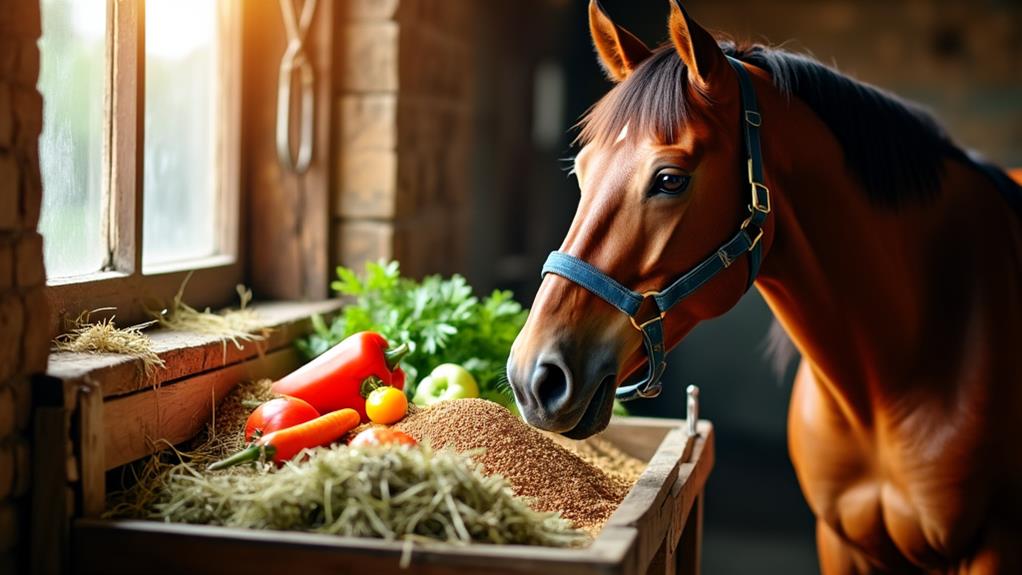
Now that you've got a grasp on the types of feeds available, let's focus on portion control to guarantee your horse gets the right amount of nutrition without overfeeding. For an adult horse, a forage diet should consist of about 1.5-2% of their body weight in forage daily. This means a 1,000-pound horse needs roughly 15-20 lbs of hay to maintain proper nutrition and digestive health. Regarding grain amounts, limit it to a maximum of 0.5% of their body weight per feeding. It's vital to divide grain into smaller meals throughout the day to prevent colic.
To verify your feeding plan is effective, incorporate body condition scoring. Using the Henneke system, aim for a score between 4-6 for ideal health. Regularly monitoring feed for mold or contaminants is significant, and always weigh portions instead of measuring by volume for accuracy. Adjust feed portions gradually over 5-7 days to avoid digestive disturbances. By following these portion control tips, you'll guarantee your horse maintains a healthy weight and achieves ideal health while minimizing the risk of digestive issues.
Avoiding Common Feeding Mistakes
When feeding your horse, it is vital to avoid common mistakes that could jeopardize their health. One of the biggest feeding mistakes is overfeeding grains. Excessive grain intake can lead to severe health issues like colic and laminitis. Limit grain to no more than 0.5% of your horse's body weight per meal. Also, keep in mind that sudden changes in diet can upset your horse's digestive system. Gradually adjust their diet over 5-7 days to maintain gut health and prevent digestive issues.
Forage is fundamental for your horse's diet, providing necessary fiber and nutrients. Confirm they consume 1.5-2% of their body weight in forage daily; for a 1,000-pound horse, that's about 20 lbs. Insufficient forage can cause digestive and behavioral problems. In addition, don't overlook water intake. Horses need approximately 2 quarts of water for every pound of hay they eat, so confirm they have constant access to clean water to prevent dehydration.
Special Dietary Considerations
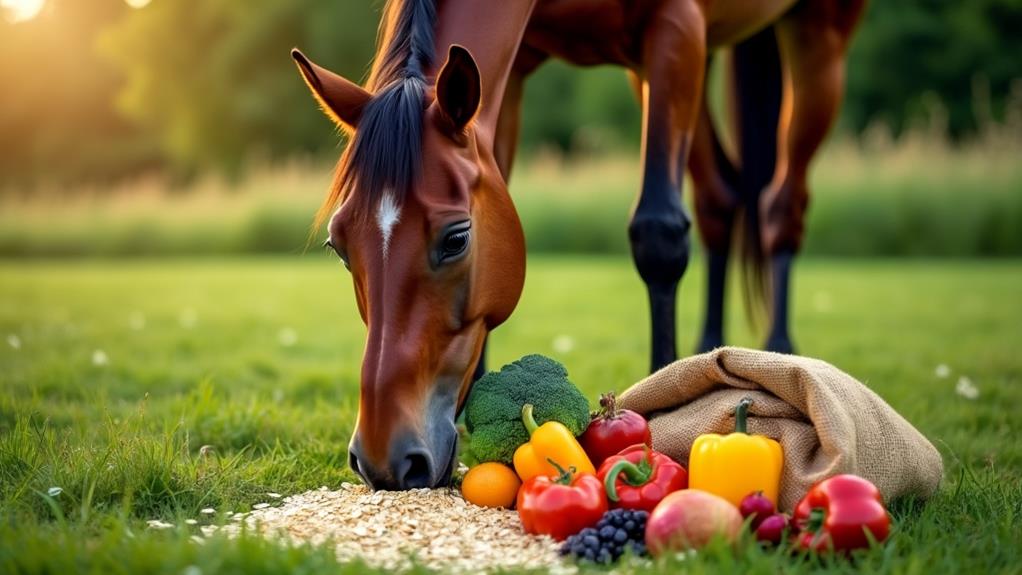
While every horse has unique dietary needs, special considerations are important for certain groups. Older horses, for instance, often benefit from higher-quality forage and softer feeds to address dental issues. A tailored feeding plan can guarantee their nutrient intake meets their needs without causing discomfort. Pregnant and lactating mares also have special dietary needs, requiring increased caloric intake and nutrient density to support fetal growth and milk production. This necessitates careful planning to make sure their energy demands are met.
For horses with metabolic syndrome or conditions like Cushing's disease, managing their diet is significant. You'll need to confirm their feeding plan is low in non-structural carbohydrates to avoid health complications and manage weight effectively. Performance horses, on the other hand, need boosted energy and protein levels to sustain their rigorous training and recovery. Higher fat and calorie diets can help maintain their endurance and performance.
Regular vet consultations are fundamental for identifying specific dietary adjustments:
- Older horses: Higher-quality forage, softer feeds
- Lactating mares: Increased caloric intake, nutrient density
- Metabolic syndrome: Low non-structural carbohydrates
- Performance horses: Higher fat, boosted energy needs
These adjustments guarantee your horse's health and performance are optimized.
Benefits of a Balanced Diet
Guaranteeing a balanced diet for your horse is fundamental for their overall health and well-being. With 50-70% of their diet consisting of forage, like grass or hay, you're supporting a healthy digestive system and preventing issues such as colic. Horses have small stomachs, so continuous grazing on high-quality pasture is critical. This natural feeding behavior also helps maintain ideal energy levels and prevents behavioral problems.
Incorporating important nutrients like carbohydrates, fats, proteins, vitamins, and minerals into your horse's diet supports muscle development and comprehensive body maintenance. Access to fresh water is imperative too; horses need 10-15 gallons daily to stay hydrated, which aids digestion and keeps them in peak condition.
Providing high-quality forage along with tailored rations guarantees that your horse gets the right balance of nutrients. Adjusting these rations based on your horse's maturity, weight, and activity level can improve their performance and support recovery from exercise. This careful attention to diet helps prevent deficiencies and reduces the risk of metabolic disorders and obesity, promoting long-term health and longevity. By focusing on a balanced diet, you're investing in your horse's future well-being.
Exploring Commercial Feeds
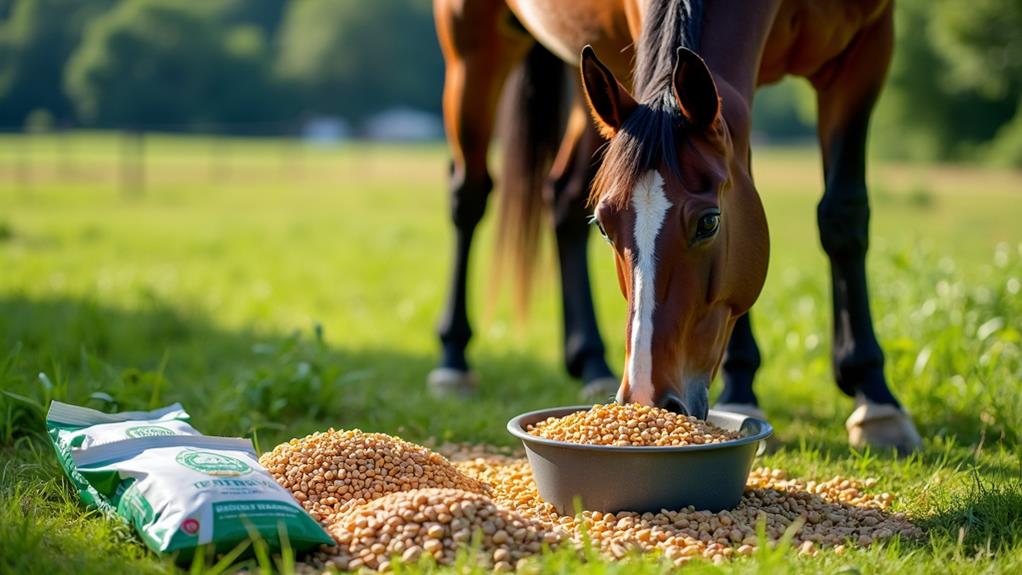
After establishing a balanced diet with quality forage, you might consider the role of commercial feeds in your horse's nutrition. These feeds are designed to deliver balanced nutrition, containing vital vitamins and minerals tailored for specific equine needs like performance or weight gain. Each type of feed offers unique benefits, so choosing the right one depends on your horse's requirements.
- Complete feeds: High-fiber, pelleted options perfect for horses with dental issues or those recovering, providing all necessary nutrients without extra forage.
- Sweet feeds: A mix of grains and molasses, customizable for energy needs but should be fed sparingly to avoid excessive sugar intake.
- Ration balancers: Low-calorie supplements providing crucial nutrients, ideal for maintaining weight in easy keepers or horses on minimal grain.
- Feeding guidelines: Always follow the instructions on commercial feed bags, which typically recommend a minimum of 5 lbs per day for average-sized horses.
When selecting commercial feeds, consider your horse's specific needs and lifestyle. If you're aiming for peak performance or managing weight, these feeds can be an effective way to guarantee your horse is getting the balanced nutrition they need.
Role of Supplements and Treats
In the domain of equine nutrition, supplements and treats play a supporting role that requires careful consideration. To maintain a healthy horse, supplements should only be added when specific deficiencies are identified. It's wise to consult your veterinarian before introducing a vitamin supplement or other nutrients like protein and calcium. A salt block is crucial for providing daily electrolytes, especially for horses that sweat heavily. Make sure your horse consumes the recommended 25-200 grams to prevent imbalances.
Beet pulp, high in fiber, is a great choice if your horse needs extra calories or fiber. Soak it in water for easier digestion. For horses on low-calorie diets, consider ration balancers. These pelleted mixes contain vital vitamins, minerals, and protein, guaranteeing balanced nutrition with just 1-2 lbs daily. They complement a diet without adding excessive calories.
When it comes to treats, moderation is key. Opt for fruits or specially made horse cookies, keeping treats to less than 10% of daily caloric intake. Avoid sugar overload by limiting treats, even those found in commercial mixes. Careful management of supplements and treats supports your horse's overall well-being.