The Benefits of Playing With Your Cat: Why It’S More Important Than You Think
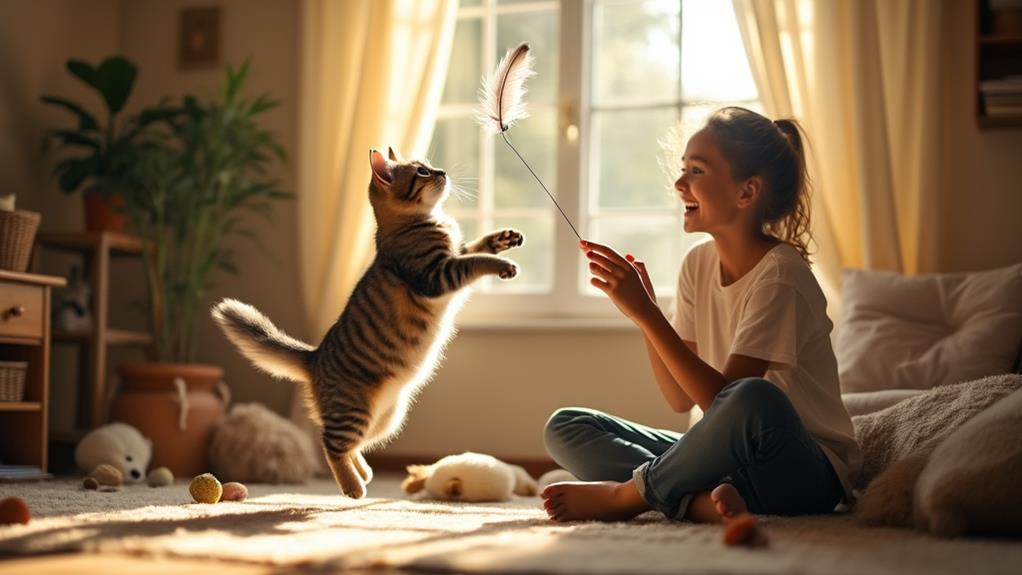
Playing with your cat is more significant than you might think. It keeps your cat physically fit, curbing obesity and health problems. When you engage their natural hunting instincts with toys, you stimulate their mind and improve problem-solving skills. This shared activity fosters a deeper bond, enhancing trust and emotional connection. Regular play also enhances your cat's socialization skills, helping it become more adaptable and less prone to anxiety. Aim for 20 to 60 minutes of playtime daily to keep your feline friend healthy and happy. Investigate further to make the most of your play sessions and strengthen your bond.
Key Takeaways
- Regular playtime supports a healthy weight, reducing obesity-related health risks in cats.
- Engaging in play reduces stress and anxiety while preventing boredom and behavioral issues.
- Play enhances cognitive development, promoting problem-solving skills and mental stimulation.
- Interactive play strengthens the emotional bond between cats and owners, fostering trust.
- Playtime improves socialization skills, enabling better interactions with humans and other pets.
Importance of Cat Play
Playing with your cat is fundamental for their general health and happiness. Engaging in regular playtime isn't just about fun; it's imperative for maintaining your cat's physical and mental health. Interactive play allows your cat to fulfill their natural hunting instincts by stalking, chasing, and pouncing. This kind of activity not only keeps them entertained but also mentally engaged and emotionally satisfied.
Incorporating play into your cat's daily routine is crucial for preventing obesity. With about 60% of U.S. cats being overweight or obese, ensuring they stay active helps maintain a healthy body weight. Structured play sessions serve as an excellent form of exercise, burning calories and keeping those extra pounds at bay.
Moreover, playtime is a great way to reduce stress and anxiety in your feline friend. By providing an outlet for their energy, you can alleviate behavior problems often linked to boredom. Cats that are regularly stimulated through play exhibit fewer destructive behaviors and less stress, leading to a more harmonious home environment.
Ultimately, interactive play is more than entertainment; it's a key factor in your cat's comprehensive well-being, promoting a healthier, happier life.
Ideal Playtime Duration
Determining the ideal playtime duration for your cat is vital for optimizing their health and happiness. Cats need regular playtime to stay fit and mentally stimulated, especially indoor cats who might not get as much spontaneous exercise. Experts recommend that cats engage in 20 to 60 minutes of play daily. This time should be spread out in play sessions of 10 to 15 minutes to match their natural short bursts of activity. Kittens, with their boundless energy, typically require more frequent and intense sessions compared to older cats, who might prefer shorter, less strenuous play.
The number of play sessions can vary based on your cat's maturity, weight, and health conditions. Younger cats often need more engagement, while older or less active cats might benefit from gradually increased playtime to avoid injury. Regularly evaluating your cat's behavior is vital to tailor these sessions to their specific needs and preferences. Over time, you'll notice the benefits of regular playtime in your cat's demeanor and health. By paying attention to how your cat responds, you can guarantee they're getting the right amount of activity to keep them happy and healthy.
Choosing the Right Toys
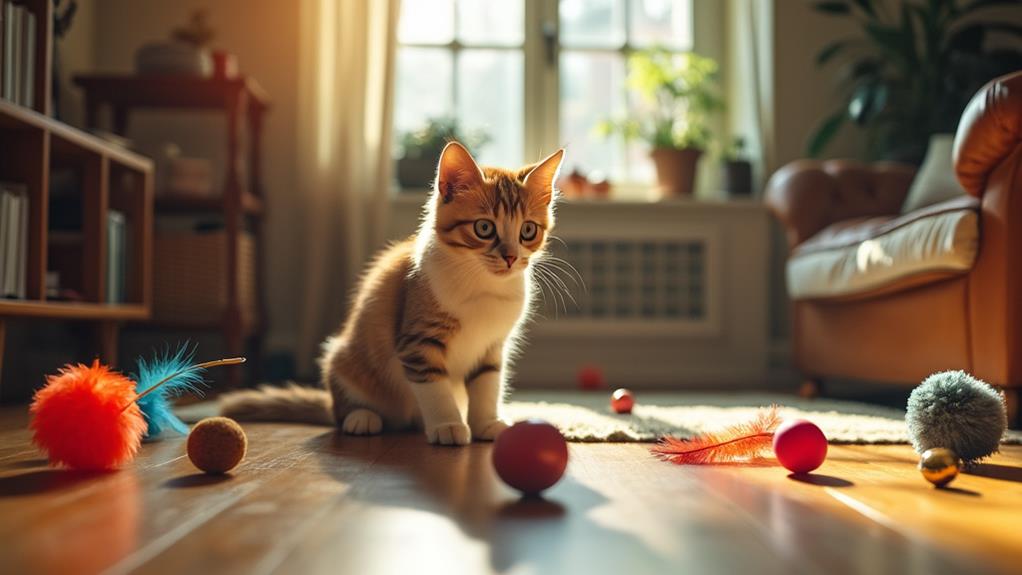
To keep your cat engaged and satisfied during those play sessions, selecting the right toys is key. As a cat owner, you'll want to choose toys that cater to their natural hunting instincts. Wand toys and feather teasers are among the best toys for this purpose, encouraging your cat to stalk and pounce just like they would in the wild. These toys not only provide physical exercise but also tap into their primal urges, keeping your cat mentally stimulated.
Don't overlook the value of puzzle toys and treat-dispensing toys. They offer mental challenges that promote problem-solving skills while keeping cats entertained. These types of toys are perfect for when you can't directly engage in play, ensuring your feline friend remains occupied and content.
For those moments when solo play is preferred, simple toys like catnip-filled toys or crinkly balls can offer hours of fun. They help prevent boredom and are great for independent play.
Lastly, interactive toys that move or make noise can improve the complete play experience. They promote bonding between you and your cat, making playtime a rewarding experience for both. Remember, variety is crucial to maintain your cat's interest and engagement.
Recognizing Playtime Needs
Understanding your cat's playtime needs is vital for their general well-being. Cats need play to stay physically and mentally stimulated, which helps prevent boredom and the unwanted behaviors that often accompany it. Recognizing playtime needs isn't just about quantity; it's about quality too. Tailoring play sessions to your cat's maturity and energy levels can keep them entertained and satisfied.
- Play Frequency: Most cats benefit from two to three play sessions of 10-15 minutes daily. Kittens and energetic breeds might require more frequent and intense play, while older cats may prefer shorter, gentler interactions.
- Behavior Monitoring: Keep an eye on your cat's behavior. If they exhibit reduced destructive actions and seem generally content, you're likely meeting their playtime needs. Conversely, signs like excessive vocalization or grooming can indicate boredom.
- Individual Preferences: Every cat is unique. Some may enjoy interactive play with you, while others might prefer solo play with their favorite toys. By recognizing and adapting to these preferences, you optimize the benefits of playing and guarantee your cat stays happy and healthy.
Physical Health Benefits
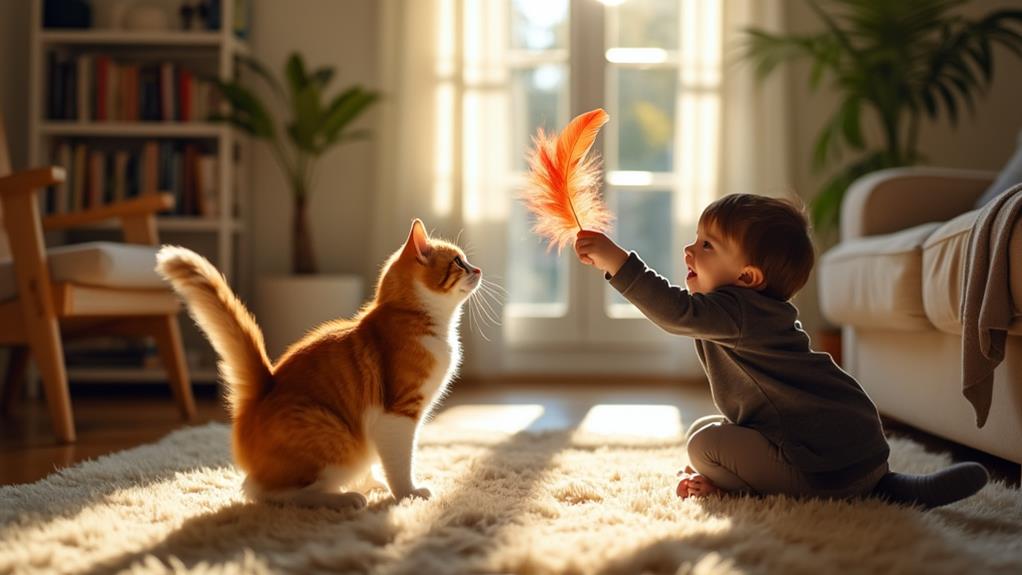
While guaranteeing your cat gets regular playtime, you're not just providing entertainment but also supporting their physical health. One of the primary physical benefits is helping your cat maintain a healthy weight. With about 60% of U.S. cats classified as overweight or obese, playtime becomes an essential part of their exercise routine. By engaging your pet in interactive play, you help keep their muscles toned and promote complete physical fitness, reducing the risk of obesity-related health issues.
Cats, including adult cats, naturally need to play to stay fit. Engaging them in short bursts of activity for 10-15 minutes multiple times a day aligns with their natural activity patterns. This approach prevents them from leading sedentary lifestyles, which can contribute to weight gain and other health problems. Playtime also acts as an effective outlet for pent-up energy, which, if unaddressed, can lead to stress and anxiety.
Additionally, consistent play improves the longevity and quality of life for older cats. It guarantees they remain active and agile, keeping them physically fit. By incorporating regular play sessions, you're investing in your cat's health, guaranteeing they lead a happier and healthier life.
Mental Stimulation
Jump into the world of mental stimulation for your cat and watch as their curiosity and instincts come alive. Regular playtime isn't just fun; it's essential for their cognitive development. By mimicking natural hunting behaviors, playtime helps your cat hone their problem-solving skills. Interactive play, like using wand toys or feather teasers, encourages them to think and act like a predator, keeping their minds sharp and agile.
Indoor cats especially benefit from mental stimulation as it reduces boredom and prevents behavioral issues. Here's how you can elevate their mental agility:
- Interactive Play: Use toys that simulate prey, prompting your cat to engage their instincts and cognitive abilities.
- Puzzle Toys: Introduce puzzle toys or treat-dispensing toys to challenge their minds, promoting critical thinking.
- Varied Activities: Consistently change play activities to maintain mental stimulation and improve emotional health.
These activities not only entertain but also contribute to your cat's comprehensive well-being. By investing in regular, varied play sessions, you're ensuring they remain mentally engaged and emotionally healthy. Keep their minds active, and you'll notice a happier, more fulfilled feline friend.
Bonding Through Play
When you engage in regular playtime with your cat, you strengthen the bond between you both, making your feline friend more likely to see you as a trusted companion. This bonding process happens naturally as you spend quality time together. Interactive play allows you to uncover your cat's unique personality and preferences, which fosters a deeper emotional connection. You'll notice how your cat responds to different toys or games, giving you insight into their likes and dislikes.
Cats associate these play sessions with fun and positive experiences, enhancing the bond. With each playtime, your cat learns to associate you with joy and excitement, reinforcing their trust in you. Incorporating treat reinforcement during these sessions can further solidify this bond. By rewarding positive behavior with treats, you strengthen the association between you and your cat, making each playtime a highly anticipated event.
Moreover, playtime encourages your cat's natural instincts. Engaging in activities that mimic hunting helps keep them mentally and physically stimulated, contributing to a healthier, happier lifestyle. By investing time in interactive play, you're not just having fun—you're nurturing a loving, trusting relationship with your furry friend.
Socialization Skills
Regular playtime with your cat does wonders for their socialization skills, helping them better interact with humans and other pets. Engaging in play from a young period helps your cat develop communication and confidence, making them more adaptable to new environments and situations. By involving your cat in interactive play, you're setting the stage for them to navigate social dynamics effectively. Here's how playtime improves their socialization skills:
- Communication: Through interactive play, your cat learns to read social cues. This ability reduces misunderstandings that could lead to fear or aggression, preventing potential behavioral issues.
- Confidence: Familiarity with diverse stimuli during playtime elevates your cat's confidence. This newfound assurance makes them more comfortable in social settings, improving their interactions with other pets.
- Behavioral Improvement: Regular play helps cats form positive relationships, decreasing territorial behaviors and aggression. These experiences teach them appropriate social behaviors, reducing the likelihood of behavioral issues.
Addressing Health Concerns
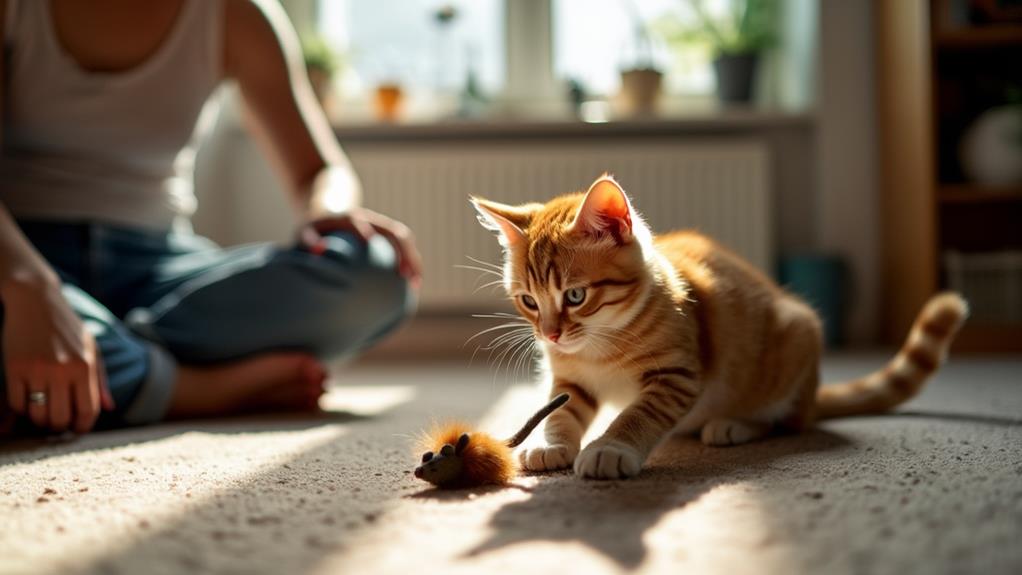
While socialization builds your cat's confidence and communication skills, playtime also addresses significant health concerns. Regular playtime is vital for combating obesity, a condition affecting about 60% of U.S. cats. Keeping your cat active through play can prevent weight-related health issues such as heart disease and high blood pressure. For cats already facing these health conditions, a gradual introduction to exercise via play is fundamental. It's significant not to overwhelm them, as this could lead to distress or injury.
Engaging your cat in structured play doesn't just tackle physical health; it also reduces stress and anxiety. These emotional benefits can prevent behavioral issues often stemming from boredom or lack of mental stimulation. As you play with your cat, take the opportunity to monitor play behavior. Sudden signs of discomfort or disinterest might signal underlying health problems needing veterinary attention.
Consulting with a veterinarian will help you develop tailored play strategies suitable for your cat's specific needs. This guarantees they remain active without exacerbating any health risks. Regardless of whether your cat is overweight or aging, these strategies will support their comprehensive well-being, making playtime an invaluable component of their health regimen.
Related posts