Teaching Kids How to Properly Care for Pets: Tips for Responsible Pet Ownership
Teaching kids how to care for pets helps them become responsible and empathetic. Start with simple tasks like feeding and grooming, which teach accountability and dependability. Show them how to establish a cleaning routine and emphasize the importance of hygiene for both pet and family. Create a consistent feeding schedule and encourage daily interaction to build a compassionate bond. Discussing animal needs fosters critical thinking and empathy, while teaching safe interaction techniques guarantees harmony between child and pet. Empowering your kids to understand the long-term commitment of pet ownership can set the stage for valuable lessons in their experience.
Benefits of Pet Ownership
Owning a pet offers numerous benefits for children, greatly improving their emotional and social development. By engaging in pet care, kids learn valuable lessons in responsibility. Tasks like feeding, grooming, and exercising pets teach them accountability. As they meet these needs, they're not just checking off chores but learning to be dependable and caring individuals. When you teach kids responsibility through pet care, you're also fostering empathy and nurturing behaviors. These skills naturally carry over into their interactions with peers, enhancing their social skills and relationships.
Pet ownership also elevates children's self-esteem. The unconditional love and companionship pets provide help them gain confidence. When they see their efforts result in a happy, healthy pet, it reinforces their sense of achievement and self-worth. This positive feedback loop builds their self-confidence, encouraging them to take on more responsibilities both with their pet and in other areas of life.
Moreover, having a pet creates wonderful opportunities for family bonding. As you all work together to care for the pet, it strengthens teamwork and shared responsibilities within the family unit. This shared experience not only improves your child's development but also brings the whole family closer.
Understanding Animal Needs
To guarantee pets thrive, it's essential they receive basic necessities like food, water, shelter, and regular veterinary care. You can teach children about each of these needs by involving them in daily pet care activities. Start by establishing a routine that includes feeding, providing fresh water, and ensuring your pet has a comfortable place to rest. Discussing these tasks helps children grasp the importance of consistency and builds their sense of responsibility.
Explaining the health implications of neglecting pet care can further reinforce responsible ownership. For example, missing meals or exercise can lead to obesity, while skipping vet visits might result in illnesses. When children understand these consequences, they're more likely to commit to their pet's well-being.
Engage them in conversations about what pets need to thrive. This encourages empathy and helps them develop nurturing behaviors. Ask questions like, "Why do you think our pet needs exercise?" or "How can we make sure our pet feels safe?" By considering these questions, children learn to think critically about their pet's needs.
Creating a Cleaning Routine
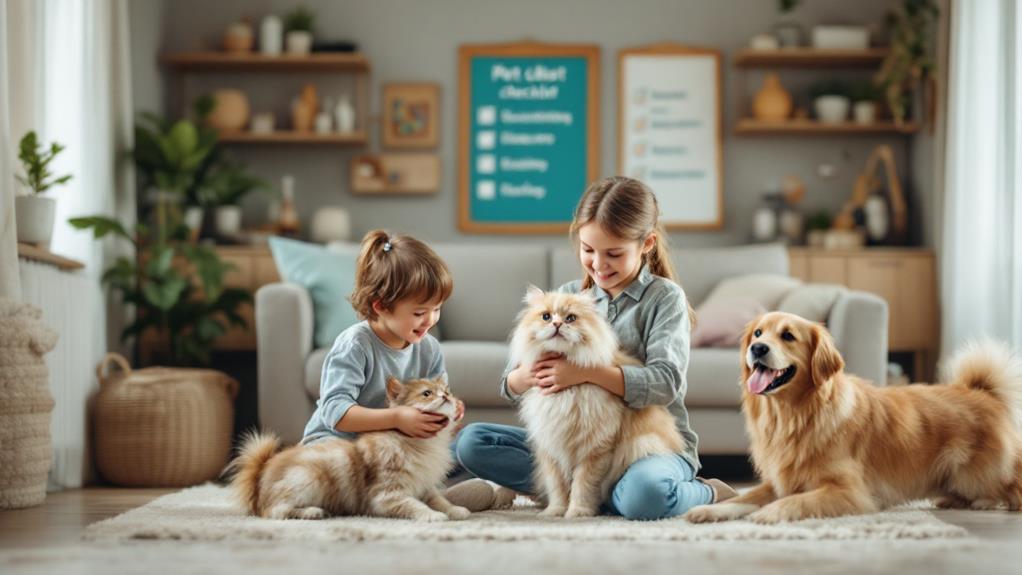
In relation to pet care, establishing a cleaning routine is just as crucial as guaranteeing they have food and water. To keep your home healthy, set up a weekly cleaning schedule that includes tasks like cleaning food and water bowls at least once a week. This helps prevent bacteria buildup, keeping your pets safe and healthy. Assign cleaning responsibilities to each child based on their maturity. For younger children, tasks might include wiping down pet areas, while older children can take on more complex chores like cleaning cages or litter boxes.
Teaching children the importance of maintaining a clean living environment for pets not only guarantees your pets' health but also instills a sense of responsibility and hygiene in your family. Regularly monitor and clean areas where your pets spend time. This helps address odors and potential allergens, promoting a healthy indoor environment for everyone.
Incorporate these pet cleaning tasks into your family routines to guarantee they're seen as a shared responsibility. By involving children in these chores, you're fostering good habits that will benefit both your pets and your family. Making pet care a team effort strengthens the bond between your children and their furry friends.
Feeding and Attention
While maintaining a clean space is fundamental for your pet's health, guaranteeing they receive proper nutrition and attention is critical too. Start by establishing a consistent feeding schedule that your children can easily follow. Use visual aids like charts to track meal times and portions, making it easier for kids to understand and stick to the routine. Timely feeding is essential as pets rely on regular meal times for their health and well-being. Teaching your children the significance of this routine fosters a sense of responsibility and accountability.
Besides feeding, paying attention to your pet's needs is similarly important. Encourage your children to recognize signs of hunger or distress in your pet. This awareness helps them respond appropriately and guarantees the pet's needs are met. Furthermore, emphasize the significance of daily interaction and playtime. Pets require not just food, but also affection and exercise to thrive, which highlights the necessity of spending quality time with them.
Incorporating feeding and attention into your children's daily routine not only supports the pet's health but also instills valuable life skills in your kids. This consistent practice helps build a strong, compassionate bond between them and their pets.
Practicing Pet Ownership
Taking the step from observing pet care to actually practicing it can be quite enlightening for children. It's an excellent way to teach them responsible pet ownership. Start by encouraging them to pet-sit for neighbors or family members. This hands-on experience allows children to understand the responsibilities involved in caring for animals, such as feeding, grooming, and providing companionship. It's a practical approach that helps you assess their readiness for actual pet ownership.
As your child engages in these tasks, introduce a variety of pets during practice sessions. This exposure helps them learn about the specific needs and care routines associated with different animals. Discuss what they've learned from these experiences, reinforcing the importance of accountability and dedication. Highlight that pet care is a long-term commitment and not just a temporary responsibility.
Use these opportunities to teach them that owning a pet involves more than just playtime. It's about understanding the pet's needs and ensuring their well-being. By practicing pet ownership, your child gains valuable insights into the level of care and attention required. This foundation is essential for fostering a sense of responsible pet ownership in the future.
Safe Interaction Techniques
Understanding safe interaction techniques is crucial when teaching kids how to engage with pets. By approaching pets slowly and calmly, you help your child reduce the animal's anxiety. Encourage them to let the pet sniff their hand initially, fostering trust. Always remind your child to ask the pet's owner for permission before petting an unfamiliar animal. This not only guarantees safety but also teaches respect for the pet's personal space.
Show your child how to use gentle strokes, steering clear of sensitive areas like the tail or ears. This prevents discomfort and minimizes the risk of defensive reactions from the pet. Encourage your child to use toys during playtime instead of their hands. This practice reduces the likelihood of accidental bites or scratches when interactions become enthusiastic.
Always supervise interactions between your child and the pet. This way, you can step in immediately if the situation becomes overwhelming for either party. Supervision provides a layer of safety, assuring that both your child and the pet enjoy their time together without stress. By implementing these safe interaction techniques, you'll help your child develop a responsible and respectful approach to pet ownership.