Tarantula Anatomy and Identification: A Complete Guide
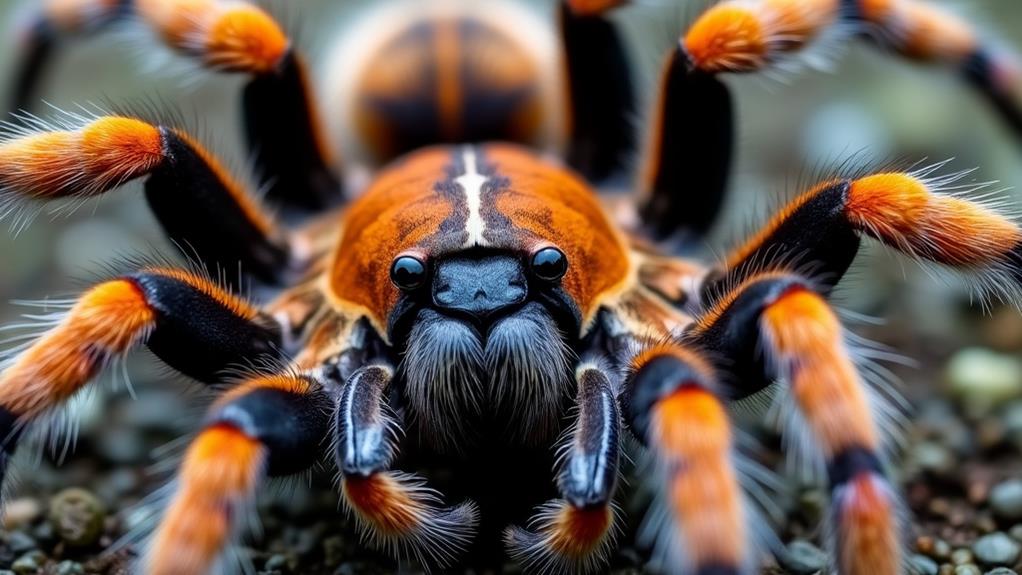
You're stepping into the intricate world of tarantula anatomy to help identify these fascinating creatures. Tarantulas have a body split into the cephalothorax and abdomen, which house their eyes, legs, and essential organs. They use their colorful exoskeleton for camouflage and defense. Sensory hairs allow them to detect vibrations, while urticating hairs can deter predators. Tarantulas also possess a unique hydraulic leg system for movement. With over 1,000 species, you'll find variations in venom potency, size, and behavior, aiding in their identification. Immerse yourself in their anatomy, and you'll gain insights into their adaptability and predatory skills.
Overview of Tarantula Anatomy
When you investigate the world of tarantulas, understanding their anatomy is fundamental. You'll uncover that tarantulas have a fascinating body segmentation consisting of the cephalothorax and abdomen. This segmentation plays a significant role in their movement and survival. The molting process is another important aspect of their anatomy. Tarantulas periodically shed their exoskeletons to grow, which is necessary for their development and adaptation to different habitats.
Tarantulas exhibit remarkable habitat adaptation abilities, allowing them to thrive in assorted environments, from rainforests to deserts. Their behavioral traits, such as burrowing and web-building, are closely linked to their anatomical structure, helping them hunt and protect themselves. When you examine deeper into their reproductive anatomy, you'll find that it's specially adapted for mating, with males having distinct pedipalps and females developing specialized structures for egg-laying.
Color variation and size comparison are also intriguing aspects of tarantula anatomy. These spiders come in a wide range of colors and sizes, influenced by their evolutionary history and environmental factors. Understanding these variations helps you appreciate the diversity within the species and how each tarantula is distinctly adapted to its ecological niche.
External Features and Functions
Although tarantulas might initially seem intimidating, their external features are both fascinating and important for their survival. You'll notice that their bodies are divided into two main segments: the cephalothorax and the abdomen. The cephalothorax houses necessary components like the eyes, mouthparts, and legs, while the abdomen contains crucial organs and spinnerets for web production. Understanding this body segmentation helps in identifying different tarantula species and appreciating their unique adaptations.
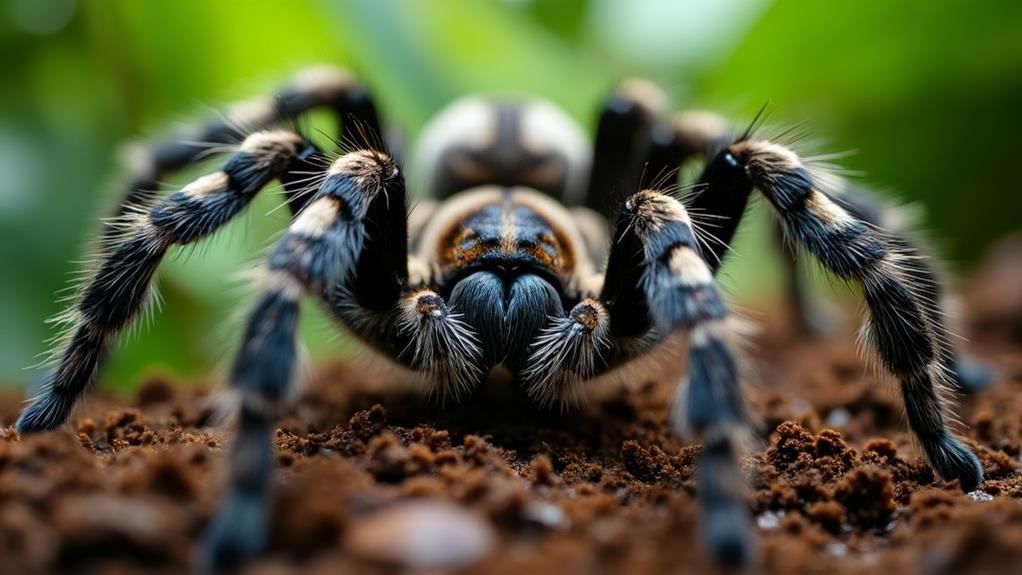
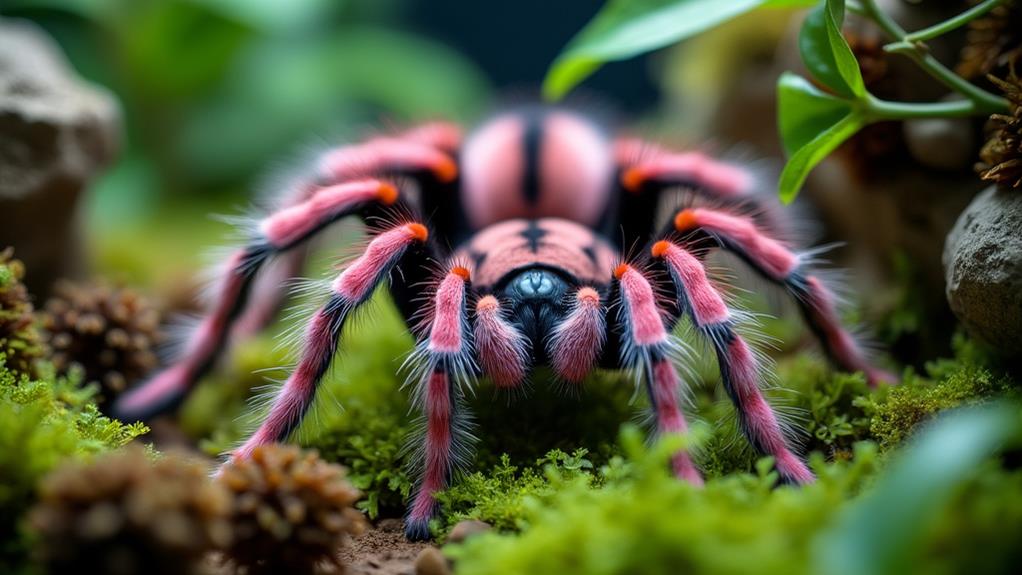
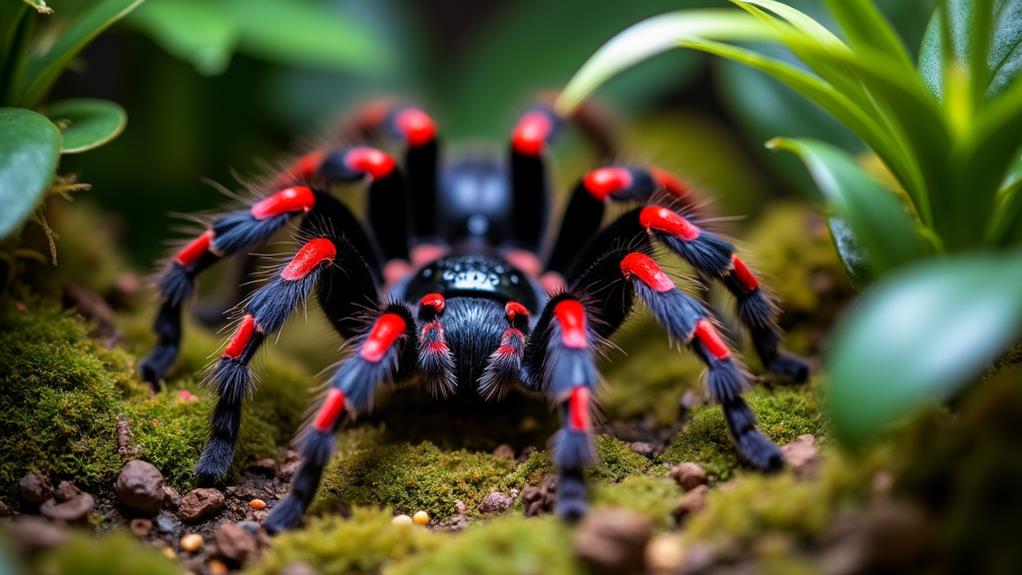
Tarantulas also exhibit a wide range of coloration patterns, which serve multiple functions. These patterns can provide camouflage, helping them blend into their surroundings and avoid predators. Some tarantulas boast lively colors, signaling potential danger to other creatures. By observing these patterns, you can gain insight into their natural habitats and behaviors.
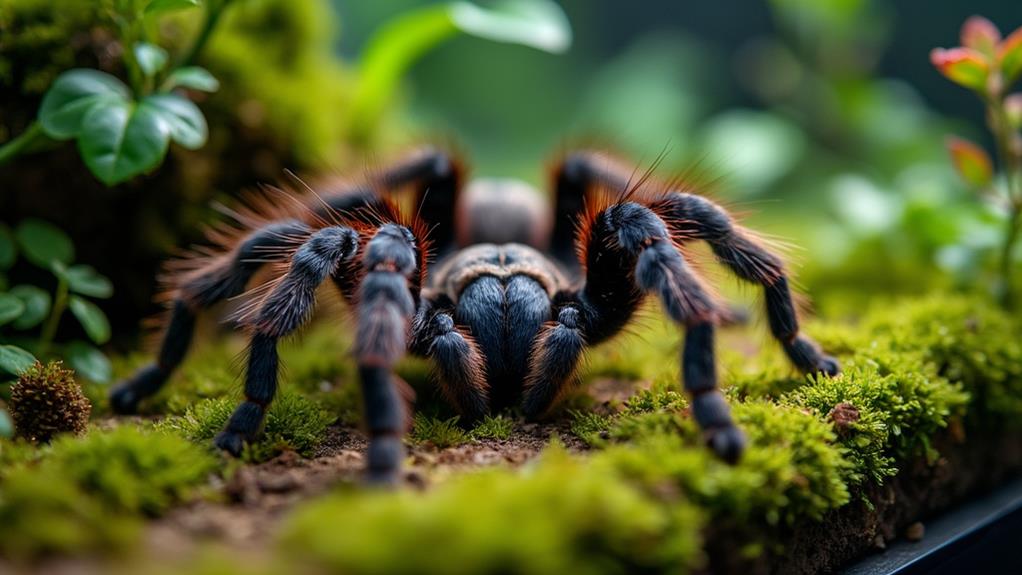
Their hairy bodies aren't just for show; these hairs, or setae, play a significant role in their sensory perception. They help tarantulas detect vibrations and air movement, which is crucial for hunting and avoiding threats. Moreover, some species possess urticating hairs that they can flick at predators, causing irritation. By exploring these external features, you'll gain a deeper understanding of how tarantulas thrive in their environments.
Internal Systems Explained
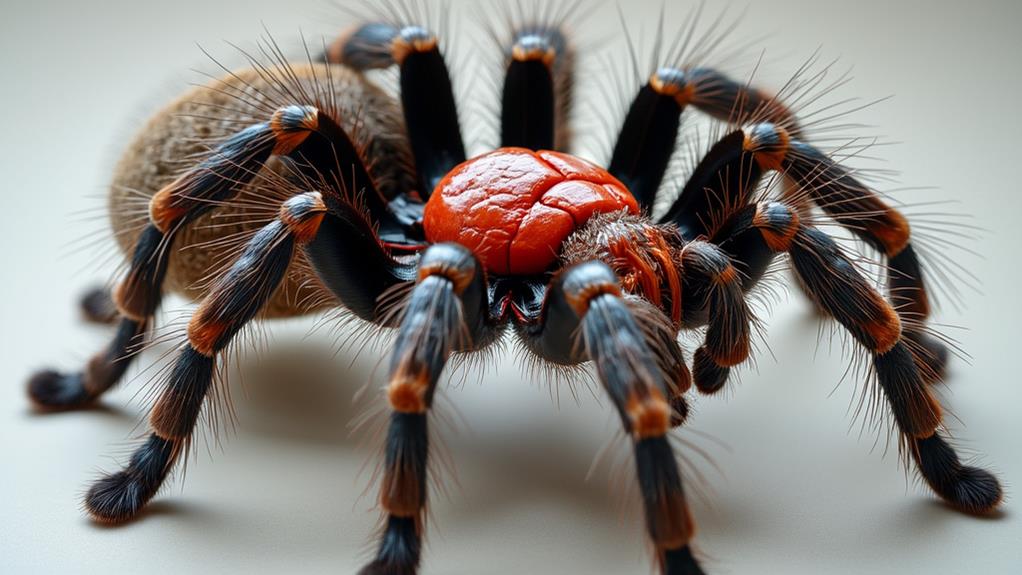
The complexity of tarantulas' internal systems showcases the marvel of nature's design. Each system plays a significant role in the spider's survival and efficiency. The circulatory system is open, with hemolymph flowing freely through the body, delivering nutrients and oxygen to cells. Their respiratory structures, known as book lungs, allow them to efficiently exchange gases, essential for their survival.
Tarantulas have a centralized nervous system with a brain and a ventral nerve cord, helping them process information and respond to their environment. The reproductive organs differ between males and females, with males possessing pedipalps for transferring sperm, while females have specialized structures for egg fertilization and laying.
Their digestive process starts externally, as they liquefy prey with digestive enzymes before ingestion. Internally, a simple gut continues the breakdown and absorption of nutrients. Excretory functions are handled by specialized organs called Malpighian tubules, which remove waste from the hemolymph.
The immune response in tarantulas is primarily cellular, using hemocytes to fight off pathogens. Their muscle arrangement is unique, as muscles attach directly to the exoskeleton, providing strength and flexibility for movement. Each component of their anatomy demonstrates their evolutionary success.
Tarantula Sensory Organs
While the internal systems of tarantulas are impressive, their sensory organs are likewise fascinating and crucial for their survival. You might be surprised by how these creatures perceive the world. Tarantulas rely heavily on their sensory organs to navigate their environment, find food, and avoid predators.
- Sensory Hairs: Tarantulas are covered in tiny hairs that serve a critical function. These sensory hairs detect vibrations and changes in air pressure, allowing the tarantula to sense nearby movement. They can even pick up the subtle tremors of prey walking nearby.
- Chemosensory Receptors: Located on their pedipalps and legs, these receptors help tarantulas taste and smell their surroundings. By analyzing chemical signals, they can identify potential food sources or recognize pheromones from other tarantulas.
- Eyes: While not as sharp as human vision, tarantula eyes are adept at detecting light and movement. Positioned on the top of their cephalothorax, they provide a wide field of view, alerting the tarantula to any rapid motion above them.
Understanding how tarantulas use their sensory organs helps you appreciate their prowess as hunters and survivors. These sensory systems are finely tuned, ensuring tarantulas thrive in their natural habitats.
Understanding Leg Structure
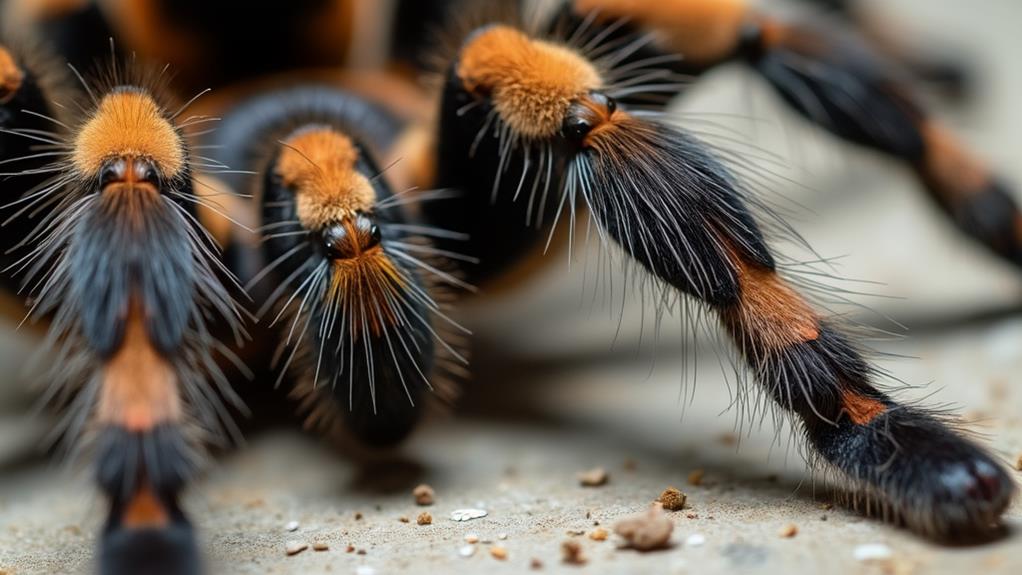
How exactly do tarantulas manage to move with such agility and precision? It all comes down to their incredible leg structure. Tarantulas have eight legs, each divided into seven segments, which contribute to their leg joint flexibility. This flexibility is essential for maneuvering different terrains, regardless of whether they're climbing, burrowing, or walking on uneven surfaces. Each joint acts like a well-oiled hinge, allowing the tarantula to adjust its movements precisely.
The secret to their movement isn't just in the joints but also in the leg muscle function. Unlike mammals, tarantulas don't rely on muscles alone to extend their legs. Instead, they use a hydraulic system where fluid pressure helps extend the legs. Muscles are primarily used for retracting the legs. This unique combination allows for quick, efficient motion without the bulk of large muscles.
You might notice tarantulas moving slowly, but that's just a part of their strategy. Their leg muscle function and joint flexibility enable them to be stealthy hunters, conserving energy until it's time to strike. Understanding this leg structure gives you a glimpse into how these fascinating creatures thrive in their environments.
Venom and Feeding Mechanisms
Curious about how tarantulas capture and consume their prey? Tarantulas have developed fascinating feeding mechanisms that make them efficient predators. They rely heavily on their venom, which differs in potency among different species. While their venom is not typically dangerous to humans, it plays an important role in subduing their prey. When a tarantula bites, it injects venom to immobilize and predigest its meal, making consumption easier.
Understanding their feeding habits is vital to appreciate how tarantulas survive. Here's a breakdown of their feeding process:
- Prey Detection: Tarantulas use their sensitive hairs to detect vibrations and movements, locating their prey effectively.
- Venom Injection: Once they secure their target, they quickly envenomate it with their fangs, guaranteeing it's immobilized and can't escape.
- Digestive Process: Tarantulas don't chew their food. Instead, they release digestive enzymes from their mouthparts to liquefy the prey, allowing them to suck up the nutrient-rich "soup."
This efficient method of feeding allows tarantulas to thrive in multiple environments. Their venom potency and feeding habits make sure they can tackle a wide range of prey, from insects to small vertebrates, securing their place as formidable hunters in the animal kingdom.
Distinguishing Species Characteristics
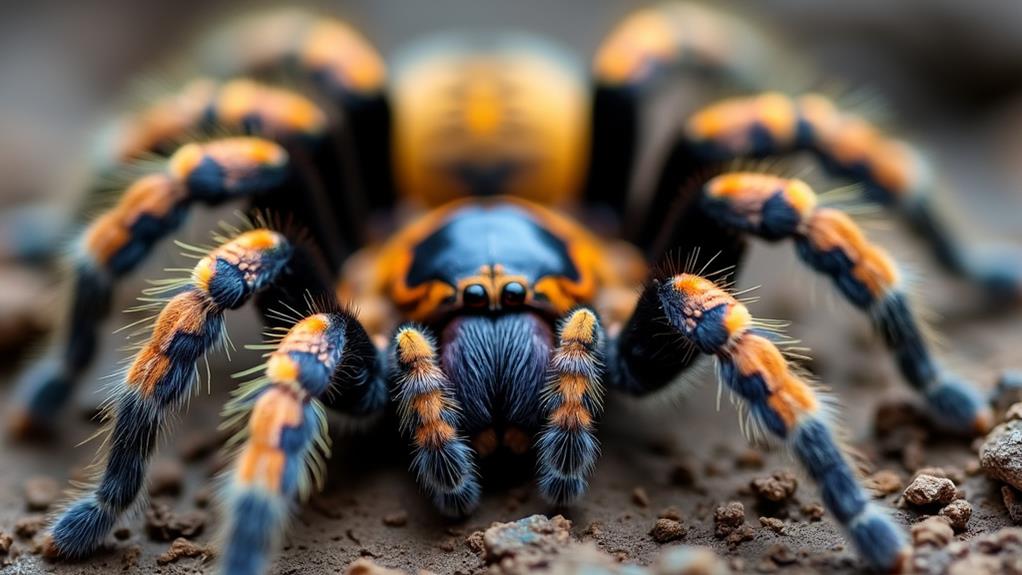
Tarantulas boast a remarkable diversity, with over 1,000 species exhibiting unique characteristics that help in distinguishing one from another. When you're trying to identify a tarantula species, pay attention to its color patterns, size, and body structure. These physical attributes can give you initial clues. However, to truly tell species apart, you should also consider their habitat preferences and behavioral traits.
Different species thrive in varied environments. Some prefer arid deserts, while others are found in lush rainforests. Understanding a tarantula's habitat can greatly narrow down the possibilities. For example, a species that burrows in sandy terrain will differ from one that dwells in trees.
Behavioral traits are similarly telling. Some tarantulas are more defensive and prone to displaying threat postures, while others are more docile. A tarantula's activity pattern, such as being nocturnal or diurnal, also helps in identification. Moreover, consider their webbing habits. Some species construct intricate burrows or silken retreats, while others don't rely on webbing at all. By combining observations of their physical characteristics with their habitat preferences and behaviors, you'll become adept at distinguishing tarantula species.
Common Tarantula Species
After exploring the diverse characteristics that differentiate tarantula species, it's helpful to engage yourself with some of the most common ones encountered by enthusiasts and researchers alike. By understanding their habitat preferences and behavioral traits, you can appreciate the fascinating world of tarantulas. Here are three popular species you might come across:
- Chilean Rose Tarantula (Grammostola rosea): Known for its docile nature, the Chilean Rose is a favorite among beginners. Its habitat preferences include arid environments, where it thrives in deserts and scrublands. This species exhibits calm behavioral traits, often staying still and rarely showing aggression.
- Mexican Redknee Tarantula (Brachypelma smithi): This species is renowned for its striking appearance and friendly demeanor. The Mexican Redknee prefers semi-arid habitats, often found in the scrublands and forests of Mexico. Its behavioral traits are generally relaxed, making it a popular choice for those seeking a colorful yet manageable tarantula.
- Goliath Birdeater (Theraphosa blondi): Among the largest tarantulas, the Goliath Birdeater captivates with its sheer size. It has specific habitat preferences, favoring the humid rainforests of South America. While its behavioral traits can be defensive, it's a fascinating species for those interested in observing giant tarantulas.
Tips for Species Identification
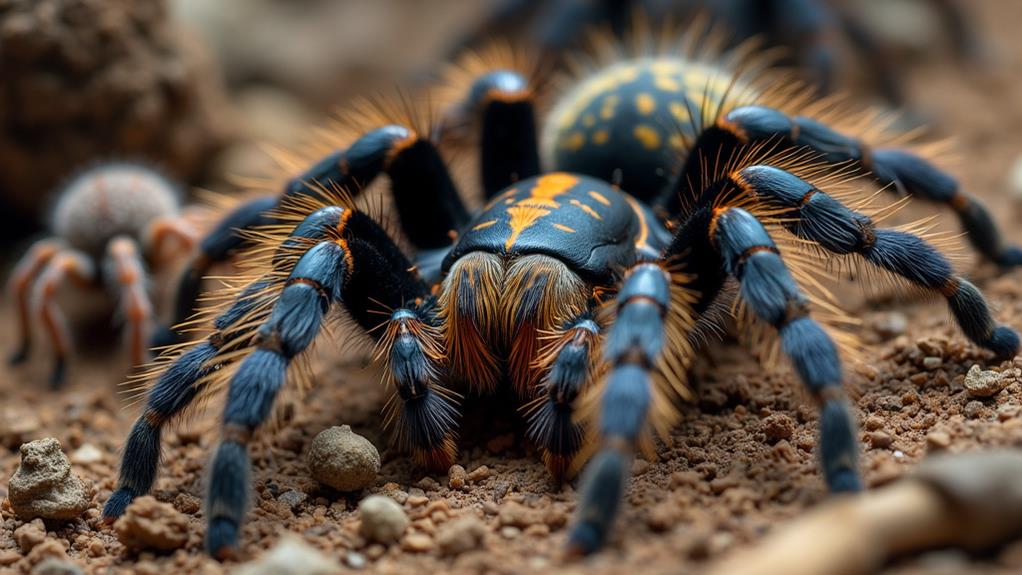
When identifying tarantula species, paying close attention to both physical characteristics and behavioral patterns is crucial. Start by examining the tarantula's complete size and coloration. Many species have distinct color patterns or markings that can provide clues to their identity. Also, note the texture of their body and legs, as some have hairy or smooth appearances.
Consider the tarantula's habitat preferences. Are they found in humid, tropical environments, or do they prefer arid, desert regions? Knowing where a tarantula naturally occurs can greatly narrow down your options. If you're observing them in the wild, pay attention to their burrowing behavior or if they climb.
Behavioral traits offer another layer of insight. Some tarantulas are more aggressive or defensive than others, while some exhibit unique webbing behaviors. For instance, certain species create elaborate silk retreats, while others may not use silk as extensively.
It's useful to consult a reliable field guide or online resource that specializes in tarantula species. These tools can provide further context and visual aids to help match your observations. By combining these physical and behavioral clues, you'll improve your ability to identify tarantula species accurately.
Related posts