Siberian Husky: The Astonishingly Strong and Beautiful Sled Dog
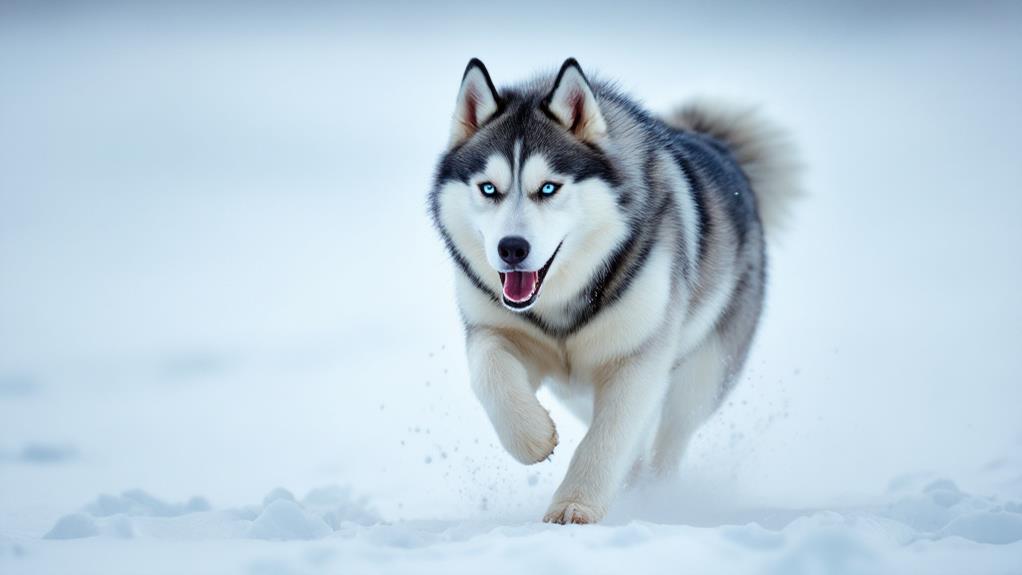
You'll find Siberian Huskies to be astonishingly beautiful and strong, bred by the Chukchi people of Siberia for sledding and hunting. Their striking wolf-like appearance boasts a thick double coat and lively eyes, while their friendly, sociable temperament makes them great family companions. Huskies thrive with plenty of exercise and mental stimulation to channel their high energy. Known for their unyielding endurance, they withstand extreme cold and adapt remarkably to warmer climates. Their legacy is intertwined with heroic tales like the 1925 Serum Run to Nome. Uncover how these resilient dogs continue to captivate and inspire through their unique history.
Breed Origins and History
Siberian Huskies, with their striking appearance and remarkable endurance, originated from the harsh terrains of Siberia, Russia. You might be fascinated to learn that the Chukchi people, native to this region, bred these dogs specifically for transportation and hunting. The Siberian Husky's breed origins are deeply rooted in the need to survive and thrive in one of the toughest climates on the planet. These dogs weren't just pets; they were vital partners in daily life, pulling sleds across vast expanses of snow and ice.
In the early 1900s, during the gold rush, the Siberian Husky made its way to Alaska. Their historical significance grew, especially with events like the 1925 Serum Run to Nome, where they heroically delivered lifesaving medicine across treacherous conditions. This event cemented their status as legendary sled dogs.
In 1930, the American Kennel Club recognized the Siberian Husky, acknowledging their unique blend of endurance, strength, and loyalty. Their genetics can be traced back to a limited number of dogs imported in the early 20th century, distinguishing them from primitive aboriginal dogs. Today, the Siberian Husky stands as a symbol of resilience and history.
Physical Characteristics
When you think of beauty in the canine world, the Siberian Husky's physical characteristics often come to mind. Their strong build and agile stature, standing 20 to 24 inches tall at the shoulder, make them a striking sight. Weighing between 35 to 70 pounds, with males usually larger than females, Siberian Huskies are built to endure the challenges of sledding.
Their thick double coat, consisting of a soft undercoat for insulation and a water-repellent topcoat, allows them to thrive in extreme cold. This feature is not only functional but adds to their wolf-like looks, complemented by erect triangular ears and bushy tails. These physical attributes give Siberian Huskies a distinct and majestic appearance.
One of the most enchanting aspects of Siberian Huskies is their eye color. They can have mesmerizing blue or warm brown eyes, and some even exhibit heterochromia, where each eye is a different color. This unique trait further improves their allure.
- Wolf-like looks: Erect triangular ears, bushy tails
- Thick double coat: Insulation and water-repellent topcoat
- Eye colors: Blue, brown, or heterochromia
Their beauty and strength make Siberian Huskies truly unforgettable.
Temperament and Behavior
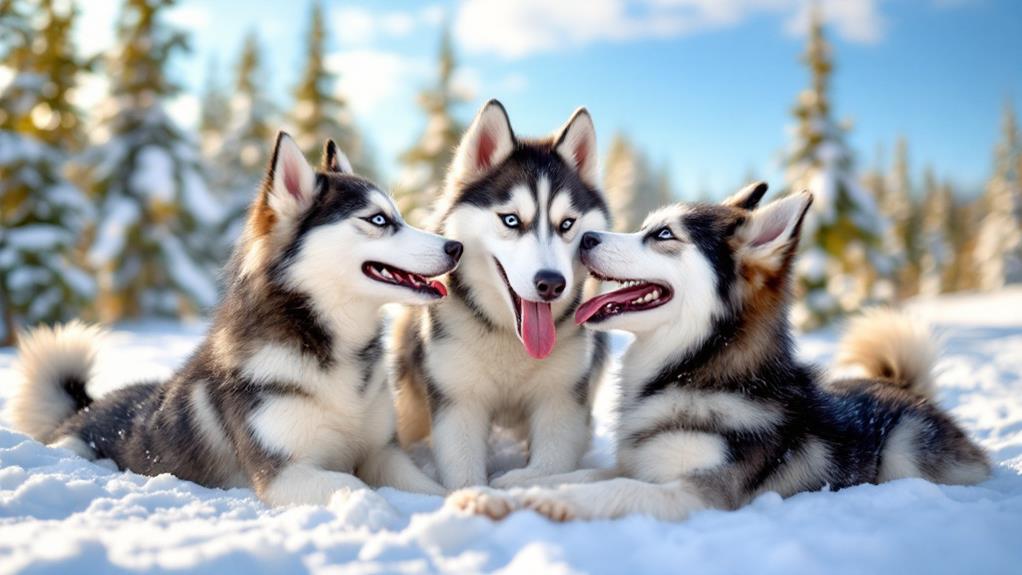
Beyond their striking physical features, Siberian Huskies captivate with their lively personalities. These dogs are known for their friendly and sociable temperament, making them perfect companions. You're likely to find them forming affectionate bonds with both humans and other dogs. Their high energy levels are a significant trait, and they can keep up with the most active of families. However, this energy needs to be channeled properly to prevent restlessness and potential destructive behaviors.
When it comes to training, Huskies are intelligent yet independent-minded. This independence can make training a bit challenging, requiring you to use consistent and patient positive reinforcement methods. Patience is vital, as these dogs don't always respond immediately to commands. Their strong prey drive is another aspect to watch out for, as it might lead them to chase smaller animals. So, supervision in open environments is critical.
Siberian Huskies are playful and loving, making them particularly well-suited for families, especially those with children. Their pack mentality and affectionate nature mean they thrive on companionship and social interaction. When you bring a Husky into your home, you're inviting in a lively and loving family member.
Exercise and Training
A commitment to exercise is fundamental when you have a Siberian Husky as part of your family. These dogs thrive in active environments, needing at least 1-2 hours of exercise daily. Activities like running, hiking, or even pulling a sled cater to their high energy levels. Without adequate exercise and mental stimulation, Huskies can develop destructive behaviors, often stemming from boredom. To keep their minds engaged, consider incorporating puzzle toys and other challenging activities into their routine.
Training your Siberian Husky requires patience and consistency. While they're intelligent, they can be stubborn, making positive reinforcement the best approach. Early socialization is key, exposing them to diverse environments and experiences to foster well-rounded behavior. This foundation aids in preventing behavioral issues as they mature. Basic obedience commands such as sit, stay, and come are crucial for effective communication and building a strong bond between you and your Husky.
Here's how to guarantee your Husky's needs are met:
- Engage them in daily physical activities to channel their energy positively.
- Provide regular mental challenges to stimulate their intelligence.
- Focus on early socialization to develop desirable behaviors.
Adaptation to Environment
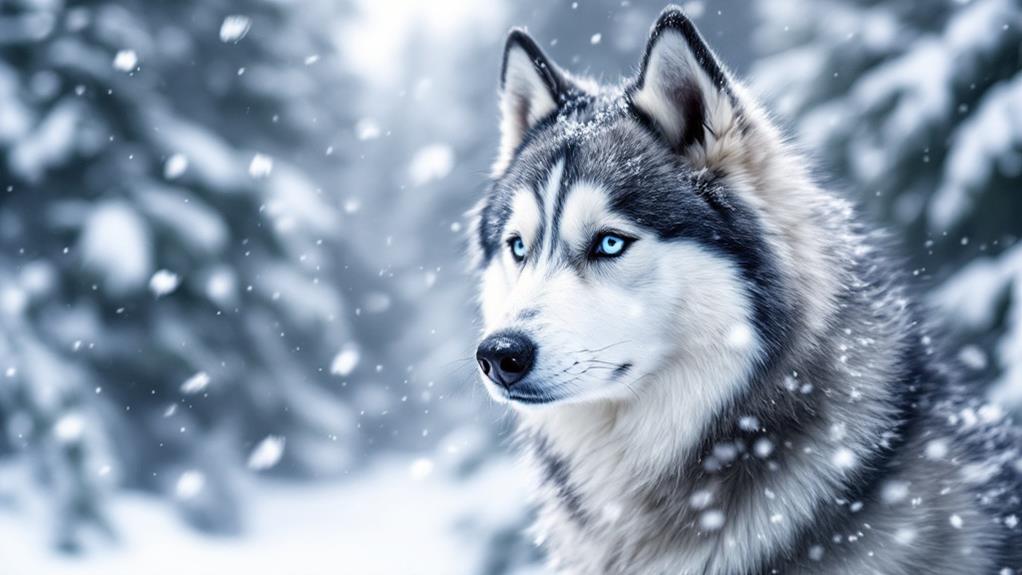
Siberian Huskies are master adapters to their environment, regardless of whether it's the frozen expanses of the Arctic or the heat of warmer regions. Their thick coats are essential to their survival in freezing temperatures, effectively insulating them in conditions as harsh as -50°C. This double-layered coat provides warmth, allowing them to function efficiently as working sled dogs over long distances. Their strong frame supports their endurance, making them capable of pulling sleds with remarkable efficiency.
You'll be amazed at how these Siberian Huskys don't just thrive in cold climates. They're also surprisingly adaptable to warmer environments, handling temperatures up to 35°C. This adaptability showcases their versatility, proving they're more than just cold-weather canines. Originally developed by the Chukchi people, Siberian Huskys have retained their strong pack dog mentality, enabling them to work seamlessly in groups of 20 or more. This pack instinct is essential for survival, ensuring they operate effectively in harsh environments.
Their ability to reserve fat storage plays an important role in maintaining energy during prolonged activity. This makes them well-suited for the demanding tasks of sled pulling and long-distance travel, highlighting their extraordinary adaptability and endurance.
Health Considerations
In caring for a Siberian Husky, it's important to pay close attention to their health considerations. These energetic and resilient dogs usually enjoy a lifespan of 12 to 15 years, but it's significant to address potential health problems early. Regular veterinary check-ups play a key role in identifying issues like hip dysplasia and eye problems. These visits allow you to implement preventive care strategies, keeping your Husky in peak condition.
Siberian Huskies have a thick double coat that insulates them against harsh climates. However, this requires consistent grooming to manage shedding and prevent matting. Their active lifestyle also makes them susceptible to joint-related issues, so consider joint supplements to maintain their mobility and guarantee their continued endurance.
With their high metabolic efficiency, Siberian Huskies can effectively manage fat storage, which supports their stamina during prolonged activities. This efficiency means they don't require excessive feeding, but a balanced diet is important to support their general health and vitality.
To keep your Husky healthy and happy, consider:
- Regular veterinary check-ups: Early detection of health problems.
- Grooming: Managing the thick double coat.
- Preventive care: Focusing on joint-related issues and general well-being.
The Legacy of Togo
Togo's remarkable expedition as a sled dog has cemented his place in history, especially noted for his vital role in the 1925 Nome Serum Run. As a Siberian Husky born in 1913, Togo showed incredible strength and endurance, covering over 264 miles of the treacherous route under extreme conditions. His intelligence and problem-solving skills were invaluable, particularly during essential moments like maneuvering dangerous ice floes. You can't help but admire the heroism he displayed throughout the trek.
Leonhard Seppala, Togo's owner, and the dog shared an unbreakable bond. This partnership was key to their success, not only in the Serum Run but also in many other races. Togo's legacy lives on as an indication of the remarkable capabilities of sled dogs, especially those facing the harsh Alaskan climate.
In 2001, a statue was erected to honor Togo, and in 2019, Disney+ released a film titled "Togo," both celebrating his contributions and reinforcing his status as a legendary sled dog. Togo's story is a beautiful reminder of the strength and spirit that Siberian Huskies possess, making them both astonishingly strong and undeniably beautiful companions.