Siamese Cat: Discover the Royal Feline of Siam
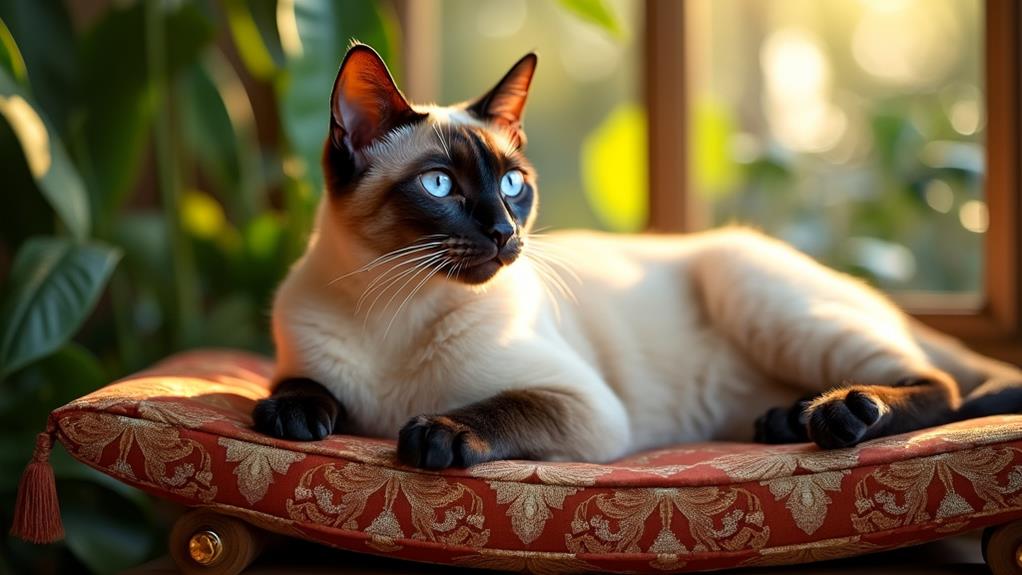
Meet the Siamese cat, the royal feline of Siam, with roots tracing back to ancient Thailand. Initially exclusive to the royal family, these cats were believed to protect valuables. Admired for their sleek bodies, striking blue eyes, and pointed coat, Siamese cats are as beautiful as they are vocal. They form strong bonds, crave attention, and are incredibly playful. You'll need to commit to their companionship, as they thrive on interaction. While they can live up to 20 years, they're prone to certain health issues, so regular care is a must. Discover their fascinating history and unique traits further.
Key Takeaways
- Siamese cats originate from ancient Siam and were exclusive to the royal family.
- They are known for their sleek bodies, blue eyes, and distinct pointed coloration.
- Siamese cats are highly social, forming strong bonds and requiring companionship.
- They have a lifespan of 15-20 years but are prone to certain health issues.
- Historically revered in Thailand, they symbolize protection and spiritual guidance.
Origins and History
Siamese cats trace their roots back to ancient Siam, now known as Thailand, where they were once exclusively owned by the royal family and seen as sacred. Known as the Royal Cats of Siam, these felines were documented as early as 1350 in ancient manuscripts. Their association with royalty wasn't just about prestige; they were believed to be protectors of royal valuables, such as the king's goblet. This belief added to their revered status and solidified their place within the royal courts.
The initial Siamese to leave its native land made a notable appearance at the 1871 Crystal Palace Cat Show in Europe, enchanting attendees with its exotic allure. It wasn't long before these cats gained popularity worldwide, especially in Western cat shows by the 1950s. Their almond-shaped blue eyes and unique coat patterns drew admiration, reinforcing their status as a beloved breed.
As one of the oldest recognized cat breeds, Siamese cats hold a rich historical and cultural significance. They're more than just pets; they're a regal lineage that reflects the splendor and mystique of their Siamese origins. Their expedition from sacred symbols to global icons is truly remarkable.
Distinctive Physical Traits
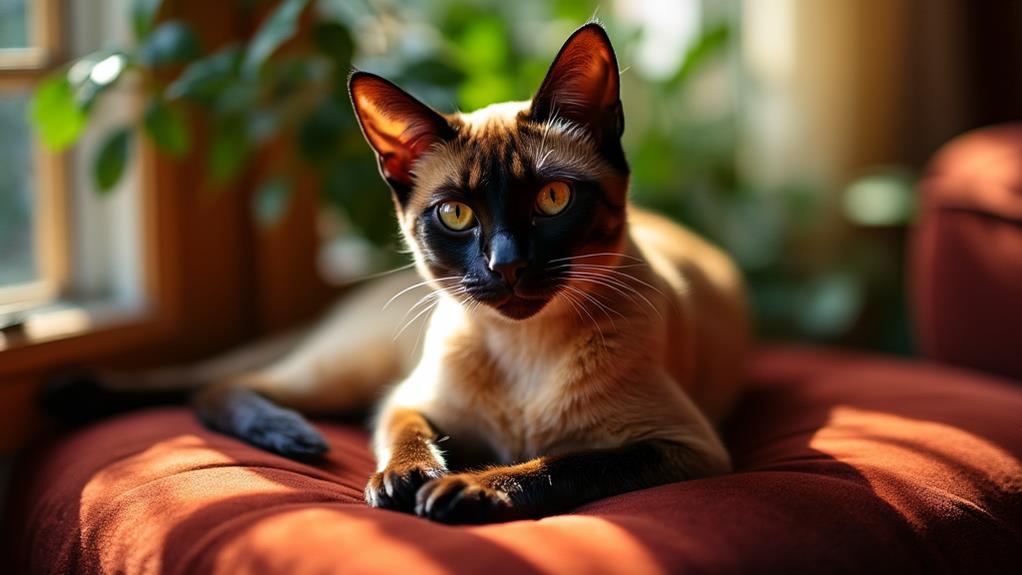
Renowned for their striking appearance, these cats boast sleek, elongated bodies and distinctive color points on their ears, face, paws, and tail, known as "pointed" coloration. The Siamese Cat is celebrated for its unique look, characterized by a wedge-shaped head that adds to their elegant profile. As you admire their striking blue almond-shaped eyes, you'll notice how they vividly contrast with the short coat, which is fine, glossy, and largely hypoallergenic—ideal if you're an allergy sufferer.
Siamese Cats also stand out with their large, wide-based pointed ears and a tapered, whip-like tail, features that further amplify their recognizable appearance. These cats weigh differently by gender, with adult males typically tipping the scales at 9-14 pounds, while females generally weigh between 6-10 pounds. This size difference is another aspect of their distinctive physical traits.
When you observe a Siamese Cat, you'll see how the combination of their sleek body, distinctive color points, and graceful features create a regal and unforgettable presence. Their short coat not only adds to their elegance but also makes grooming a breeze, ensuring they remain as stunning as ever.
Personality and Behavior
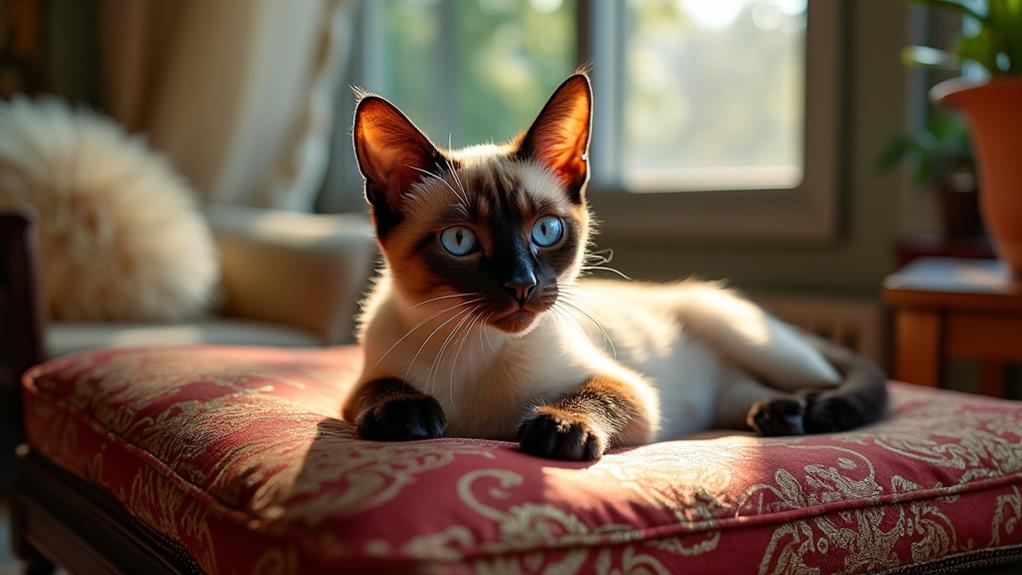
Beyond their striking physical traits, these elegant felines captivate with their distinctive personalities and behaviors. Siamese cats are known for forming strong, lifelong bonds with a single person. If you become their chosen companion, expect unwavering loyalty and affection. They crave attention and thrive on companionship, making them highly social creatures. Their playful behavior keeps them engaging and entertaining, often involving you in their antics.
These cats are also incredibly vocal and expressive, using a range of low-pitched meows and other sounds to communicate. You'll quickly learn to interpret their vocalizations as they clearly convey their needs and desires. Their intelligent and curious nature means they require mental stimulation. Engage their minds by teaching them tricks or playing fetch, activities they enjoy immensely.
However, be mindful of their need for social interaction. Siamese cats can experience separation anxiety if left alone for too long. They need regular companionship to maintain their emotional well-being. Consider this when planning your daily routine, ensuring you can provide the attention and interaction they require. Essentially, Siamese cats offer a rewarding companionship experience, full of affection and engaging behavior.
Health and Maintenance
Caring for a Siamese cat involves understanding their unique health and maintenance needs. These elegant felines typically enjoy a long lifespan of 15 to 20 years, yet they're susceptible to certain health issues such as gastrointestinal problems and upper respiratory infections. It's vital to schedule regular veterinary check-ups to monitor these conditions and address their sensitivity to anesthetics. Moreover, Siamese cats may develop Feline Hyperesthesia Syndrome, making close observation significant.
To guarantee their well-being, consider these key aspects of their care:
- Grooming needs: Their short, glossy coat requires brushing just twice a week, reducing shedding and benefiting allergy sufferers.
- High energy levels: Siamese cats are active and need plenty of space for both indoor and outdoor activities. Regular, interactive playtime is fundamental to keep them stimulated.
- Comfortable resting areas: Provide a dry, warm spot for young Siamese cats as they grow and develop.
- Diet: Maintain a balanced diet to support their health and energy levels.
- Mental stimulation: Engage them with toys and puzzles to satisfy their curiosity and intelligence.
Adoption Considerations
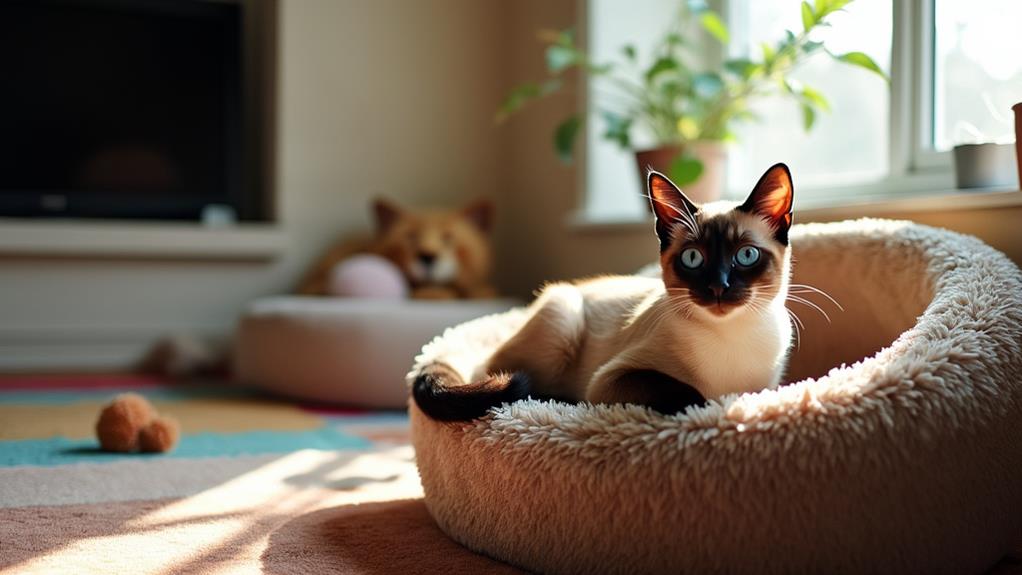
Adopting a Siamese cat requires careful thought and commitment. When you're looking into cat adoption, it's crucial to understand that Siamese cats, regardless of whether they're Siamese kittens or adults, have unique needs. These felines thrive on human interaction and companionship, so they're not the best choice if you're away often. It's good to know that this breed has a long lifespan, typically 15 to 20 years, meaning you need to be ready for a long-term commitment.
If you're interested in Siamese kittens, they're relatively affordable, with prices ranging from $200 to $400 from breeders. For those willing to adopt adult cats, rescue centers often have Siamese cats available, which can help you save on initial costs while giving a home to a cat in need. Remember, responsible adoption involves understanding potential health concerns specific to the breed, including sensitivity to anesthetics and upper respiratory issues.
Don't forget to take into account the long-haired Siamese, which might require a bit more grooming. In summary, understanding these factors will help guarantee a successful and fulfilling adoption process for both you and your new feline friend.
Cultural Significance
Siamese cats hold a rich cultural significance that stretches back centuries, particularly in Thailand where they were once revered as sacred creatures. Historically, these elegant felines were considered protectors and spiritual guides, exclusively owned by the royal family. Cultural myths surrounding Siamese cats are fascinating, with beliefs suggesting their gaze can offer glimpses into the future and their magical abilities to cast protective spells. Such stories have entrenched them deeply into cultural traditions and celebrations.
The allure of Siamese cats transcends time, inspiring countless art forms, literature, and music. Their enchanting presence is often highlighted during cultural festivals, celebrating their beauty and mystique. As you investigate the cultural significance of Siamese cats, consider these intriguing points:
- Historical Reverence: Once protected by law, stealing a Siamese cat was punishable by death.
- Artistic Influence: Featured in artworks from Siam to the Western world since the late 1800s.
- Modern Siamese Perception: Seen as symbols of positive change and human-feline connection.
- Cultural Myths: Beliefs in their mystical abilities continue to captivate.
- Selective Breeding: Maintains their unique features and cultural legacy.
Today, the legacy of Siamese cats continues to captivate, blending ancient reverence with modern admiration.