Should Cat Treats Contain Real Meat? The Benefits and Considerations
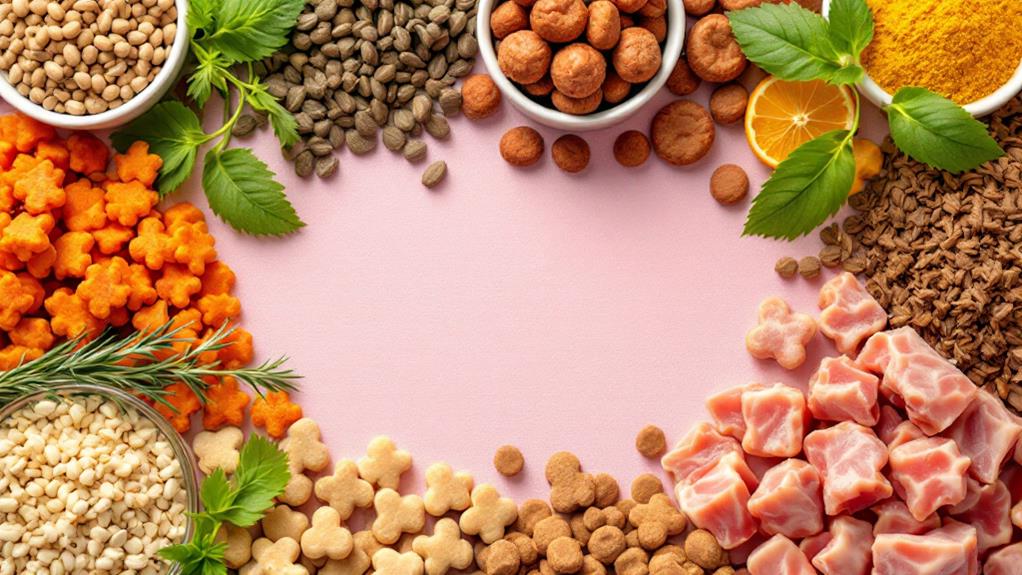
When you choose cat treats, it's significant to evaluate ones with real meat because cats are obligate carnivores and need animal-based nutrients. Real meat provides crucial amino acids like taurine, which support your cat's heart, eyes, and immune health. It also improves palatability and contributes to healthy eating habits while meeting AAFCO protein guidelines. Unlike fillers, real meat is nutritious and can reduce the risk of obesity if given in moderation. Be aware of fillers and additives that may harm your pet. There's more to investigate about ensuring your cat gets the best nutrition through its treats.
Importance of Real Meat
When choosing cat treats, it's important to prioritize options that feature real meat. Cats are obligate carnivores, which means their diets need to be rich in animal-based nutrients. Real meat in cat treats delivers high-quality protein and necessary amino acids like taurine, critical for your cat's heart and eye health. By selecting treats with real meat as the primary ingredient, you guarantee they meet your cat's nutritional needs more effectively than those packed with fillers or plant-based proteins.
Real meat doesn't just cater to dietary requirements; it also supports muscle maintenance and elevates energy levels. These are essential for your cat's complete health and well-being. The concentrated protein content found in real meat treats is key to keeping your feline friend strong and active. Plus, the palatability of these treats improves their appeal, encouraging healthy eating habits.
Nutritional Benefits for Cats
Your cat's health thrives on the right nutrition, and treats made with real meat offer significant nutritional benefits. As obligate carnivores, cats require a diet rich in high-quality meat ingredients to support their overall wellness. Real meat provides necessary amino acids like taurine, critical for heart, eye, and immune system health. It also delivers concentrated energy, promoting muscle and tissue repair.
By incorporating meat-based treats into your cat's diet, you guarantee they're getting the required crude protein. The AAFCO recommends cat food contain at least 26%-30% crude protein by dry matter, best achieved through meat-based ingredients. When treats feature chicken, beef, or fish as the primary ingredient, they're likely to meet these dietary needs effectively.
Moreover, these treats are more palatable, encouraging your cat to enjoy their snacks. When given in moderation, they minimize the risk of obesity. Consider the benefits of real meat in your cat's treats:
- High-quality protein supports muscle growth and repair.
- Necessary amino acids aid in important body functions, from heart health to immunity.
- Palatable treats keep your cat happy and engaged without overfeeding.
Incorporating real meat treats into your cat's diet can greatly contribute to their well-being.
Comparing Ingredient Quality
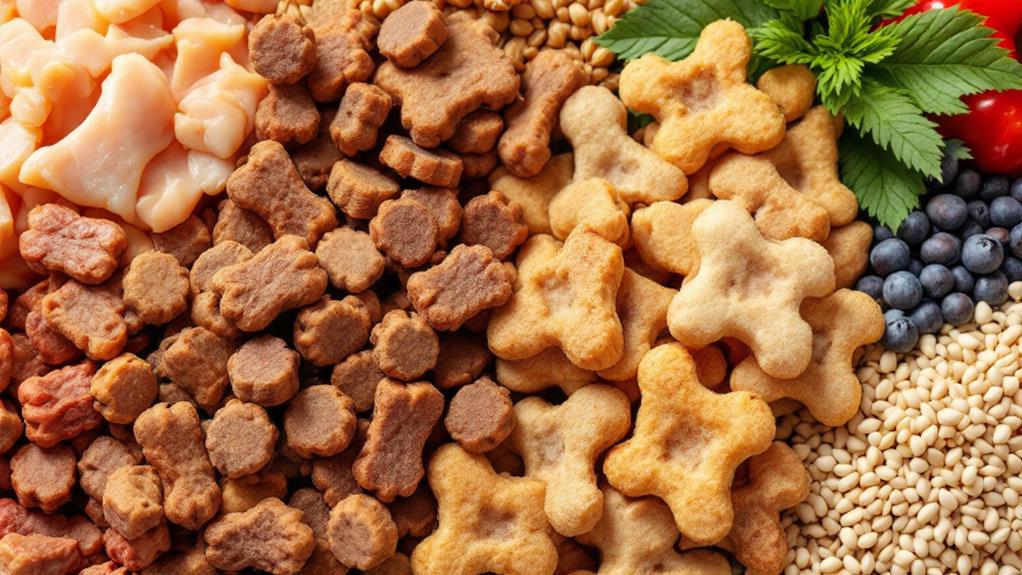
Checking ingredient labels can reveal much about a treat's nutritional value. Treats with real meat typically boast higher protein levels, meeting the AAFCO guidelines of at least 30% on a dry matter basis. This is essential for maintaining your cat's muscle health and energy levels. Furthermore, treats made from whole prey or single-ingredient meat sources provide complete nutrients, including essential amino acids like taurine, which are significant for heart health and vision.
Risks of Fillers and Additives
While high-quality ingredients like real meat provide substantial nutritional benefits, it's just as vital to be aware of the risks associated with fillers and additives in cat treats. Many commercial cat treats include fillers such as corn, wheat, and soy. These ingredients offer minimal nutritional value and can contribute to obesity and digestive issues in your cat. Furthermore, artificial additives like colors, flavors, and preservatives might pose significant health risks. Ingredients like BHA and BHT have been linked to potential long-term harm, making it imperative to scrutinize treat labels closely.
Consider the following risks:
- Mystery Meats: Often labeled as "meat by-products," these can indicate low-quality sources and may come from unhealthy animals.
- Excessive Sugar: Unnecessary for cats, excessive sugar can lead to obesity, diabetes, and other health complications.
- Lack of Vital Nutrients: Fillers and additives can replace real meat, depriving cats of vital amino acids and nutrients they need.
Choosing treats with real meat as the primary ingredient helps guarantee higher nutritional quality. Real meat offers vital nutrients that plant-based fillers cannot provide, supporting your cat's overall health. Stay informed to make the best choices for your feline friend.
Impact on Feline Health
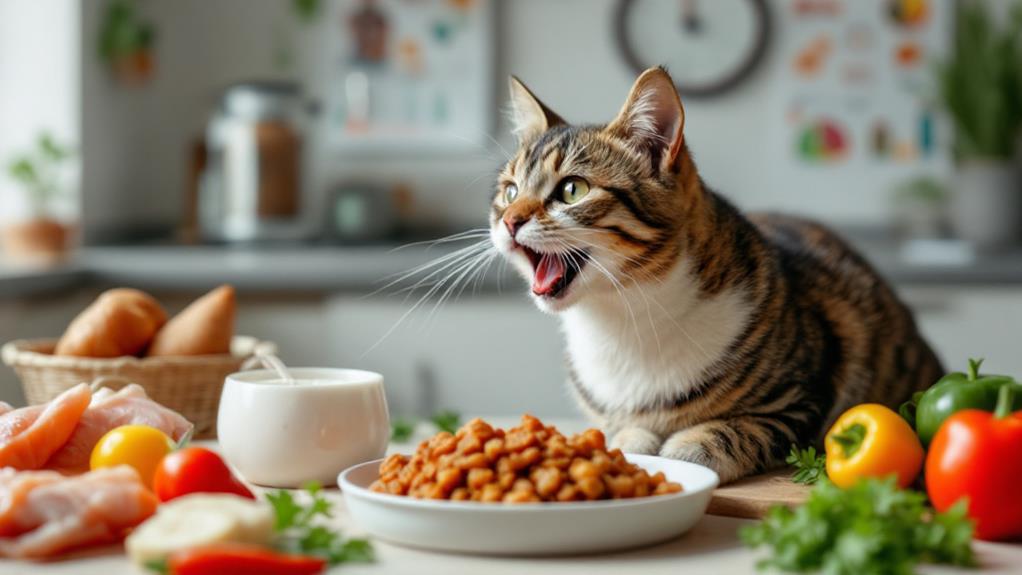
A significant impact of feeding your cat treats made with real meat is the improvement in general health and energy. Real meat supplies important amino acids and nutrients, like taurine, necessary for your cat's heart, eye, and immune system. These treats align closely with your cat's carnivorous dietary needs, offering high-quality protein sources that contribute to a balanced diet. By focusing on nutritional content, you're helping maintain your cat's vitality and overall well-being.
Including real meat in treats not only supports feline health but also provides an effective strategy to prevent obesity. Unlike treats full of fillers or carbohydrates, meat-based treats deliver valuable nutrition without unnecessary extras. This means your cat can enjoy their treats without the risk of excessive weight gain or related health issues, such as diabetes. Moderation is key, but when you choose high-quality treats, you're guaranteeing that even a small indulgence is beneficial.
Moreover, real meat improves treat palatability, enticing even the pickiest of eaters. This not only makes treat time exciting but also guarantees that your cat receives the important nutrients they need. By prioritizing real meat treats, you're actively supporting your cat's health and happiness.
Balancing Treats in Diet
Balancing treats in your cat's diet is as important as choosing the right kind of treats. Cat treats and healthy options guarantee your feline friend enjoys a balanced diet while maintaining weight. Treats should make up no more than 10% of your cat's daily caloric intake to avoid health issues. Real meat treats provide fundamental amino acids and nutrients, meeting their carnivorous dietary needs and supporting comprehensive feline nutrition.
- Portion Control: Measure treats carefully to prevent overfeeding. Using a closed jar for daily treat limits helps manage caloric intake.
- Variety: Offering different treats with real meat can prevent finicky eating and promote a balanced diet.
- Nutritious Ingredients: Prioritize treats with real meat to support your cat's digestive system and prevent health issues like diabetes.
Excessive consumption of treats, particularly those high in carbohydrates, can lead to digestive problems and other health issues. Portion control is fundamental to avoid these risks and maintain your cat's healthy weight. By incorporating nutritious ingredients and monitoring the caloric intake, you can guarantee your cat enjoys treats without compromising their health. Remember, a balanced diet plays an important role in your cat's long-term well-being.
Tips for Choosing Treats
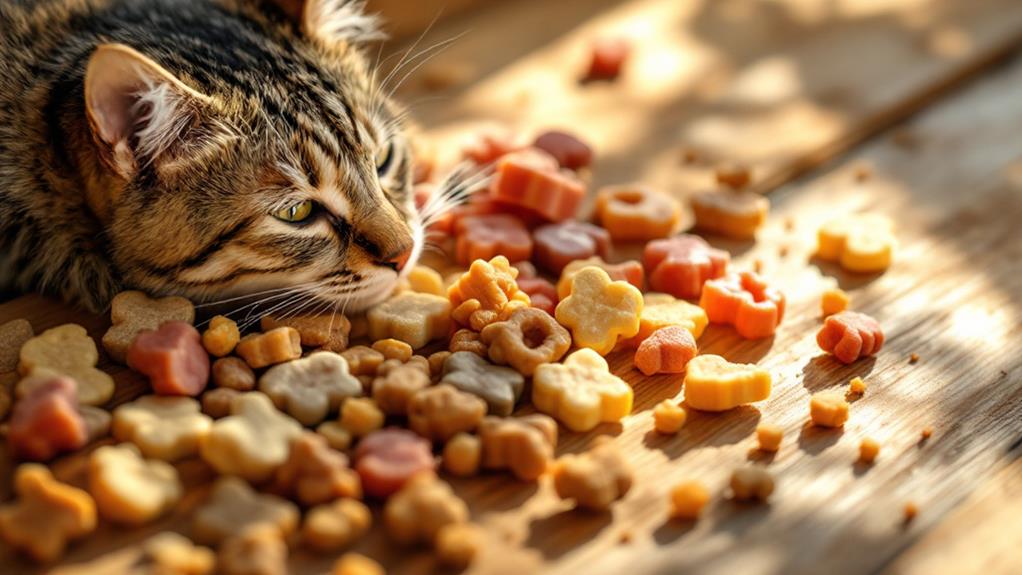
Choosing the right treats for your cat can greatly impact their health and happiness. Cats are obligate carnivores, so prioritize cat treats with real meat as the primary ingredient to guarantee high protein content and proper nutrition. This approach supports their meat-based dietary needs, promoting comprehensive well-being. Avoid treats with fillers like corn or wheat, as these offer little nutrition and might lead to health issues over time.
Consider opting for treats made from single-ingredient sources, such as freeze-dried meat. These treats are free from artificial additives, assuring the highest quality and safety for your feline friend. Monitoring the caloric intake of treats is crucial; they should comprise no more than 10% of your cat's daily caloric intake. Overindulgence could lead to obesity and related health issues, undermining your efforts to keep your cat healthy.
Related posts