Serengeti Cat: The Royal and Peppy Wild-Looking Breed
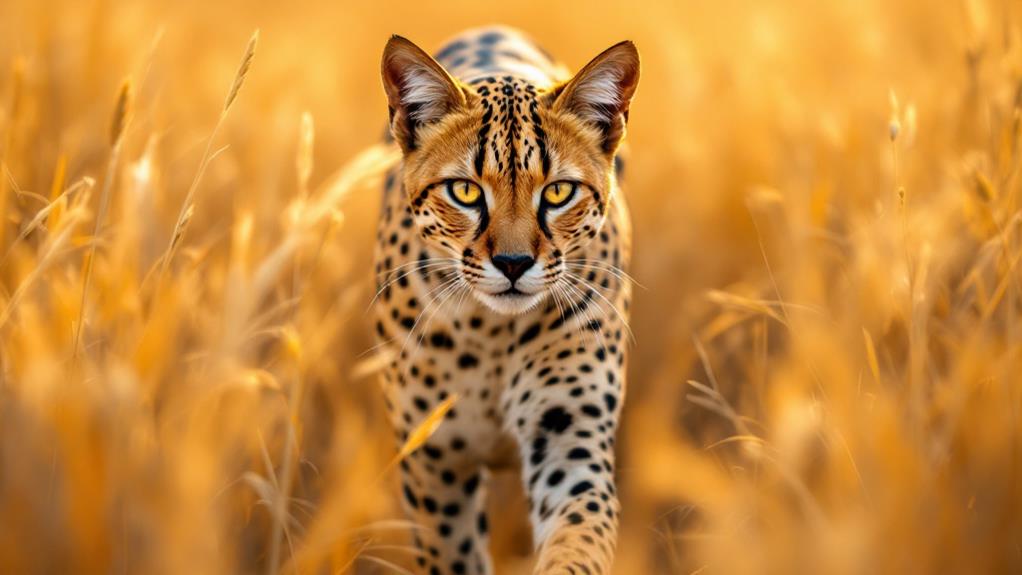
Uncovering the Serengeti cat means embracing a blend of elegance and wild beauty. Created in 1994, this breed was designed to mimic the striking serval, minus the wild genetics, through a mix of Bengal cats and Oriental Shorthairs. You'll find them lively, affectionate, and always up for playtime, making them excellent companions. Their appearance boasts a plush coat with notable ghost spots and ears ready for adventure. Regular vet visits and a high-protein diet are key for their health. If you're seeking a rare, engaging feline, the Serengeti might just be the perfect match. Investigate further to uncover more details about this remarkable breed.
History of the Serengeti
The Serengeti Cat, an alluring breed, was initially developed in 1994 by Karen Sausman at Kingsmark Cattery in the United States. You'll find its origins fascinating, as it was designed to resemble the wild servals without incorporating any serval blood. Sausman achieved this by crossing Bengal cats with Oriental Shorthairs, resulting in a breed that captures the wild cat allure while maintaining a domestic temperament.
Efforts to develop the Serengeti Cat started gaining momentum in 1995. The breed's unique qualities and striking appearance quickly caught attention, leading to its recognition by The International Cat Association (TICA). As of now, TICA remains the only organization to recognize the Serengeti Cat as a distinct breed. This recognition underscores the breed's uniqueness and the importance of adhering to responsible breeding practices to guarantee healthy lineage and minimize health issues.
The name "Serengeti" is inspired by the vast plains of Africa, highlighting the breed's wild aesthetic and heritage. While the breed is still relatively young, its development emphasizes a commitment to maintaining quality standards and promoting the health and well-being of these enchanting cats.
Physical Features
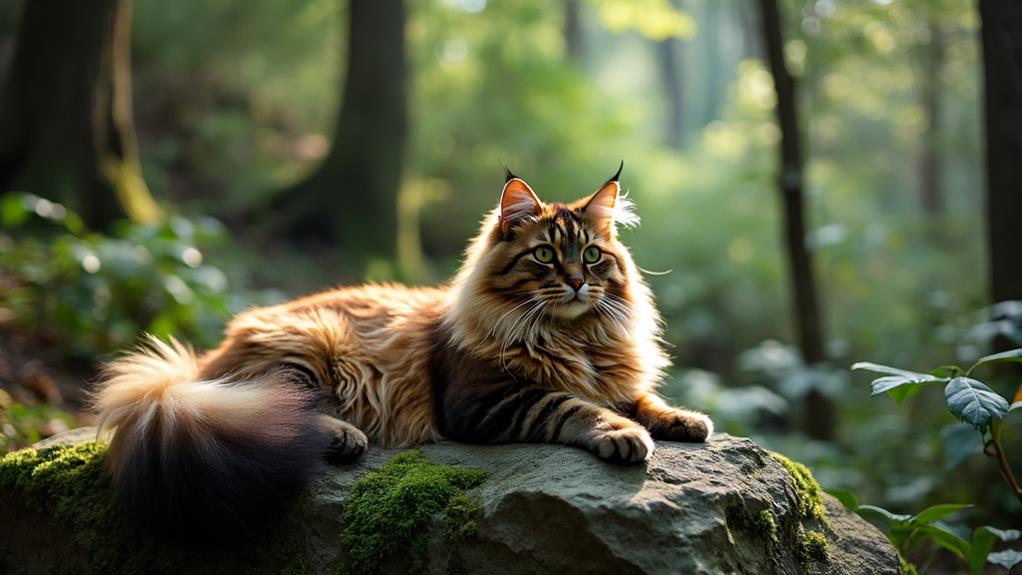
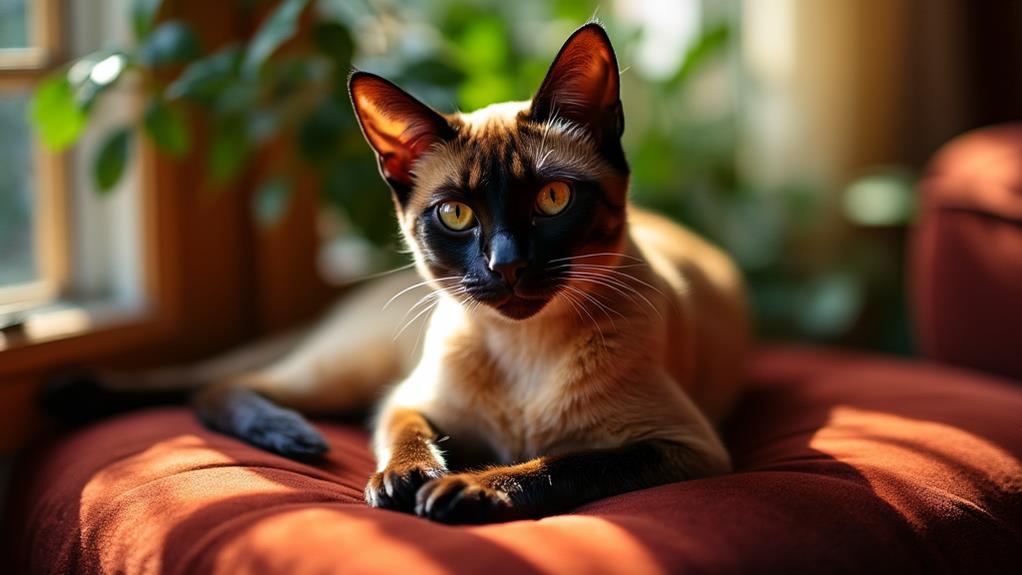
As you explore the Serengeti Cat's striking appearance, its physical features stand out as a demonstration of its wild-inspired heritage. The Serengeti is a medium-sized feline with a graceful body that has a tubular shape, typically weighing between 8 to 15 pounds. Its form exudes elegance and agility, drawing inspiration from its wild ancestors. One of the most fascinating features you'll notice are its very large, broad ears with rounded tips, giving the Serengeti an alert and upright appearance that's hard to miss.
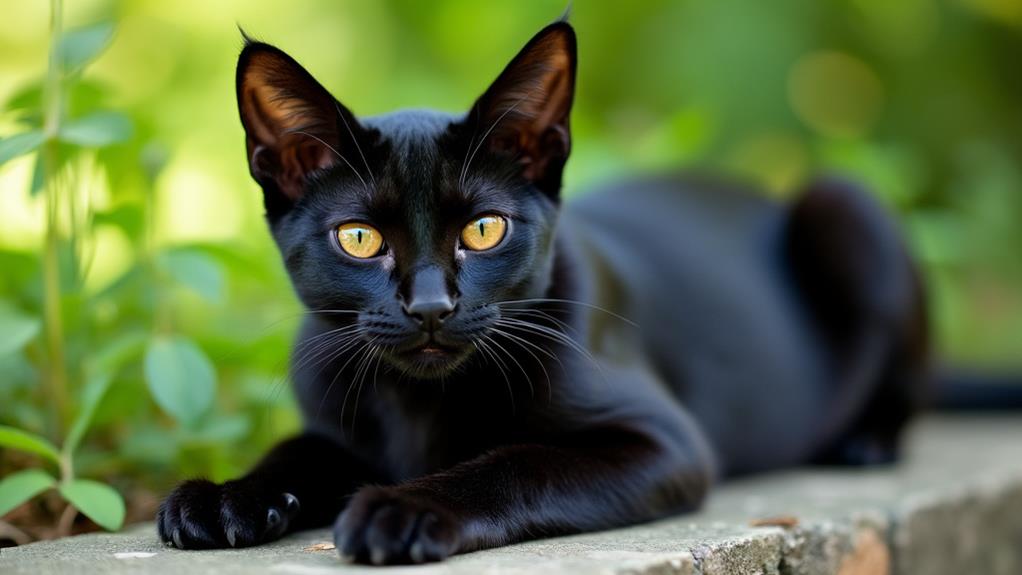
Not only does this breed boast a distinctive form, but its coat also contributes to its allure. The short coat is plush and soft, available in several colors like tabby, chocolate brown, silver blue, and occasionally, solid black. These varied hues add to the Serengeti's enchanting look. Adding to its exotic charm are the round, open eyes, ranging in color from amber to gold, which elevate its striking appearance.
Unique markings further define the Serengeti's wild aesthetic. Many cats exhibit melanistic markings known as ghost spots. These subtle patterns create an illusion of untamed beauty, making each Serengeti truly unique in its appearance.
Personality Traits
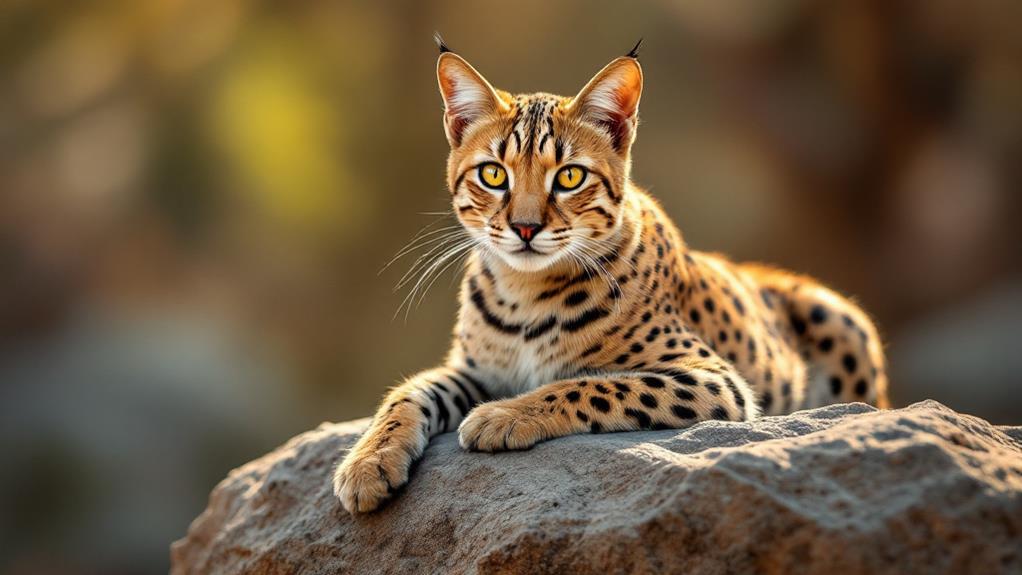
With regard to personality, Serengeti Cats stand out with their lively and engaging demeanor. These outgoing felines thrive on interaction, showcasing playful and energetic personalities that demand ample playtime. You'll find that they're not just content with solo activities; they crave human and pet companionship, making them ideal for families. Their sociable nature means they'll quickly become an integral part of your household, seeking out affection and building strong bonds.
Serengeti Cats are highly trainable, thanks to their intelligence and problem-solving abilities. However, they respond best to positive reinforcement, so remember to reward them with treats or praise during training. Their vocal communication is another charming trait. These cats love to engage with you using chirps and trills, adding a melodic touch to your interactions. It's their way of expressing curiosity or affection.
Known as "Velcro cats," Serengeti Cats form strong attachments to their human companions. They're not just pets; they're affectionate family members who thrive on love and attention. Appreciate their lively personalities, and in return, you'll gain a loyal, engaging, and endlessly entertaining feline friend.
Health Considerations
Caring for a Serengeti Cat involves staying informed about their health needs to guarantee they remain lively and active. Although generally considered healthy, regular veterinary check-ups are necessary for monitoring potential issues like urinary crystals. Health considerations should include awareness of conditions such as hypertrophic cardiomyopathy (HCM) and patellar luxation. Routine screenings can help detect these early, ensuring your cat gets the required care.
A balanced diet plays an important role in maintaining your Serengeti Cat's health. Opt for high-protein, low-carbohydrate foods to support their naturally active lifestyle. This dietary approach helps maintain a healthy weight and prevents obesity, which can lead to further health complications. Incorporating regular playtime into their daily routine is crucial, not only for their physical health but also for their mental well-being. It keeps them engaged and promotes an active lifestyle.
Moreover, ethical care and responsible breeding practices are fundamental to preventing health problems and ensuring the long-term welfare of this breed. By choosing breeders who adhere to these standards, you contribute to the overall health and sustainability of Serengeti Cats. Stay proactive, and you'll help your Serengeti thrive.
Grooming and Care
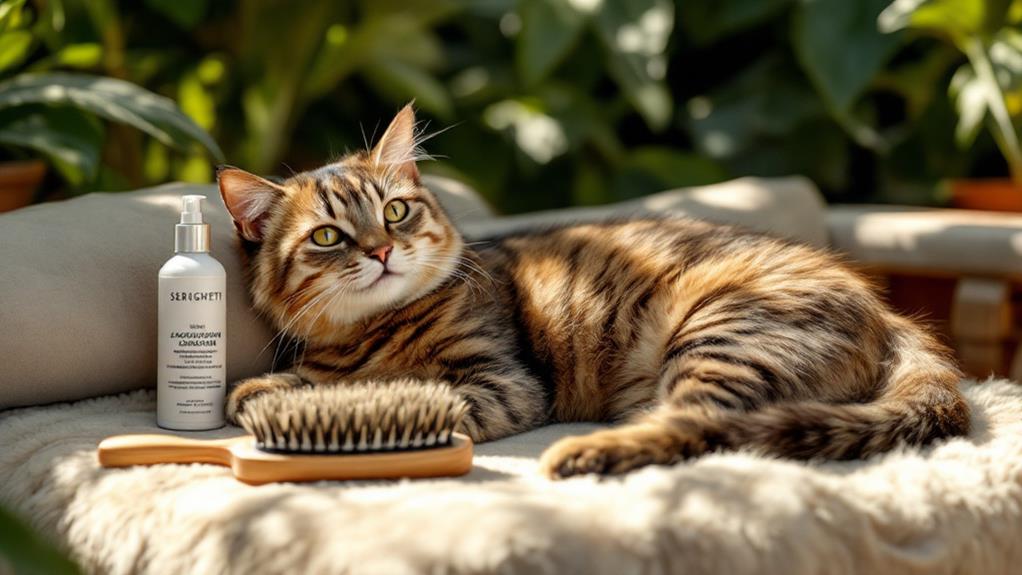
Grooming a Serengeti Cat is a straightforward task thanks to their short, plush coat. These cats are low-shedding, so brushing just once or twice a week is enough to keep their fur healthy and looking sleek. This minimal grooming routine makes them an excellent choice for those who prefer a low-maintenance pet. Regular grooming also gives you a chance to check for any skin issues or unusual changes in their coat, which can be significant for their overall well-being.
In addition to grooming, it's essential to schedule regular veterinary check-ups. Serengeti Cats are generally healthy, but they can be susceptible to issues like urinary crystals. Keeping an eye on their health through routine vet visits guarantees they stay in top condition.
To maintain their energy levels, make certain your Serengeti Cat gets plenty of interactive playtime. These cats are known for their lively energy and curiosity, so engaging them in playtime not only keeps them active but also supports their mental stimulation. A high-protein diet is also crucial for sustaining their energy and health. By focusing on these care aspects, you'll have a happy, flourishing feline companion.
Diet and Exercise
While maintaining proper grooming and health checks, it's likewise significant to focus on the diet and exercise needs of your Serengeti Cat. A high-protein diet with real meat or fish as the primary ingredient is crucial to fuel their energetic lifestyle. This type of food supports their active nature and helps maintain muscle health. Be diligent about their food intake to prevent obesity, which can be a concern if not monitored. Regular weight checks are a practical way to guarantee your cat maintains a healthy weight.
Exercise is just as vital for your Serengeti Cat. These high-energy felines require plenty of interactive playtime to keep boredom at bay and to satisfy their natural instincts. Incorporate engaging activities such as climbing and jumping into their daily routine. Providing climbing structures like shelves or cat trees can improve their physical workout while offering opportunities for mental stimulation. Cat puzzles are another excellent tool for keeping their minds sharp and bodies active. By paying attention to both diet and exercise, you'll help your Serengeti Cat thrive in a lively and healthy environment, assuring they remain the spirited and lively companions they're known to be.
Finding a Serengeti Cat
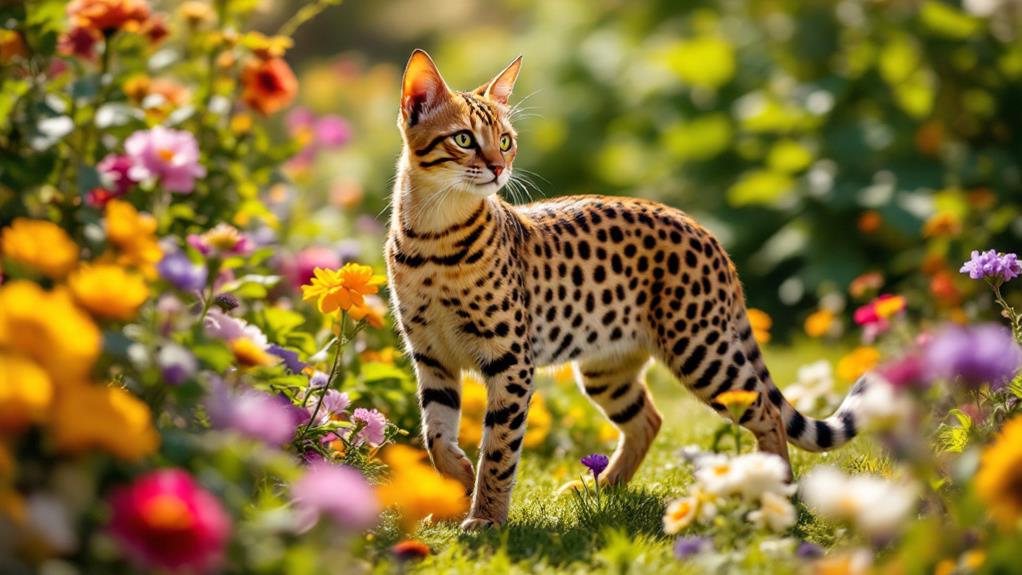
Finding a Serengeti Cat can be a bit of a challenge, as they're rarely found in shelters or rescues. Because of this, adoption might require a bit more effort compared to other breeds. To start your search, use the Petfinder tool. It's a great resource that helps guarantee you're looking at purebred cats, as many shelters might mistakenly label non-purebred cats as Serengetis.
If you're considering purchasing a Serengeti cat, local breeders are a viable option. However, it's vital to research their reputation and breeding practices. The price range for these elegant cats typically falls between $600 and $2,000. Factors like breeder reputation and the cat's lineage can greatly influence the cost. It's essential to keep in mind that the Serengeti is recognized only by The International Cat Association (TICA). This organization can guide you to reputable breeders, making sure you're getting a true Serengeti.
While finding a Serengeti cat may take time and effort, making informed decisions about adoption or purchasing from breeders will help you find a healthy and happy feline companion. Stay diligent and patient, and you'll eventually find the perfect Serengeti cat for your home.