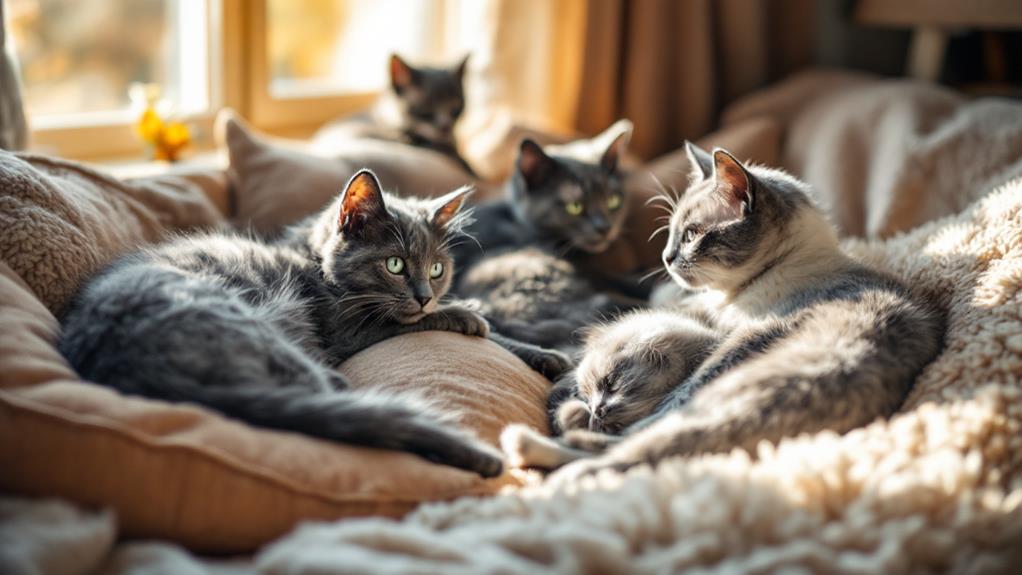
Russian Blue: The Elegant and Sleek “Doberman” of Cats
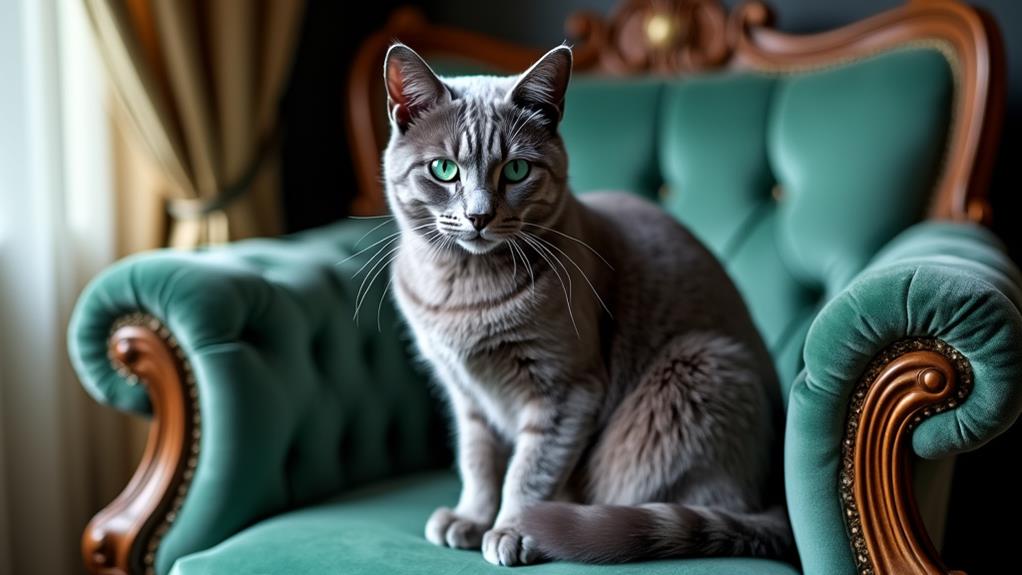
You're captivated by the Russian Blue, often likened to the sleek and elegant "Doberman" of cats due to its refined appearance and reserved yet affectionate nature. This breed likely hails from Russia's Archangel Isles and boasts a plush double-layered coat and striking green eyes. They're loyal and gentle, forming strong family bonds while being wary of strangers. These cats are intelligent, needing interactive play for mental stimulation, and thrive in steady environments. Regular grooming and quality diets are crucial to maintain their health and grace. Uncover more about these sophisticated felines' remarkable traits and caregiving fundamentals.
Key Takeaways
- Russian Blues are known for their elegant, sleek appearance, earning them the nickname "Doberman" of cats.
- They possess a distinctive dense double coat and striking bright green eyes.
- Renowned for their gentle, affectionate nature and strong family bonds.
- Highly intelligent and playful, they thrive on mental stimulation and interactive play.
- Their hypoallergenic properties and tolerant nature make them ideal pets for families.
Origins and Ancestry
The Russian Blue cat, with its elegant appearance and mysterious origins, likely traces back to the Archangel Isles of Northern Russia. This breed was cherished by Russian nobility, possibly having a royal lineage connected to the pets of czars. Its ancestry is steeped in prestige, and its progression from the remote isles to becoming a beloved breed in Europe is quite fascinating.
In the late 19th century, the Russian Blue made its European debut at British cat shows under the moniker "Archangel Cat." This introduction captured the attention of cat fanciers, leading to its recognition as a distinct breed by esteemed registries like the Cat Fanciers' Association (CFA) and The International Cat Association (TICA) in the early 20th century. However, the breed faced near extinction during World War II, prompting a revival effort through crossbreeding with Siamese and British Blue cats to restore its original traits and maintain its cultural significance.
The Russian Blue's association with Russian culture is evident in its presence in folklore and its status as a cherished companion of Russian aristocrats. Its storied past and noble ancestry continue to captivate cat enthusiasts worldwide.
Distinctive Physical Features
One of the most fascinating features of the Russian Blue is its distinctive facial characteristics. The breed sports a round face adorned with large, wide-set ears and mesmerizing bright green almond-shaped eyes, creating an unforgettable and enchanting look. These eyes not only improve the breed's elegance but also give it a curious and intelligent expression.
Standing at about 9 to 10 inches at the shoulder, the Russian Blue presents a harmonious balance of strength and grace, making it a visual delight. Its combination of a double-layered coat, muscular body, and bright green eyes make the Russian Blue a truly unique and alluring feline.
Temperament and Behavior
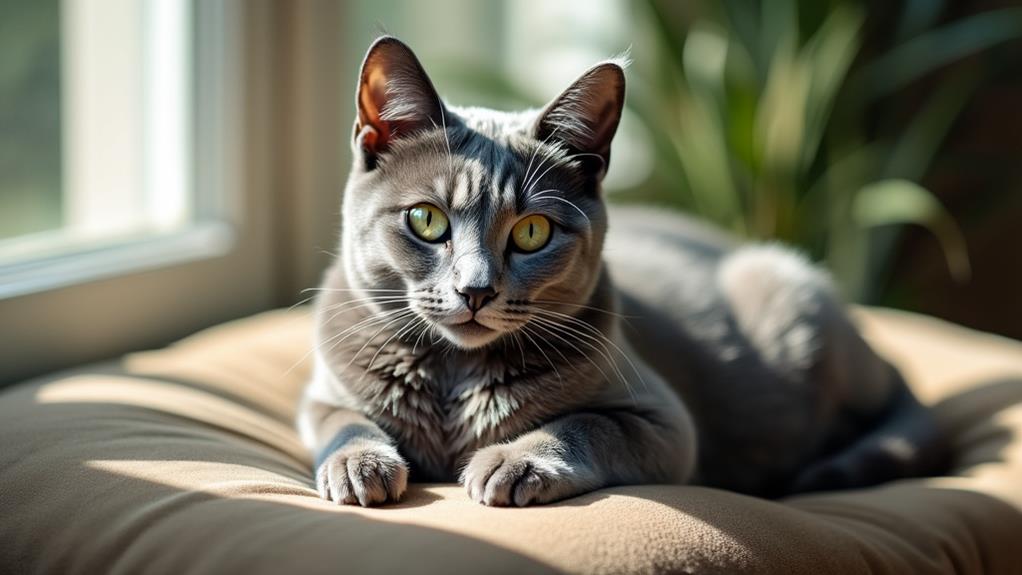
Possessing a gentle and affectionate nature, Russian Blues quickly form strong bonds with their families. They're known for their loyalty, often singling out specific household members as their favorites. Despite their reserved and sometimes shy demeanor around strangers, they thrive in the warmth and familiarity of their homes. Their calm demeanor makes them perfect companions for families, as they can tolerate clumsy handling from kind, respectful children.
These cats are not just about cuddles; they're incredibly intelligent and playful. Russian Blues love engaging in interactive play, which keeps them mentally stimulated and happy. You'll find that they enjoy toys that challenge their intelligence and provide a bit of a mental workout. Incorporating such activities into their routine guarantees they remain content and lively.
Moreover, Russian Blues are highly attuned to the emotional states of their owners. They respond well to affection and attention, often offering comfort during stressful times. This emotional sensitivity can help alleviate anxiety for both you and your pet, creating a harmonious living environment. By understanding and reciprocating their gentle affection, you'll foster a deep, enduring bond with your Russian Blue.
Care Needs
When caring for a Russian Blue, regular grooming is essential due to their dense, plush double coat. You should brush them at least once a week to manage shedding and maintain their coat's health. Their grooming needs aren't just about aesthetics; they're important for your cat's comfort and well-being.
Feeding your Russian Blue a balanced diet is vital. Opt for high-quality cat food rich in protein and necessary nutrients to prevent obesity, a common issue if they're overfed. Regular veterinary check-ups are significant for catching any health issues early, especially breed-specific ones like hypertrophic cardiomyopathy (HCM).
Your Russian Blue will thrive in an indoor living environment. This keeps them safe from outdoor dangers and aligns with their preferences. Make certain their litter box hygiene is first-rate; these cats appreciate a clean space.
Environmental enrichment is essential for their happiness. Provide plenty of interactive toys, and schedule regular playtimes to meet their exercise requirements and offer mental stimulation. These activities not only keep your Russian Blue entertained but also promote a healthier lifestyle. By understanding their care needs, you'll guarantee a happy, healthy feline companion.
Health and Wellness
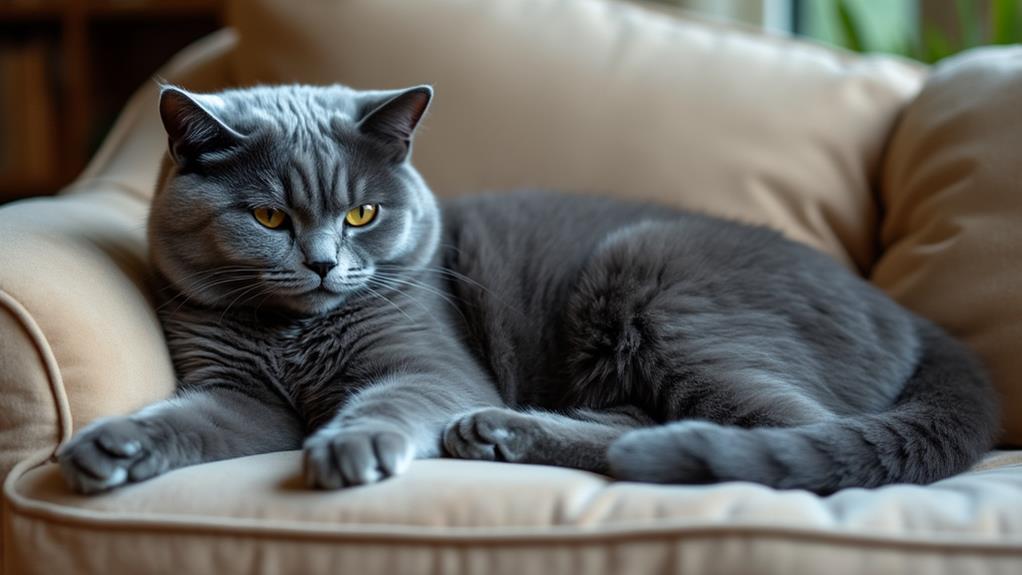
In caring for your Russian Blue, attention to their health and wellness is just as vital as meeting their grooming needs. This elegant breed typically enjoys a long lifespan of 15 to 20 years, but they can be prone to certain health problems, particularly genetic conditions like hypertrophic cardiomyopathy (HCM). To guarantee early detection, regular veterinary check-ups are fundamental. These visits help monitor their health and keep vaccinations up to date, safeguarding them from potential illnesses.
Diet plays a significant role in your Russian Blue's wellness. Feeding them a high-quality diet rich in protein and necessary nutrients helps maintain their sleek physique and prevents obesity, as they have a tendency to overeat. Incorporate regular grooming sessions, including weekly brushing, to keep their dense, double-layered coat in top condition and reduce shedding.
Opt for indoor living to protect your Russian Blue from outdoor dangers and diseases. Providing a stimulating environment indoors is also vital to support their active lifestyle and mental well-being. By focusing on these aspects, you'll promote a happy and healthy life for your feline friend, guaranteeing they remain the elegant and sleek companions you've always admired.
Socialization Tips
Socialization is vital for the well-being of your Russian Blue, as it helps them adapt to new experiences and reduces anxiety. Begin by introducing your Russian Blue to new people and environments gradually. This gradual acclimation allows them to assess the situation at their own pace, minimizing potential anxiety. Use positive reinforcement, like treats, during these interactions. It creates a positive association, encouraging them to be more open and sociable.
Maintaining a consistent routine in feeding and playtimes also plays a significant role. A predictable schedule helps your Russian Blue feel secure in their environment, which can greatly improve their social behavior. With a secure environment, they're more likely to be comfortable and open to socialization.
Incorporate interactive play sessions into your daily routine. These sessions not only stimulate their curiosity and intelligence but also improve their comfort levels with both people and new experiences. Interactive play can make them more receptive to socialization efforts.
While we're focusing on acclimating your Russian Blue to people and environments, remember the importance of supervision during initial introductions to new pets. Socialization, when done correctly, can transform your Russian Blue into a confident and friendly companion.
Interaction With Other Pets
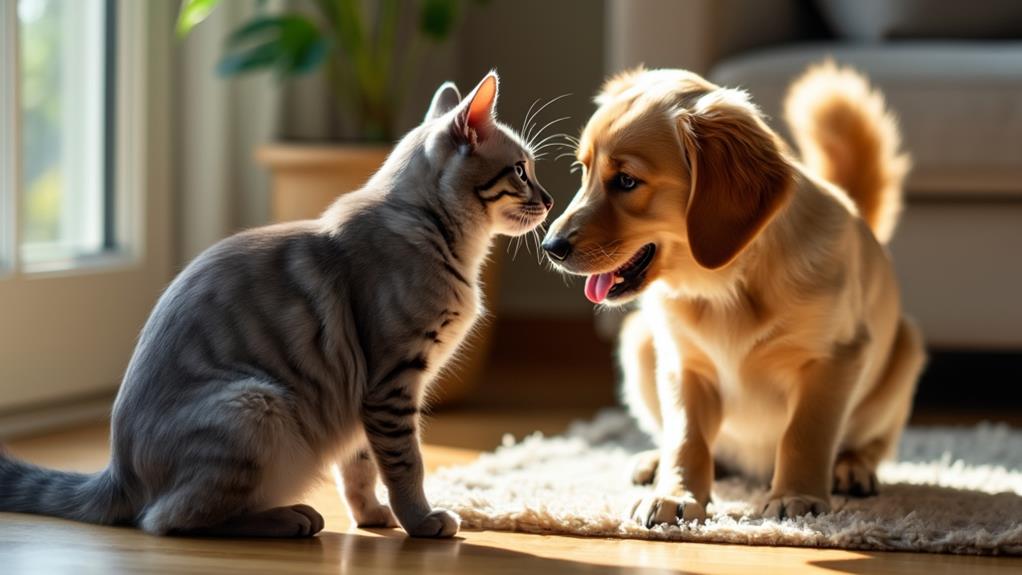
Harmony is achievable when introducing your Russian Blue to other pets. Thanks to their tolerant nature, Russian Blues can interact well with a variety of pets, including dogs, when introductions are handled gradually. Their gentle demeanor makes them ideal for homes with children, provided interactions are supervised to maintain safety and comfort for everyone involved.
When it comes to adapting to new animals, Russian Blues may display some shyness initially. However, with time and secure surroundings, they typically warm up and enjoy the companionship of their fellow pets. This adaptation period is vital, as it enables your Russian Blue to feel more comfortable and confident in their environment.
Here are some tips to guarantee smooth interactions:
- Gradual Introductions: Allow your Russian Blue to meet other pets slowly. This helps ease any anxiety and fosters trust.
- Create a Safe Space: Make sure your Russian Blue has a secure area to retreat to if they feel overwhelmed or need a break.
- Supervision is Key: Always supervise interactions, especially with young children or energetic pets, to prevent any accidents or stress.
Allergy Considerations
For those considering a Russian Blue but worried about allergies, it's vital to understand their potential impact. While Russian Blues are often thought to be hypoallergenic, they still produce the Fel d1 protein, a primary allergen for many people. This means they can trigger allergic reactions in sensitive individuals. However, they might generate fewer allergens compared to other cat breeds, which could make them a more suitable choice for mild allergy sufferers.
The breed's dense double coat plays a significant role in this. It can trap allergens closer to the skin, potentially reducing the amount of dander released into your environment. To further minimize exposure, regular grooming is key. By brushing your Russian Blue consistently and maintaining a clean living space, you can reduce shedding and the accumulation of dander in your home.
It's advisable for potential owners with allergies to spend time with Russian Blues before adopting. This hands-on experience will help you assess your individual reaction to the breed and determine if a Russian Blue is a comfortable fit for your household. Remember, understanding and managing allergens can lead to a harmonious and sneeze-free companionship.