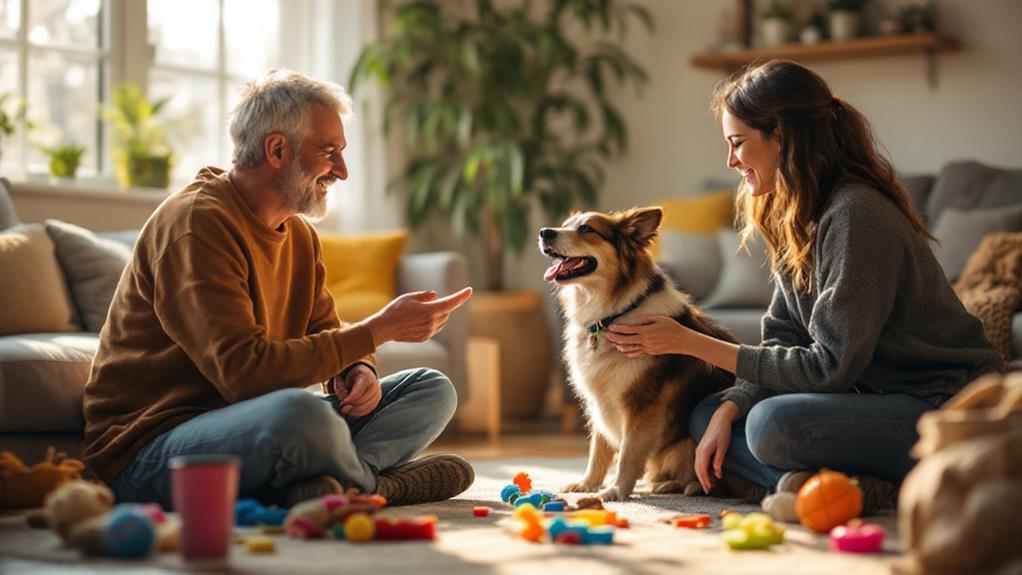
Puppy Training Guide: Housetraining and Preventing Chewing and Biting

To housetrain your puppy, take them to a designated potty area every 1-2 hours and reward them immediately after successful outdoor potty use to reinforce behavior. Puppies love to chew and bite, especially when teething, so provide varied chew toys. Redirect inappropriate chewing with a firm "no" and guide them to acceptable chew items. Socializing your puppy and giving plenty of physical exercise can help curb unwanted biting. Consistent use of positive reinforcement will make them more responsive and happy. Investigate further to reveal more tips for successfully training your puppy and strengthening your bond with them.
Understanding Puppy Behavior
Understanding puppy behavior is fundamental for effective training and a harmonious relationship with your new furry friend. Puppies naturally investigate their world with their mouths, leading to common chewing and biting behaviors. These actions are particularly prevalent during the teething phase when your puppy's gums are sore and need soothing. Recognizing the motivations behind these behaviors, such as boredom or anxiety, is critical for addressing them appropriately.
To help manage and redirect these tendencies, focus on positive reinforcement techniques. Reward your puppy whenever they chew on acceptable items like chew toys instead of your shoes or furniture. This approach not only encourages good habits but also strengthens your bond with your puppy. Consistent supervision and training will help them understand what's acceptable to chew and bite.
Socialization plays a significant role in teaching puppies appropriate play behavior and bite inhibition. Interacting with other dogs and people helps them learn the boundaries of acceptable biting. Establishing a routine that includes plenty of mental and physical stimulation can further reduce unwanted behaviors. By understanding and addressing these aspects of puppy behavior, you'll pave the way for a well-behaved and happy companion.
Effective Housetraining Tips
With a grasp on puppy behavior, it's time to focus on one of the most important aspects of raising a young dog: housetraining. Start by designating a specific potty area outside. By having a consistent location, you help your puppy establish a routine, a key element for successful potty training. Take them to this spot every 1-2 hours, especially after meals, playtime, or naps. This regularity encourages good habits.
Rewarding your puppy immediately after they go potty outside with treats and praise is fundamental. This positive reinforcement creates a strong association with the outdoor potty area, making them enthusiastic to repeat the behavior. Remember, patience is essential. Housetraining can take 4 to 6 months, and smaller breeds often need more frequent trips due to smaller bladders.
Monitor your puppy closely for signs they need to go, such as sniffing, circling, or whining. This vigilance prevents indoor accidents and teaches them to communicate their needs effectively. While focusing on housetraining, don't forget to provide chew toys to keep them occupied. These toys can help redirect their energy and prevent unwanted behaviors indoors.
Managing Chewing Instincts
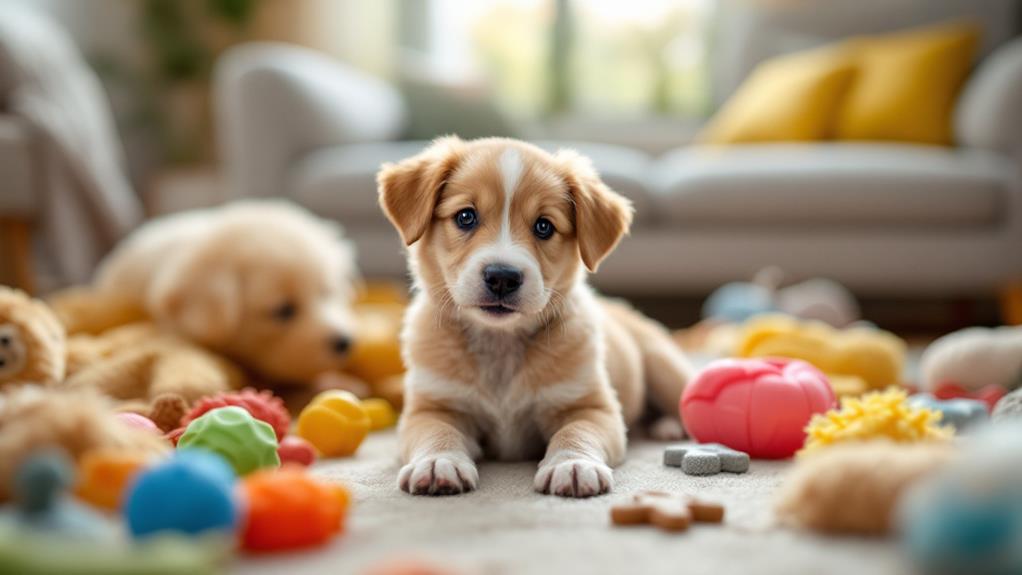
Chewing is a natural behavior for puppies, serving as a way for them to investigate their environment, soothe teething discomfort, and alleviate boredom. To manage this instinct effectively, it's essential to incorporate constructive methods into training your puppy. Initially, provide a variety of appropriate chew toys to satisfy their natural urges. This is particularly significant during puppy teething stages when they're seeking relief.
Consistency is key in training your puppy. Whenever you notice your puppy chewing something inappropriate, gently redirect them to their designated chew toys. This not only helps establish clear boundaries but also reinforces good behavior. Monitoring your puppy's chewing habits closely allows you to intervene early, minimizing the chances of developing destructive behaviors.
Positive reinforcement plays a vital role in managing chewing instincts. Reward your puppy with treats and praise when they choose the right items to chew. This encourages them to repeat this behavior, solidifying their understanding of what's acceptable.
Creating a specific chewing zone filled with a variety of toys can also help manage these instincts. Redirect any inappropriate chewing to this area, ensuring a safe and structured environment for your puppy as they learn.
Preventing Destructive Chewing
In the domain of preventing destructive chewing, starting with some simple adjustments can make a big difference. Understanding that chewing is a natural behavior for puppies, often triggered by teething, boredom, or anxiety, helps set the stage for effective training. Providing appropriate chew toys is vital to satisfy your puppy's needs and keep them from targeting your belongings.
Dog-proofing your home is another important step. Remove tempting objects and use baby gates to limit access to areas with non-chewable items. This strategy reduces the opportunities for destructive chewing and keeps your puppy safe. Establish a designated chewing area in your home with a variety of chew toys. This helps redirect their chewing behavior toward acceptable items, making it easier for you to guide them.
Consistent supervision is key. Monitor your puppy during free-roaming periods to catch any inappropriate chewing. Redirect them to the designated chew toys to reinforce positive habits. Furthermore, using bitter-tasting deterrents on furniture and other non-chewable items can effectively discourage unwanted chewing behavior. With these proactive measures, you'll be well on your way to preventing destructive chewing and fostering a well-behaved puppy.
Addressing Biting Habits
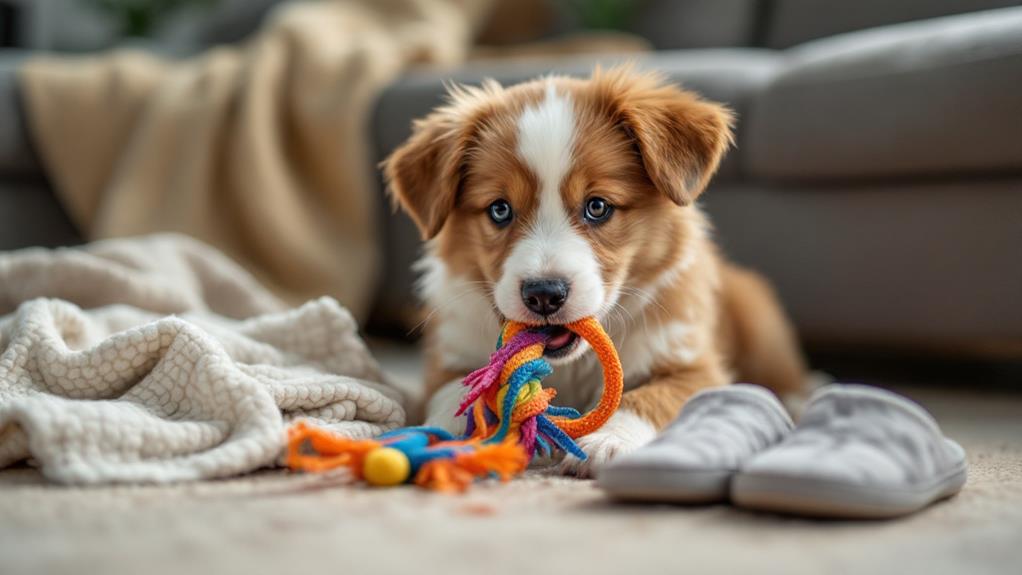
Puppies, much like human toddlers, investigate the world around them through their mouths. It's natural for them to bite, but it's essential to teach them boundaries. When your puppy starts biting, use a firm "no" to communicate that this behavior is unacceptable. Immediately redirect their attention to appropriate toys or chews. This helps them learn what's okay to bite and chew on, steering them away from unwanted habits.
Socializing your puppy from chewing through interaction with other dogs and people can greatly aid in correcting biting habits. These interactions provide them with opportunities for appropriate play, teaching them how to use their mouths gently. Consistency is key; make certain to stop play immediately if biting occurs. This reinforces positive interactions and helps establish clear boundaries.
Additionally, guarantee your puppy gets plenty of physical exercise and structured playtime. A tired puppy is less likely to bite out of excitement or overstimulation. Remember, patience and consistency go a long way. When your puppy exhibits good behavior, offer treats and praise. This positive feedback encourages them to continue behaving well, making your training efforts more effective over time.
Utilizing Positive Reinforcement
Positive reinforcement is a powerful tool in puppy training that involves rewarding desired behaviors to encourage their repetition. By giving treats, praise, or playtime, you're helping your pup understand which actions are worth repeating. When your puppy shows good behavior, like going potty outside, quickly reward them with a small treat or enthusiastic praise. This approach builds a trusting relationship, making your puppy more keen to learn.
Research shows that positive reinforcement is much more effective than punishment. It helps your puppy learn faster and become well-adjusted. If you want to teach them that biting isn't acceptable, use commands like "leave it" paired with rewards when they obey. This way, you're not only correcting unwanted behavior but also redirecting their focus to something positive.
Celebrate even the smallest successes with your puppy using positive reinforcement. It keeps them motivated and makes training enjoyable for both of you. Incorporate this method consistently during training sessions, and you'll find that your pup is not just learning commands but is also developing a positive attitude towards training. Remember, a happy puppy is a well-behaved puppy, and positive reinforcement is key to achieving that.
Crate Training Essentials
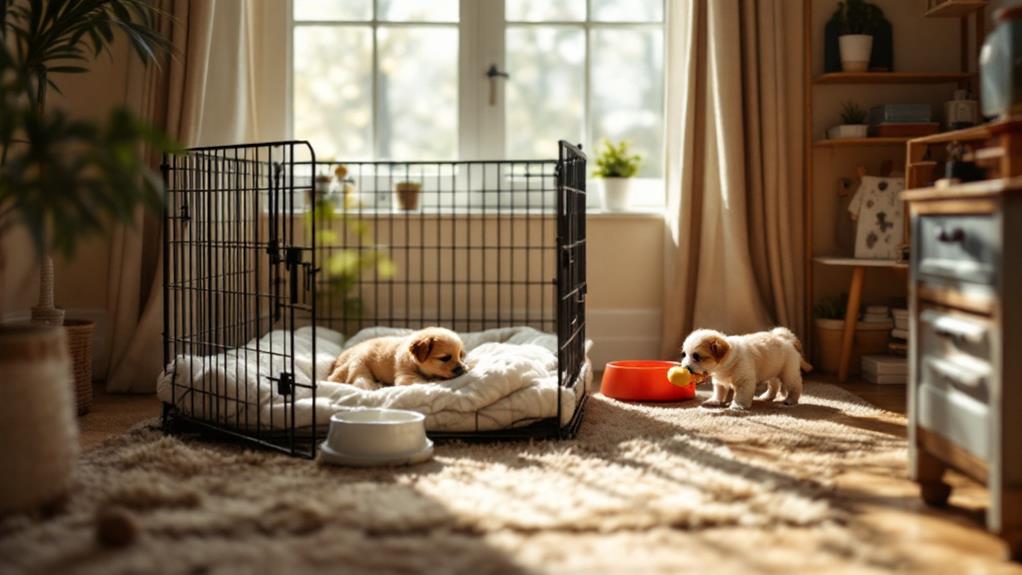
Building on the success of positive reinforcement, crate training offers another effective way to nurture your puppy's behavior. By providing a safe and secure environment, the crate helps your puppy learn to relax while reducing opportunities for destructive chewing. To guarantee success, gradually introduce the crate by rewarding your puppy for entering it, turning it into a positive space associated with comfort and safety.
Consistency is key when using the crate. Use it during times of supervision and rest, which aids in potty training and helps establish a routine for bathroom breaks. Your puppy will start to associate the crate with these breaks, making potty training more effective. Remember to increase crate time gradually to avoid overwhelming your puppy. Encourage longer stays only after they've become comfortable with the space.
Positive reinforcement is essential throughout the crate training process. Offering treats and praise when your puppy willingly enters or remains in the crate will make them more likely to view it as a desirable space. This approach not only improves their comfort but also reinforces positive behaviors, making crate training a valuable tool in their comprehensive development.
Socialization and Behavior
Socialization plays a vital role in shaping a well-adjusted puppy. It's fundamental for your new puppy to learn appropriate behaviors and avoid fear-based reactions. Start socializing your puppy between 3 to 14 weeks, which is the significant period for developing healthy social habits. During this time, expose your puppy to different environments, sights, sounds, and textures. This wide range of experiences helps them adapt and become comfortable with the varied situations they'll face as adults.
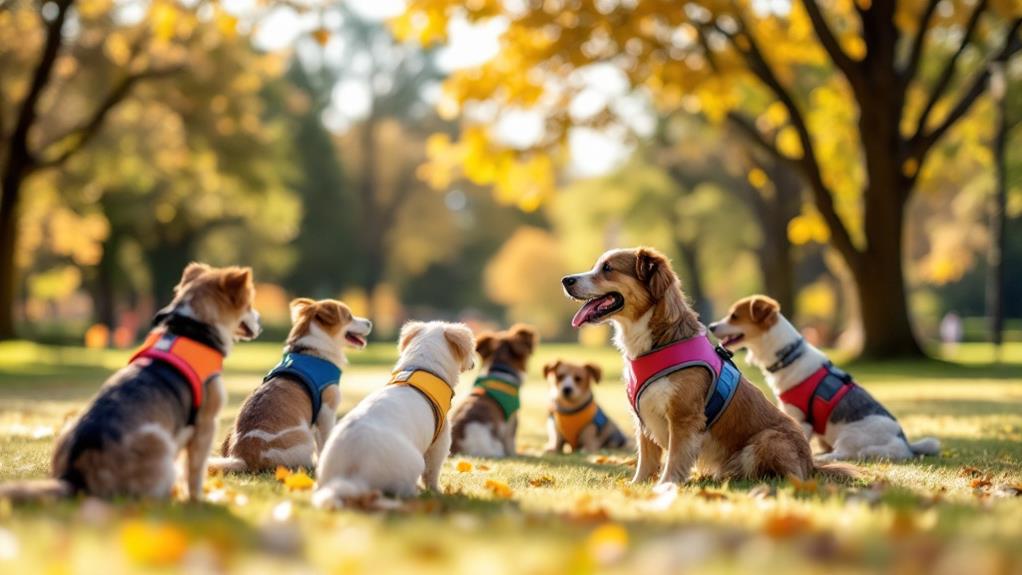
Enrolling your puppy in socialization classes can be particularly advantageous. These classes provide opportunities to interact with other dogs and people, helping your puppy develop positive play behaviors and communication skills. While your puppy's exploring and learning, use positive reinforcement, such as treats and praise, to encourage confident interactions. This approach not only enhances your puppy's confidence but also strengthens your bond.
Seeking Professional Help
While socializing your puppy is essential to developing positive behaviors, sometimes challenges arise that require extra guidance. If your puppy struggles with excessive chewing or biting, seeking professional help can make a significant difference. Start by consulting a veterinarian to rule out any underlying health issues contributing to these behaviors. Health problems can often manifest in unexpected ways, and a vet's insight is invaluable.
Once health concerns are addressed, consider reaching out to a professional dog trainer. These experts offer tailored behavior modification plans that specifically target your puppy's unique needs. This customized approach guarantees that you're not just applying generic solutions but addressing the root causes of the excessive chewing or biting.
Behaviorists can also provide vital insights, particularly if anxiety is at play. They can help you develop effective strategies to manage anxiety-related behaviors, making sure your puppy feels more secure and less prone to destructive habits. Moreover, joining support groups or online forums allows you to connect with fellow dog owners, sharing experiences and practical solutions. Continuous education through workshops or seminars further improves your ability to address and prevent these issues, equipping you with the knowledge to foster a well-behaved companion.
Long-Term Training Goals
As you undertake establishing long-term training goals for your puppy, keep in mind that patience and consistency are key to success. Focus on long-term retention of skills rather than seeking immediate results. This approach not only prevents frustration but also fosters successful behavior modification. Providing your puppy with gradual freedom in the house as they learn acceptable chewing and biting behaviors is essential. It encourages independence while helping maintain necessary boundaries.
A consistent routine plays an important role in reinforcing positive behaviors. Regular exercise and training sessions should be integral parts of your puppy's daily schedule. This routine aids in their comprehensive development and strengthens your relationship, enhancing communication and trust between you and your canine companion. Tailor your training methods to suit your puppy's unique personality and learning style. Recognizing individual differences guarantees that your techniques align with your puppy's needs, making the training more effective.