Popular Russian Cat Breeds: a Guide to the Most Loved Felines From Russia
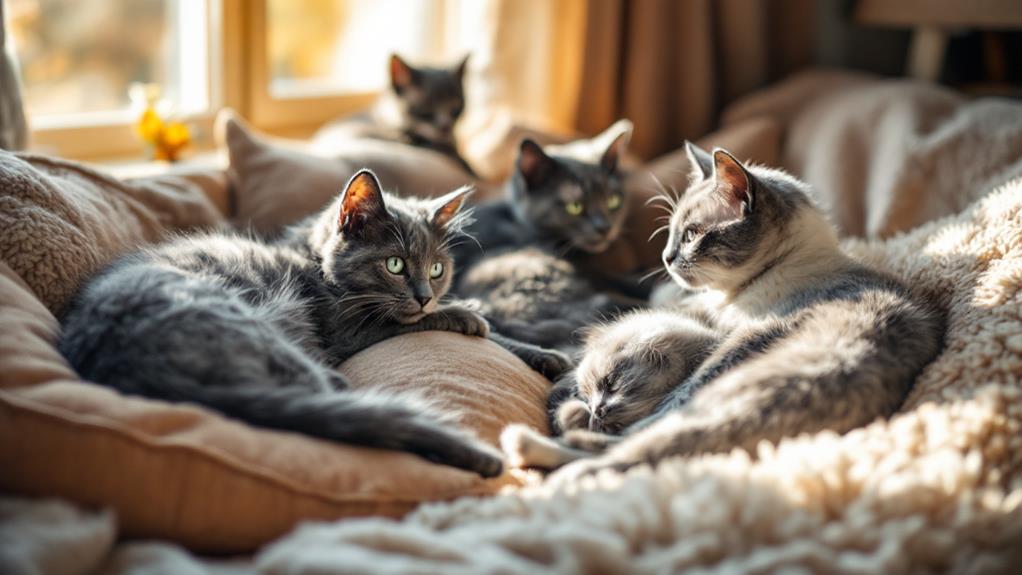
Investigate the enchanting world of Russian cat breeds, where elegance meets resilience. You'll find cuddly Siberians with their dense fur perfect for cold climates, and the sleek Russian Blue, known for its striking silver-blue coat and hypoallergenic properties. There's also the eye-catching, hairless Donskoy, which does require some special care. If you're after a unique companion, consider the Kurilian Bobtail's fluffy tail or the elegant Peterbald. Each breed offers a charming mix of playfulness and loyalty. You'll appreciate their adaptability and strong hunting instincts. Uncover how each breed's distinct traits can complement your lifestyle as you learn more.
Russian Cat Breed Characteristics
When exploring Russian cat breeds, you'll notice several distinct characteristics that set them apart. These cats often have medium to long fur, which, combined with their thick insulating coats, makes them perfect for colder climates. For instance, breeds like the Siberian and Neva Masquerade boast such luxurious coats. Their rounded heads and large expressive eyes, paired with distinctive color patterns, make them visually striking.
In terms of personality, Russian cat breeds are known for being affectionate and sociable, forming strong bonds with their humans. They're ideal companions, especially in family settings. Despite their loving nature, they maintain a playful but still independent streak, giving them a balanced temperament. Their high energy levels mean you'll need to engage them in regular playtime and mental activities to keep them healthy and happy.
Grooming requirements can vary among these breeds. Those with longer fur need frequent brushing to prevent matting and maintain their coat's health. This grooming routine not only helps with their appearance but also strengthens your bond with them. Overall, Russian cat breeds offer a wonderful mix of beauty, companionship, and spirited energy.
Most Popular Breeds
Russian cat breeds offer a fascinating mix of beauty and personality, and among them, a few stand out as the most popular. The Siberian cat, with its thick fur and affectionate nature, is beloved for its ability to thrive in cold climates. Its playful and loving demeanor makes it a favorite among families seeking a hearty companion. The Russian Blue is another cherished breed, admired for its striking silver-blue coat and gentle temperament. These cats are calm and loyal, often forming strong bonds with their owners.
If you're interested in a unique look, the Donskoy might catch your eye. Originating from a genetic mutation, this Russian Hairless breed is known for its sociable and affectionate personality. It's no wonder they're a popular choice for those seeking a distinctive pet. The Kurilian Bobtail, with its distinctive bobtail and friendly demeanor, is also a hit among cat enthusiasts. It's not just their appearance but also their high prey drive that captivates many. Finally, the Peterbald, recognized for its hairless variety and outgoing nature, is celebrated for its affectionate behavior. Each breed brings a unique charm, making them popular cat breeds in their own right.
Coat and Physical Traits
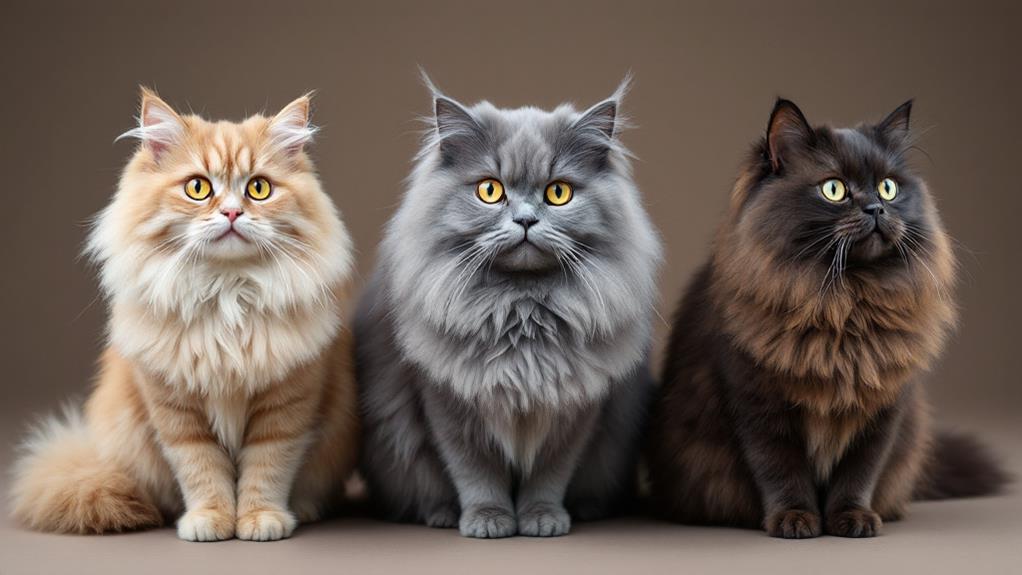
Investigate the intriguing world of Russian cat breeds, and you'll uncover their unique coat and physical traits that set them apart. These felines often display distinctive features like rounded heads and large eyes, which add to their delightful appeal. Many Russian cats have long, thick fur, providing crucial insulation against harsh climates.
The Siberian cat stands out with its dense semi-long-haired coat, perfectly designed for cold weather. Its tail fur is longer than the body fur, enhancing its heat retention capabilities. On the other hand, the Russian Blue mesmerizes with its striking silver-blue coat, a stunning contrast to its lively green eyes, making it a visual delight.
Meanwhile, the Karelian Bobtail's fluffy bobtail is not only a natural trait but also a defining characteristic that pairs beautifully with its friendly demeanor. This breed's adaptability makes it a cherished companion. In contrast, the Donskoi, with its hairlessness resulting from a genetic mutation, requires special care to protect from temperature extremes.
- Siberian Cat: Dense semi-long-haired coat
- Russian Blue: Striking silver-blue coat
- Karelian Bobtail: Fluffy bobtail
- Donskoi: Hairless, sensitive to temperature extremes
These enchanting physical traits make Russian cats truly unique.
Temperament and Behavior
Beyond their striking physical traits, Russian cat breeds captivate with their distinct temperaments and behaviors. If you're searching for a feline companion that's both affectionate and loyal, search no more than breeds like the Siberian and Russian Blue. These cats form strong bonds with their owners, often following you around the house and snuggling at every opportunity. Their playful nature means they thrive in active households, where regular engagement and mental enrichment are part of the routine.
The Donskoi, for instance, is particularly sociable, enthusiastic for human interaction and attention. This breed's outgoing temperament makes it a delightful supplement to families who love to socialize. Meanwhile, the Kurilian Bobtail displays a high prey drive, reflecting a more independent and curious spirit. Despite this, early socialization is essential across all Russian breeds to guarantee they adapt well to diverse environments and situations.
While these cats are generally gentle, certain breeds like the Russian Blue can be reserved around strangers. Their cautious demeanor doesn't hinder their inquisitive exploration of new spaces. With the right mix of socialization and enrichment, Russian cat breeds blossom into well-rounded, loyal companions.
Grooming and Care Needs
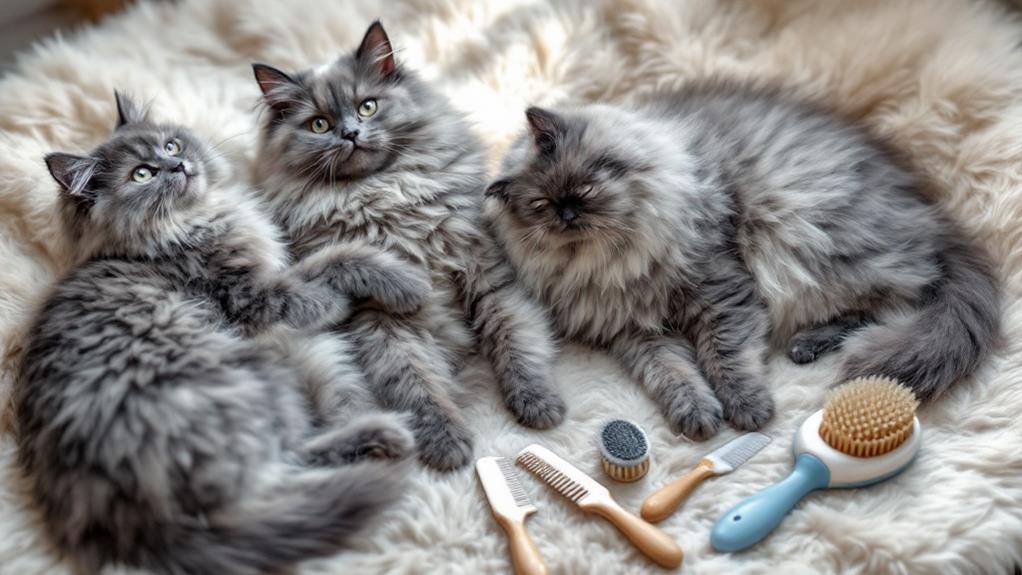
Regarding grooming and care needs, understanding the unique requirements of Russian cat breeds is fundamental. Long-haired breeds like the Siberian and Neva Masquerade demand frequent brushing to prevent matting and guarantee coat health. Regular grooming is indispensable for all Russian breeds to manage shedding, which can vary from moderate to high. Bathing might be needed occasionally, especially for breeds like the Donskoi, which lack fur and can easily accumulate dirt. Incorporating routine nail trimming, ear cleaning, and dental care into your cat's grooming schedule is paramount for their comprehensive health and well-being.
To keep your Russian cat content and reduce grooming stress, consider these enrichment strategies:
- Provide interactive toys that stimulate their natural hunting instincts.
- Create safe hiding spots to offer comfort and security.
- Engage in regular playtime to maintain their physical and mental health.
- Rotate toys to keep their environment interesting and engaging.
These care needs are not only about maintaining a clean and healthy appearance but also about enriching their daily lives. By understanding and addressing these grooming needs, you'll guarantee your Russian feline remains happy, healthy, and well-cared for. With proper care, your cat will thrive in its environment.
Adoption and Breeding Choices
When considering adoption and breeding choices for Russian cat breeds, it's important to weigh all your options carefully. Many breeds, like the Siberian and Donskoi, are available for adoption through shelters and rescue organizations. This route offers prospective owners a chance to provide a loving home for a feline in need. However, if you're leaning towards purchasing, choosing reputable breeders is fundamental. They guarantee health assurances and proper socialization for the kittens, which are critical for your pet's well-being.
Breed clubs and associations can be remarkably helpful, offering resources and support for both adopting and breeding Russian cat breeds. They can guide you in finding responsible breeders or adoption opportunities that align with your preferences. Keep in mind that the costs associated with adopting or purchasing can vary considerably. Factors like breed rarity and breeder reputation play a role, as do initial setup expenses for your new pet.
Understanding the responsibilities of owning a Russian cat breed is key. These cats require lifelong commitment and proper care to thrive. As a prospective owner, be prepared to meet their specific needs and provide them with the love and attention they deserve.