Pointer Dog Characteristics: What Makes Them Great Hunting Dogs
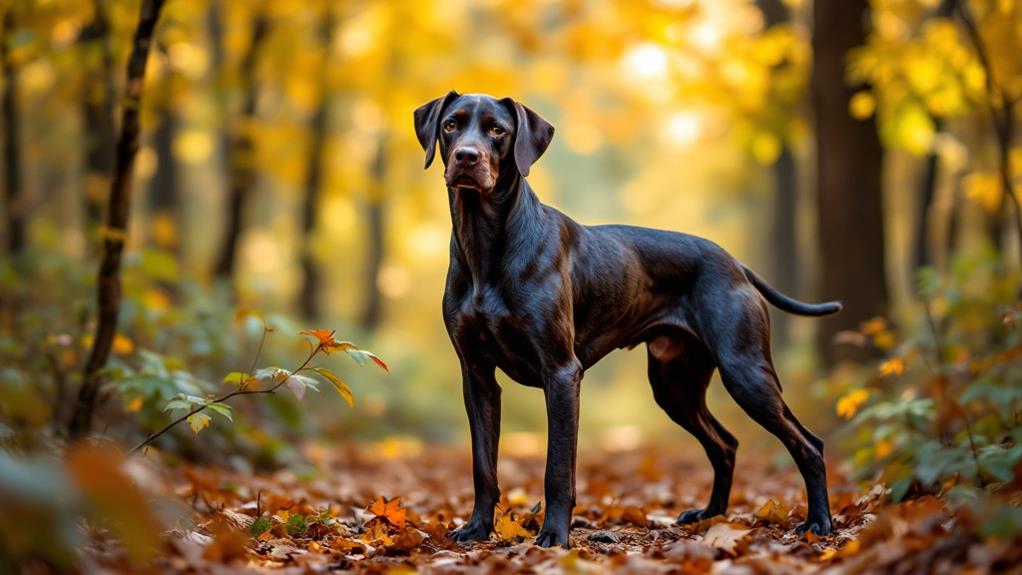
You'll find Pointer dogs make fantastic hunting companions due to their agility, intelligence, and strong hunting instincts. Their athletic build allows them to move swiftly and cover difficult terrains with ease. They're highly trainable and respond well to commands, enhancing their effectiveness in the field. Their social and friendly temperament guarantees they bond well with families, while their need for mental stimulation keeps them enthusiastic for new challenges. With minimal grooming needs and a coat that protects them in diverse weather conditions, they're low maintenance yet high performing. Uncover more about their versatile nature and unique capabilities that set them apart.
Historical Origins
When you investigate the historical origins of pointer dogs, you'll find their roots trace back to the Old Spanish Pointer. These dogs were initially used for net hunting, a practice where hunters needed a reliable partner to locate and indicate the presence of game without disturbing it. By pointing or "setting," these dogs became an vital part of early hunting techniques. This led to the development of different breeds, honing their natural abilities to assist hunters by locking eyes on game.
Over time, the role of pointers evolved, influenced by the use of flushing dogs by falconers, who required dogs that could drive game into the air. This contribution was significant in shaping the modern pointing breeds that we understand today. In Europe, continental breeds of pointing dogs gained recognition as adaptable gun dogs, also known as HPR (Hunt, Point, Retrieve) breeds. These dogs excel in multiple tasks—finding, pointing, retrieving game on land and water, and tracking wounded animals.
The North American Versatile Hunting Dog Association highlights this versatility, showcasing how these dogs' rich hunting heritage makes them invaluable companions for hunters. Regardless of if you're pursuing birds or small game, pointers remain a top choice.
Physical Attributes
Moving from their historical roots to their present-day form, pointer dogs exhibit a striking combination of physical attributes that make them stand out in the field. This dog breed is renowned for its athletic build, which is vital for hunting dogs. Males typically stand 25-28 inches tall and weigh between 55-75 pounds, while females measure 23-26 inches and weigh 45-65 pounds. Their compact and muscular frames are perfectly designed for agility and endurance, allowing them to navigate diverse terrains effortlessly.
Pointers possess deep chests and straight front legs, which improve their speed and stamina, enabling them to cover large areas swiftly. This exceptional speed, paired with their stamina, makes them highly effective in the hunt. Their short, dense, and smooth coats, available in colors like liver, lemon, and orange, not only protect them but also add to their sleek appearance. Distinct markings, including spots and ticking, further distinguish the breed.
Another notable feature is their large, rounded, dark-colored eyes. These eyes are darker than their coat and contribute to their keen awareness and intelligence, fundamental traits for successful hunting. With these physical attributes, pointers excel as remarkable hunting companions.
Temperament and Behavior
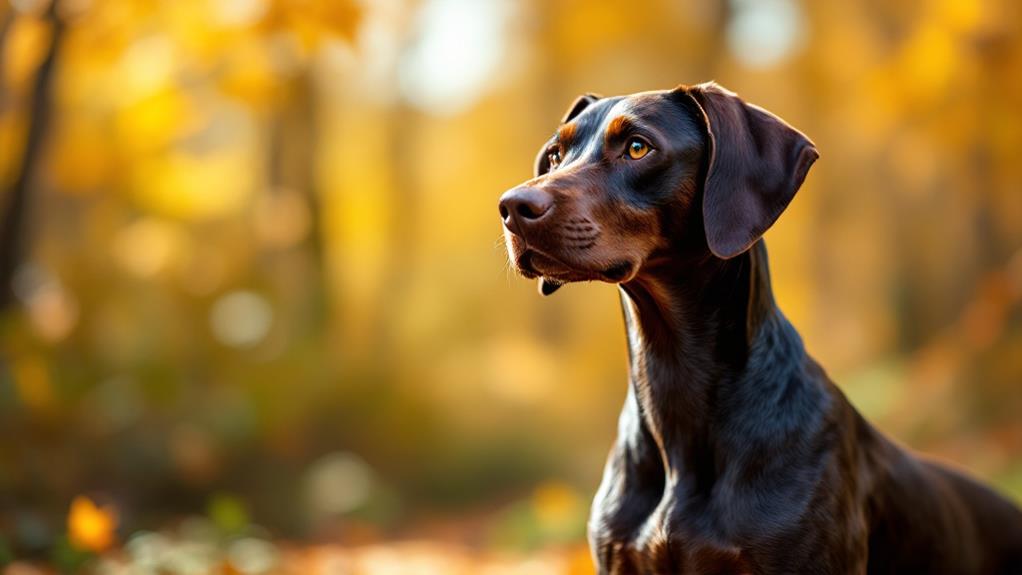
Pointer dogs are known for their friendly and affectionate nature, making them not just exceptional hunting companions but also wonderful family pets. Among dog breeds, Pointers stand out for their social temperament and loyalty to their human families. You'll find that they're enthusiastic to please, always ready to learn new commands, which makes them a joy to train. However, their high energy levels demand regular exercise and mental stimulation. Without these, they might become restless or develop unwanted behaviors.
To help manage their energy and maintain their well-being, consider the following:
- Daily Exercise: Engage them in long walks, runs, or playtime.
- Mental Games: Puzzle toys or training sessions keep their minds sharp.
- Social Interaction: Spend quality time with them, as they thrive on companionship.
- Positive Reinforcement: Use treats and praise to encourage good behavior.
- Family Involvement: Include them in family activities to reinforce their role as loyal family members.
Pointers generally do well with children and other pets, reinforcing their status as one of the most versatile pointing breeds. With the right care and attention, they'll not only excel in the field but also enrich your home life with their lively spirit.
Hunting Versatility
In the world of hunting, adaptability is the hallmark of Pointer dogs, setting them apart as invaluable assets in the field. As a breed, Pointers showcase remarkable hunting instincts, making them one of the most adaptable hunting companions you can find. They're not just exceptional at finding and pointing game; they can also retrieve birds on both land and water. Breeds like the German Shorthaired Pointer excel in duck hunting, demonstrating their ability to adapt to different environments seamlessly.
While some continental breeds are trained for multiple tasks, Pointers truly stand out by performing each role with finesse. The North American Versatile Hunting Dog Association highlights adaptability as a defining trait, emphasizing the importance of a dog's ability to perform diverse hunting tasks effectively. This breed's excellent hunting skills extend beyond traditional roles, making them favorites in dog sports where adaptability is key.
However, don't forget that such capabilities require consistent training and mental stimulation to harness their full potential. With proper guidance, Pointers can track wounded animals and excel in adaptable hunting scenarios. By investing time and effort into their development, you'll guarantee that they remain indispensable partners in any hunting expedition.
Training Essentials
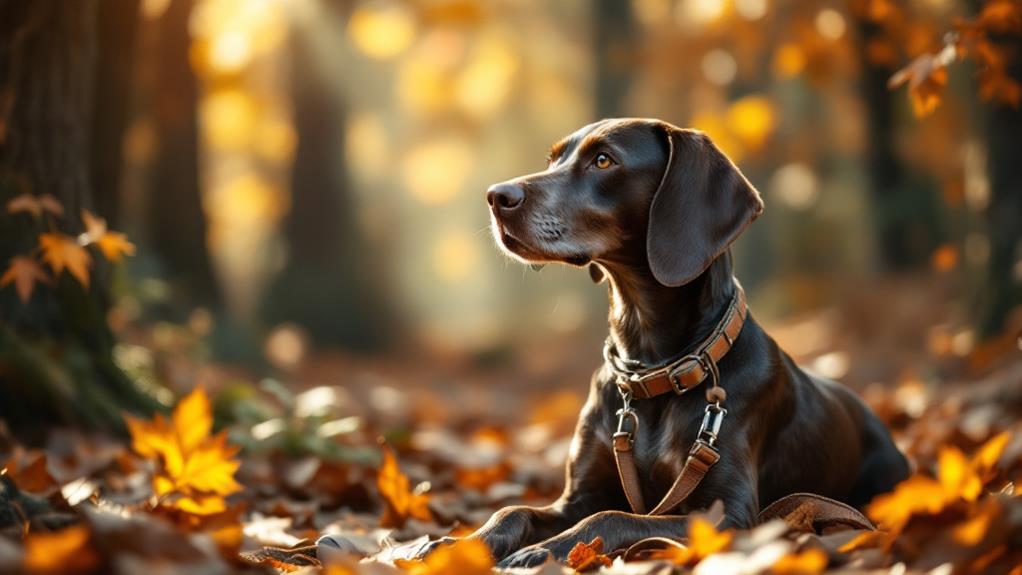
Training a Pointer dog requires dedication and a strategic approach to guarantee they become adaptable and well-mannered companions. Start with early socialization to introduce your Pointer to different environments, ensuring they grow into confident and friendly adults. Focus on basic obedience using positive reinforcement methods, such as treats and praise, to teach commands like sit, stay, and come. These methods are effective and strengthen your bond with your dog.
Pointers have a high energy level, so daily exercise is vital. Engage them in activities that provide both physical and mental stimulation, such as obedience training sessions and dog sports. Keeping sessions short yet frequent helps maintain their attention and enthusiasm.
Here's a quick guide to training necessities:
- Early socialization: Expose them to different people, places, and situations.
- Basic obedience: Use positive reinforcement for teaching commands.
- Daily exercise: Incorporate physical and mental activities.
- Short, frequent sessions: Keep their interest and motivation.
- Professional trainers: Consider classes or guidance for behavior challenges.
If you're a novice owner, consulting with professional trainers can improve your training efforts and address any behavioral issues effectively.
Health Considerations
While focusing on training, it's likewise important to pay attention to the health of your Pointer dog to guarantee they live a long, active life. Pointers are active breeds, so they require regular veterinary check-ups to catch any potential health issues early. Common concerns include hip dysplasia and certain eye conditions. Regular screenings, especially those recommended by the Canine Health Information Center (CHIC), are significant in identifying hereditary problems.
Gastric torsion, or bloat, is another serious condition to watch for. This can occur suddenly, and if your dog shows signs of distress or an enlarged abdomen, immediate veterinary intervention is necessary. Being proactive about your Pointer's health needs assures they continue to thrive.
Maintaining a balanced diet is fundamental to prevent obesity-related health issues. Active breeds like Pointers burn a lot of energy, so they need the right mix of nutrients to stay fit and healthy. Overfeeding can lead to unnecessary weight gain, exacerbating joint problems and other health issues. By keeping your Pointer at a healthy weight and guaranteeing they get the proper nutrition, you'll support their general well-being and improve their quality of life.
Grooming and Maintenance
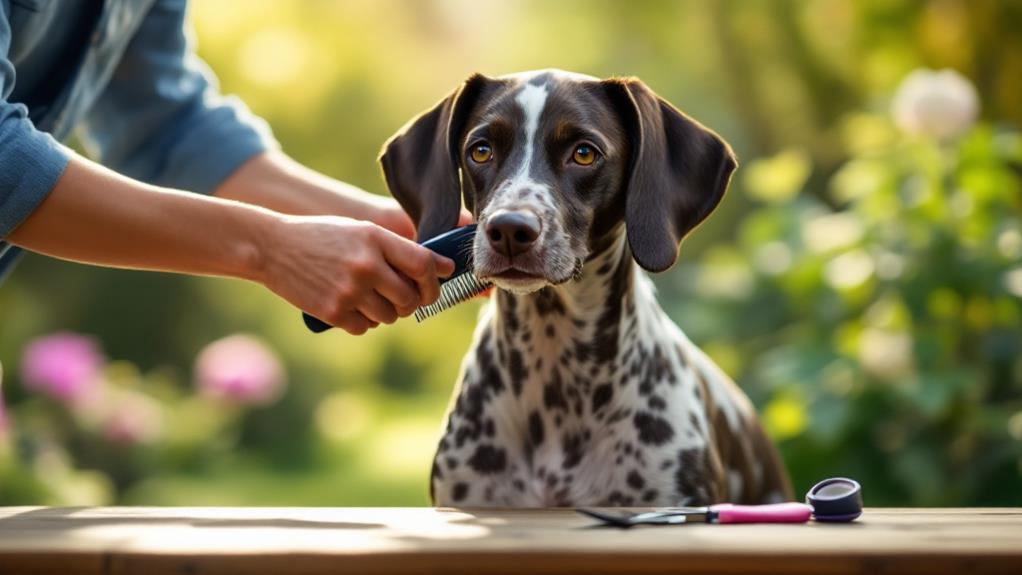
Caring for your Pointer's coat and general hygiene is straightforward, thanks to their short, dense, and smooth fur. Regular grooming and maintenance routines are essential to guarantee your dog stays in top condition. Their short coats require minimal grooming, needing only weekly brushing to manage shedding and keep their coat looking sleek. Regular brushing also helps distribute natural oils for a healthy shine.
Don't forget, though, that maintenance isn't just about their coat. Regular ear checks and cleaning are important, as their long, droopy ears can trap moisture and debris, leading to infections. A balanced diet and access to clean water are key to maintaining their overall health and well-being. Here's a quick checklist to keep your Pointer in peak condition:
- Weekly brushing to manage shedding and maintain coat health.
- Regular ear checks and cleaning to prevent infections.
- Nail trimming to maintain proper paw health.
- Daily teeth brushing to avoid dental issues.
- Bathing only when necessary to preserve natural oils.