Pixie-bob Cat: The Smart and Collected Bobtail Companion
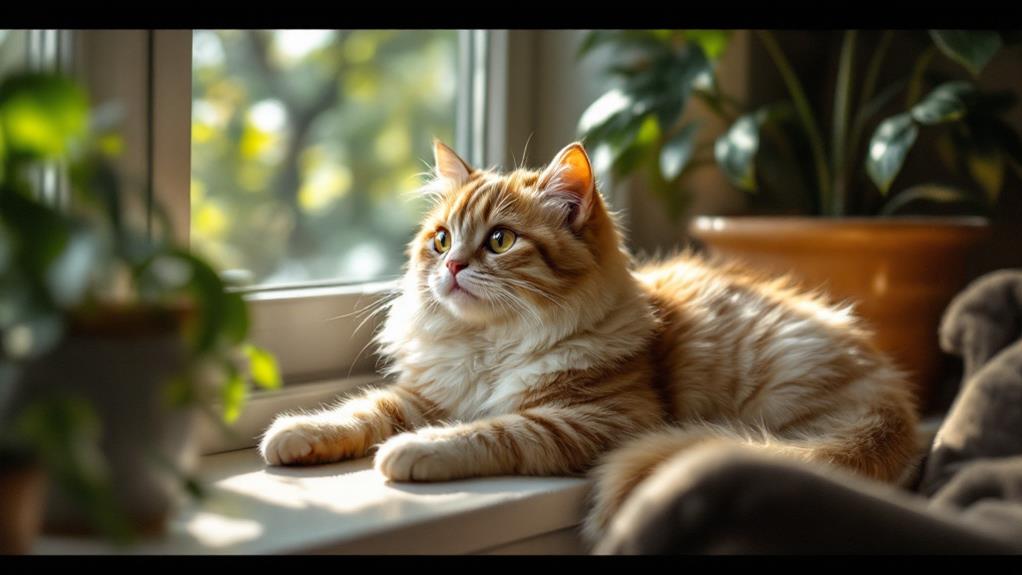
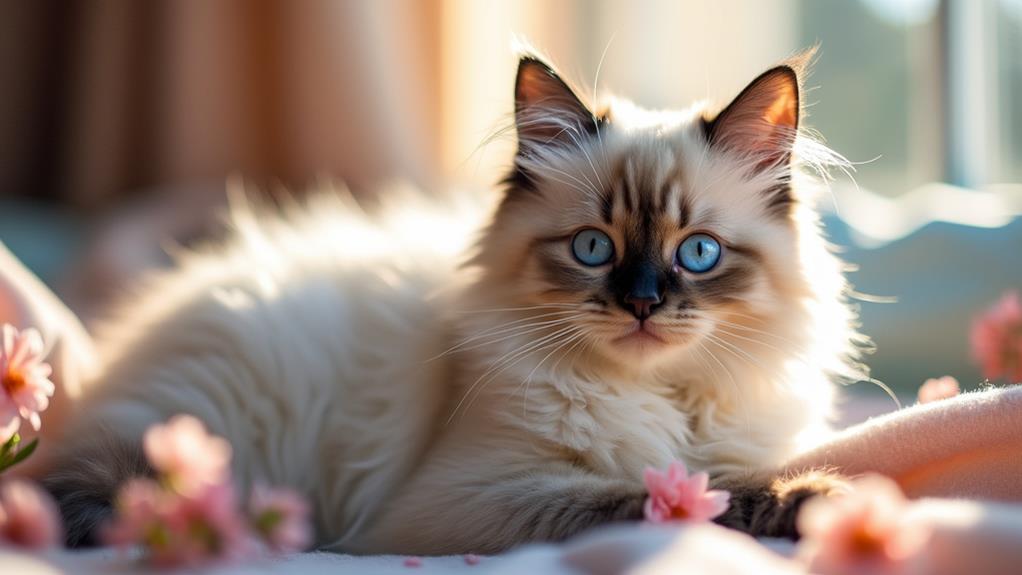
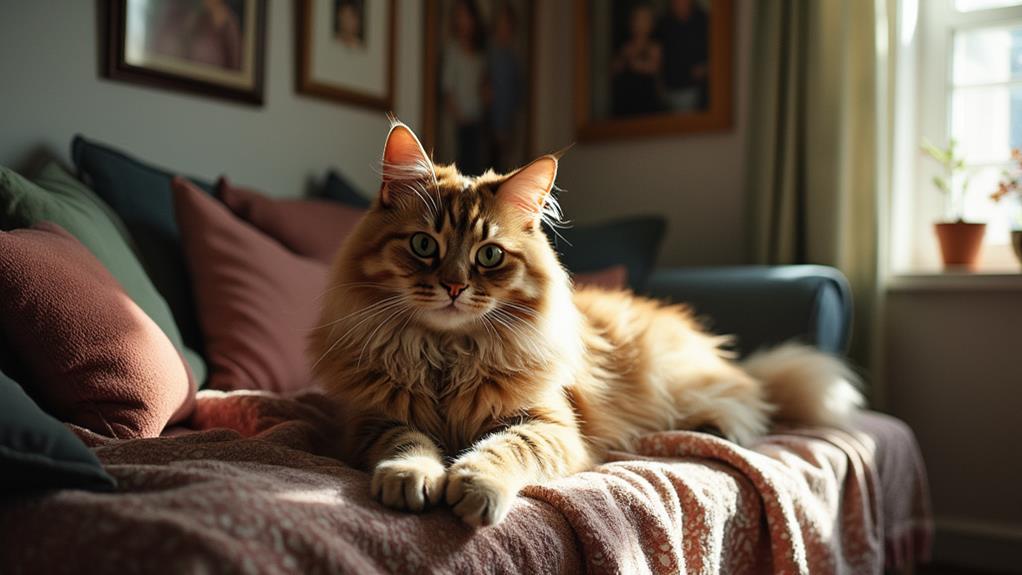
You'll love having a Pixie-bob cat as a companion. They blend the appearance of a wild bobcat with a domestic, affectionate temperament. These smart felines are playful and highly trainable, enjoying activities like fetch and leash-walking. With their calm and friendly nature, Pixie-bobs fit well into family life, bonding closely with both children and seniors. Their adaptable demeanor allows for coexisting peacefully with other pets. Provide them with a protein-rich diet and engage them in daily physical activity to keep them healthy and thriving. Uncover more about this fascinating bobtail breed's unique traits and care needs.
Breed Overview
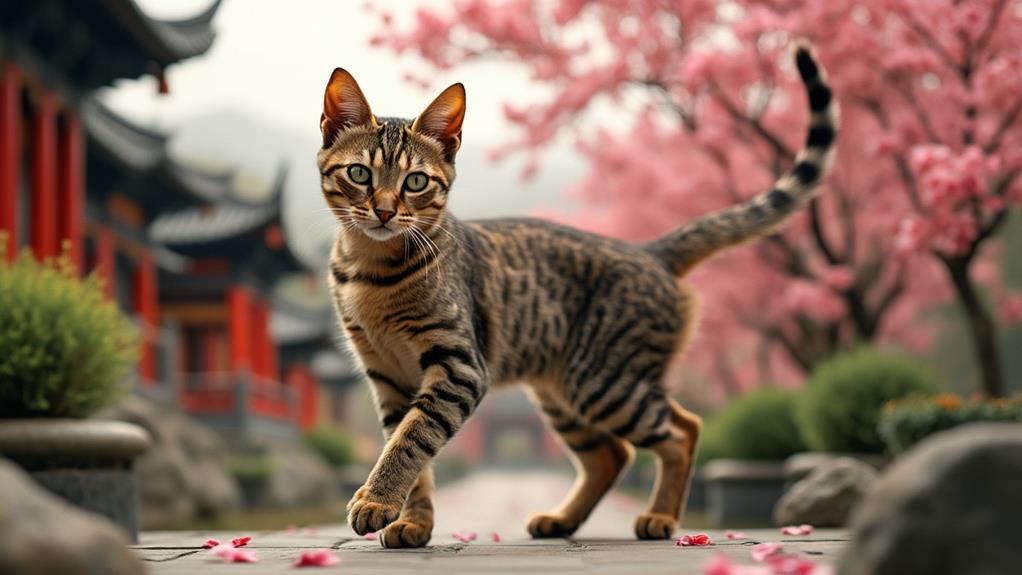
The Pixie-Bob cat is a unique breed that stands out with its wild appearance and friendly nature. If you're looking for a feline that resembles a North American Bobcat but has the temperament of domestic cats, the Pixie-Bob is the perfect choice. This breed typically stands between 9 to 13 inches tall and weighs around 10 to 15 pounds. They have a striking appearance with large, stocky bodies, short tails, and tufted ears, which all contribute to their wild look.
One of the fascinating features of the Pixie-Bob is its coat. Regardless of being long or short, their fur is thick with double layers, and comes in colors like tawny, red, and light gray, often with brown-spotted tabby patterns. This gives them a rugged, wild aesthetic that mirrors their bobcat cousins. Despite their wild appearance, Pixie-Bobs are sociable and form strong bonds with humans, making them ideal companions for families, seniors, and multi-pet households.
Additionally, the breed is generally healthy, boasting a lifespan of 11 to 15 years. They do have a low risk of serious genetic issues, but watch for conditions like cryptorchidism and obesity.
Personality Traits
While their striking appearance may catch your eye, it's the Pixie-Bob's personality that truly captivates. These cats are known for their friendly and affectionate nature, forming strong bonds with their human companions. They thrive on social interaction, making them an ideal choice for anyone desiring a loving and engaging pet. Their playful behavior often surprises and delights, as they enjoy activities like fetch and leash walking, much like a dog. You'll find that their enthusiasm to play can brighten even the dullest day.
Here are some key personality traits of the Pixie-Bob:
- Friendly and Affectionate Nature: They love being around you and will form deep, lasting bonds.
- Playful Behavior: Their dog-like tendencies mean they relish games and interactive play.
- Highly Trainable: With moderate intelligence, they easily learn tricks and commands when taught with positive reinforcement.
- Adaptable Temperament: They adjust well to busy households and can coexist peacefully with children and other pets.
Pixie-Bobs communicate with unique vocalizations like chirps and trills, adding to their charm. Their combination of intelligence and adaptability guarantees they fit seamlessly into diverse living environments, making them a joy to have around.
Family Compatibility
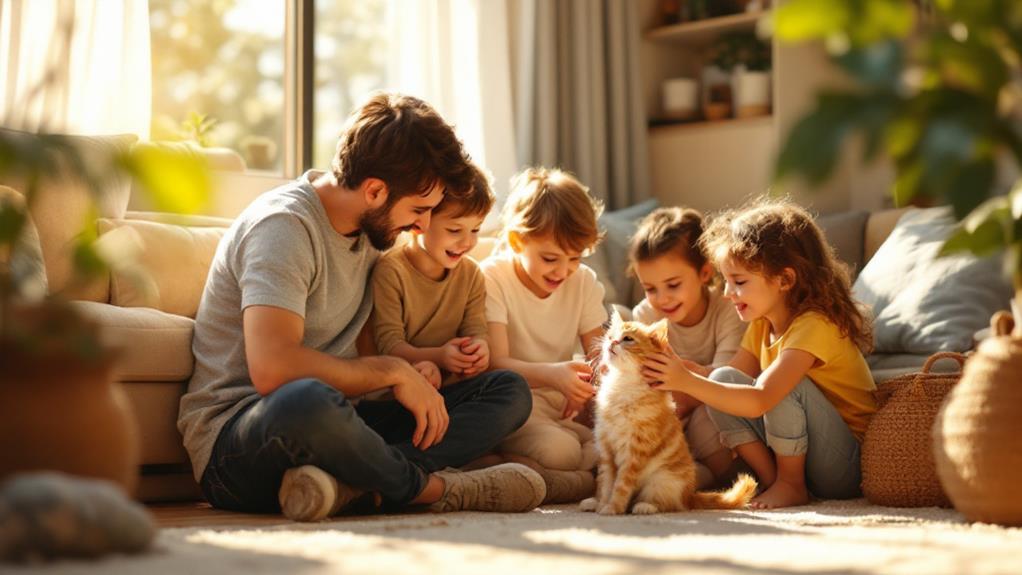
Pixie-Bobs make fantastic family pets due to their calm demeanor and sociable nature. These cats quickly bond with all family members, including children of all stages and seniors, thanks to their gentle and patient temperament. Their curious nature guarantees they're always enthusiastic to join in family activities, creating a lively and engaging household atmosphere. You'll find that Pixie-Bobs adapt well to the hustle and bustle of family life, making them ideal companions for growing families.
Living with a Pixie-Bob means enjoying the benefits of a pet that provides companionship and emotional support without being overly demanding. They thrive on positive reinforcement, responding well to gentle training techniques and rewarding interactions with their loved ones. This approach helps reinforce good behavior and strengthens the bond between the cat and its human family members.
In multi-pet households, Pixie-Bobs' adaptable nature allows them to coexist peacefully with other animals. However, it's wise to supervise interactions with smaller pets to guarantee everyone's safety. In general, Pixie-Bobs' friendly demeanor and ability to connect with each family member make them a cherished supplement to any home, enriching the lives of those lucky enough to have them.
Dietary Needs
Understanding the dietary needs of your Pixie-Bob is fundamental for their health and well-being. A high-quality diet is imperative, focusing on foods high in protein. Real meat or fish should be the primary ingredients to sustain their energy levels and maintain their comprehensive health. However, managing their diet involves more than just choosing the right food. Here's what you need to keep in mind:
- Protein-Rich Meals: Guarantee your Pixie-Bob's diet is high in protein, as this is crucial for their muscle development and energy.
- Portion Control: Measure meals carefully to prevent obesity. Overweight Pixie-Bobs can suffer from health problems like arthritis and diabetes, so portion control is significant.
- Treats Limitation: Treats shouldn't exceed 10% of their daily caloric intake. This helps maintain a balanced diet and prevents unnecessary weight gain.
- Hydration: Always provide fresh, clean water to support proper kidney function and keep your Pixie-Bob hydrated.
Since nutritional needs can vary based on stage of life, activity level, and health status, regular veterinary guidance is imperative. Your vet can offer personalized advice, guaranteeing your Pixie-Bob's diet supports a long, healthy life.
Exercise Requirements
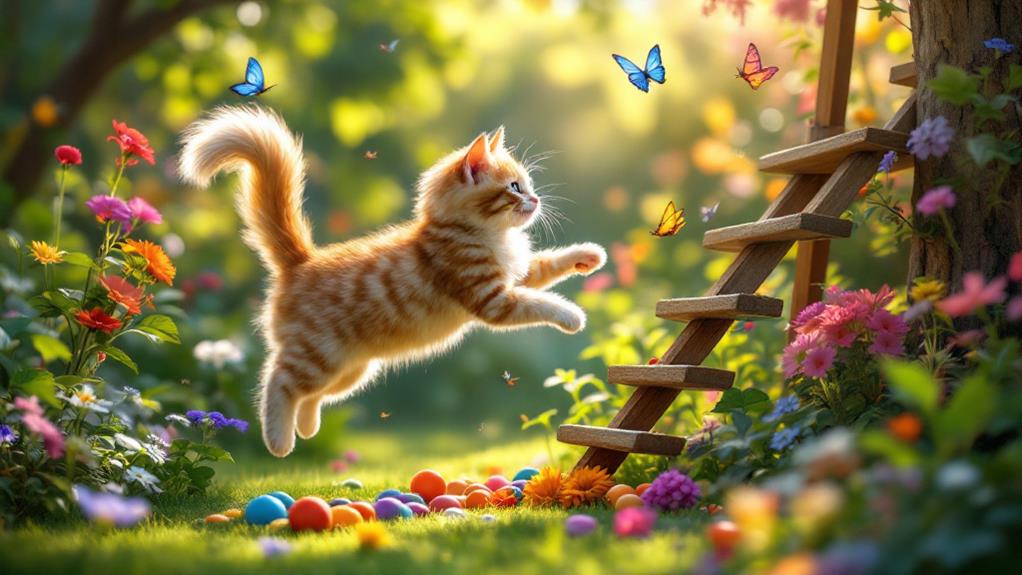
Meeting your Pixie-Bob's dietary needs is only part of guaranteeing their thorough health; regular exercise plays a fundamental role too. These cats have specific exercise requirements, needing at least 15-20 minutes of daily physical activity to keep both their bodies and minds in top shape. Engaging them in interactive playtime is indispensable. Activities like fetch or using toys that mimic prey movements cater to their playful nature and help satisfy their exercise needs.
Incorporating climbing structures and scratching posts into your home environment is critical. Pixie-Bobs love to investigate and climb, so these features promote their natural instincts and provide the physical activity they crave. While independent play is acceptable, making time for daily human interaction is priceless. Not only does this strengthen your bond, but it also guarantees they're getting adequate exercise.
If you have access to a secure outdoor space, such as a cat-proofed garden, it's an excellent way to offer your Pixie-Bob fresh air and natural exercise opportunities safely. This setting allows them to investigate and indulge their curiosity while staying active. Meeting their exercise requirements will lead to a happier, healthier feline companion.
Grooming Essentials
Grooming your Pixie-Bob properly is fundamental to their health and happiness. These cats have thick double coats that need attention. A regular grooming routine keeps their coat healthy and helps you bond with your feline friend. Here's what you need to do:
- Weekly Brushing: Pixie-Bobs require weekly brushing to manage shedding and prevent matting. During seasonal changes, you might need to increase the frequency to keep their coat in top condition.
- Nail Trims: Monthly nail trims are imperative. Not only do they prevent overgrowth and discomfort, but they also protect your furniture from unwanted scratches. Providing scratching posts can also help keep their nails healthy and satisfy their natural instincts.
- Ear Cleaning: Regular ear cleaning is significant to prevent infections and other ear-related issues. Check their ears weekly for dirt, wax, or any signs of trouble. Use a vet-approved cleaner to gently clean their ears as needed.
- Daily Dental Care: Though not directly related to coat grooming, daily dental care is crucial. Brush their teeth regularly and schedule professional cleanings to prevent dental diseases.
Health Considerations
When considering the health of your Pixie-Bob, it's essential to be aware of both their general lifespan and specific breed concerns. These cats typically live between 13 to 15 years, offering many years of companionship. However, like any breed, they have unique health considerations. Regular vet check-ups are vital to guarantee your Pixie-Bob remains healthy throughout its life. Such visits help monitor for obesity, a common issue affecting about one in three cats in the U.S. Obesity can lead to severe health problems, so maintaining a balanced diet and exercise is crucial.
Besides general health, Pixie-Bobs have some breed-specific health concerns. Some may exhibit minor vaccine sensitivities, so discussing vaccines with your vet is significant. Male Pixie-Bobs are prone to cryptorchidism, a condition where one or both testicles fail to descend properly, potentially causing complications if left untreated. Furthermore, Pixie-Bobs can have extra toes, a trait that might lead to injury if the toes aren't properly attached. Regular grooming, particularly for long-haired variants, aids in preventing hairballs and matting, thereby contributing to overall wellness. Being proactive in these areas will help your Pixie-Bob thrive.
Gender Differences
In the world of Pixie-Bob cats, gender differences offer intriguing variations in size, behavior, and personality. When you're considering adopting a Pixie-Bob, it's crucial to understand how males and females differ. Here's a quick guide to help you navigate these gender differences:
- Size: Male Pixie-Bobs are generally larger, weighing between 10-15 pounds, while females are slightly smaller, typically weighing 8-12 pounds. This size difference can influence certain behaviors and even their lifespan.
- Behavioral Traits: Males often exhibit more sociable behaviors and may be prone to spraying if not neutered. They're typically more playful and affectionate. On the other hand, females are usually more selective with their social interactions, showing off their independent side.
- Hunting Skills: If you're looking for a capable hunter, females might be your best bet. They're known for their superior hunting abilities compared to their male counterparts.
- Maturity: Both genders reach sexual maturity around 4-5 months, making early spaying or neutering advisable to prevent unwanted behaviors like spraying or territorial marking.
Understanding these gender differences helps you choose the right Pixie-Bob companion for your household.
Unique Traits and Origins
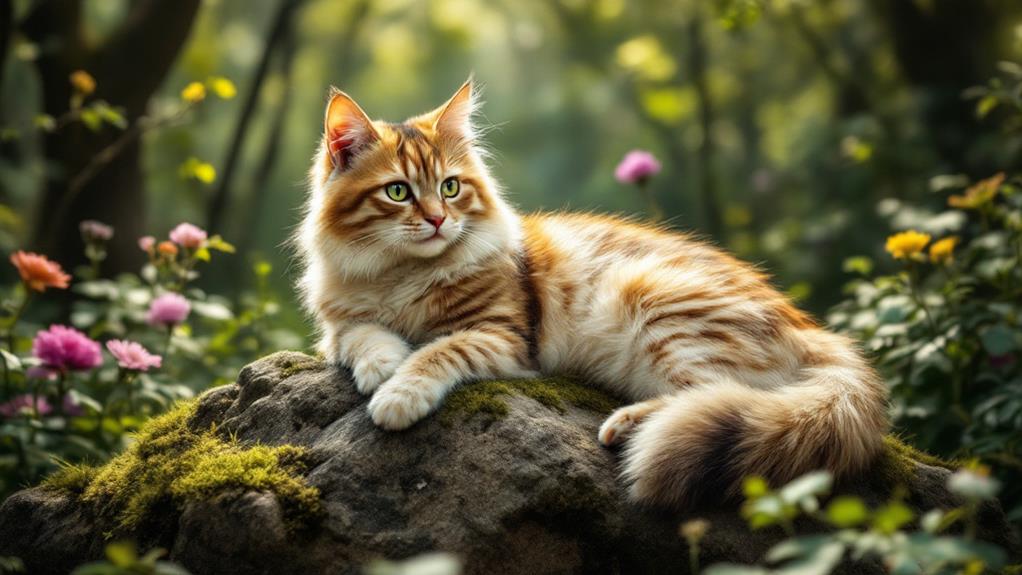
Although the Pixie-Bob cat might seem like a miniature wildcat with its distinctive looks, its origins are firmly rooted in the United States. In the late 1980s, Carol Ann Brewer developed this unique breed, aiming to capture the appearance and personality of a wild bobcat. By selectively breeding cats with specific characteristics, she created Pixie-Bob cats that exude the wild allure of their bobcat counterparts while maintaining a domestic temperament.
Pixie-Bob cats are distinguished by their unique physical traits. They have a naturally bobbed tail, typically measuring between 2-4 inches, which is one of their most striking features. Their tufted ears and muscular build further improve their resemblance to wild bobcats. Another fascinating trait is polydactylism, which results in some Pixie-Bobs having up to seven toes per paw, adding to their distinctive charm.
Their coats, often exhibiting brown spotted tabby patterns, range in color from tawny to reddish-brown and can be found in both long and short-haired varieties. Legends suggest their wildcat-like appearance and temperament might have stemmed from spontaneous mating with North American bobcats, lending them an air of mystique and allure.