Peterbald Cat: The Big-Hearted and Perky Hairless Feline
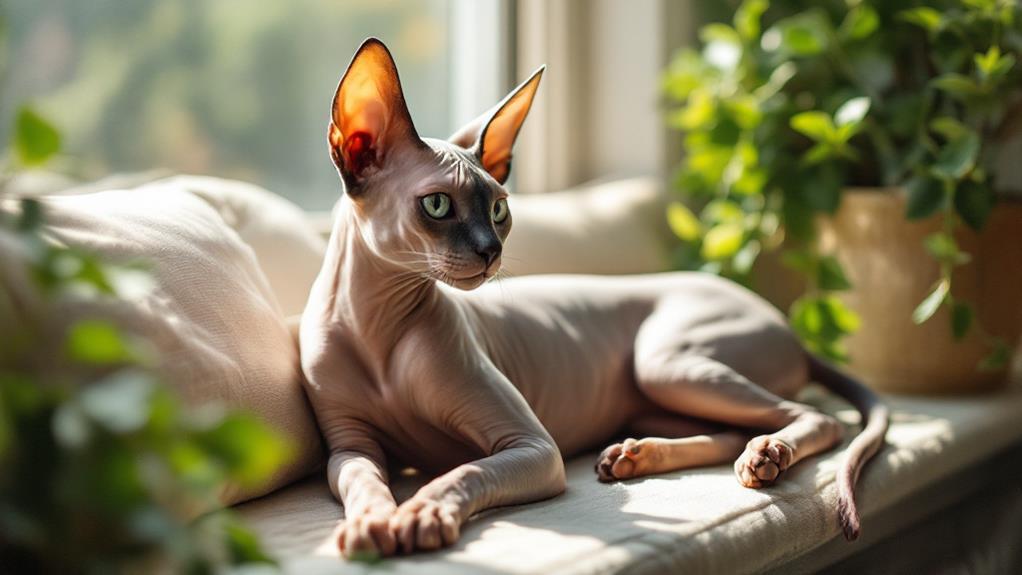
Meet the Peterbald cat, a charming and spirited breed originating from St. Petersburg, Russia in 1994. This hairless feline combines a unique look with a warm heart, thriving on affection and interaction. Their long, lean bodies and oversized ears give them a striking appearance, while their playful and social nature makes them ideal companions. Despite needing special care for their sensitive skin, their vocal and energetic temperament keeps you thoroughly entertained. They fit well in households with other pets and children, providing endless joy with their perky personality. Investigate more to uncover their intriguing traits and care necessities.
Breed Origins and Development
The Peterbald cat breed began its expedition in 1994 in St. Petersburg, Russia. It emerged from the unique pairing of a Donskoy male and an Oriental Shorthair female. This experimental breeding aimed to blend the distinctive traits of both parent breeds, resulting in a fascinating new lineage. The Peterbald's origins are deeply rooted in its hairless ancestor, the Don Sphynx, which passed down a dominant hair-losing gene. This gene allows for a variety of coat types, from completely hairless to flocked and brush.
In the initial litters, notable cats like Mandarin iz Murino and Muscat iz Murino helped establish the breed's foundation. Their unique characteristics set the stage for the Peterbald's development and recognition. By 1996, the Russian Selectional Feline Federation (SFF) officially recognized the breed. A year later, The International Cat Association (TICA) followed suit, acknowledging the Peterbald's distinct lineage and charm.
Continued efforts in breeding have guaranteed the Peterbald's acceptance in competitive arenas. In 2009, the American Cat Fanciers Association (ACFA) recognized the breed for championship class competition, solidifying its place among esteemed feline breeds.
Distinctive Physical Traits
Building on its unique lineage, the Peterbald cat fascinates with its striking physical traits that distinguish it from other breeds. As medium-sized cats, Peterbalds boast a long, lean body, typically weighing around 14 pounds and stretching up to 17 inches in length. One glance at their distinctive triangular head reveals oversized bat-like ears, a blunt jaw, and prominent cheekbones, all of which contribute to their unmistakable appearance. These features make the Peterbald a true standout among feline enthusiasts.
What really sets Peterbalds apart is their variety of coat types, including the famous hairless variants. These hairless Peterbalds have a soft, suede-like texture that's both unique and compelling to the touch. However, you must be cautious with their sensitive skin, as the absence of fur leaves them prone to sunburn and environmental injuries. This sensitivity requires diligent care and protection.
Peterbalds also impress with their eye colors, which range from striking green to alluring blue and golden yellow. Coupled with their diverse colors and patterns, such as bicolor, tabby, solid, and color points, these cats offer an array of visual delights, making them a remarkable breed both in appearance and charm.
Coat Types and Varieties
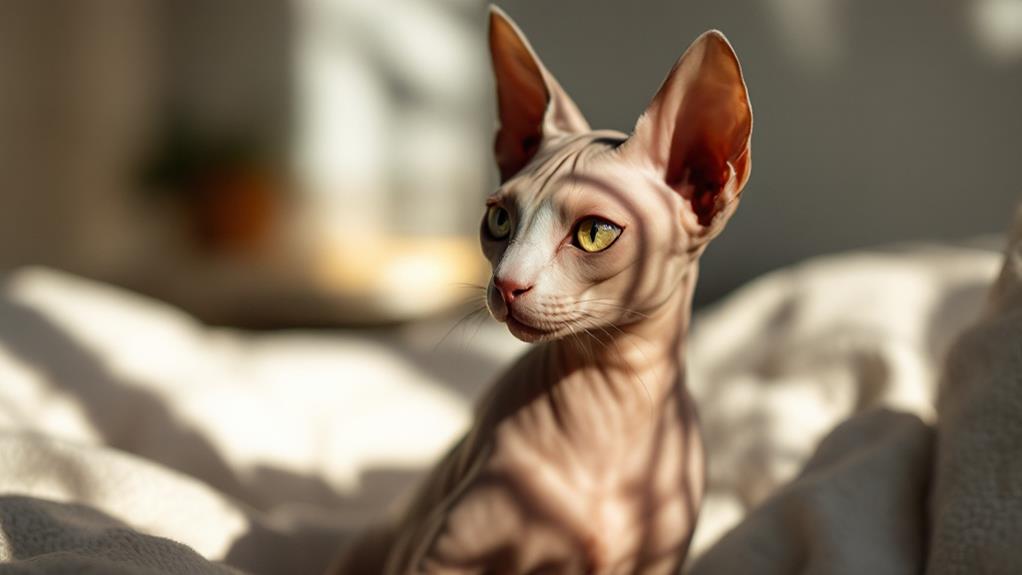
Among the enthralling aspects of the Peterbald cat are its distinct coat types, each offering a unique texture and feel. You'll find Peterbalds ranging from completely hairless to those with different degrees of fuzz and fur. The hairless variety, as the name suggests, showcases a completely bald and sleek appearance, often considered the quintessential Peterbald look. On the other hand, there's the flock coat, presenting a downy soft feel akin to an undercoat of long-haired breeds.
The chamois type features a fine, silk-like fuzz that's a delight to touch. Then, there's the brush coat, characterized by longer, softer hair that may cover parts of the body. Furthermore, some Peterbalds sport a straight coat, which is similar to a typical short-haired cat's fur. Genetic analysis reveals that the baldness gene in Peterbalds is dominant, which means you can expect hairless offspring even when breeding with other cat breeds. In an average litter, you'll notice about 25% are completely bald, another 25% have a standard coat, and the remaining 50% boast an intermediate coat type, offering a fascinating range within a single breed.
Personality and Temperament
Imagine having a feline friend that's not just affectionate but thrives on your companionship—enter the Peterbald cat. Peterbalds are the epitome of a social butterfly, always enthusiastic to be by your side, regardless of whether you're moving from room to room or lounging on the couch. Their affectionate nature makes them perfect lap companions, and their playful spirit means they're always ready for a game or two. You'll find them happily engaging with family members, showcasing their adaptable and gentle demeanor.
But it's not just their physical presence that makes Peterbalds stand out; their vocal temperament adds another layer to their personality. These cats love to express themselves through a variety of sounds, ensuring you're always in the loop about their needs and daily escapades. Peterbalds are known for their energetic nature, requiring moderate physical and mental stimulation each day to keep boredom at bay. This curious spirit makes them excellent companions for other pets and gentle children, though it's wise to supervise playtime. Welcome the joy of living with a Peterbald, and you'll quickly uncover how their unique blend of affection and energy enriches your life.
Ideal Living Environment
Creating the ideal living environment for a Peterbald cat involves guaranteeing they have a comfortable and engaging space. Since Peterbalds thrive in indoor environments, it's essential to maintain a comfortable temperature, as their hairless bodies are sensitive to cold weather. Making sure your home is warm and draft-free will keep them cozy and content. Protecting them from direct sunlight is also critical to prevent sunburn and skin issues.
Incorporating vertical spaces and climbing structures into your home will cater to their energetic nature. These enhancements provide them with opportunities for exploration and play, which is important for their mental stimulation. Think of cat trees, shelves, or wall-mounted climbing areas that encourage activity and curiosity.
Peterbalds are highly social and crave companionship, making a household with other pets or family members ideal. Regular interaction is fundamental, so make certain you're providing plenty of toys and playtime to keep them entertained and prevent boredom. Their inquisitive and playful nature means they'll thrive in an environment that offers enrichment and engagement. By focusing on these elements, you'll create the perfect setting for your Peterbald to flourish.
Essential Care Practices
Caring for a Peterbald cat requires attention to their unique needs to guarantee they thrive. As a member of hairless cat breeds, they need special care to maintain their comprehensive health. Here's how you can confirm your Peterbald stays happy and healthy:
- Regular Baths: To prevent oil buildup on their skin, especially for hairless varieties, Peterbalds need regular baths. Depending on their coat type, weekly bathing might be necessary to avoid skin issues.
- High-Protein Diet: With a high metabolism, Peterbalds benefit from a high-protein diet. Consult your veterinarian to establish appropriate feeding guidelines, confirming your cat's nutritional needs are met.
- Routine Care: Consistent care is imperative. Nail trimming, ear cleaning, and maintaining a clean litter box are fundamental for their hygiene. These practices help promote their comprehensive health and comfort.
- Sun Exposure: Peterbalds are susceptible to sunburn and skin cancer. Keep them indoors or provide protective clothing or sunscreen when outside to shield them from harmful rays.
Regular veterinary check-ups are important, too. Your vet can monitor for potential skin conditions and dental issues, confirming your Peterbald stays healthy and lively throughout their life.
Health and Wellness Tips
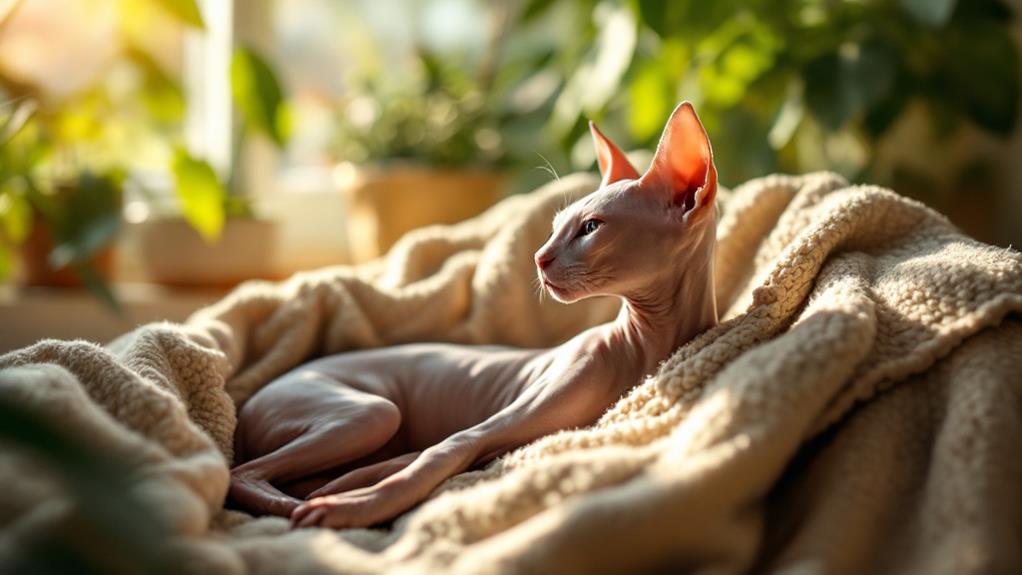
In relation to the health and wellness of your Peterbald cat, regular veterinary visits are fundamental. These check-ups help monitor potential health issues like progressive retinal atrophy and guarantee vaccinations for diseases such as distemper and rabies are up to date. Peterbalds are known for their skin sensitivity due to their lack of fur, making sun protection significant. To prevent sunburn and reduce the risk of skin cancer, keep your cat indoors and apply pet-safe sunscreen when necessary.
Maintaining a high-quality diet is important for preventing obesity and supporting their energetic nature. Consult your vet to tailor a high-protein feeding plan that meets their unique metabolic needs. Routine grooming is also required; regular bathing prevents oil buildup on their skin. Bathing frequency depends on your cat's coat type, but don't forget to trim their nails and clean their ears regularly.
Indoor safety is paramount for Peterbalds. Keeping them inside shields them from temperature extremes, parasites, and potential injuries. This protective environment supports their health and longevity. By following these health and wellness tips, you're guaranteeing your Peterbald thrives in a safe and loving home.
Nutritional Needs and Diet
A Peterbald cat's nutritional needs are unique due to their high metabolism, requiring a high-protein, high-quality diet to maintain their energy levels and prevent obesity. Meeting these needs is vital for keeping your furry friend healthy and active. Consulting a veterinarian is important to establish the right feeding guidelines tailored to your Peterbald's specific requirements. They might suggest a special diet to address any potential weight-related health issues and guarantee your cat's comprehensive well-being.
To help you manage their nutritional needs efficiently, consider these tips:
- High-Protein Diet: Choose a diet rich in protein to support their active lifestyle and metabolism.
- Regular Feeding Schedule: Feed your Peterbald several small meals throughout the day to cater to their frequent hunger and prevent overeating.
- Hydration: Always provide fresh water to keep them properly hydrated, as their dietary needs can increase their thirst.
- Monitor Weight: Regularly check your cat's weight and consult your veterinarian if you notice any changes, preventing potential obesity or other weight-related health issues.
Socialization and Interaction
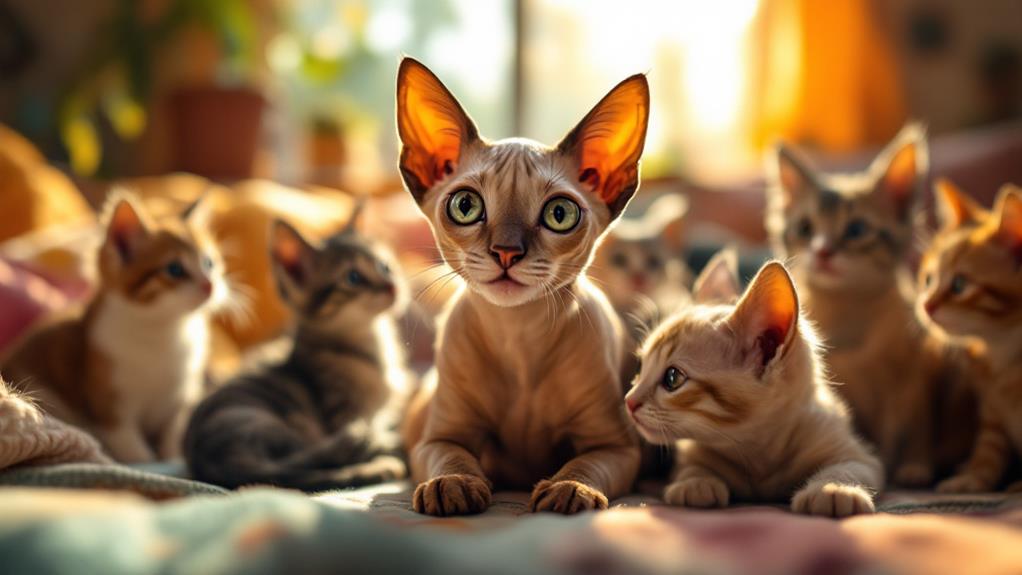
Peterbalds are incredibly social creatures that thrive on companionship, seeking out human interaction and affection. These social cats form strong emotional bonds with their families, often following you around the house, longing to be part of your daily activities. Their playful and inquisitive nature means they're always up for interactive play, regardless of whether it's with toys or just engaging in spontaneous games. This need for stimulation makes it vital to regularly engage with them, keeping their curious minds active.
You'll notice that Peterbalds are exceptionally vocal, using different sounds to communicate their needs and emotions. This vocalization creates a dynamic relationship, as they aren't shy about letting you know what they want. Their expressive nature makes them delightful companions, always ready to share their thoughts.
When it comes to adapting to different environments, Peterbalds do well with gentle children and other pets, though supervision is wise to guarantee harmony. However, be mindful of their sensitivity to being left alone. They can experience separation anxiety if you're frequently away, so they're best suited for households where someone is often present to provide the companionship they crave.
Fun Facts and Trivia
Renowned for their distinct lack of fur, Peterbald cats rank among the six recognized hairless breeds worldwide. Sharing this category with the likes of the Sphynx, these cats boast a unique genetic background. Bred originally as a cross between the Sphynx and Oriental Shorthair, the initial known Peterbald emerged in Russia in 1994. Their hairless nature means they require special attention, especially regarding grooming. Regular baths become crucial to manage the oil buildup on their skin, and the frequency of these baths can vary depending on their coat type.
Peterbalds aren't just known for their grooming needs; they're also celebrated for their playful and affectionate nature. With high energy levels, they make excellent companions for families and individuals who can engage them daily. If you're considering bringing a Peterbald into your home, here are some fun facts and trivia:
- A Peterbald kitten can cost up to $2,000, while monthly care can average around $1,200.
- Their lively and playful demeanor makes them wonderful companions.
- Due to their hairlessness, they need regular grooming.
- They were initially recognized in St. Petersburg, Russia.