Pet Food Storage Guide: Tips to Keep Your Pet's Food Fresh and Safe
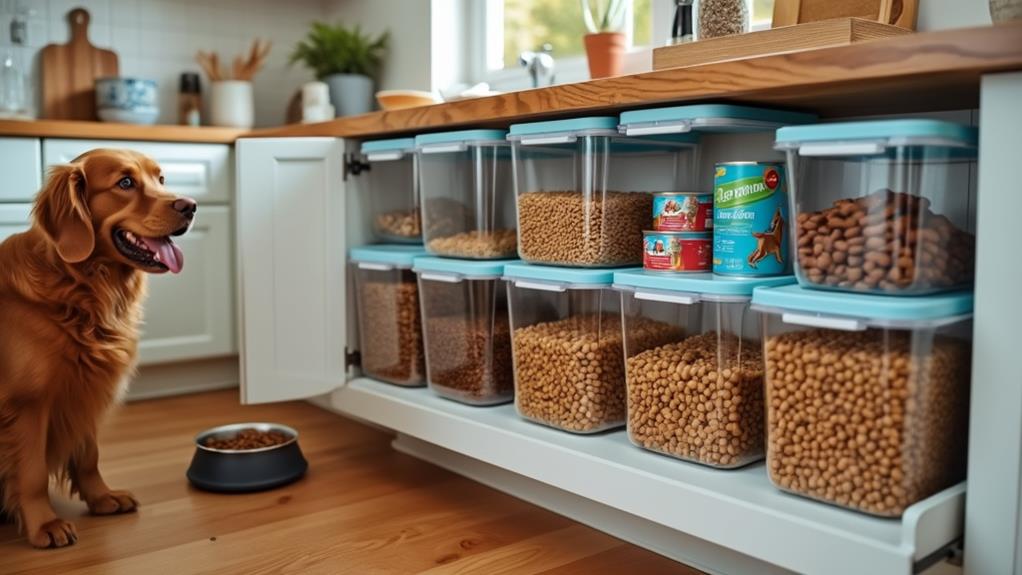
Store your pet's food safely by always checking expiration dates and using airtight containers to keep it fresh. Make sure to store food in cool, dry places, away from direct sunlight and moisture. After serving your pet, promptly seal dry food with clips or zip-locks. Refrigerate opened wet food within two hours and consume it within five to seven days. Maintain cleanliness by using dedicated scoops for different foods to avoid contamination. Don't forget to monitor packaging for any signs of damage or spoilage. Adhering to these simple tips will keep your pet healthy and their meals enjoyable.
Key Takeaways
- Check expiration dates before purchasing to ensure pet food freshness and safety.
- Use airtight containers to protect food from oxygen and moisture exposure.
- Store pet food in cool, dry places to prevent degradation and spoilage.
- Seal opened food tightly between meals to maintain its quality and freshness.
- Refrigerate opened wet food within two hours and consume within 5-7 days.
Check Expiration Dates
Before buying pet food, always check the expiration dates on the labels. This simple step safeguards your pet's health by guaranteeing the food you purchase is fresh and maintains ideal nutrient levels. Pet food that has surpassed its expiration date can lose its nutritional value, which is vital for your pet's well-being. Furthermore, expired food poses a risk of spoilage, potentially leading to digestive disorders and other health issues.
It's wise to buy new pet food every 4-6 weeks. This practice not only guarantees freshness but also helps prevent spoilage. Smaller bags of pet food are a great option, as they're likely to be consumed before reaching their expiration date, reducing waste and minimizing health risks. Once you've opened a bag, keep an eye out for signs of spoilage like off odors or changes in texture. If you notice any signs of spoilage, don't hesitate to discard the affected food immediately.
Use Airtight Containers
Once you've verified your pet food is within its expiration date, the next step is making sure it stays fresh with proper storage. Airtight containers are essential to this process, as they effectively prevent exposure to oxygen and moisture, which can lead to spoilage and a decrease in nutritional value. To keep pet food fresh, it's best to use containers made from food-grade materials like plastic, stainless steel, or glass. These materials not only maintain freshness but also protect against pests.
Always keep the pet food in its original packaging before placing it in the airtight container. This helps retain its freshness and allows you to track important information, such as expiration dates and feeding instructions. Properly sealing the container is vital, as it greatly extends the shelf life of the food. Regularly check for any wear and damage on your containers to make sure they continue to protect against contamination.
Store in Cool, Dry Places
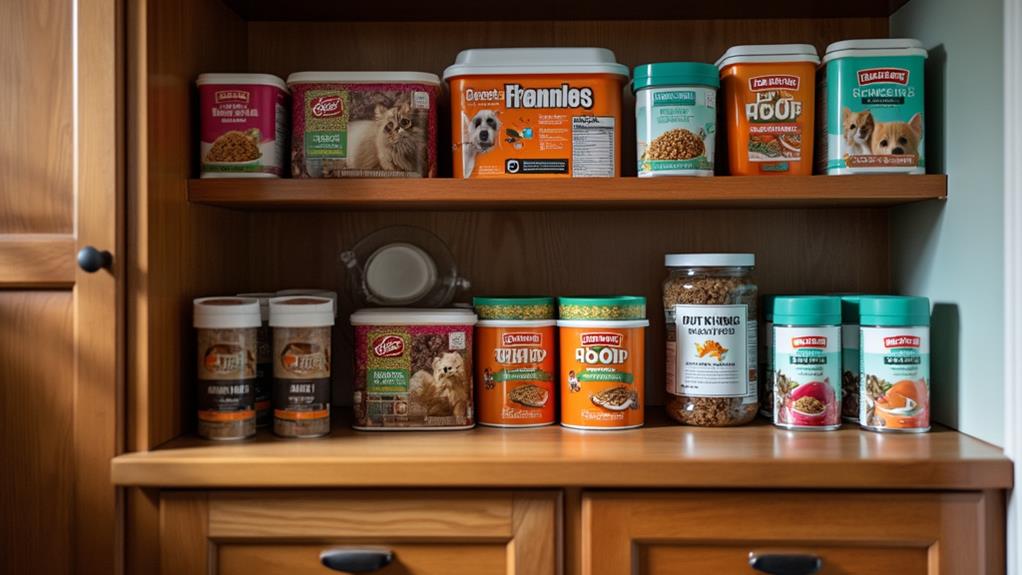
In order to preserve your pet food's quality and nutritional value, it is crucial to store it in cool, dry places. Storing dry pet food at temperatures between 50-70°F helps prevent nutrient degradation and spoilage. Avoid placing bags on the floor or in garages where extreme temperatures and moisture can compromise the food's quality. Instead, choose a well-ventilated, dry area to store pet food containers, protecting them from high humidity levels that can lead to mold formation.
Ensure your chosen storage spot is free from excess heat and away from direct sunlight. Exposure to sunlight can degrade the food, so it is best to keep it in dark cupboards or closets. Another significant aspect of proper food storage is keeping containers tightly sealed. This prevents exposure to air and moisture, which could accelerate spoilage.
Keep Original Packaging
Keeping pet food in its original packaging is essential for maintaining its freshness and preventing contamination. This packaging is specifically designed to keep the food safe from environmental factors such as moisture and pests, making it important to store your pet's food properly. By keeping the original packaging, you guarantee that the product maintains its nutritional integrity, which is crucial for your pet's health. Here's why you should always keep the original packaging:
- Nutritional and Safety Information: The original bag includes significant details like expiration dates and nutritional information, helping you avoid food-borne illnesses and guarantee your pet is consuming proper food.
- Recall and Safety Tracking: Original packaging makes it easy to track lot numbers and UPC codes, which are essential if you need to report safety concerns or check for recalls.
- Enhanced Protection: Even when transferring food to airtight containers, retaining the original packaging provides an extra barrier against moisture and pests.
- Convenience and Assurance: Storing pet food in its original packaging means you have all the necessary information at your fingertips, ensuring you're always informed and prepared when feeding your pet.
Seal Between Meals
You've just finished feeding your pet, and it's vital to seal their food properly between meals to keep it fresh. Tightly sealing bags of dry pet food is important to limit air exposure. Kibble is particularly vulnerable to environmental damage, which can lead to spoilage. By rolling the open bag tightly and using clips or zip-locks, you effectively reduce air and moisture contact. This simple step extends the food's shelf life, keeping your pet food fresh and nutritious.
For wet food, using airtight containers is the way to go. Store leftovers in these containers and refrigerate them within two hours of opening to maintain their quality and flavor. Always store opened pet food in a cool, dry location. Properly sealing and storing the food prevents degradation of nutrients and guarantees your pet's meals remain safe and healthy.
Be vigilant for spoilage signs like off odors or changes in texture. Regularly check sealed bags and containers to confirm your pet is consuming only the best. By following these steps, you can keep your furry friend's food fresh and safe between meals, providing them with the nutrition they deserve.
Separate Containers for Pets
To effectively manage your pets' diets, consider using separate containers for each one. This method guarantees that each pet's unique dietary needs are met, reducing the risk of mix-ups, especially if they have allergies or specialized diets. Separate storage also helps you keep a close eye on each pet's food intake, preventing overfeeding or giving the wrong diet.
Here are some reasons why using separate containers for pets is beneficial:
- Labeling: Clearly labeling each container with your pet's name and dietary details simplifies monitoring and managing their feeding routines. This is especially useful if multiple people are involved in meal preparation.
- Cross-contamination Prevention: Keeping food separate minimizes the risk of cross-contamination, preserving the integrity of specialized diets. This is essential for pets with sensitive dietary needs.
- Simplified Meal Preparation: With distinct containers, you can easily grab the right food for each pet without confusion, streamlining your daily routine.
- Accountability and Management: Having a dedicated container for each pet improves accountability, making it easier to track storage and assess how much food each pet consumes over time.
Refrigerate Wet Food
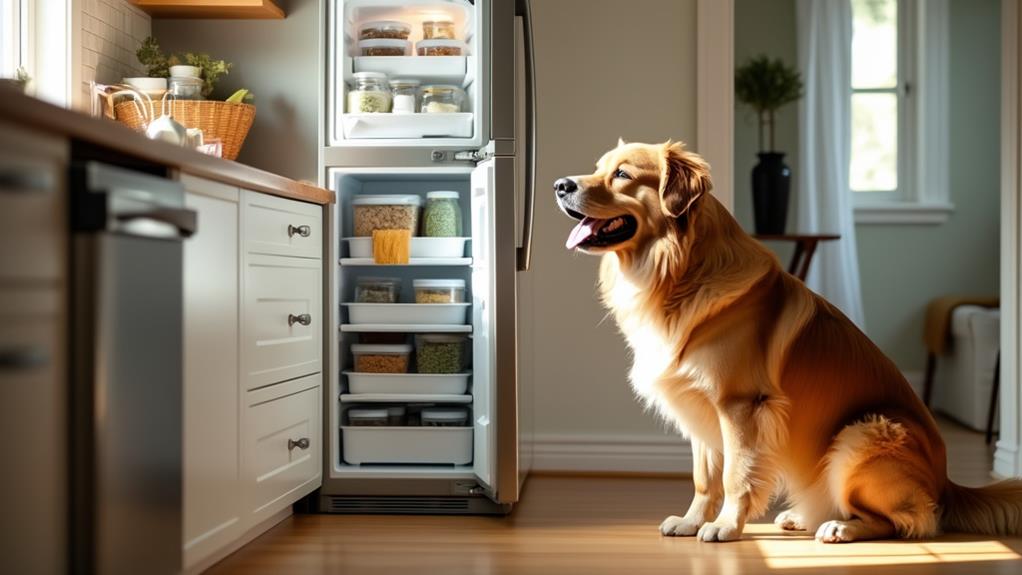
Refrigerating wet food is crucial for maintaining its freshness and safety for your pets. Once you've opened wet food, you should refrigerate it within two hours to prevent spoilage. If left out for more than four hours at room temperature, it becomes unsafe to consume. For peak freshness, store the opened wet food in airtight containers. This not only retains its quality but also prevents odors from spreading and contaminating other foods in your refrigerator.
When you refrigerate wet food, aim to consume it within 5 to 7 days. After this period, any unused portions should be discarded. It's helpful to label the containers with the date you opened the food. This way, you can track freshness and guarantee your pet gets the best quality meals. Always be vigilant about checking the food for any off odor, unusual color, or visible signs of spoilage. These indicators suggest bacterial growth, and such food should be discarded immediately to keep your pet safe.
Use a Scoop
Using a dedicated scoop for pet food not only guarantees proper hygiene but also helps manage your pet's diet effectively. When you use a scoop, you minimize the transfer of bacteria from your hands to their food, promoting a cleaner and safer feeding environment. Here are some key benefits of using a scoop:
- Hygiene: A clean scoop reduces the risk of spoilage by limiting exposure to moisture and other contaminants that might be present on your hands or other utensils. This practice is fundamental for maintaining the freshness of your pet's food.
- Prevent Cross-Contamination: By assigning individual scoops for different types of pet food, you make certain that each pet gets the correct diet without any unwanted mixing, which is especially significant for pets with specific dietary needs.
- Consistent Serving Size: Using a scoop allows for consistent serving sizes, helping you manage your pet's diet more effectively. This consistency is crucial to prevent overeating and the potential health issues that come with it.
- Cleanliness: Regularly washing the scoop, at least once a week, prevents the buildup of food residues and bacteria, keeping the feeding process hygienic and safe.
Implementing these practices will keep your pet's food fresh and safe.
Monitor Packaging Condition
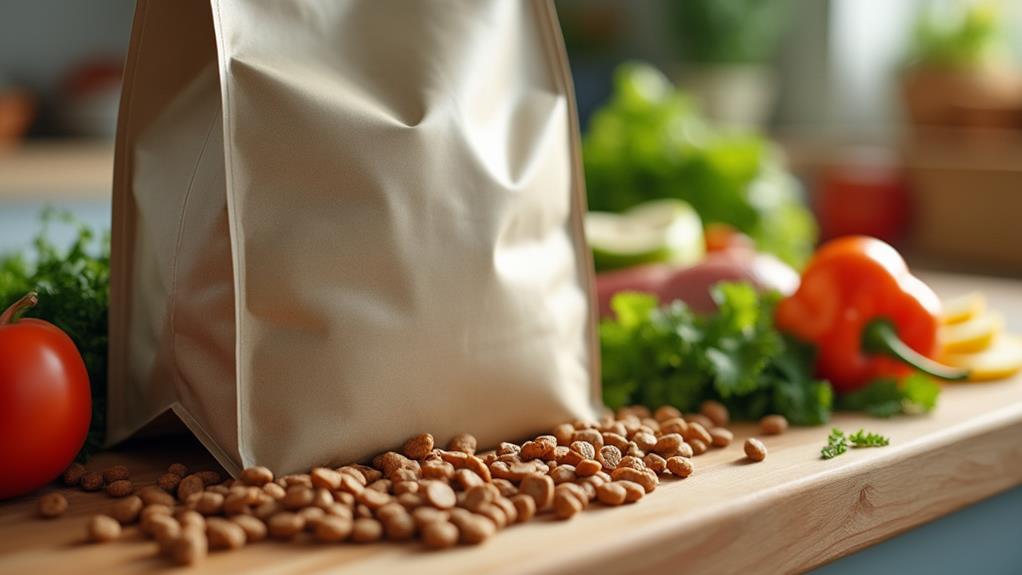
When guaranteeing the safety and quality of your pet's food, monitoring the condition of the packaging is vital. Start by inspecting pet food packaging for cleanliness and any signs of damage, like rips or holes, before you buy. This helps maintain the product's integrity and protects your pet from potential health risks. Always verify expiration dates to confirm the food is fresh and safe to consume. Expired food can cause digestive issues for your pet, so it's a significant step in your purchasing process.
Once you bring the food home, check for proper seals, especially on wet food containers. Proper seals help prevent spoilage and contamination, keeping the food inside safe and nutritious. After opening, regularly monitor the packaging for signs of spoilage or pest activity. Be on the lookout for any off odors or visual contamination, which are clear indicators of compromised food quality. If you notice any of these signs, discard any food immediately to protect your pet's health.
Follow Special Diet Instructions
After confirming the packaging of your pet's food remains intact, it's crucial to pay attention to any special diet instructions provided by the manufacturer. Specialized pet foods often have unique requirements that guarantee their effectiveness and maintain their nutritional value. Proper pet food storage involves being thorough about how and where you store these foods to meet specific dietary needs.
- Store specialized pet foods in a cool, dry place: This prevents the degradation of nutrients, especially for foods sensitive to light or moisture.
- Use food-grade containers: Verify they're clean and dry to avoid cross-contamination with other pet foods that might not align with your pet's dietary needs.
- Monitor expiration dates closely: Special diets may contain specific nutrients that lose efficacy over time if not stored properly. Keeping track of these dates guarantees your pet gets the intended benefits from their food.
- Separate storage for different dietary needs: If you have multiple pets with varying diets, store each pet's food separately. This prevents mix-ups and guarantees each pet receives the proper nutrition.
Related posts