Norwegian Forest Cat: The Gentle Giant of the Cat World
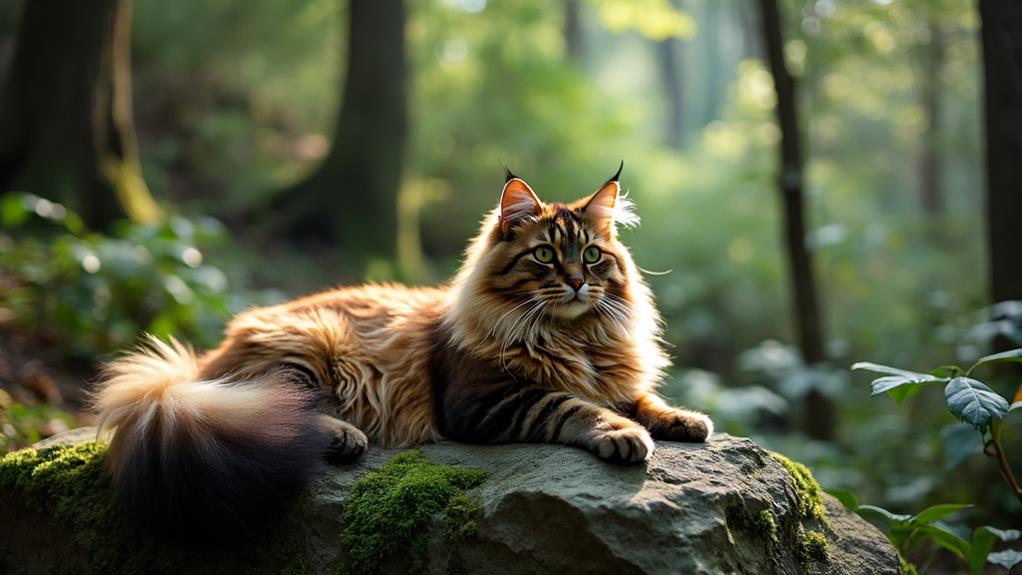
You'll find the Norwegian Forest Cat, or Wegie, truly lives up to its nickname as the gentle giant of the cat world. Originating with the Vikings, these cats are known for their affectionate nature and impressive climbing abilities, thanks to their robust, muscular build. They have a semi-long, water-repellent coat that keeps them cozy against harsh weather. While they adore human interaction, they may develop separation anxiety if left alone too long. Always consider their health, as they're prone to particular genetic and dental conditions. Keep going, and you'll uncover what makes this breed so special.
Key Takeaways
- Norwegian Forest Cats are known for their affectionate and gentle temperament, making them excellent companions.
- They have a muscular build and semi-long, water-repellent coat, adapted for harsh climates.
- Highly intelligent and playful, they require interactive games and social interaction.
- Regular grooming twice a week is essential to maintain their coat and prevent matting.
- Prone to specific health issues, they require routine veterinary care and DNA testing for genetic conditions.
Historical Background
The fascinating history of the Norwegian Forest Cat begins with the Vikings, who brought their domestic cats to Norway around 1,000 AD. These cats, hardy and adaptable, thrived in the harsh northern climate of Norway. Over time, they formed wild colonies in the Norwegian forests, becoming adept hunters. These feline colonies helped manage rodent populations on farms, proving invaluable to Norse farmers.
During World War II, the Norwegian Forest Cat faced near extinction. However, passionate cat enthusiasts stepped in. The Norwegian Forest Cat Club was instrumental in preserving the breed's lineage, ensuring these majestic cats weren't lost to history. Their efforts paid off when the breed gained official recognition in Europe during the 1970s. By 1989, the UK also recognized the Norwegian Forest Cat, acknowledging its unique place in feline history.
In a nod to their cultural significance, King Olaf V declared the Norwegian Forest Cat the official cat of Norway. This designation underscores the breed's enduring legacy and its deep-rooted connection to Norwegian heritage. Today, the Norwegian Forest Cat stands as a symbol of resilience, embodying the spirit of the Vikings who initially brought them to Norway's shores.
Distinctive Traits
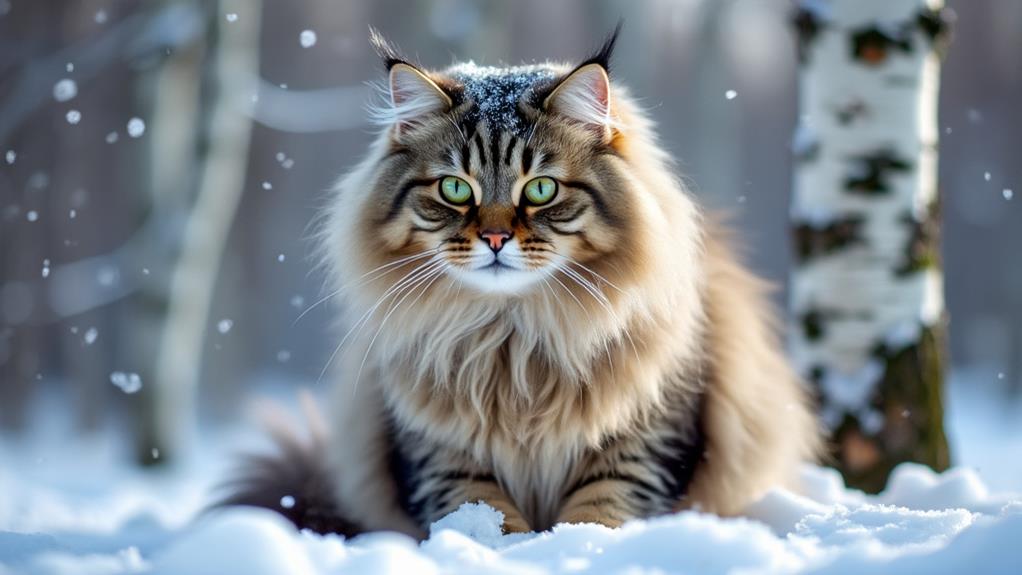
Norwegian Forest Cats' remarkable traits make them stand out among feline enthusiasts. Their impressive climbing abilities can be traced back to their origins as mountain dwellers in Norse folklore. This agility is improved by their muscular builds and powerful limbs, allowing them to easily navigate diverse terrains. Weighing up to 20 pounds, these gentle giants have a triangular head shape and large tufted ears, contributing to their striking appearance.
Their semi-long, water-repellent coat is another of their distinctive traits. Designed to withstand harsh weather, it features a dense undercoat that provides excellent insulation. The coat comes in a range of colors, though it excludes Siamese color point patterns. Coupled with long, bushy tails often held high, they exude a majestic aura.
Norwegian Forest Cats boast almond-shaped eyes, ranging from green to gold and copper, lending them an alert and inquisitive expression. Despite their independent nature, they possess an affectionate temperament, making them wonderful companions. These cats enjoy human interaction and playtime, while also being adaptable to different living situations. Regardless of being in a lively household or a serene environment, their easygoing nature makes them a joy to have around.
Health Considerations
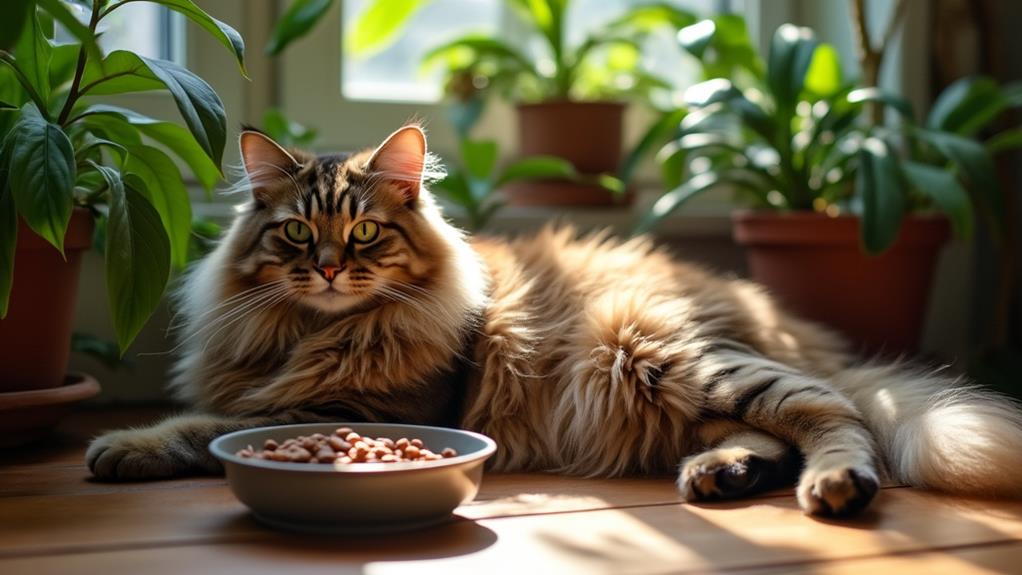
When you admire the majestic appearance and charming nature of Norwegian Forest Cats, it's crucial to also consider their health needs. These cats are genetically predisposed to glycogen storage disease IV, so DNA testing is important before breeding or purchasing. This helps identify potential risks and guarantee you're making informed decisions.
Regular dental care is vital for your Norwegian Forest Cat. They're prone to dental issues like tartar buildup, gingivitis, and periodontal disease. Don't skip those dental check-ups; they play a significant role in maintaining your cat's overall health. Furthermore, these cats are susceptible to eye conditions such as conjunctivitis and glaucoma. Routine veterinary visits are necessary to monitor their ocular health and catch any problems early.
It's also significant to be aware of other hereditary health problems like hypertrophic cardiomyopathy and polycystic kidney disease. Sourcing your cat from reputable breeders who screen for these conditions is a wise choice. Regular health check-ups will help maintain their well-being throughout their lifespan, which typically ranges from 14 to 16 years. By being proactive about your Norwegian Forest Cat's health, you can guarantee they lead a long and happy life.
Grooming Essentials
Although maintaining a Norwegian Forest Cat's stunning appearance might seem intimidating, understanding grooming fundamentals guarantees your cat stays healthy and happy. With their thick double coat, these cats require grooming at least twice a week to prevent tangles and matting. During moulting, daily brushing becomes crucial. This keeps their fur in ideal condition and manages heavy shedding periods effectively.
Incorporating regular eye cleaning into your grooming routine is critical. Use separate cloths for each eye to avoid cross-contamination, ensuring your cat's eyes remain clear and healthy. Nail trimming is another significant aspect of their care. Regular trims prevent overgrowth, which can lead to discomfort or health issues.
While their nearly waterproof coat means they don't need frequent baths, gentle combing helps untangle any knots that might form. This simple step keeps their fur looking its best and feeling smooth. Be prepared for heavy shedding a couple of times a year, which requires more frequent grooming to remove loose fur.
Behavior and Training
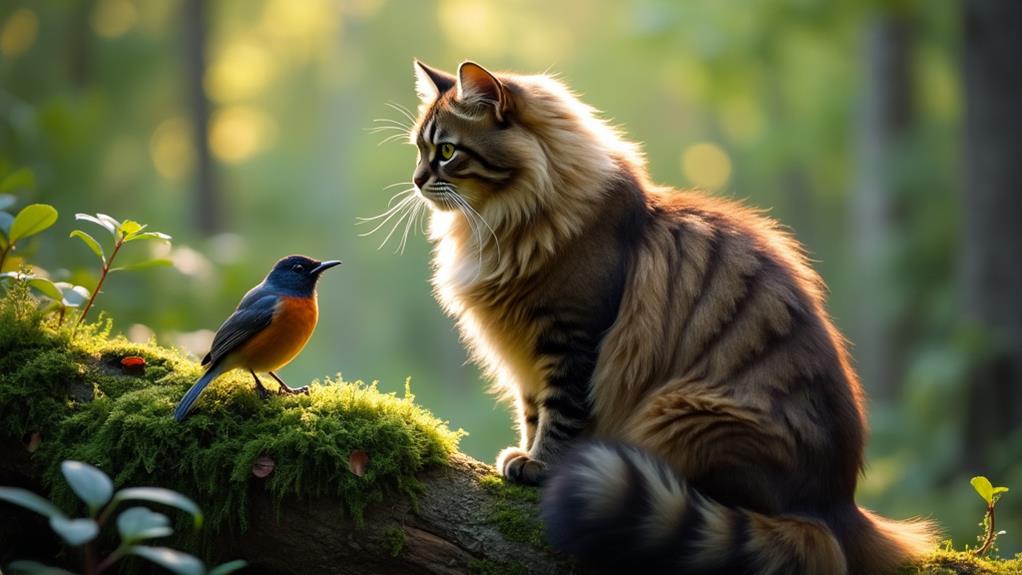
While keeping their coat pristine is vital, understanding your Norwegian Forest Cat's behavior and training needs guarantees a harmonious living environment. Norwegian Forest Cats are highly intelligent and thrive on social interaction. Early handling and socialization are fundamental to prevent shyness around strangers. Their playful kitten antics persist into adulthood, thanks to their slow maturity, making interactive games a must. These games not only entertain but also provide the mental challenges they need to stay sharp and content.
Despite their independent temperament, Norwegian Forest Cats can develop separation anxiety if left alone for too long. To mitigate this, make certain they have ample regular playtime. Creating a stimulating environment with toys and challenging activities will keep them engaged. They appreciate your company and often enjoy lounging nearby as you go about your day, illustrating their laid-back nature.
Training these cats is generally straightforward due to their enthusiasm to learn. Positive reinforcement works wonders in house-training them. Consistency and a gentle approach will yield the best results. By understanding their unique behavior and training requirements, you can guarantee your Norwegian Forest Cat remains a joyful and well-adjusted member of your family.
Adoption Insights
Adopting a Norwegian Forest Cat is a rewarding experience, but it requires careful consideration. Firstly, you'll want to find a reputable breeder or rescue organization to guarantee your cat's health and reduce hereditary risks. These majestic cats thrive on social interaction, so prepare to spend plenty of quality time with them to prevent separation anxiety. If you're considering an adult Norwegian Forest Cat, remember they often adapt more easily than kittens, being house-trained and having established personalities.
It's essential to know that Norwegian Forest Cats are not hypoallergenic. Their saliva contains allergens that can trigger reactions if you're sensitive. When planning for adoption, consider the initial expenses such as vaccinations and spaying or neutering. Keep in mind the ongoing costs for things like quality food, grooming, and regular veterinary care throughout their life.
Grooming is particularly significant with these cats due to their thick, beautiful coats, so factor in the time and tools needed. By understanding these adoption insights, you can make an informed decision and enjoy the companionship of this gentle giant in your home for years to come.