Most Trainable Cat Breeds: Felines That Can Learn Tricks and Commands
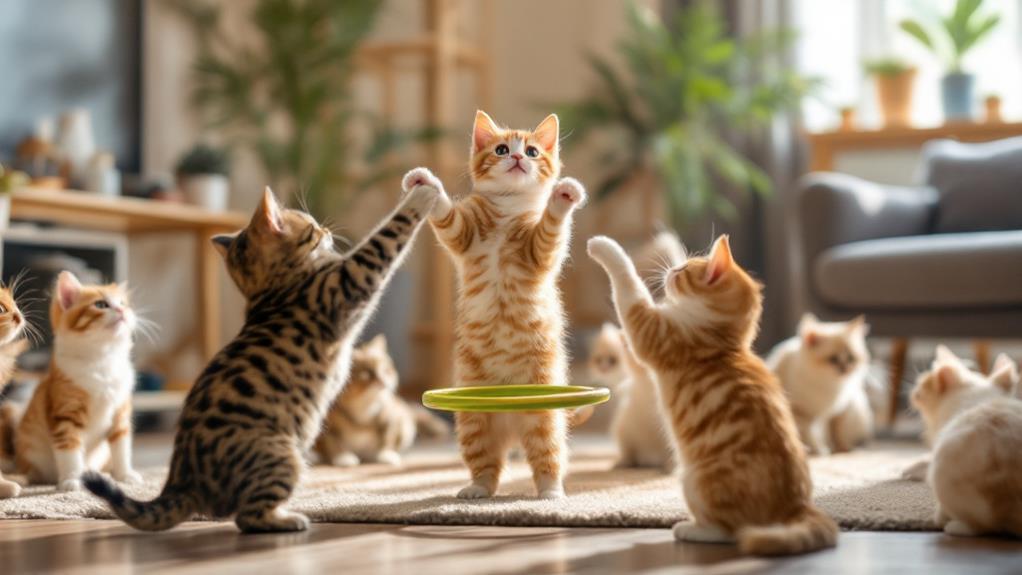
If you're looking for trainable cat breeds, consider the Abyssinian, Bengal, Siamese, Maine Coon, and Japanese Bobtail. These cats excel in learning tricks and commands due to their intelligence and social nature. Use techniques like positive reinforcement and interactive play to make training enjoyable. Short sessions maintain their focus, while activities like clicker training can mark progress efficiently. Training benefits include improved behavior, improved bonding, and mental stimulation. Be aware of their independent streak and keep sessions engaging and consistent. Stick with it, and you'll reveal even more insights into training and enriching your feline friend's life.
Top Trainable Cat Breeds
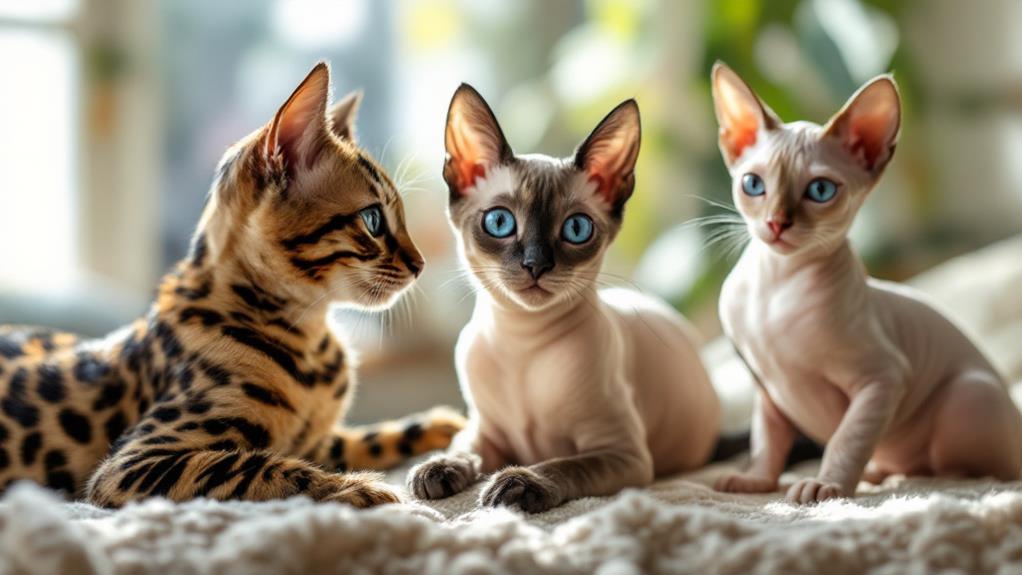
When considering a trainable cat, certain breeds stand out for their intelligence and enthusiasm to learn. The Abyssinian is a prime example, known for its high intelligence and curiosity. This breed loves interactive play, making it an excellent candidate for learning tricks. If you're looking for a cat with boundless energy, the Bengal might be your perfect match. These cats thrive on mental stimulation and can quickly learn activities like playing fetch or walking on a leash.
For those who appreciate a strong human-cat bond, the Siamese is an engaging companion. Their social nature and ability to respond to commands often surprise owners. They excel at performing tricks, enhancing the bond you share. The Maine Coon, affectionately known as the gentle giant, enjoys participating in interactive activities. Their amiable nature makes them delightful companions for learning new tricks.
Effective Training Techniques
Training your cat can be a rewarding experience when you use the right techniques. Positive reinforcement is essential for encouraging desired behaviors in trainable cat breeds like Abyssinians and Bengals. Treats and praise work wonders, motivating your feline friend to learn faster. Consistency in training is another key factor. By maintaining a regular schedule and using the same commands, you improve your cat's ability to remember and perform tricks.
Short training sessions, ideally lasting five minutes or less, help keep your cat's attention. Cats are quick learners, especially if they're highly intelligent, so brief, focused sessions are more effective. Consider integrating clicker training into your routine. It precisely marks desired behaviors, helping your cat associate actions with rewards quickly. This method is particularly effective for achieving quicker learning outcomes.
Interactive play is another great tool. Incorporating toys and games into the training process engages your cat mentally and physically, making sessions more enjoyable. High-energy breeds like the Japanese Bobtail benefit immensely from this approach. By using these techniques, you're setting your cat up for success in learning tricks and commands, making the experience enjoyable for both of you.
Benefits of Cat Training
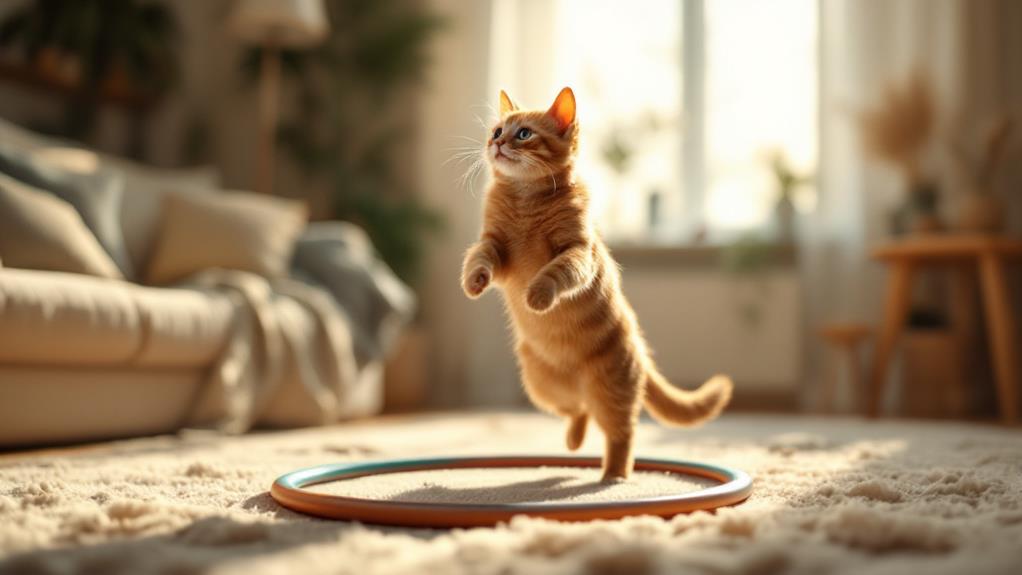
Understanding the benefits of cat training can improve your experience with your feline companion. When you train your cat, you're not just teaching them tricks—you're enhancing their intelligence and trainability. This mental stimulation reduces boredom and promotes problem-solving skills, especially for active breeds like Bengals and Abyssinians. Plus, training can strengthen the bond between you and your cat, leading to better communication and social interaction, which is particularly rewarding with social breeds like Siamese and Maine Coons.
Here are some key benefits:
- Behavioral Management: Positive reinforcement during cat training can effectively manage behaviors, helping prevent issues like play biting and litter box avoidance.
- Physical Exercise: Engaging in training activities encourages physical exercise, allowing your cat to channel their energy productively. This is crucial for high-energy breeds like the Japanese Bobtail and Somali.
- Enrichment and Fulfillment: Training sessions can align with your cat's natural instincts, making activities like learning tricks, fetching, or leash walking more enjoyable and fulfilling.
Ultimately, cat training offers enriching experiences that benefit both you and your feline friend, creating a happier and healthier life for your pet.
Challenges in Training Cats
Training cats presents a unique set of challenges that can test your patience and creativity. Unlike dogs, cats can be trained, but they often display individual variability in trainability. This means that even within the same breed, some cats may quickly pick up on tricks and commands, while others might not respond as well. Understanding that each cat's learning curve is different can help manage your expectations and reduce frustration.
Cats also have a notoriously short attention span, so when you train your cat, it's crucial to keep sessions brief and engaging. They can lose interest quickly, so varying your methods and incorporating fun elements can help maintain their focus. Furthermore, their independent nature might make them resist commands, preferring instead to act on their own terms.
Environmental distractions pose another hurdle. Background noises or sudden movements can easily divert a cat's attention, disrupting the consistency needed for effective training. Consequently, choosing a quiet, controlled environment for training a cat can contribute to better outcomes. Remember, patience is key. Each cat learns at its own pace, and understanding this can make the process more enjoyable for both you and your feline friend.
Advanced Tricks to Teach
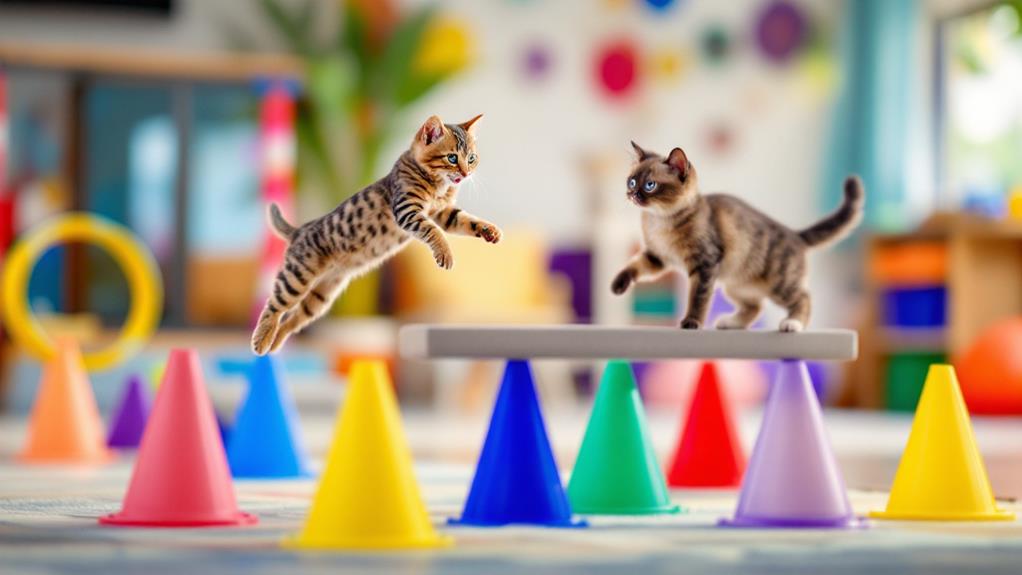
In the domain of advanced tricks, teaching your cat can be a rewarding experience that strengthens your bond and showcases your pet's intelligence. Your feline friend is capable of learning some impressive cat tricks with a bit of patience and consistent training. Here are three advanced tricks to teach your cat:
- Play Dead: Guide your cat to roll onto their back when prompted. Reward them for completing this action. This trick requires patience, but with regular practice, your cat will get the hang of it.
- Walk on a Leash: Start by using a secure harness and begin leash training indoors. This helps your cat get used to the harness before venturing outside. Once comfortable, you can enjoy leisurely walks together, enhancing your bond.
- Ring a Bell: Attach a bell to your cat's collar and encourage them to make contact. Reward them when they do, gradually teaching them to ring it on command.
These advanced tricks not only entertain but also stimulate your cat mentally. Remember, training should be fun and rewarding for both you and your cat, so celebrate every small success along the way!
Tips for Successful Training
To guarantee a successful training experience, start by keeping sessions brief—ideally under five minutes—to maintain your cat's focus and interest. Short, engaging interactions increase the likelihood of teaching success. Use positive reinforcement, such as treats and praise, to encourage desired behaviors and strengthen the bond between you and your feline friend. This method not only makes learning enjoyable but also reinforces the connection you share.
Incorporate play into training sessions to improve engagement. Interactive activities make learning fun and can help your cat associate commands with enjoyable experiences. Remember, patience is key. Cats learn at their own pace, and it's essential to avoid frustration. If your cat struggles with a command, take a break and try again later. This approach prevents stress and maintains a positive training environment.
Tailor your training methods to your cat's individual preferences and personality traits. Understanding unique behaviors can greatly enhance training outcomes. Some cats may respond better to certain cues or rewards, so pay attention to what works best for your pet. By respecting their individuality, you'll create a more effective and enjoyable training process for both you and your cat.