
Modern Dog Training: Techniques for Today’s Dog Owners

In modern dog training, adopt techniques that focus on positive reinforcement to build trust with your furry companion. Use rewards like treats, praise, or toys to encourage desired behaviors, making learning more efficient and fun. Incorporate clicker training to mark behaviors immediately, which can speed up command responses and reduce anxiety. Try the Do-As-I-Do method where your dog learns through imitation, elevating engagement and motivation. Emphasize socialization early on and improve learning with enrichment activities to prevent boredom. Accept science-based methods for clarity and understanding without dominance-based approaches. Investigate these strategies for a harmonious bond with your dog.
Positive Reinforcement Benefits
Positive reinforcement is transforming dog training by focusing on encouraging desired behaviors with rewards like treats, praise, and toys. As you engage in these training techniques, you'll notice that dogs learn more efficiently and respond faster to commands. This method emphasizes rewarding desirable behaviors, which not only improves your dog's learning experience but also strengthens the trust between you and your furry friend. Unlike punishment-based methods, positive reinforcement reduces anxiety and fear, leading to a more enjoyable training process for both you and your dog.
Professional dog trainers often advocate for these humane training practices because they align with contemporary animal welfare standards and prioritize the dog's well-being. By focusing on positive methods, you're not just teaching commands; you're building confidence in your dog, which is essential for their overall development and happiness. The bond you create through positive reinforcement is a lasting one, cemented by mutual respect and understanding.
As you implement these techniques, keep in mind that consistency is key. The more you practice, the more your dog will associate good behavior with positive outcomes, ensuring a strong, trusting relationship that benefits both of you in the long run.
Clicker Training Overview
Clicker training revolutionizes the way you communicate with your dog by using a distinct sound to immediately mark desired behaviors. This method relies on operant conditioning principles, employing positive reinforcement to encourage your dog to repeat actions you want to see more often. As a dog owner, you'll appreciate how this technique improves communication clarity, allowing your pet to quickly grasp which behaviors are rewarded.
Research shows that dogs trained with clickers learn commands faster and retain them longer than those taught with traditional, punishment-based methods. The training process becomes a positive experience, reducing anxiety and fear, which in turn builds trust between you and your dog. Precision in marking behaviors with a clicker guarantees your dog understands exactly what action is being rewarded, resulting in quicker and more reliable responses.
Here's why clicker training is beneficial:
- Builds Trust: Strengthens the bond between you and your dog by creating a positive learning environment.
- Anxiety Reduction: Minimizes fear associated with training, making sessions enjoyable for both parties.
- Communication Clarity: Offers precise timing in marking desired behaviors, helping your dog learn efficiently.
Do-As-I-Do Method
The Do-As-I-Do Method taps into your dog's innate ability to learn through imitation, making training both efficient and engaging. Developed by Claudia Fugazza, this technique encourages your dog to observe and mimic your actions. By leveraging their natural inclination to mimic behaviors, you can guide them to learn complex tasks without relying heavily on verbal commands. This method not only speeds up the training process but also makes it more enjoyable for both you and your dog.
Research supports that dogs trained with the Do-As-I-Do Method grasp new behaviors faster than those trained traditionally. This improves the overall learning effectiveness and leads to higher retention rates of learned behaviors. Because this approach is based on positive reinforcement and mutual understanding, it strengthens the bond between you and your dog. The positive interactions encourage your dog to be more engaged and motivated, forming a deeper connection with you as their owner.
Relationship-Based Approach
While the Do-As-I-Do Method improves learning through imitation, the Relationship-Based Approach takes a different path by focusing on the emotional connection between you and your dog. This method emphasizes relationship-based training, where understanding and cooperation form the foundation of your interactions. By prioritizing your dog's emotional well-being, you create a stress-free environment that fosters trust and reduces anxiety during training sessions.
In relationship-based training, you adapt your techniques to fit your dog's unique motivations and responses. This approach uses positive reinforcement to encourage desired behaviors, leading to more effective learning outcomes. It's essential to pay attention to your dog's body language, as it offers valuable insights into their emotional state. By interpreting these cues, you improve communication and guarantee mutual understanding, which is key to successful training.
- Unique Motivations: Every dog is different, and knowing what drives them helps tailor training to their needs.
- Emotional Well-Being: Prioritizing your dog's feelings makes them more receptive and engaged.
- Trust and Respect: Building a strong bond improves cooperation and long-term behavior retention.
Socialization Importance

At the heart of raising a well-adjusted dog lies the importance of early socialization. Between 8 to 20 weeks, your puppy is in a critical period where exposure to varied stimuli can make a huge difference. Proper puppy socialization not only reduces breed-specific fears but also sets the stage for good behavior and adaptability. When you introduce your puppy to diverse people, sounds, and experiences, you're actively working to prevent issues like excessive barking and anxiety in adulthood.
Positive reinforcement during this period is key. Rewarding your puppy for calm and confident interactions encourages them to develop the social skills they need to navigate the world without fear. Consider enrolling in puppy socialization classes where your young dog can interact safely with others. These classes provide a structured environment for building confidence and learning appropriate play behaviors.
If you're feeling unsure about how to proceed, consulting a professional dog trainer can offer personalized guidance. They can help you craft a socialization plan tailored to your puppy's needs, ensuring a solid foundation for a well-behaved adult dog. Don't underestimate the power of early socialization—it's an investment in your dog's future.
Science-Based Techniques
Building on the foundation of early socialization, you'll find that science-based techniques offer effective tools for training your dog. Central to these methods is positive reinforcement, which encourages desired behaviors through rewards. This approach, rooted in operant conditioning, promotes faster learning and better retention compared to punishment-based methods. A 2020 study highlighted that dogs trained with rewards respond more quickly and show fewer stress indicators, like licking or pacing.
Clicker training is a popular science-based technique. It uses a distinct sound to mark desired behaviors, making communication clearer and helping your dog better understand training cues. By focusing on positive reinforcement, you not only foster a stronger bond with your dog but also improve their overall welfare.
The shift away from dominance theory underscores the importance of understanding canine behavior and emotional needs. Studies discredit punishment methods, highlighting how science-based techniques yield better training outcomes.
Consider these points when using science-based techniques:
- Positive reinforcement strengthens the bond and encourages learning.
- Clicker training provides clear communication and quick responses.
- Understanding canine behavior is key to effective training and well-being.
Enrichment in Training
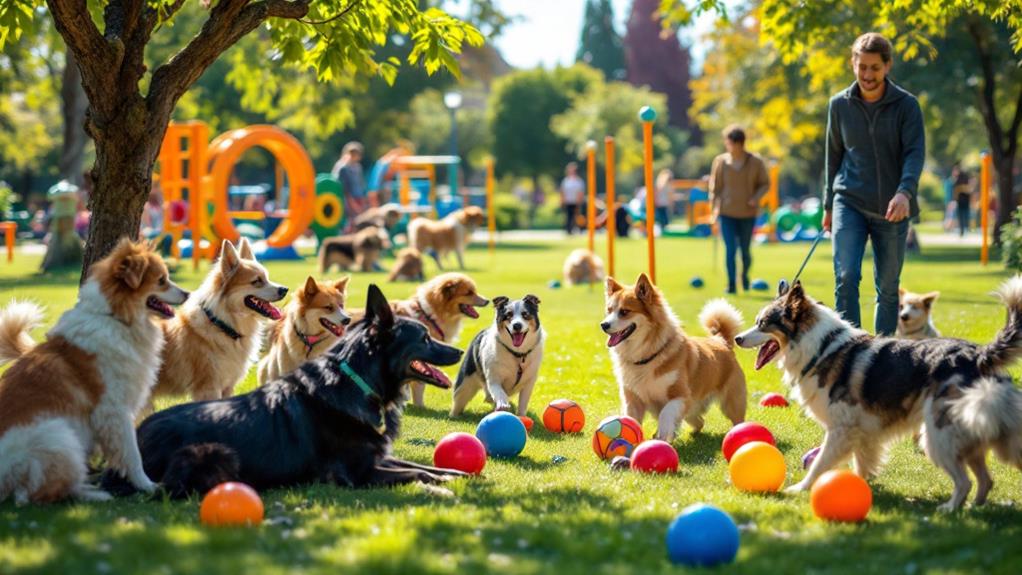
Anyone with a dog knows that training goes beyond simple commands; it's about improving your pet's life. Enrichment through mental challenges can transform how dogs learn and behave. By integrating food puzzles and interactive toys into daily routines, you guarantee your dog stays engaged during meals, which promotes positive reinforcement and reduces the chances of destructive behaviors. Dogs channel their energy into these productive tasks, leading to a happier, well-behaved companion.
Enrichment isn't just about toys. Activities like scent work and agility training provide excellent mental stimulation and foster a stronger bond between you and your dog. By participating in these activities together, you not only aid your dog's learning process but also enrich your relationship through shared experiences. This holistic approach to training guarantees that your dog is not only physically active but also mentally fulfilled.
As training communities evolve, there's a growing acceptance of combining mental and physical challenges to improve behavior in dogs. Research suggests that well-enriched dogs have lower stress levels and improved emotional well-being. This leads to happier dogs that are adaptable in different situations, making enrichment a crucial part of modern dog training.
Misconceptions in Dog Behavior
Understanding dog behavior is just as essential as providing enrichment activities. Many owners fall prey to misconceptions like assuming all dogs respond the same to training methods. Each dog possesses its unique personality and learning style, necessitating tailored approaches. Positive reinforcement should be prioritized over harsh training, as it not only improves learning speed but also guarantees better long-term retention of desired behaviors. Contrary to outdated beliefs, dominance theory, which advocates for control through force, is debunked. Recognizing your dog's emotional well-being is key to successful training.
Misunderstandings persist, such as delaying socialization until full vaccination. Early socialization is crucial to prevent fear and anxiety later in life. Stress indicators often surface with aversive techniques, underscoring the significance of compassionate methods. Avoid these common pitfalls:
- Individualized Approach: Every dog has a unique learning style; adapt training methods to suit their needs.
- Positive Reinforcement: Focus on rewarding good behavior instead of relying on punishment.
- Early Socialization: Start socializing puppies early to foster confidence and reduce future anxiety.
Evolution of Training Methods

Shifting from dominance-based approaches to positive reinforcement marks a significant advancement in dog training methods. In the early 20th century, training relied heavily on wolf pack hierarchy theories, which emphasized dominance. However, Modern Dog Training Methods have progressed to focus on building trust and understanding between you and your dog. This shift began with B.F. Skinner's introduction of operant conditioning in the 1930s. His principles laid the groundwork for rewarding desired behaviors rather than punishing unwanted ones, offering a more humane training technique.
Clicker training, which gained popularity in the 1990s thanks to trainers like Karen Pryor, transformed communication with your dog. By using a distinct sound to mark desired behaviors, clicker training improves positive outcomes and strengthens your bond. Research supports that reward-based training leads to faster learning and better retention. Your dog will respond more quickly to commands when trained with positive reinforcement compared to punishment.
The decline in aversive methods is backed by evidence linking punishment to increased stress and behavioral issues in dogs. As a result, humane, science-based training techniques have gained broader acceptance, ensuring a happier, healthier relationship with your furry friend.