Miniature Schnauzer: The Obedient and Friendly Companion Dog
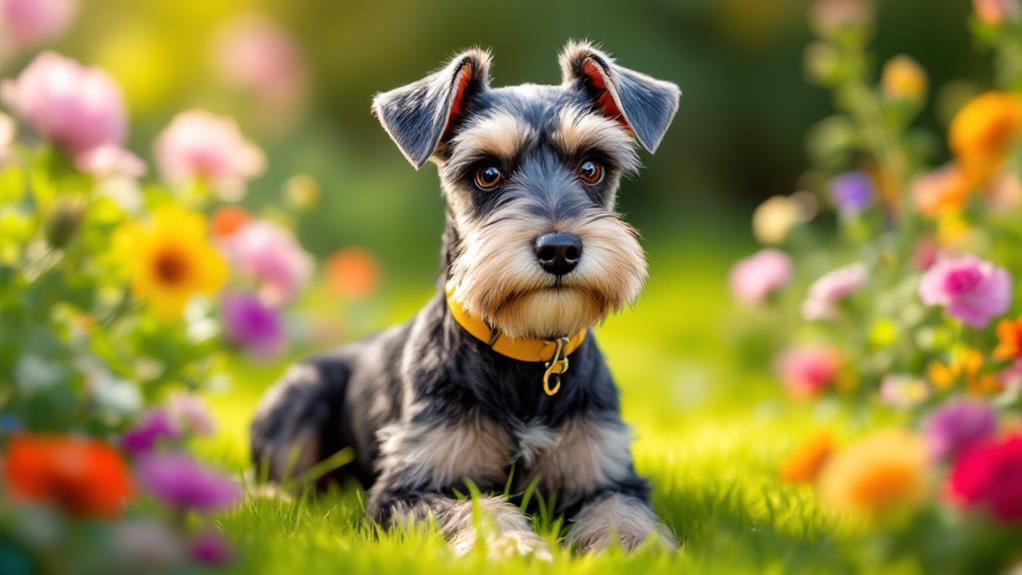
You'll love having a Miniature Schnauzer as part of the family. They're loyal, playful, and highly trainable, making them ideal companions. With a wirehaired coat that requires regular grooming, they're great for those with allergies. Their high energy means they thrive on regular exercise and mental stimulation. These intelligent dogs excel in obedience and agility activities, responding well to consistent training with positive reinforcement. Socialization helps them handle new experiences confidently, balancing their protective instincts. With proper care, they can live up to 15 years. Investigate how their lively personality and needs make them a rewarding family addition.
Breed Characteristics
Why choose a Miniature Schnauzer as your next pet? This delightful breed packs a lot of charm into its small frame. Standing between 12 to 14 inches tall and weighing 11 to 20 pounds, Miniature Schnauzers are perfect for those looking for a compact yet spirited companion. One of the standout breed characteristics is their low-shedding, wiry double coat, making them an excellent choice for allergy sufferers.
Their playful nature is another appealing trait. Miniature Schnauzers are known for their outgoing, friendly disposition, making them suitable for families and individuals alike. They love to engage in games and activities, keeping everyone entertained with their energetic antics. As an intelligent and trainable breed, Miniature Schnauzers excel in obedience and dog sports like agility. This makes them not only fun but also rewarding pets to train.
As family pets, they're incredibly loyal and form strong bonds with their human companions. Their willingness to please and protective instincts guarantee they fit seamlessly into your household. With their combination of intelligence, energy, and affection, Miniature Schnauzers offer a perfect balance for anyone seeking a devoted, low-shedding companion.
Health and Lifespan
In relation to the health and lifespan of Miniature Schnauzers, you'll find they often enjoy a long and relatively healthy life, typically living between 12 to 15 years. Despite being a robust breed, they can face common health issues such as hip dysplasia, cataracts, glaucoma, diabetes, and heart disease. To guarantee your Schnauzer stays healthy, regular veterinary check-ups are fundamental. These visits help monitor their health and catch any hereditary conditions early, improving treatment outcomes.
Proper diet and exercise are also significant in maintaining your Miniature Schnauzer's well-being. Aim to feed them ¾ to 1 cup of high-quality dry food daily to prevent obesity, which can lead to further complications. Moreover, grooming is crucial, as these dogs are prone to skin problems known as "schnauzer bumps." Regular grooming will help maintain their coat's health and overall wellness.
Consider the following to improve your Miniature Schnauzer's life:
- Cherish the years with your loyal companion
- Relish the joy of grooming sessions together
- Celebrate their health milestones
- Feel the peace of regular check-ups
- Embrace the bond through proper care
Personality and Temperament
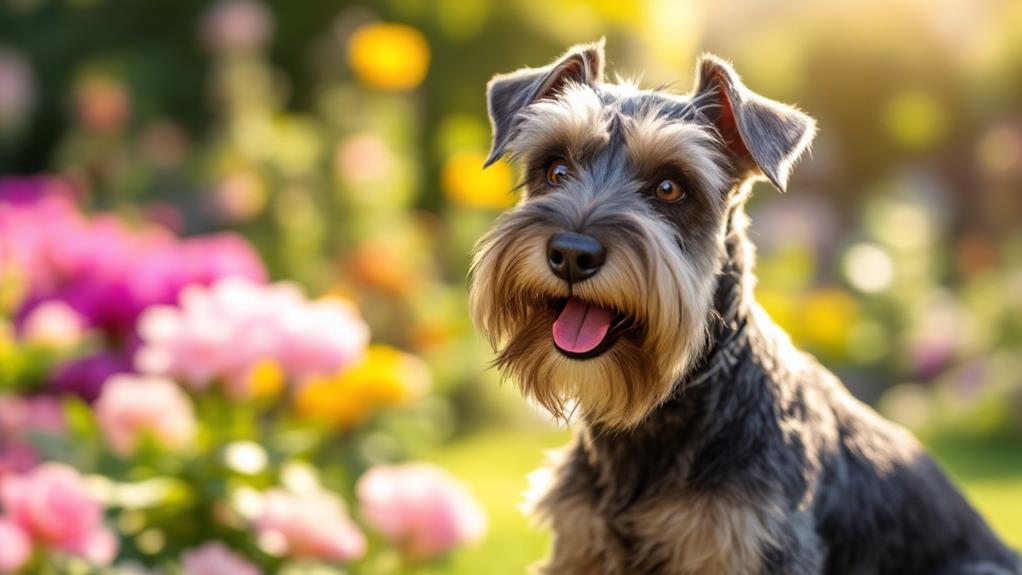
Miniature Schnauzers charm with their outgoing and friendly disposition, making them excellent companions for families and children. Their outgoing personality shines through in their enthusiasm to engage in play and activities, guaranteeing they quickly become a beloved member of any household. You'll appreciate their intelligent nature, which makes them highly trainable and keen to please. This intelligence means they thrive in obedience training and dog sports, providing a rewarding experience for both you and your canine friend.
Despite their size, Miniature Schnauzers possess a protective nature, often serving as alert watchdogs. You'll find their vocal tendencies useful for alerting you to potential intruders, enhancing your home's security. However, without proper early socialization, their protectiveness could manifest as timidity or excessive barking, especially around strangers. Early socialization is essential to balance their behavior and guarantee they grow into well-adjusted dogs.
Miniature Schnauzers are high-energy dogs, requiring regular exercise and mental stimulation to stay happy and healthy. If not given enough outlets for their energy, they might develop undesirable behaviors. By understanding their personality and needs, you can foster a strong, obedient bond with your Miniature Schnauzer.
Training Techniques
Training a Miniature Schnauzer can be a rewarding experience, thanks to their remarkable intelligence and enthusiasm to learn. With consistent training and positive reinforcement, you'll find that these dogs quickly grasp basic commands and tricks. Short, engaging sessions are key to holding their attention and preventing selective hearing. Participation in obedience training and dog sports, like agility, provides the mental stimulation they crave and channels their high energy levels appropriately.
Early socialization is essential in shaping their behavior. It helps establish discipline and reduces potential issues like separation anxiety or aggression towards unfamiliar animals. Incorporating recall training early on will guarantee they remain obedient throughout their life. Consistent training techniques also help manage their natural tendencies to bark and dig, resulting in a well-rounded companion.
To make the most of training your Miniature Schnauzer, focus on:
- Patience: Every dog learns at their own pace, so stay calm and encouraging.
- Diversity: Mix up activities to keep them engaged and stimulated.
- Positive reinforcement: Reward their successes with treats and praise.
- Consistency: Stick to the same commands and routines.
- Socialization: Introduce them to different environments and situations early.
You'll foster a loving, obedient friend for life.
Grooming Essentials
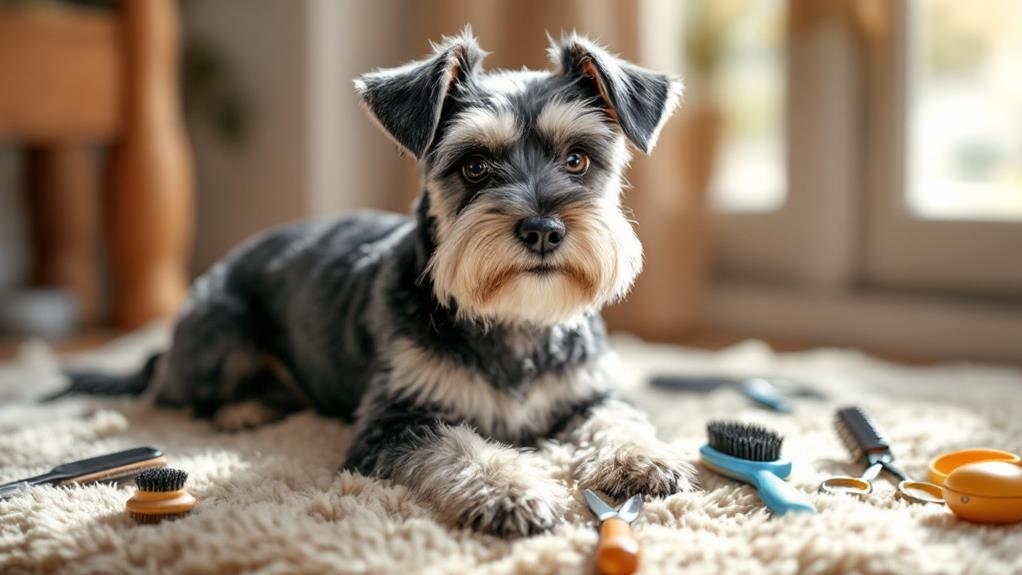
As you enjoy the rewards of training your Miniature Schnauzer, it's important to also focus on their grooming needs to guarantee they're healthy and looking their best. Their wiry double coat needs attention at least twice a week to prevent matting and maintain general coat health. Regular grooming sessions, including brushing and trimming, every 4 to 6 weeks are significant. This routine helps keep their distinctive appearance intact and manages their low shedding.
Don't overlook the importance of professional grooming, especially if you're aiming for the perfect coat texture and appearance typical of show dogs. Professional groomers can expertly perform plucking or stripping, which improves the coat's texture more effectively than clipping.
Daily maintenance of your Schnauzer's beard and legs is important to avoid tangles and preserve their unique look. Furthermore, maintaining ear cleanliness and regularly trimming their nails are key parts of the grooming routine. These tasks help prevent potential health issues, ensuring your Schnauzer remains in top condition.
Nutrition Tips
While caring for your Miniature Schnauzer's nutritional needs, you'll want to guarantee they receive the right balance of high-quality dry food tailored to their size and energy levels. Typically, they require about ¾ to 1 cup of dry food daily. Due to their predisposition to urinary stones, it's critical to provide plenty of water at all times. This helps prevent urinary conditions that could impact their health.
In some cases, special diets may be necessary, especially if your Miniature Schnauzer has food allergies. Consulting with a veterinarian for personalized dietary recommendations guarantees your pet's needs are met. Furthermore, regular dental check-ups are essential since Miniature Schnauzers are prone to periodontal disease. Home dental care, including brushing and dental treats, supports their oral health.
Consider these significant aspects of their care:
- 🐾 Making sure they always have access to fresh, clean water.
- 🐾 Choosing a high-quality dry food that meets their specific needs.
- 🐾 Consulting a vet for special diets if food allergies arise.
- 🐾 Maintaining regular dental check-ups to prevent oral issues.
- 🐾 Establishing feeding routines to build trust and avoid food guarding.
Socialization Practices
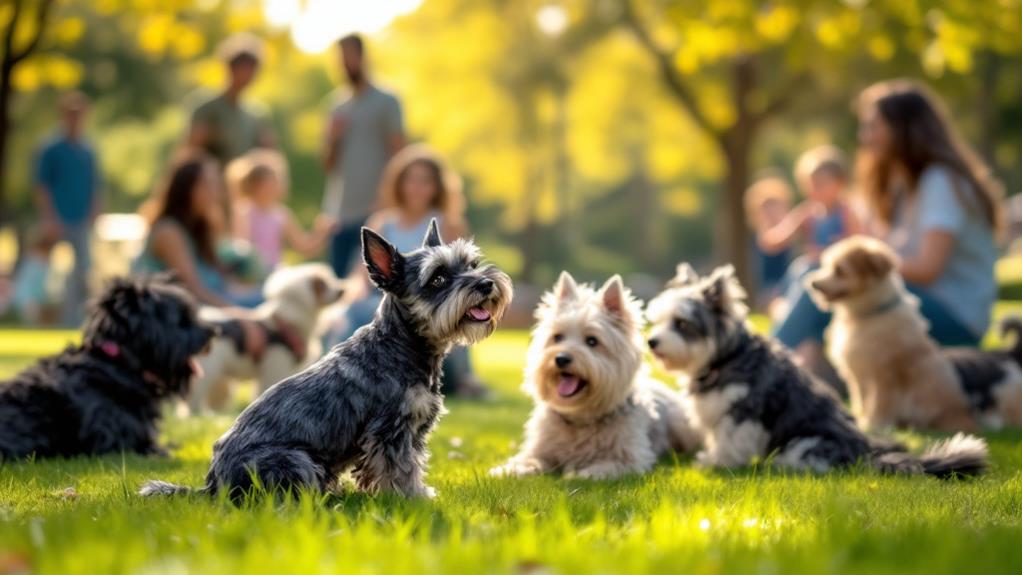
Guaranteeing your Miniature Schnauzer is well-nourished is just one aspect of their all-encompassing well-being; fostering their social skills is likewise important. Socialization at an early stage is vital for developing well-rounded behavior in your furry friend. By exposing your Miniature Schnauzer to diverse environments, sounds, and experiences before they reach 16 weeks old, you're helping them grow into a confident and friendly companion. This early exposure considerably reduces the chances of anxiety and aggression later in life.
Regular playdates with other dogs and interactions with children of different developmental stages can improve their sociable nature. These experiences help decrease any independent tendencies they may have. Enrolling your Miniature Schnauzer in obedience classes is another excellent way to assist their socialization. Not only do these classes enhance training, but they also provide important opportunities for your dog to interact with other dogs and people in a controlled environment.
Throughout these socialization efforts, consistent positive reinforcement is key. Rewarding your Miniature Schnauzer for displaying desired behaviors builds their confidence in new situations. By focusing on these practices, you'll guarantee your Miniature Schnauzer becomes a well-adjusted and delightful companion.
Common Health Issues
Miniature Schnauzers, known for their lively personalities and loyal companionship, are generally healthy dogs. However, they can be prone to certain health issues. For instance, they have a predisposition to diabetes, which means you'll need to manage their diet carefully to prevent obesity and related complications. Regular grooming is fundamental to prevent skin problems like schnauzer bumps. Routine health screenings can help detect conditions early, such as hip dysplasia and eye problems like cataracts and glaucoma. It's also significant to keep an eye out for certain cancers common in this breed.
To keep your Miniature Schnauzer healthy and thriving, consider the following:
- Dietary Management: Proper nutrition is imperative to managing diabetes and maintaining a healthy weight.
- Regular Grooming: Helps manage skin problems and keeps your dog comfortable.
- Routine Health Screenings: Critical for early detection of hereditary and congenital conditions.
- Exercise and Activity: Regular physical activity prevents obesity and promotes general well-being.
- Veterinary Check-ups: Regular visits help monitor their health and catch potential issues early.