Miniature Poodle: The Aristocratic and Intelligent Miniature Dog
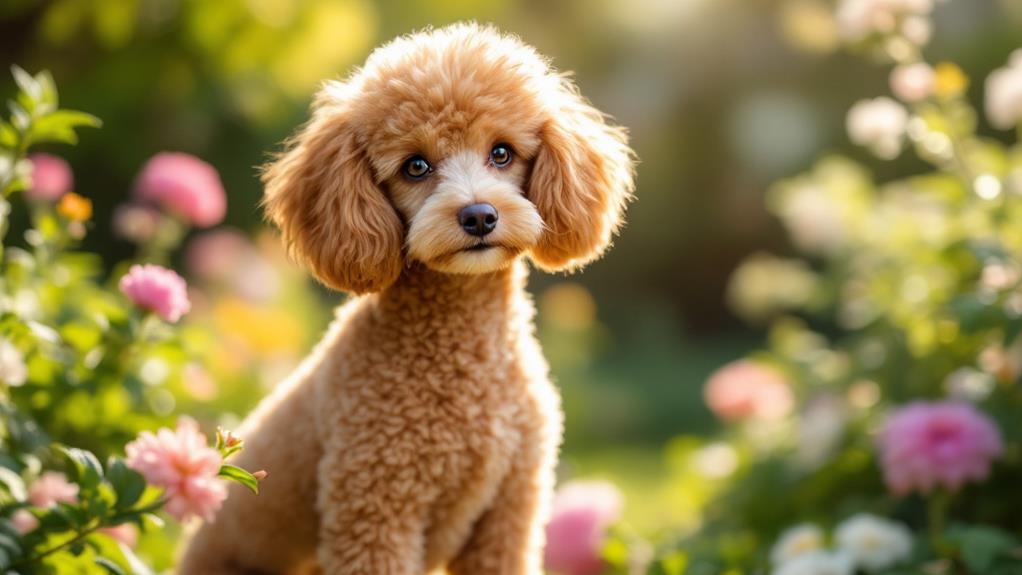
A Miniature Poodle is the perfect mix of sophistication and smarts. Standing 10 to 15 inches tall and weighing 10 to 15 pounds, these dogs sport a hypoallergenic coat that needs regular grooming. You'll find them loving and sociable, forming strong bonds with humans and other pets. Their intelligence shines in agility and obedience, requiring both mental and physical exercise—up to two hours daily. With origins in Germany, they became aristocratic favorites with their adaptable, charming nature. Proper grooming, diet, and early training guarantee their health and happiness. Exploring their world reveals more of their fascinating traits and needs.
Breed Characteristics
Miniature Poodles are a delightful blend of elegance and athleticism. Standing between 10 to 15 inches tall and weighing 10 to 15 pounds, they're the perfect middle-sized breed in the Poodle family. Their distinctive curly coat isn't just a visual treat; it's hypoallergenic, making them a great choice for allergy sufferers. Available in a variety of colors like black, white, and apricot, their coats require regular grooming to maintain that pristine appearance.
These intelligent dogs are highly trainable, excelling in different canine sports. Regardless of your interest in agility, obedience, or even just teaching fun tricks, a Miniature Poodle is enthusiastic to learn and impress. They thrive on human companionship, making them ideal companions for active families. Their friendly and sociable nature means they integrate well into family life, but early socialization is vital to guarantee they develop positive behavior.
When it comes to general health, Miniature Poodles are robust, with a life expectancy of 10 to 18 years. This longevity makes them a great long-term family pet. With their lively spirit and resilience, they promise not only companionship but also a lifetime of joyful memories.
Historical Background
The origins of the Miniature Poodle trace back over 400 years to Germany, where it was initially bred as a water retriever for hunting waterfowl. This breed originated from the Standard Poodle, with the Miniature version emerging to meet the needs of those seeking easier care and increased companionship. The breed's name, derived from the German word "Pudel," meaning "splash," reflects its purpose as a water dog.
As the Miniature Poodle evolved, its intelligence and trainability caught the eye of the aristocracy during the 18th and 19th centuries. Nobility favored these dogs not only for their smart and charming demeanor but also for their ability to serve as esteemed companions. Their rise in popularity among the upper class can be attributed to three key factors:
- Intelligence: Miniature Poodles were easily trained, making them ideal pets for the nobility.
- Companionship: Their affectionate nature provided comfort and entertainment to their owners.
- Adaptability: They thrived in diverse living environments, from lavish estates to more modest homes.
After World War II, their affectionate nature and adaptability further cemented their status as beloved family pets in the United States.
Size and Growth
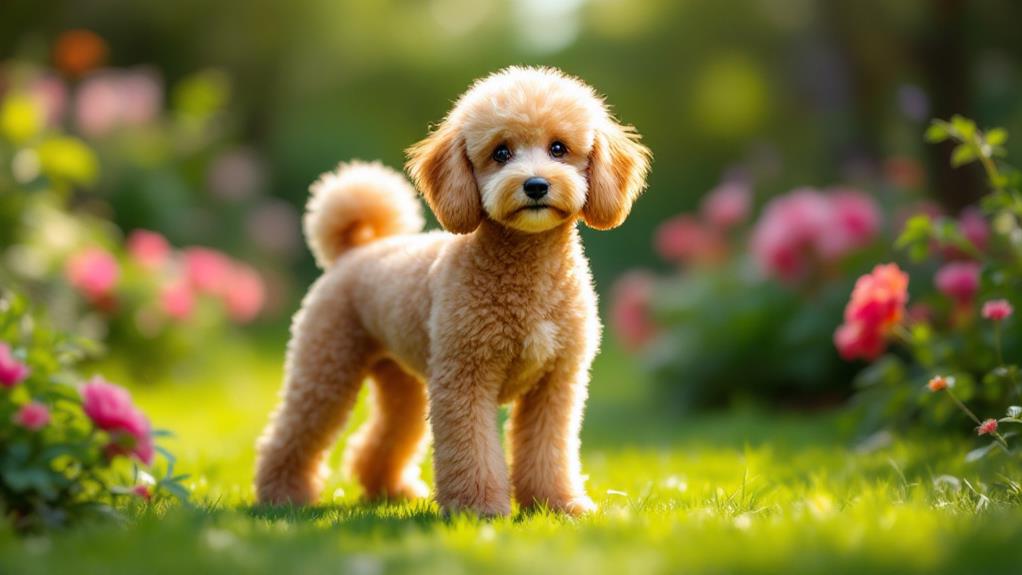
When considering the size of a Miniature Poodle, you'll find they typically weigh between 10 to 15 pounds and stand 10 to 15 inches tall at the shoulder. Their growth process is both fascinating and fundamental to understand for any prospective owner. Miniature poodles experience their most significant growth spurt between 5 to 6 months of development. By the time they reach one year, their growth is mostly complete, although some minor weight gain might continue until about 14 months.
The key to healthy development lies in their diet. You should feed your miniature poodle approximately one cup of high-quality dog food daily. This helps maintain their ideal weight and supports their comprehensive growth. Brands like Royal Canin Poodle Adult and Wellness Small Breed are recommended because they cater specifically to their dietary needs.
These dogs are generally easy-going with food and aren't picky eaters, which makes it simpler to manage their nutrition. Monitoring their diet and exercise is vital to prevent unnecessary weight gain as they shift from puppyhood to adulthood. With proper care, your miniature poodle will thrive, growing into its full, aristocratic stature.
Personality Traits
Why are Miniature Poodles such beloved companions? These charming dogs are adored for their loving and caring nature, thriving on human companionship, and forming strong bonds with their families. Their intelligent minds and high trainability make them stand out, often excelling in obedience and canine sports due to their willingness to please. Miniature Poodles are not just smart; they're also incredibly friendly and sociable, making them excellent family pets that get along well with children and other animals.
To guarantee a happy and healthy Miniature Poodle, consider three key elements:
- Exercise: Regular physical activity is vital for these energetic dogs. It keeps them fit and prevents boredom.
- Mental Stimulation: Their intelligent nature requires mental challenges. Engaging toys and puzzle games work wonders.
- Socialization: With their sociable temperament, frequent social interactions guarantee they remain well-adjusted and friendly.
Despite their small size, Miniature Poodles are confident and fearless, displaying a natural curiosity and spirited personality. They love exploring new environments and thrive when kept engaged. Regular exercise and mental stimulation are essential to prevent issues like separation anxiety. Accept their playful disposition, and you'll have a delightful, loyal companion.
Training Tips
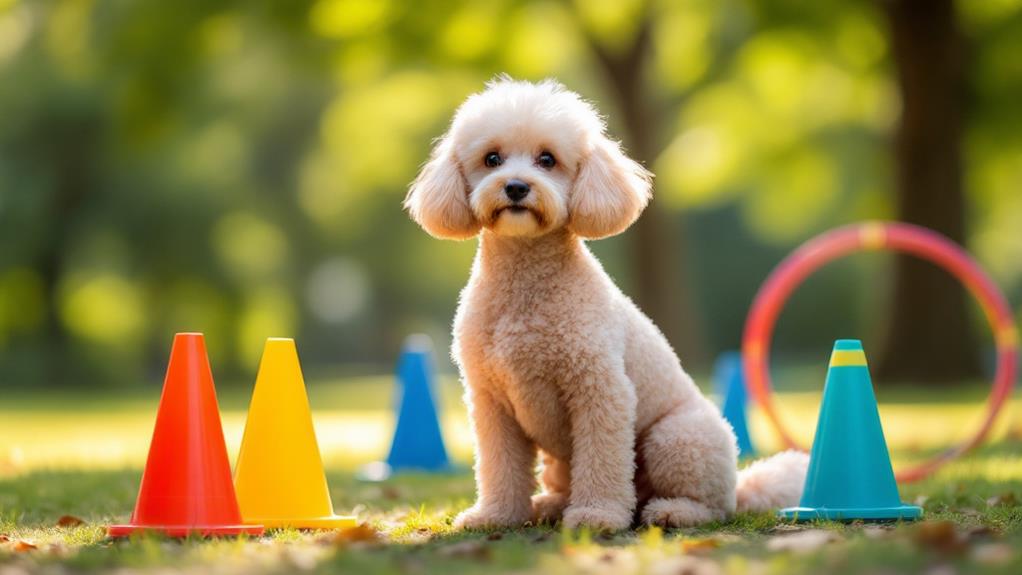
With their remarkable intelligence and enthusiasm to please, Miniature Poodles excel in training when you use positive reinforcement techniques. These highly intelligent dogs quickly grasp commands, making early obedience training essential for their development. Start training your Miniature Poodle as soon as possible, focusing on consistency and using rewards like treats or praise to reinforce good behavior.
Socialization is also key to raising a well-mannered Miniature Poodle. Expose them to different environments, people, and other pets early on. This helps them develop a well-rounded temperament and reduces anxiety or aggression towards unfamiliar situations.
Incorporate mental stimulation activities into your training regimen to keep your Miniature Poodle engaged and prevent boredom. Puzzle toys and interactive games are excellent tools to challenge their minds and can be seamlessly integrated into your consistent training routines.
Participating in canine sports and competitions offers supplementary training opportunities that cater to their physical and mental needs. These activities not only improve their skills but also strengthen your bond. Remember, a consistent approach with positive reinforcement methods fosters a happy, obedient Miniature Poodle, making training a rewarding experience for both you and your furry friend.
Exercise Requirements
A harmonious balance of physical activity and mental stimulation is vital for a Miniature Poodle's well-being. Miniature Poodles require 1 to 2 hours of daily exercise to maintain their physical and mental health. This isn't just about keeping them fit; it's about guaranteeing they lead a balanced life. Regular exercise helps mitigate excessive barking and promotes a calm demeanor. Without it, you might notice signs of boredom and even hyperactivity. Here's how you can effectively incorporate exercise into their routine:
- Brisk Walks: Short, invigorating walks provide excellent physical activity and a chance for them to investigate their surroundings.
- Training Sessions: Engaging their sharp minds with training exercises can improve their intelligence and obedience, providing fundamental mental stimulation.
- Fetch Games: These are perfect for burning off energy and encourage interaction between you and your Poodle.
Tailor daily exercise routines to your Miniature Poodle's maturity, health, and energy levels for peak well-being. Incorporate interactive toys and puzzles to further enrich their environment, preventing boredom. Remember, each Poodle is unique, so adjust activities as needed to guarantee they're satisfied and thriving.
Grooming Essentials
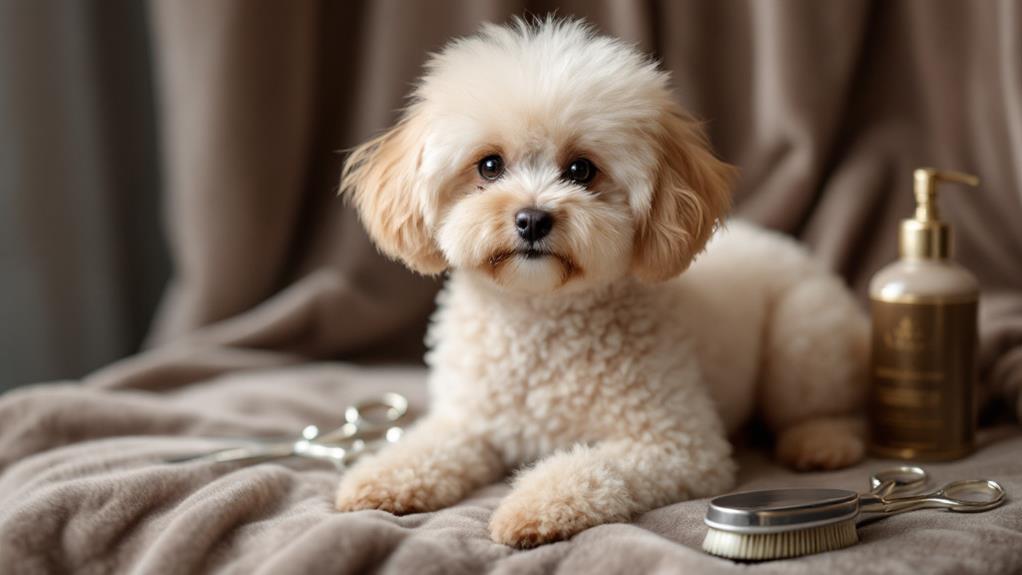
As you guarantee your Miniature Poodle stays active and engaged, grooming becomes another vital aspect of their care routine. Miniature Poodles require regular grooming every 6 to 10 weeks to maintain their distinctive curly coat and prevent matting. This consistent care helps keep their fur manageable and free from tangles. To support this, daily brushing is fundamental. It reduces shedding and tangling, assuring your poodle's coat condition stays ideal and healthy.
When it comes to bathing, adjust the frequency based on your dog's activity level and coat condition. Using hypoallergenic shampoos is recommended to prevent skin irritations, keeping their skin healthy and irritation-free. Furthermore, ear cleaning is essential for Miniature Poodles, as their floppy ears and dense fur make them prone to ear infections. Regular attention to their ears can prevent these issues from arising.
Don't overlook nail trimming either. Regularly trimming your poodle's nails avoids discomfort and potential mobility problems, contributing greatly to their general well-being. By establishing a consistent grooming routine, you guarantee your Miniature Poodle remains not only beautiful but also healthy and comfortable in their daily life.
Common Health Concerns
Miniature Poodles, known for their intelligence and charm, face several health concerns that owners should be aware of. Understanding these common health issues can lead to better care and a longer, happier life for your pet. To begin with, Miniature Poodles are prone to progressive retinal atrophy (PRA), a genetic condition causing gradual vision loss. Regular eye examinations are vital to detect PRA early and manage it effectively.
Next, luxating patella is a frequent concern where the knee cap dislocates. If your Poodle experiences this issue regularly, surgical intervention might be necessary. Keeping an eye on their mobility and consulting your vet promptly can make a significant difference.
Finally, dental problems are prevalent in Miniature Poodles. Regular dental care, including brushing and check-ups, helps prevent periodontal disease and other oral health issues.
Along with these specific concerns, Miniature Poodles can suffer from Addison's disease, which causes symptoms like poor appetite and lethargy. It requires immediate veterinary attention to manage effectively. Regular veterinary check-ups are imperative for early detection of these health issues, ensuring your Miniature Poodle remains healthy and lively throughout their life.
Pet Insurance Options
Maneuvering the world of pet insurance can feel overwhelming, but it offers invaluable peace of mind for Miniature Poodle owners. With tailored plans like those from Healthy Paws, you can cover up to 90% of veterinary costs, protecting yourself from unexpected health conditions. Miniature Poodles, known for their intelligence and aristocratic charm, deserve the best care, and choosing the right pet insurance is a vital step.
When considering coverage options, it's necessary to assess factors like lifespan, deductible, and reimbursement levels. Each of these elements can greatly impact the cost and benefits of a policy. Be sure to carefully review policy details to find the best fit for your Poodle's needs. Keep in mind that common exclusions often include pre-existing conditions and certain hereditary diseases. Understanding these limitations will help you make a more informed decision.
Regular vet check-ups are fundamental for early detection of health issues, and pet insurance can alleviate the financial burden, ensuring timely treatment. Healthy Paws offers a straightforward claims process, backed by reputable companies, ensuring reliable support. By choosing the right insurance, you'll provide your Miniature Poodle with the care they deserve while safeguarding your finances.