
Litter Box Maintenance Tips: Keep Your Cat’s Space Clean and Odor-Free
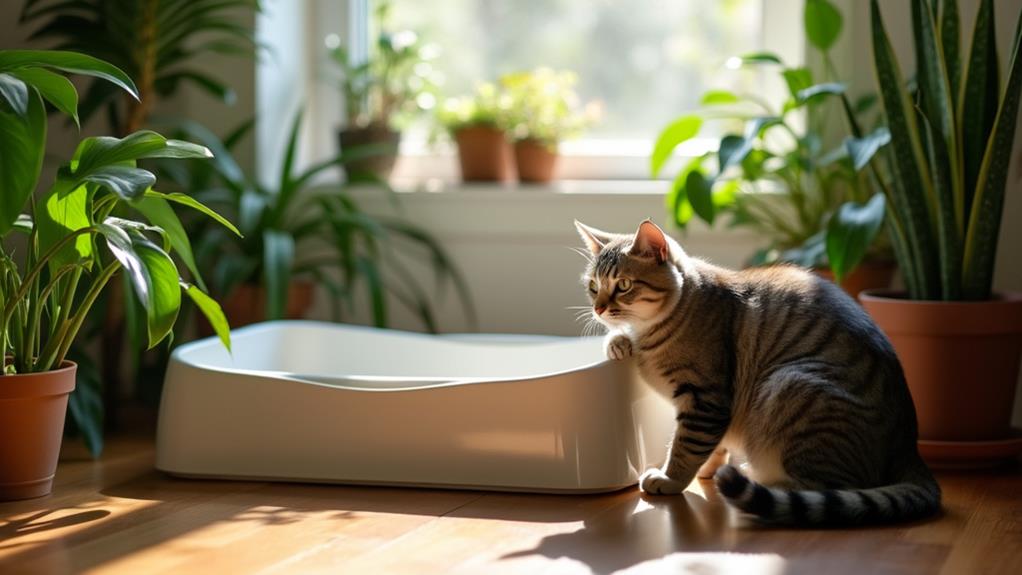
To keep your cat's litter box clean and odor-free, start by following the C+1 rule—one box per cat plus an extra. Use fine-textured, unscented clumping litter, and guarantee the box is the right size for your cat's comfort. Scoop waste at least twice daily and replace removed litter promptly. A weekly deep clean with hot water and unscented soap is crucial. Sprinkle baking soda to neutralize odors, and place boxes in quiet, ventilated areas. Watch your cat's behavior for any signs of discomfort or health issues. Uncover more tips and solutions to create a pleasant environment for your cat.
Key Takeaways
- Follow the C+1 rule for litter box quantity to prevent accidents and ensure cat health.
- Scoop litter at least twice daily to minimize odor and maintain cleanliness.
- Position litter boxes in quiet, low-traffic areas with proper ventilation.
- Use fine-textured, unscented clumping litter for easy waste removal and cat preference.
- Perform deep cleaning weekly with hot water and unscented dish soap.
Determine the Right Number
Determining the right number of litter boxes is crucial for maintaining your cats' happiness and hygiene. Following the C+1 rule—having one litter box per cat plus one extra—ensures each cat always has access to a clean litter box. For example, in a two-cat household, you'll want to provide three cats litter boxes. This prevents accidents outside the litter box and supports good cat health by reducing stress and territorial disputes.
If your home has multiple levels, place a litter box on each floor. This setup accommodates your cats' needs and encourages consistent use, no matter where they are in the house. Cats appreciate having options, and this arrangement helps them feel more secure and less stressed, contributing to their overall wellness.
Select the Best Cat Litter
Selecting the right cat litter is essential for ensuring your feline friend's comfort and maintaining a clean home environment. Cats typically prefer fine-textured, unscented clumping litter for its ease of use and effective control of odors. A good clumping litter, like Arm and Hammer Clump and Seal or World's Best Cat Litter, simplifies cleaning by making waste removal a breeze. This helps you keep the litter box cleaner, reducing the chance of unwanted smells.
It's significant to take into account your cat's preferences, as they can be picky about texture and scent. To find the best fit, try setting up multiple boxes with different types of litter and observe your cat's choices. This experimentation can reveal if they have a preference or if they're rejecting a specific litter due to texture or scent. Furthermore, selecting non-toxic and fragrance-free litters is vital to prevent health issues, particularly for sensitive cats or those with respiratory concerns.
Remember to regularly replace litter every 2-3 weeks or when you notice signs of odor or discoloration. This keeps the environment hygienic, ensuring your cat stays happy and healthy.
Choose an Ideal Box Size
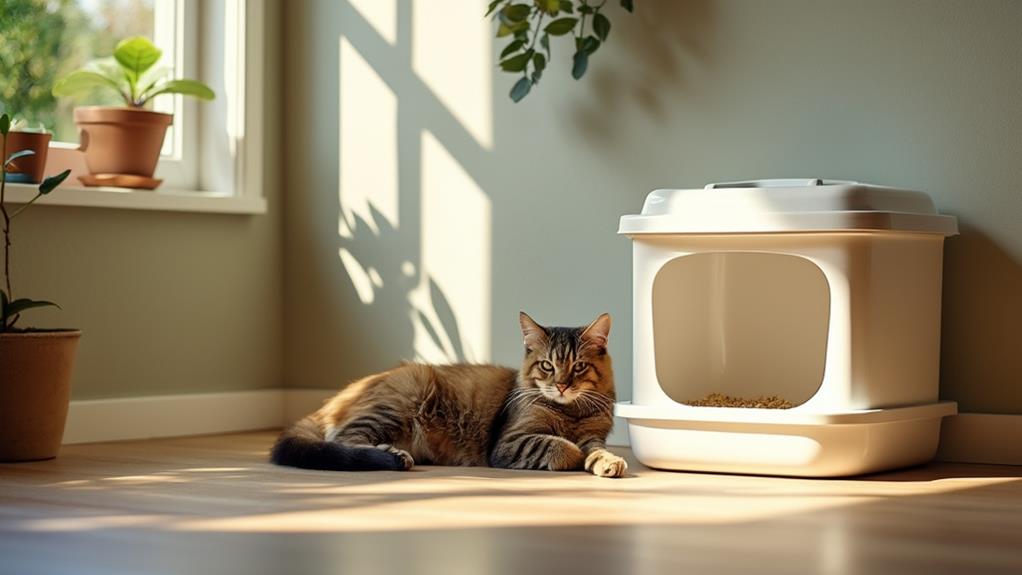
Once you've settled on the perfect cat litter, it's vital to take into account the size of the litter box to guarantee your cat's comfort. The right litter box size is fundamental for keeping a clean litter box and making sure your cat's health. A box that's too small can be uncomfortable for your cat, much like a human trying to use a toddler's toilet. Ideally, the litter box should be as long as your cat's body, including its tail, and the width should match the cat's length. This gives them ample space to move around and bury waste easily.
If your cat is a large breed or tends to dig deeply, opt for a deeper box with a litter depth of 3-4 inches. Regularly evaluate the box size and adjust it as your cat grows or its behaviors change. This helps maintain a clean litter box daily and guarantees it's comfortable for your cat.
Consider these points when choosing a box:
- Box length matches cat's body, including tail
- Width equals cat's length for easy movement
- Deep box for larger or deep-scratching cats
- Litter depth of 3-4 inches
- Adjust size as cat grows or behavior changes
Establish a Scooping Routine
Maintaining a clean litter box is vital for your cat's comfort and health, and establishing a scooping routine guarantees this. Start by scooping the litter at least twice a day. This prevents odor buildup and keeps your cat's environment clean and inviting. It's key for good litter box habits because cats are less likely to use dirty litter boxes. Use a scoop with small, closely set holes to efficiently remove waste while minimizing the amount of clean litter you discard. This helps you maintain the litter quality and reduce waste.
After scooping, immediately replace removed litter with fresh litter. This not only controls odors but also encourages your cat to consistently use the box. It's significant to regularly monitor the litter for any signs of discoloration or persistent odors. Such signs suggest it might be time for a complete litter change. To make daily maintenance easier, consider placing old newspapers at the bottom of the litter box. They absorb moisture and simplify the cleaning process.
Regular Deep Cleaning
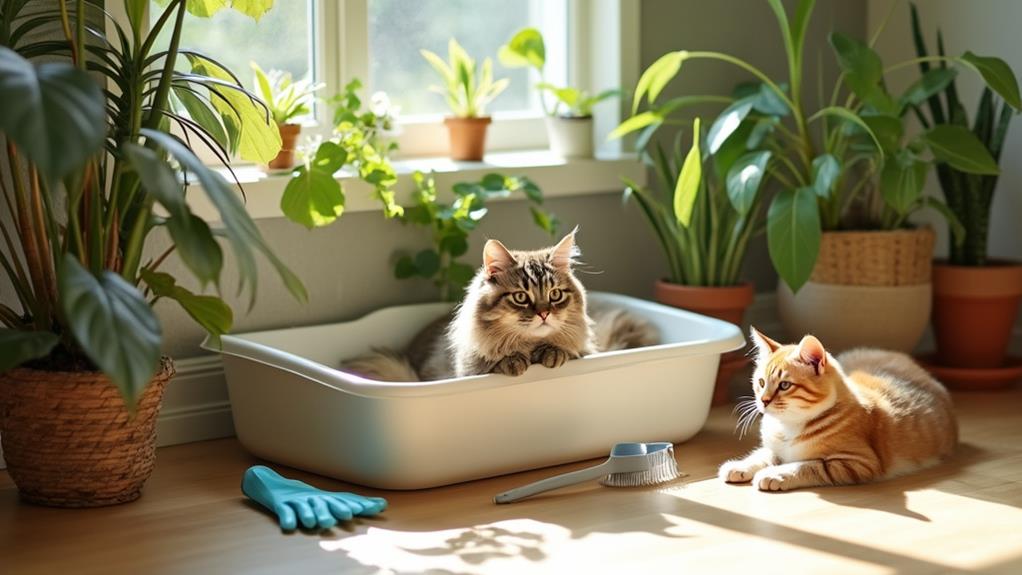
To keep your cat's litter box hygienic and inviting, regular deep cleaning is essential. Performing a deep cleaning at least once a week helps prevent bacteria buildup, ensuring your cat's health and promoting a pleasant odor in your home. Start by emptying the litter into a sealed garbage bag to dispose of waste safely. Scrub the litter box using hot water and unscented dish soap, which effectively removes residue without introducing harsh chemicals.
Once you've scrubbed the box, rinse it thoroughly and let it dry completely before adding fresh litter. This step is important to prevent moisture buildup, which can lead to unwanted odors and bacteria growth. While cleaning, consider using a disinfectant, but always choose pet-safe alternatives over harsh chemicals like bleach, which can harm your cat's health.
Here are some quick tips for effective deep cleaning:
- Empty litter into a sealed garbage bag.
- Scrub with hot water and unscented dish soap.
- Use pet-safe disinfectants, avoiding harsh chemicals.
- Rinse thoroughly and let the box dry completely.
- Refill with fresh litter to maintain a pleasant odor.
Control Odors Naturally
Freshness in your home starts with controlling litter box odors naturally. You can begin by sprinkling a small amount of baking soda into the litter box. This simple step helps neutralize odors without using overpowering fragrances that could deter your cat. Make sure to thoroughly clean the litter box once a week with unscented soap and hot water. This routine will eliminate bacteria that contribute to unpleasant litter box smells.
Consider placing charcoal filters or odor-absorbing mats around the litter box. These tools effectively trap odors and help maintain a cleaner environment. For any accidents outside the box, use non-toxic, enzyme-based cleaners. They break down odors at their source, preventing lingering smells.
Positioning the litter box in a well-ventilated area is essential. Good airflow reduces odor buildup, ensuring a more pleasant space for both you and your feline friend. By incorporating these natural methods, you'll keep the litter box clean and your home smelling fresh. Remember, maintaining a fresh environment not only benefits you but also encourages your cat to use the litter box consistently. With these tips, achieving a clean, odor-free home becomes effortless.
Optimal Placement Strategies
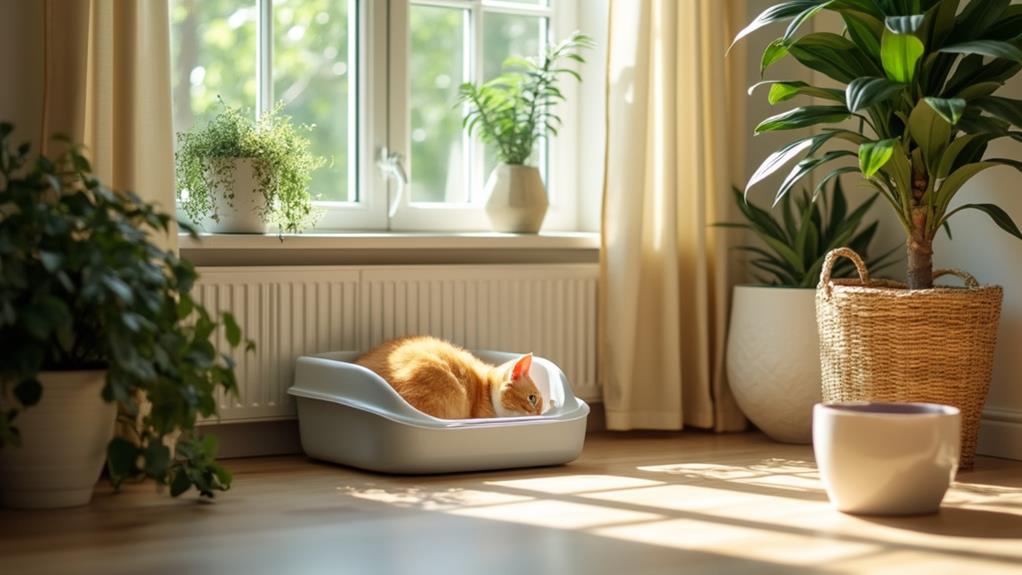
Finding the perfect spot for your cat's litter box is vital to encourage its regular use. Cats appreciate privacy, so you should aim for quiet areas with ideal placement to guarantee they feel secure. Low-traffic spots are key, as constant disturbances might discourage your cat from using the litter box. Remember, accessibility is critical, especially if you have older or less mobile cats. Confirm the litter box is easy for them to reach to prevent accidents outside the box.
In homes with multiple stories, consider placing a litter box on each level. This thoughtful arrangement accommodates your cat's needs and promotes regular use, reducing stress and avoiding territorial disputes. Steer clear of feeding areas when placing litter boxes, as proximity to food can deter your cat due to natural instincts.
Here are some tips to help you find the best spot:
- Choose quiet, low-traffic areas for privacy.
- Verify the litter box is easily accessible for all cats.
- Place one litter box on each floor in multi-level homes.
- Avoid placing litter boxes near feeding areas.
- Maintain proper ventilation to reduce odors.
Essential Cleaning Supplies
Regarding maintaining a clean litter box, having the right cleaning supplies makes all the difference. Start with a wide, slotted scoop. It's crucial for efficiently removing waste, as it allows you to separate clumps from the clean litter without much hassle. Pair this with non-toxic, unscented cleaners to keep the box fresh. Cats are sensitive to strong smells, so unscented options guarantee they're not deterred from their litter box.
Disposable gloves are a must-have. They protect your hands from germs and odors, making the cleaning process more hygienic and comfortable. After scooping, discard waste using a sturdy trash bag. Sturdy bags prevent leaks and contain odors, making waste disposal much more manageable.
Consider using litter box liners. They can make cleaning quicker and minimize the buildup of residue in the box itself. A litter mat is another handy tool. It catches stray litter that might get tracked outside the box, keeping the surrounding area cleaner. By equipping yourself with these crucial cleaning supplies, you'll maintain a litter box environment that's clean, odor-free, and inviting for your cat.
Handling Litter Waste
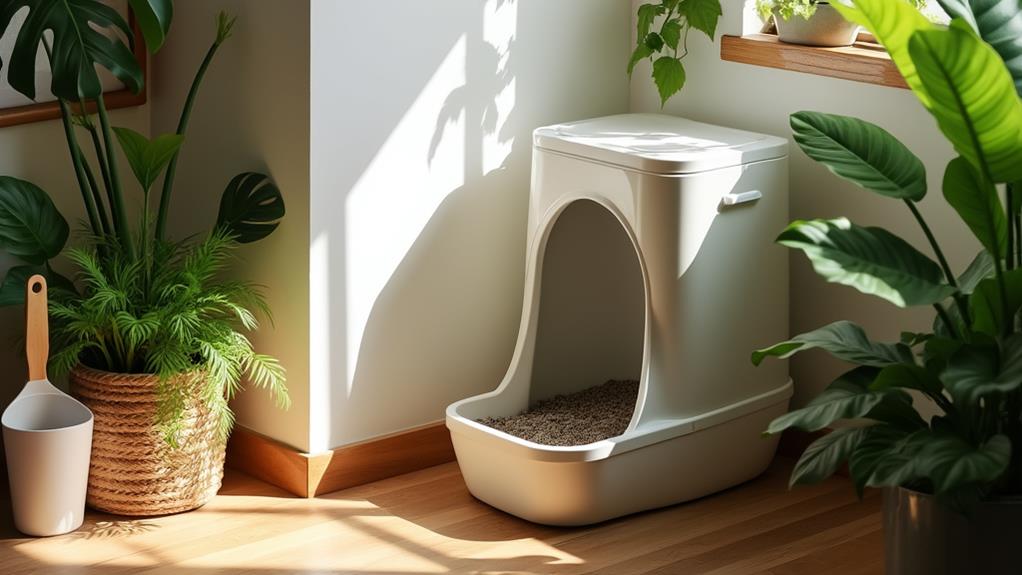
Once you've gathered the right cleaning supplies, it's time to focus on handling litter waste effectively. Start with regular scooping of the litter box, ideally twice daily, to prevent odor buildup and keep your cat's environment fresh. Use disposable bags when removing waste. This guarantees hygienic disposal and minimizes your contact with litter bacteria. Consider layering old newspapers at the bottom of the litter box to absorb moisture. This simple step can make cleanup easier and reduce odors.
When it's time for a deep cleaning, empty the old litter into a sealed garbage bag. This prevents any lingering smells from escaping. Scrub the box with hot water and mild soap to eliminate odors and bacteria effectively. Remember, never flush old litter down toilets or drains, as this can lead to plumbing issues.
To paint a clearer picture, here's a quick checklist:
- Regular scooping: Twice daily to prevent odor buildup.
- Use disposable bags: For hygienic disposal of waste.
- Old newspapers: Layer at the bottom for easy cleanup.
- Deep cleaning: Hot water and mild soap for thorough scrubbing.
- Sealed garbage bags: Dispose of old litter without plumbing problems.
Monitor Cat Box Behavior
As you care for your cat, it's vital to keep an eye on their litter box behavior to verify their health and happiness. Start by observing how often and how long your cat uses the litter box. Changes in frequency or duration can indicate potential health issues. If your cat suddenly starts having accidents outside the litter box, it might be a sign of litter aversion. This can happen if the box isn't clean enough or if your cat dislikes the type of litter. Always make sure the litter box is clean, as a dirty box can lead to reluctance in using it, affecting your cat's well-being.
You should also monitor any changes in behavior, like increased urgency or straining, as these could signal urinary tract problems needing veterinary care. Furthermore, regularly assess the location and environment of the litter box. It should be in a quiet, safe place where your cat feels comfortable. A well-maintained and clean litter box not only keeps your home odor-free but also supports your cat's health. By staying vigilant and attentive, you can address issues before they become serious, confirming your cat remains happy and healthy.