Komondor: the Unique White Corded Herder From Hungary
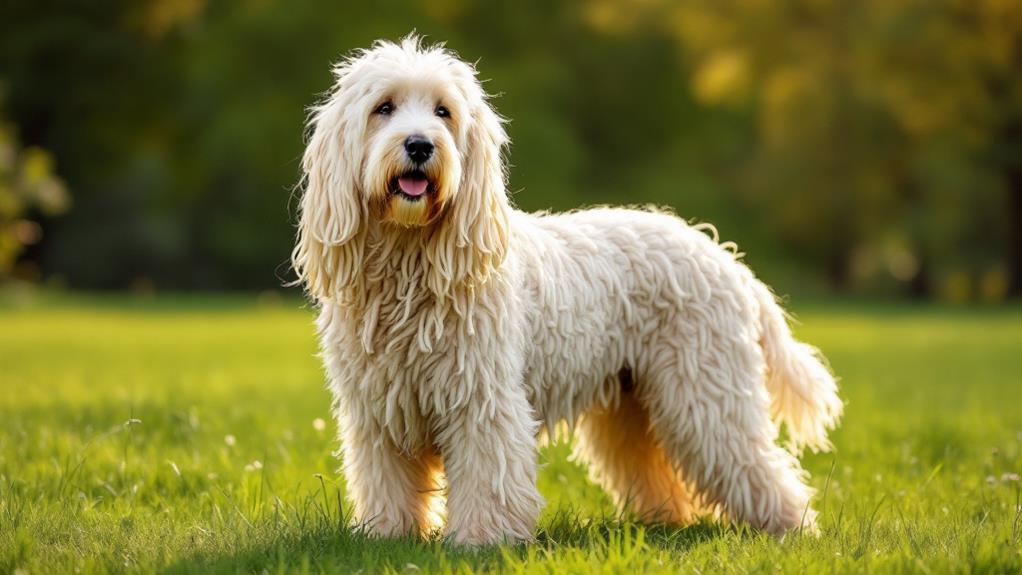
Uncover the Komondor, a remarkable guard dog with a unique white corded coat that resembles dreadlocks. This striking herder hails from Hungary, where it has protected livestock against predators since the 12th century. Its coat not only offers protection but also blends into surrounding flocks. With a calm, loyal temperament, the Komondor forms deep bonds with families and requires early, consistent training. Regular grooming is crucial to maintain their cords, alongside daily exercise and a balanced diet. Recognized as a national gem in Hungary, this breed's rich history and cultural significance continue to impress enthusiasts worldwide. Investigate its legacy further.
Origins and Historical Significance
How did the Komondor become such a distinct part of Hungarian culture? You have to look back to the 12th and 13th centuries when this remarkable Hungarian sheepdog breed was introduced to Hungary by the Cumans. These nomadic people, originating from Asia, traveled with dogs descended from Tibetan breeds. The Komondor's origins are deeply rooted in these migrations, marking its historical significance in a new land.
By 1544, the Komondor was initially mentioned in historical records by Péter Kákonyi, illustrating its long-standing presence. Over centuries, it played a significant role in Hungarian pastoral life, embodying strength and loyalty. As a guardian of sheep flocks, the Komondor protected livestock from predators like wolves and bears, essential for the region's shepherding traditions. These dogs weren't just protectors; they were symbols of the shepherd's unwavering defense against natural threats.
The breed's significance was challenged during WWII when invasions led to a severe decline in their numbers. Post-war, dedicated efforts in selective breeding were necessary to preserve their unique attributes. This commitment guaranteed the Komondor remained a revered part of Hungary's cultural and historical fabric.
Distinctive Appearance and Coat
Having cemented its place in Hungarian history, the Komondor's striking appearance is instantly recognizable and deeply functional. As a large breed, males stand at least 27.5 inches tall, while females reach a minimum of 25.5 inches. This majestic dog typically weighs between 100-132 pounds for males and 88-110 pounds for females, making its size alone a distinctive feature. However, what truly sets the Komondor apart is its heavy, corded coat.
Born with a white coat, the Komondor's fur resembles dreadlocks, and this corded coat develops naturally over about two years. Its unique texture provides excellent insulation and protection against harsh weather and potential predators. Despite appearing off-white if not regularly washed, this coat requires weekly grooming to prevent dirt from accumulating within the cords. You'll also find the mature coat serves a dual purpose: it camouflages the Komondor among sheep during the day while offering visibility to shepherds at night.
Remarkably, the Komondor's coat has minimal moulting, with significant shedding occurring primarily in puppies. Over time, their coat transforms from fluffy and shaggy to the long, corded look they're known for by around six to seven years of maturity.
Temperament and Natural Instincts
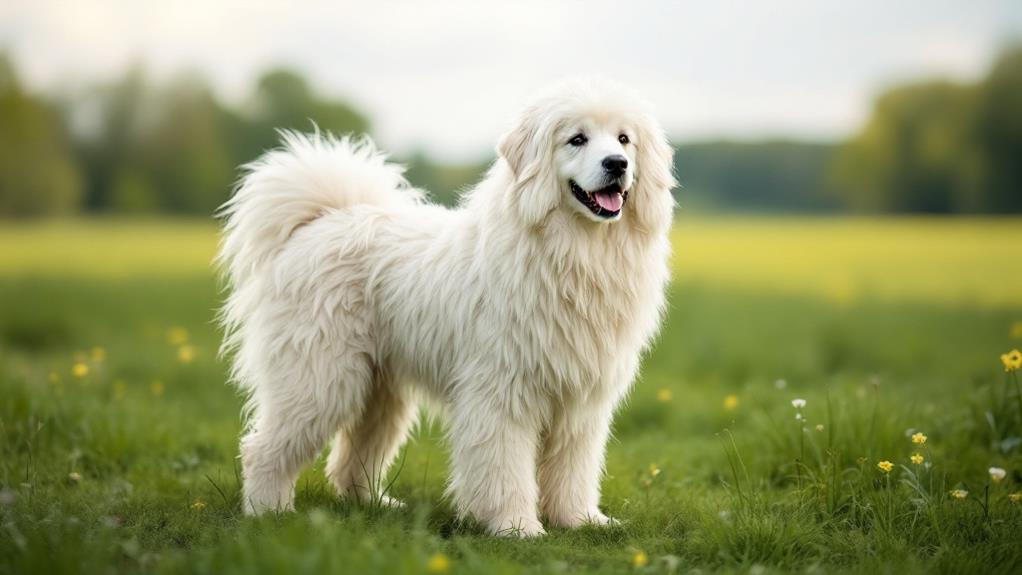
Stepping into the domain of the Komondor's temperament, you'll quickly recognize its calm and steady nature, making it an exceptional guardian for livestock and property. This breed's temperament is defined by its strong protective instincts, fearlessly defending its charges against formidable predators like wolves and bears. Komondors are naturally vigilant, often patrolling their territory at night to guarantee everything remains secure.
While Komondors may seem aloof with strangers, they form deep, affectionate bonds with their families, showcasing unwavering loyalty and devotion. This loyal nature makes them not just guardians but also cherished companions. However, their protective instincts mean they can sometimes react strongly to unfamiliar situations or people. That's why early socialization and training are essential to guaranteeing a balanced temperament.
Training and socialization help mold the Komondor into a well-rounded dog, capable of differentiating between genuine threats and normal day-to-day activity. By introducing them to diverse environments, people, and animals, you can mitigate potential aggressive reactions, assuring they grow into confident and composed adults. Understanding their temperament and instincts allows you to nurture a Komondor that's not only a formidable protector but also a loving family member.
Training and Socialization Tips
Training your Komondor is like sculpting a masterpiece, requiring patience and expertise to bring out their best qualities. Start obedience training early, ideally between 4 to 8 months of maturity, to harness their independent nature effectively. Keep your training sessions upbeat and engaging, using consistent corrections paired with plenty of praise. This approach will help manage their strong guarding instincts and prevent stubbornness from taking hold.
Socialization is similarly important during their puppyhood. Expose your Komondor to diverse environments, people, and other animals to reduce the risk of aggressive reactions in unfamiliar situations. This exposure encourages a well-rounded temperament and helps them become more adaptable to new experiences.
Given their independent nature, a firm and experienced hand is necessary to maintain control and guarantee safety. Your Komondor may require special training to accommodate breed-specific legislation in some countries, such as the need for muzzling in public spaces. Including this in your training sessions early on can prevent future challenges.
Health and Grooming Needs
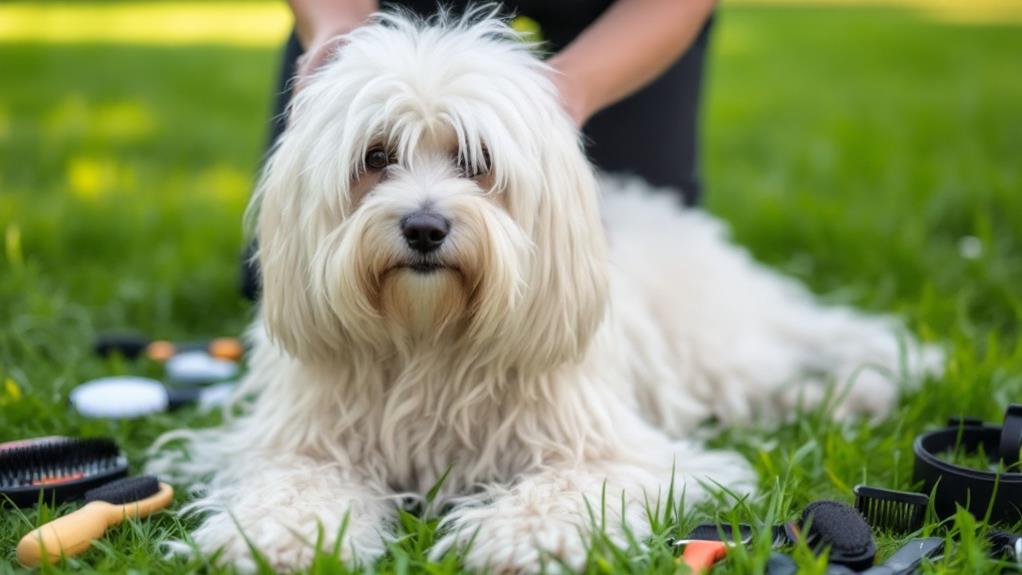
The Komondor's unique corded coat demands significant attention to maintain its health and distinctive appearance. Regular grooming is vital, involving the separation of clumps into individual cords every 9-10 months to prevent matting. You'll need to bathe your Komondor regularly using dog shampoo, as dirt tends to accumulate in the cords. Thorough drying afterward is key to avoid unpleasant odors and discoloration.
Beyond coat care, focus on daily dental hygiene by brushing their teeth and trimming their nails regularly. These habits are significant for preventing dental issues and ensuring their general health. Given their size and energy, Komondors require substantial exercise to keep both their bodies and minds in top condition. Daily walks or playtime in a secure area will support their physical needs.
Proper nutrition is vital to maintaining a healthy weight. A balanced diet tailored to their size and activity level helps keep them fit. Finally, schedule regular veterinary check-ups to monitor their health. Komondors are prone to conditions like hip dysplasia and bloating (GDV), which need prompt attention. With the right care, your Komondor will thrive in both health and happiness.
Role in Modern Agriculture
In the landscape of modern agriculture, the Komondor stands out as a formidable guardian of livestock. This large dog is increasingly utilized in the U.S. to protect sheep and goats from predators like coyotes and bears. Their effectiveness in agricultural settings is unmatched due to their unique traits. The Komondor's thick, corded coat not only offers insulation and protection but also helps them blend seamlessly with flocks, making it difficult for potential threats to spot them during the day.
As a livestock guardian, the Komondor's independent and vigilant nature guarantees they patrol their territory at night, safeguarding animals while resting during daylight hours. This breed's calm and steady demeanor is paired with an affectionate nature towards their families, making them both protective and reliable. Their historical breeding for herding and guarding means they need significant space to thrive, perfectly suiting them to farms rather than urban environments.
In modern agricultural settings, the Komondor plays an essential role, not just as a protector, but as a valued member of the farming community. Their ability to integrate into the farm environment improves their effectiveness and showcases their enduring legacy as livestock guardians.
Cultural Impact and Recognition
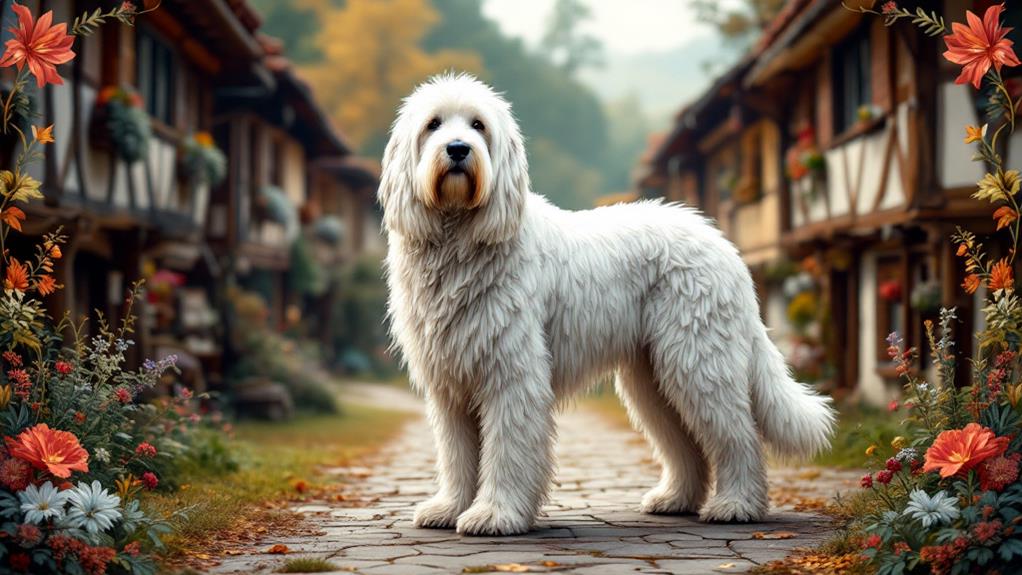
Celebrating the Komondor's cultural impact, you'll find it deeply woven into Hungarian folklore, where it symbolizes strength and loyalty. These cultural narratives highlight its role as a steadfast livestock guardian, deeply embedded in the pastoral lifestyle of Hungary's shepherds. This majestic breed isn't just a protector of herds; it's a living emblem of Hungarian heritage, revered for its unwavering dedication and distinctive appearance.
The Komondor's unique appearance and historical significance have earned it a place in a range of dog shows and competitions. Recognized by the American Kennel Club, the breed has set standards that celebrate its extraordinary traits. This recognition extends beyond the show ring, as the Komondor also captures the hearts of dog enthusiasts and artists. Its striking presence is often immortalized in artworks, reflecting its profound influence on dog-related art and culture.
As you investigate the Komondor's story, you'll uncover how its legacy as a livestock guardian continues to captivate people worldwide. With its rich history and cultural significance, the Komondor remains a powerful symbol of strength, loyalty, and the enduring spirit of Hungarian heritage. Its impact echoes far beyond its homeland, reaching admirers everywhere.