Is the Brazilian Black Tarantula a Good Pet for Beginners? A Complete Guide
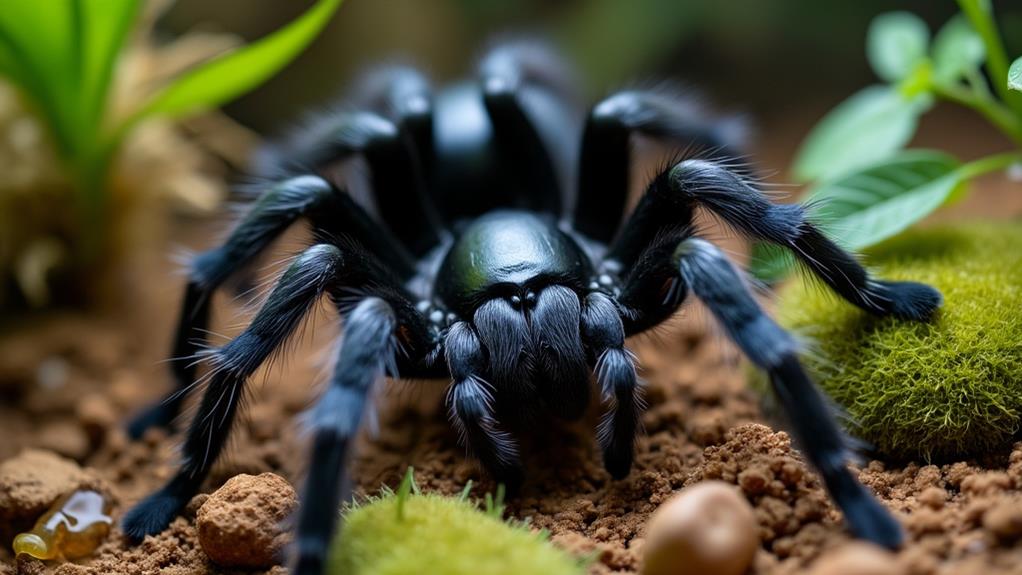
If you're eyeing a Brazilian Black Tarantula as your initial pet, you're making a wise choice. Known as Grammostola pulchra, this tarantula is prized for its calm temperament and ease of care, perfect for novices. You only need a suitably sized enclosure with proper humidity and temperature, making setup straightforward. Its diet is simple too, mainly insects. With the potential to live decades, you'll enjoy a long-lasting companion. Regular handling isn't necessary, reducing stress for you and the spider. As you investigate further, you'll ascertain more about their fascinating behaviors and care requirements to guarantee a thriving pet.
Key Takeaways
- Brazilian Black Tarantulas have a docile temperament, making them suitable for beginner pet owners.
- Minimal handling is recommended to reduce stress and maintain their calm nature.
- They require a controlled environment with specific temperature and humidity levels for optimal health.
- Their slow growth rate provides beginners ample time to learn care requirements.
- A varied diet of insects like crickets simplifies feeding and maintenance.
Understanding the Brazilian Black Tarantula
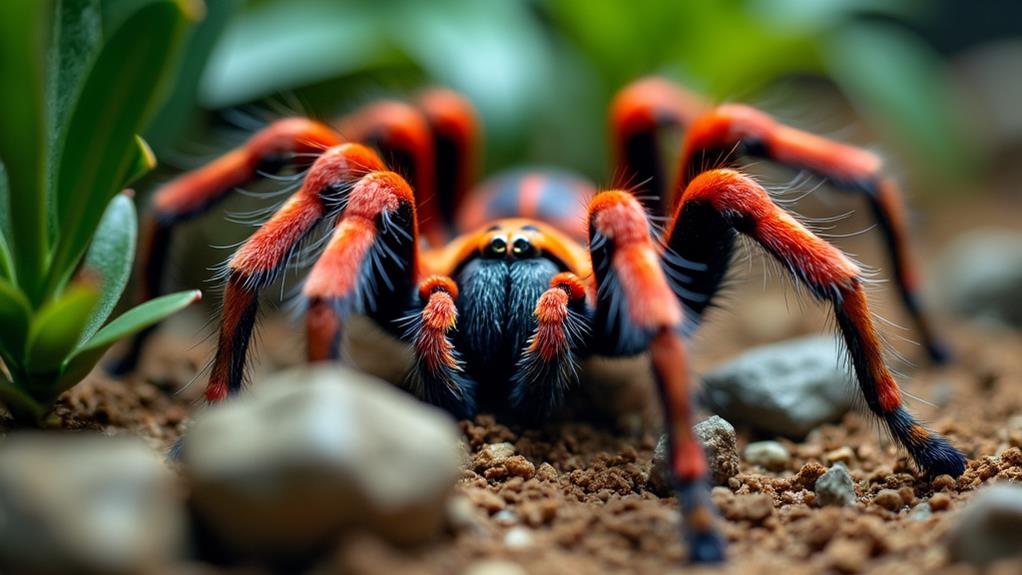
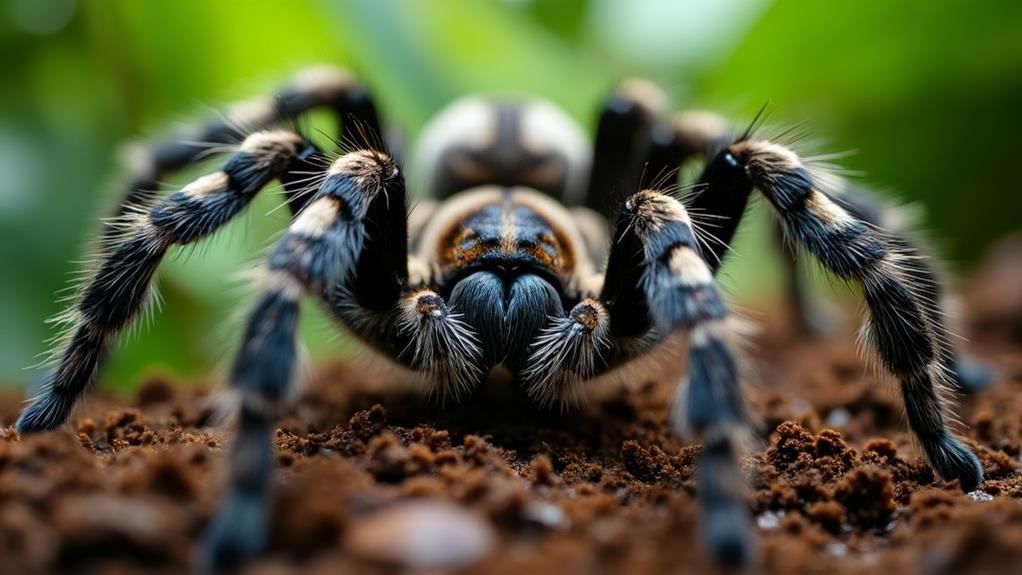
In regard to understanding the Brazilian Black Tarantula, you'll find that its striking appearance and gentle nature make it a unique pet choice. This docile species, scientifically called Grammostola pulchra, is native to Brazil's humid tropical forests. Its thick black coloration with hints of blue is truly enchanting. Adults can reach a leg span of up to 8 inches, with females often larger than males. This species' calm disposition and low bite risk make it suitable for both novice and experienced keepers.
Caring for a Brazilian Black Tarantula involves maintaining specific conditions to guarantee its well-being. You'll need to monitor humidity levels closely, keeping them between 60-75%, which mirrors their natural tropical habitat. This helps in maintaining their health and reducing stress. A temperature range of 70-80°F is ideal for their comfort.
Keep in mind the commitment involved, as males typically live 5-10 years, whereas females can live 20-30 years. This considerable lifespan means you'll need to plan for long-term care. Altogether, understanding these care tips will help you provide a nurturing environment for your Brazilian Black Tarantula, guaranteeing it thrives under your care.
Ideal Habitat and Enclosure Setup
As you commence on creating the perfect habitat for your Brazilian Black Tarantula, consider the enclosure's size and setup as key factors in guaranteeing its well-being. Aim for an enclosure size of 10-15 gallons, though a larger terrarium is preferable to offer ample space for roaming and burrowing. This will help you establish an ideal habitat that meets all your tarantula's needs.
A vital aspect of the enclosure setup is the substrate. Provide 4-5 inches of coconut coir or potting soil. This depth supports your tarantula's natural burrowing behavior and helps maintain the ideal humidity levels between 60-75%. It's significant to monitor these levels closely, as they contribute greatly to your tarantula's health.
Incorporate hiding spots like cork bark or flower pots within the enclosure to reduce stress and create a comfortable environment. Maintaining a temperature range of 75-85°F is fundamental, and confirm good ventilation to prevent mold and maintain air quality. You'll also need to include a shallow water dish for fresh water, and occasionally mist the substrate to help achieve the necessary humidity. These steps will guarantee your tarantula thrives in its new home.
Feeding and Nutrition Essentials
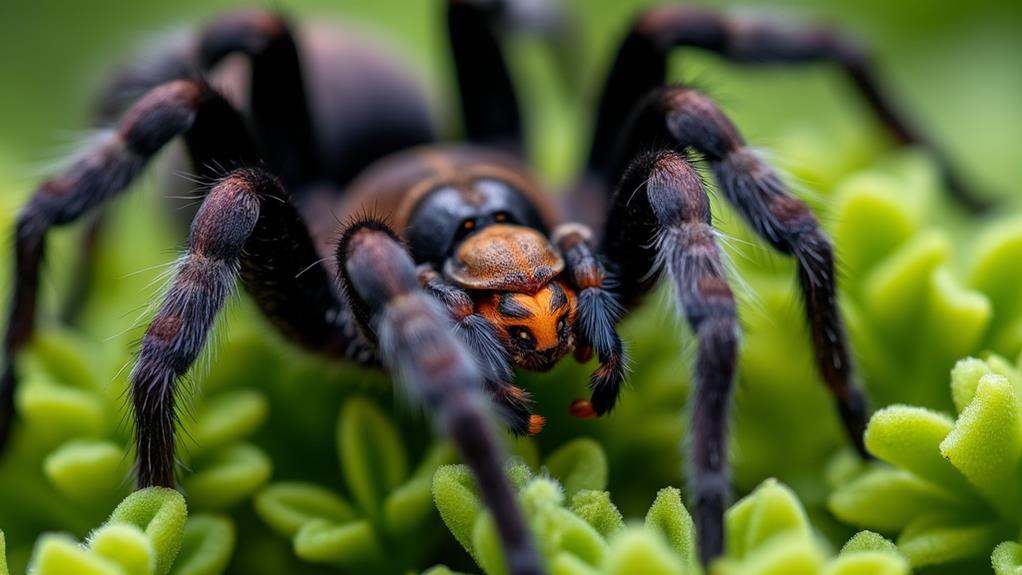
Understanding the dietary needs of your Brazilian Black Tarantula is vital for its health and longevity. Feeding these fascinating creatures correctly guarantees they thrive in captivity. A varied diet is important, primarily consisting of crickets, grasshoppers, and other large insects. Adult tarantulas typically consume 3-8 items per month, depending on their size and activity level. Meanwhile, spiderlings require smaller prey like pinhead crickets or roach nymphs and should be fed every other day to support their rapid growth.
Here's a quick guide to keep your tarantula healthy:
- Varied Diet: Guarantee nutritional balance by offering gut-loaded and dusted prey with supplements.
- Fresh Water: Always provide a shallow dish of clean water, guaranteeing your tarantula stays hydrated.
- Feeding Frequency: Feed adult tarantulas once a week to prevent obesity; spiderlings may need more frequent meals.
- Cleanliness: Remove uneaten food promptly to avoid mold and pest issues in the enclosure.
Lifespan and Growth Expectations
Feeding your Brazilian Black Tarantula right sets the stage for a long and healthy life. This tarantula species stands out for its impressive lifespan. Males live around 5-10 years, while females can thrive for 20-30 years, offering a long-term companionship. However, be prepared for their slow growth rate. As spiderlings, they measure about 2-3 inches after their initial year, gradually reaching their full size over several years.
Understanding the growth expectations is vital. Males mature faster, typically within three years, while females take longer but grow larger, often achieving a leg span of 6-8 inches. Their slow growth rate requires patience, but it's rewarding to watch them evolve into stunning adults.
Regular molting is important during their development. As spiderlings, they molt several times before becoming mature adults. Molting signifies healthy growth, so ensuring proper care and nutrition is key. Once mature, breeding usually happens in the warmer months. Females can lay up to 150 eggs in a silk sac, continuing the life cycle of this remarkable species.
Handling and Behavioral Traits
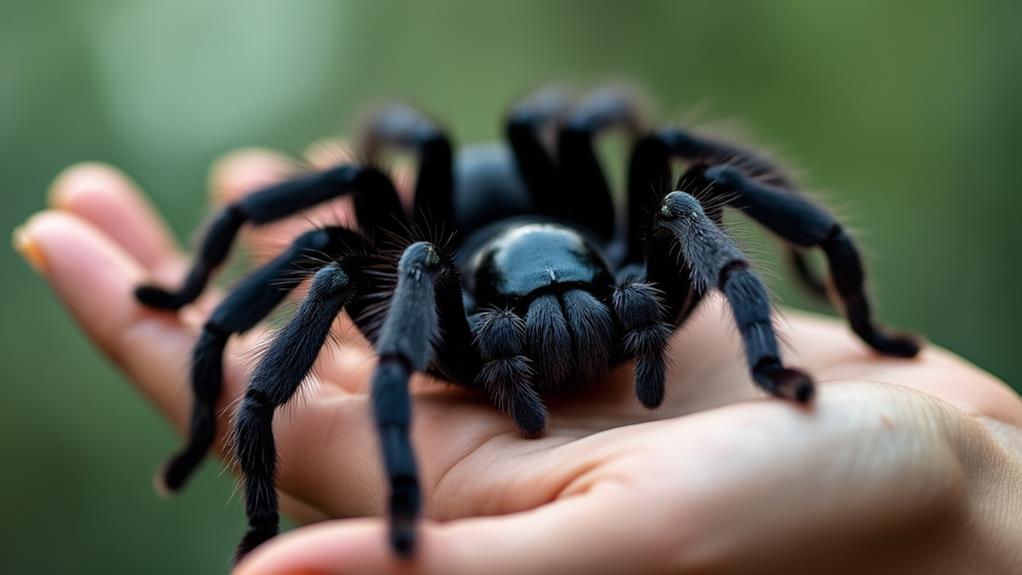
The Brazilian Black Tarantula's reputation as a docile pet makes it a popular choice for many tarantula enthusiasts. Known for its calm and gentle nature, this species is particularly appealing to beginners. Its behavioral traits include a docile temperament and a low bite risk, which means you can handle it with minimal concerns. However, it's significant to keep in mind that handling should be done cautiously to prevent stress-induced bites. Although it's tolerant of handling, the Brazilian Black Tarantula might experience stress if handled too frequently.
Here are some key points to reflect on when interacting with your Brazilian Black Tarantula:
- Docile Temperament: This tarantula is slow-moving and prefers fleeing over fighting, showing little aggression even when startled.
- Handling Precautions: While handling is possible, minimizing interactions is vital to reducing stress and maintaining health.
- Building Bonds: Interaction can improve your experience, and over time, a bond may form, adding to the enjoyment of keeping this species.
- Stress Awareness: Always be mindful of signs of stress, such as excessive movement or defensive postures, and give your tarantula time to adjust.
Molting Process Explained
During the life of a Brazilian Black Tarantula, the molting process is vital for growth and development. As spiderlings hatch and mature, they undergo several molts to accommodate their increasing size. You'll notice signs of impending molt such as a refusal to eat, lethargy, and changes in behavior. These are indicators that your tarantula is preparing to shed its old exoskeleton.
When the molting process begins, your tarantula will typically flip onto its back. This can take several hours, so patience is key. It's important to guarantee a stress-free environment during this time. After molting, your tarantula will be vulnerable, needing time for its new exoskeleton to harden. A healthy tarantula will discard its old exoskeleton shortly after the process, and you might find it in the enclosure.
Post-molt, pay close attention to your tarantula's condition. Look for potential health problems such as a shrunken abdomen or prolonged lethargy, which can indicate issues. Proper care of a Brazilian Black Tarantula includes monitoring these signs to verify it remains healthy and robust throughout its life. With attentive care, your tarantula will thrive.
Breeding and Reproduction Insights
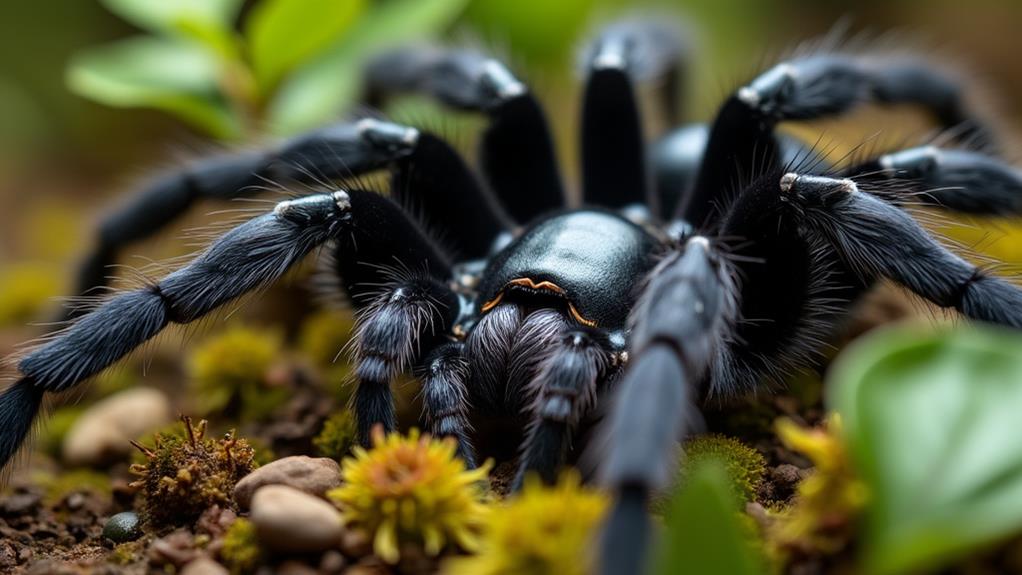
Understanding the molting process lays the foundation for gaining insight into the breeding and reproduction habits of Brazilian Black Tarantulas. When these tarantulas reach maturity in about three years, breeding typically occurs during warmer months. You'll notice males actively seeking out females, displaying fascinating courtship behaviors. Females are larger and, if receptive, may mate and produce eggs. A female can lay up to 150 eggs in a silk sac, with hatching timed for the warm late spring or early summer.
Proper conditions are essential for breeding success. Here's what you should focus on:
- Humidity: Maintain ideal humidity levels in the enclosure to guarantee the successful development of eggs and spiderlings. Low humidity can hinder their growth and survival.
- Temperature: Keep temperatures consistent and warm, mimicking their natural habitat, to encourage mating and egg incubation.
- Monitoring: Regularly check the female's behavior post-mating and the condition of the egg sac to prevent any issues.
- Care for Spiderlings: After hatching, spiderlings will undergo several molts before adulthood. Provide suitable care and feeding to support their healthy development.
Understanding these aspects will help you successfully breed your Brazilian Black Tarantula and care for the spiderlings.
Common Health Issues
When caring for your Brazilian Black Tarantula, you'll find they're generally hardy, but common health issues can still arise. One of the main concerns is maintaining proper humidity levels to prevent molting problems. If the humidity is too low, your tarantula might struggle during molting, which is essential for their growth. On the other hand, excessive humidity and poor ventilation can lead to respiratory infections. Make sure your tarantula's enclosure stays within the ideal temperature range of 75-85°F and has good airflow to keep them healthy.
Obesity is another issue you should watch out for. Overfeeding your tarantula can lead to excessive weight gain, and adult Brazilian Black Tarantulas typically only need about 3-8 insects per month. Be diligent about removing any uneaten food to avoid mold and pests that could harm your pet.
Stress can also affect your tarantula's health. Keep an eye out for signs like lethargy or a refusal to eat, as these can indicate stress or an unsuitable environment. Finally, regularly check your tarantula for parasites such as mites or nematodes, which can compromise their health if left untreated.
Choosing the Right Tarantula
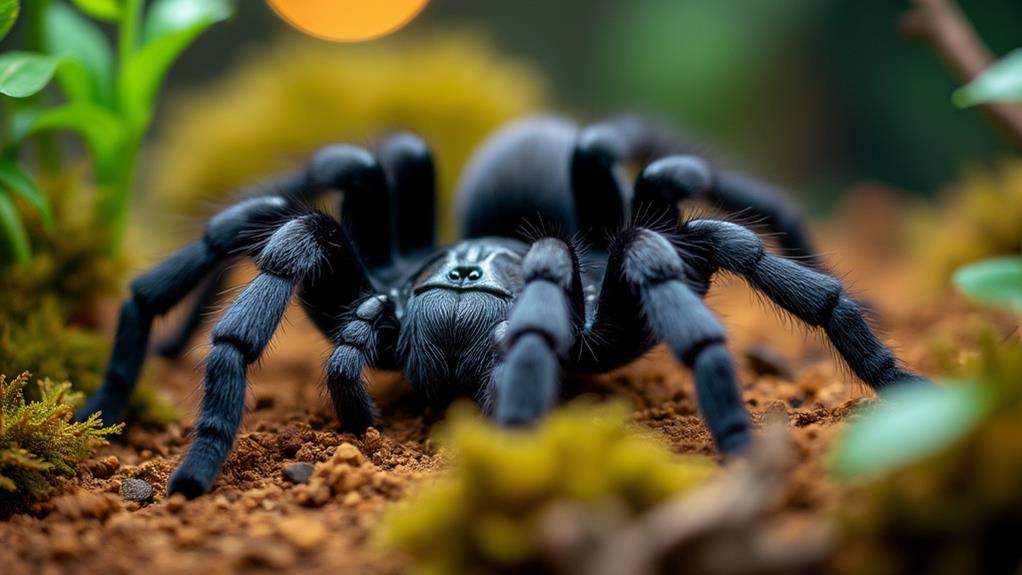
Guaranteeing your Brazilian Black Tarantula remains healthy is crucial, and selecting the right tarantula is the initial step towards a rewarding experience. As a beginner, you'll appreciate the Brazilian Black Tarantula's docile temperament and low aggression levels. This makes them easier to handle compared to other species. Their slow growth rate, reaching full size over three years, allows you ample time to become comfortable with their care.
To set yourself up for success, consider the following tips when choosing the right tarantula:
- Research the Species: Understand the Brazilian Black Tarantula's needs and characteristics. Their docile nature and minimal handling requirements make them ideal for beginners.
- Select Reputable Breeders: Purchase your tarantula from reputable breeders to guarantee a healthy specimen. Wild-caught tarantulas may carry health risks and stress, which can complicate care.
- Consider Their Diet: Brazilian Black Tarantulas are opportunistic feeders. They thrive on a diet of crickets, mealworms, and other readily available insects, making them easier to maintain.
- Assess Your Comfort Level: Make sure you're comfortable with minimal handling. These tarantulas are less prone to stress, ideal for novice keepers.
Following these guidelines will help you choose a tarantula that fits your lifestyle and guarantees a positive experience.
Resources for Further Learning
If you're looking to plunge deeper into the world of Brazilian Black Tarantulas, there are plenty of resources available to guide you. Start by visiting Arachnoboards.com, a hub for thorough forums where fellow enthusiasts share their experiences on Brazilian Black Tarantula care. You'll find advice on everything from habitat setup to dietary needs. For visual learners, YouTube offers dedicated channels featuring guides on tarantula care. These videos cover crucial topics such as feeding practices and handling techniques, allowing you to learn by example.
Investing in a detailed tarantula care guide specifically for Grammostola pulchra can greatly improve your understanding of their specific requirements and behavior. These guides offer detailed insights and are a valuable supplement to your learning arsenal. Moreover, attending local reptile expos or pet shows can provide firsthand interaction with breeders and seasoned keepers. You'll not only observe these fascinating creatures up close but also gain practical advice tailored to your needs.
Lastly, subscribing to tarantula magazines and publications can keep you updated with articles on care, breeding, and health. These resources guarantee that your knowledge of Brazilian Black Tarantulas is both current and thorough, setting you up for a successful pet-keeping experience.
Related posts