Is a Schnauzer the Right Dog for Families With Kids? Pros and Cons
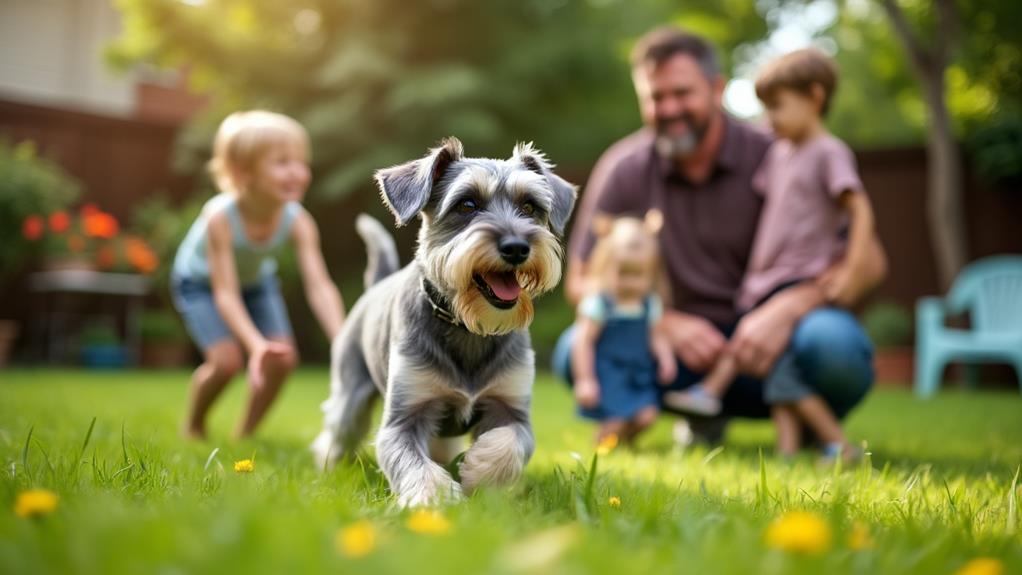
Schnauzers can be a great choice for families with kids due to their affectionate and playful nature. They're intelligent and easily trainable, making them wonderful companions for children. However, they require regular grooming and exercise to stay healthy. Their protective instincts can be a plus for family security, but watch out for potential behavioral issues like Small Dog Syndrome and excessive barking. These high-energy dogs need consistent socialization and mental stimulation. They're adaptable to different living spaces, but their care needs may challenge busy households. Explore details to understand how a Schnauzer fits into your family life.
Key Takeaways
- Schnauzers' friendly and affectionate nature makes them excellent companions for families with kids.
- High intelligence and easy trainability allow Schnauzers to quickly learn commands and interact well with children.
- Protective instincts provide added security, but early socialization is vital to prevent aggression towards strangers.
- Regular exercise is crucial due to their high energy levels, which may be challenging for busy families.
- Schnauzers require consistent training to manage vocal tendencies and avoid Small Dog Syndrome.
History of the Schnauzer
Amid the rich tapestry of canine history, the Miniature Schnauzer stands out as a fascinating blend of breeds. This charming dog originated in Germany during the mid-to-late 19th century. It was developed by crossing the Standard Schnauzer with smaller breeds like the Affenpinscher and Miniature Poodle. The initial recorded Miniature Schnauzer was a black female named Findel, appearing in 1888. By 1926, the American Kennel Club recognized the breed, and the American Miniature Schnauzer Club followed in 1933.
Despite being in the AKC Terrier Group, the Miniature Schnauzer lacks British ancestry, setting it apart from traditional terriers. This breed is known for its distinctive personality traits, including intelligence, alertness, and a friendly demeanor. These qualities make it a delightful option for families. They're not only energetic and playful but also exhibit a strong sense of loyalty.
When considering a dog for your family, the Miniature Schnauzer's amiable nature and adaptability make it a strong contender. While its popularity has fluctuated, ranking 11th in 2008 and 17th in 2016, its suitability for families remains consistent. This history-rich breed continues to capture hearts with its endearing traits.
Schnauzer Appearance
Regarding the appearance of Miniature Schnauzers, their small yet sturdy build makes them a perfect fit for families. Standing between 11-14 inches tall and weighing 11-20 pounds, these dogs are compact enough for any home environment. Their small size shouldn't fool you, though—they're quite robust and muscular, making them excellent playmates for active children.
Their coat is one of their most striking features, consisting of a distinctive double layer. The outer layer is wiry, while the undercoat is soft, which not only gives them a unique texture but also necessitates regular grooming to prevent matting. This is one of the primary Miniature Schnauzer needs you should consider.
With regard to coat colors, Miniature Schnauzers offer a variety of options: black, salt and pepper, black and silver, and even white. These different hues provide plenty of aesthetic choices to suit your family's preferences. Their rectangular heads, complete with bushy beards and mustaches, along with v-shaped ears, make them easily recognizable. Moreover, their cat-like feet add to their distinctive appearance, ensuring your Miniature Schnauzer will stand out in any crowd.
Grooming Needs
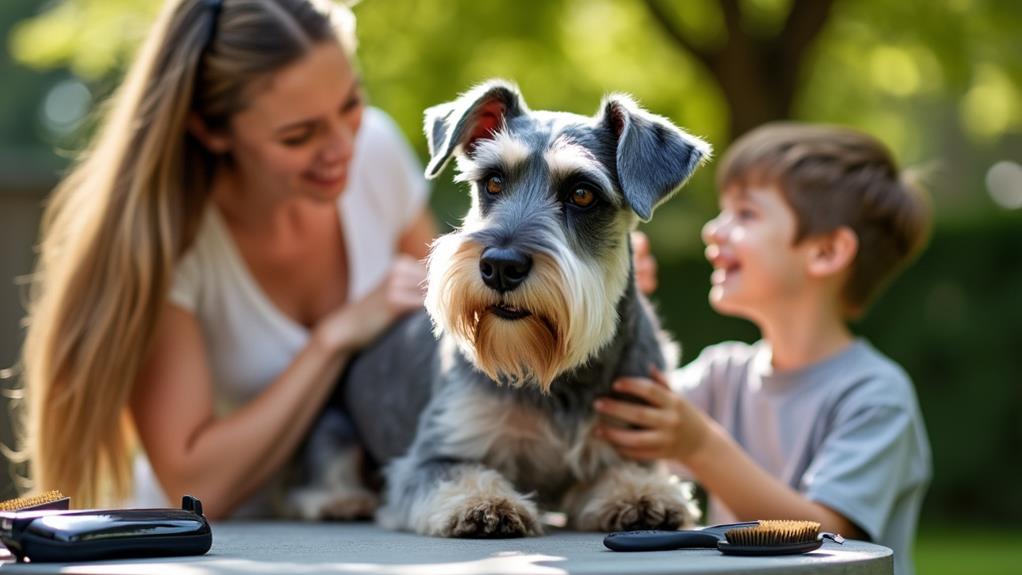
With their striking double coat and distinctive appearance, Miniature Schnauzers require regular grooming to keep them looking and feeling their best. Their grooming needs involve managing both a wiry exterior coat and a soft undercoat. Regular grooming, typically every six weeks, is crucial to maintain coat health and prevent tangles and mats. You'll need to use different grooming techniques, such as stripping to remove dead hair and clipping for a softer trim. This regular attention helps avoid skin issues like matting, which can cause discomfort and infections.
Miniature Schnauzers are known for their high intelligence, making them cooperative during grooming sessions. However, you'll need to pay special attention to their faces, particularly the beard and mustache. Daily combing is necessary to prevent food debris accumulation and matting. While grooming is manageable for most pet owners, professional grooming might be necessary if your Schnauzer is a show dog, as they must meet specific breed standards.
Schnauzer Temperament
Miniature Schnauzers bring a delightful blend of friendliness and spirit to any family setting, making them excellent companions for children. Their friendly nature shines through in their interactions with kids, as they often form strong bonds and enjoy being part of family activities. With a high level of intelligence, these dogs are quick learners, which means you can easily train them to interact appropriately with your little ones.
Their playful demeanor makes them perfect for families who love staying active. Regardless of a game of fetch in the backyard or a walk around the neighborhood, a Miniature Schnauzer will happily join in on the fun. However, their spirited nature is balanced by a protective instinct. They are naturally alert and serve as excellent watchdogs, providing your family with a sense of security.
Despite their friendly disposition, early socialization is crucial. Exposing them to different people, environments, and experiences will help prevent aloofness or aggression towards strangers. This guarantees your Schnauzer remains well-adjusted and welcoming, making them not only an ideal companion for your children but also a great host for visitors. Socialization sets the foundation for a well-rounded, adaptable family pet.
Health Considerations

While Miniature Schnauzers' temperament makes them a joy to have around, their health requires attentive care to guarantee they remain lively companions. These dogs have an impressive life expectancy of about 13.3 years, promising long-term friendships. However, they are prone to certain health problems that need monitoring. Conditions like gall bladder mucoceles and congenital portosystemic shunts necessitate regular veterinary check-ups. Such visits are essential for early detection of hereditary conditions like von Willebrand disease and atopic dermatitis, making sure these issues don't hinder their quality of life.
Obesity is another concern for Miniature Schnauzers, as it can lead to multiple health complications. To prevent this, you'll need to manage their diet carefully and make certain they get regular exercise. Keeping them fit will help avoid the pitfalls of excessive weight. Furthermore, Schnauzers are at risk for periodontal disease, so regular dental care is non-negotiable. Maintaining their oral hygiene is not just about fresh breath—it's about preventing serious health issues that can arise from neglect. By staying vigilant with their health needs, you can enjoy many happy and healthy years with your Schnauzer.
Training Requirements
Training a Miniature Schnauzer can be a rewarding experience, especially given their impressive intelligence—they rank 12th among canine breeds. With their ability to learn commands in about 15 repetitions, you'll find they're quick to pick up new tricks, making them an excellent breed for families with kids. However, meeting their training requirements is vital. Consistent training with positive reinforcement is key. Miniature Schnauzers respond well to praise, treats, and play, so keep sessions short and engaging to maintain their interest and focus.
Early socialization is similarly significant. Introducing your Schnauzer to different environments, people, and other pets can prevent aggressive behavior and help them adapt to varying family dynamics. This is particularly significant in homes with children, as it guarantees the dog is comfortable and well-behaved around them.
Despite their intelligence, Schnauzers can be strong-willed, occasionally exhibiting selective hearing. Patience and persistence are indispensable to overcome this trait. Regular mental stimulation, such as puzzle toys or interactive games, keeps them engaged and less likely to develop behavioral issues. When you combine consistent training with early socialization and mental challenges, your Miniature Schnauzer can thrive in a family setting.
Exercise Needs
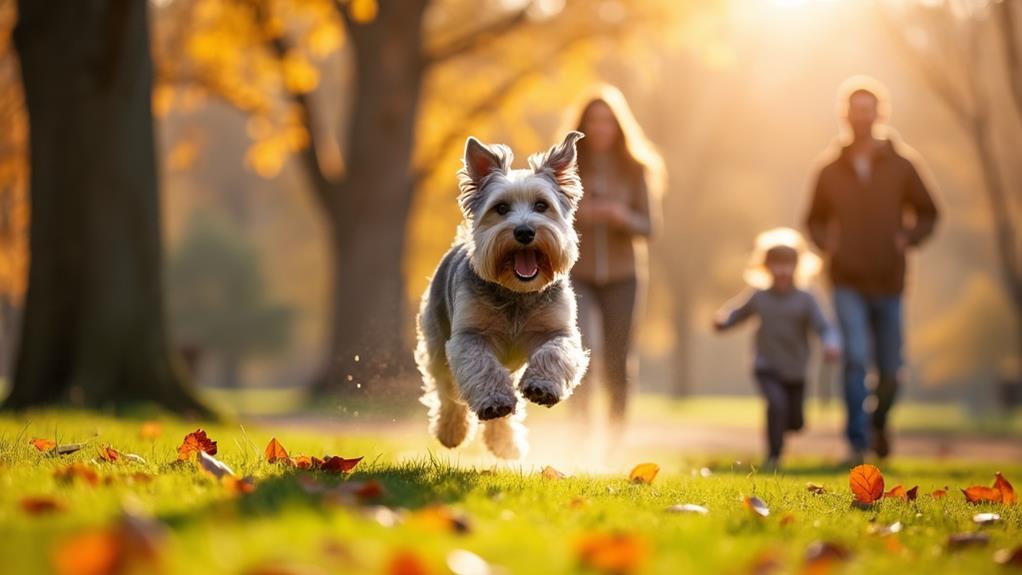
After laying the groundwork with effective training, it's essential to focus on meeting your Schnauzer's exercise needs to confirm they're healthy and content. Schnauzers are known for their high energy levels, and without regular exercise, they can become restless and develop behavioral issues. To prevent this, aim for daily walks and playtime, guaranteeing they get at least 30 minutes to an hour of physical activity. This not only keeps them fit but also mentally stimulated, reducing the likelihood of destructive behaviors like excessive barking or hyperactivity.
Incorporating activities such as dog agility and obedience training can be a great way to channel their energy positively. These activities also offer a wonderful opportunity for your children to bond with the dog, making the exercise experience enjoyable for the entire family. Schnauzers thrive when they have a structured routine, so try to establish consistent exercise habits that fit into your family's lifestyle.
Despite being adaptable to different living situations, Schnauzers need a committed approach to their exercise regimen to guarantee their complete well-being and happiness. By meeting their exercise needs, you're setting the stage for a harmonious and joyful family environment.
Family Compatibility
A Schnauzer's affectionate and loyal nature makes them ideal companions for families with children. Miniature Schnauzers, in particular, are known for their devotion and intelligence, making them excellent family pets. Their willingness to please and quick learning ability mean training can be both fun and effective. When you commit to consistent training, you help create a harmonious environment for your kids and your furry friend.
Families with children will appreciate the Miniature Schnauzer's playful demeanor and natural energy, as they make for engaging and enthusiastic playmates. Their protective instincts also mean they serve as excellent watchdogs, alerting you to potential intruders or dangers. This trait can offer an extra layer of security and peace of mind for your family.
However, to guarantee they get along well with your children and other pets, consistent socialization is essential. Introducing your Schnauzer to a variety of people, pets, and environments will help prevent aloofness or aggression towards unfamiliar kids or animals. By focusing on socialization early, you encourage a more adaptable and friendly temperament, making the Miniature Schnauzer a true family-friendly companion. With the right approach, they can improve your family's dynamics beautifully.
Pros of Owning a Schnauzer
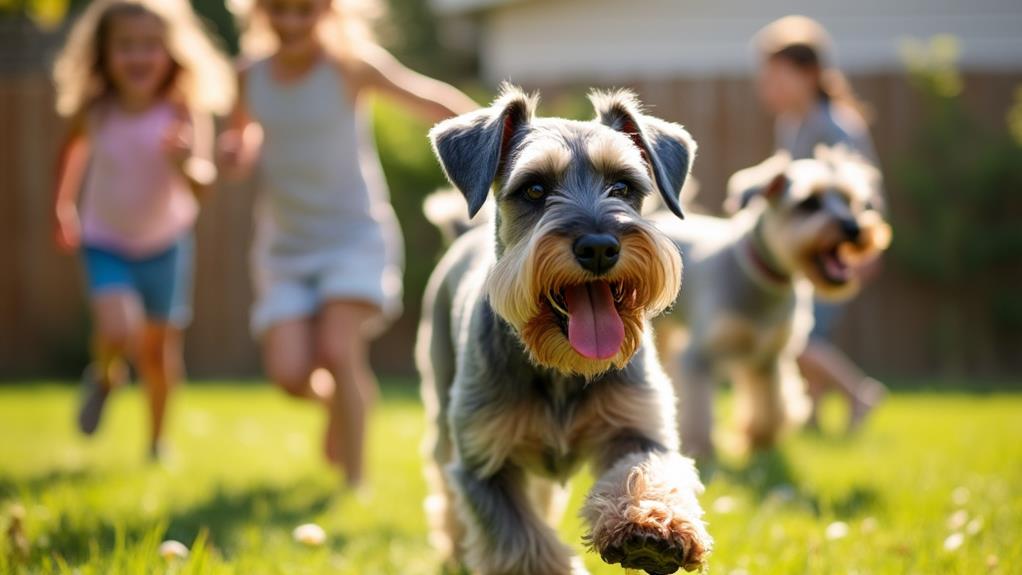
Owning a Miniature Schnauzer offers a bundle of benefits for families, especially those with children. These dogs are known for their affectionate nature, making them excellent companions for kids who crave a loving pet. Their loyalty shines through in their interactions, creating a strong emotional bond within the family. With a spirited and playful demeanor, Schnauzers encourage active play, keeping your children engaged and entertained.
Additionally, Miniature Schnauzers are easy to train due to their high intelligence, ranking 12th among dog breeds. This trait allows them to quickly learn commands and tricks, providing a fun and educational experience for kids during training sessions. Their adaptability means they can thrive in numerous living environments, regardless of whether you live in an apartment or a house. As long as they get adequate exercise, Schnauzers adjust well to different settings.
Their protective instincts are another significant advantage. These instincts make them effective watchdogs, offering a sense of security for your family. With a Schnauzer around, you can feel more at ease knowing they'll alert you to any unusual activity. Altogether, owning a Miniature Schnauzer brings loyalty, fun, and safety to family life.
Cons of Owning a Schnauzer
While many enjoy the companionship of a Miniature Schnauzer, it's crucial to contemplate the potential challenges that come with this breed. Schnauzers can be prone to Small Dog Syndrome, which might lead to behavioral issues, especially around young children. If not properly managed, this could result in a pet that feels the need to assert dominance, making interactions with kids a bit tricky.
Their high energy level means they require regular exercise to stay happy and healthy. For families with very young children or hectic schedules, meeting these exercise needs can be demanding. Without enough physical activity, Schnauzers might become restless or even destructive.
Schnauzers also have vocal tendencies, often barking more than you'd expect. This can disrupt a peaceful household, especially if kids are trying to nap or do homework. Training to curb this habit requires consistent effort and patience.
Additionally, Miniature Schnauzers face potential health issues like skin allergies and diabetes. These conditions might demand extra care and attention, which can be challenging for busy families.
- Small Dog Syndrome: Potential for behavioral issues.
- High Energy Level: Requires regular exercise.
- Vocal Tendencies: May disrupt household peace.