Is a Pink Toe Tarantula a Great Pet for Beginners? What You Should Know
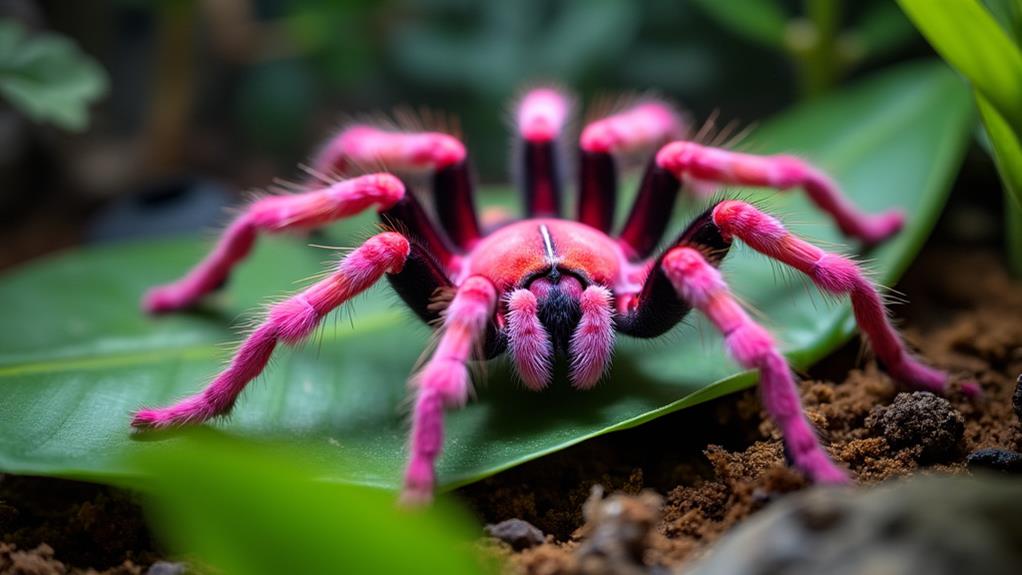
Pink Toe Tarantulas are great for beginners due to their low maintenance and docile nature. They need a tall, escape-proof enclosure with humidity levels of 75% to 85%. These skittish creatures are non-aggressive and their bites are mild. Feed them live insects like crickets, ensuring proper nutrition with gut-loaded prey. Maintain a temperature range of 75°F to 82°F and avoid extremes above 85°F. Handle them gently and briefly to reduce stress. Their upkeep is budget-friendly, with monthly costs around $5 to $10. If you're curious about their needs and care, investigate detailed aspects of their habitat and lifestyle.
Key Takeaways
- Pink Toe Tarantulas are generally non-aggressive, making them suitable for beginners.
- Their low maintenance costs are ideal for budget-conscious pet owners.
- They require specific humidity and temperature conditions, needing careful monitoring.
- Short handling sessions are recommended due to their skittish nature.
- Proper enclosure setup with climbing structures is essential for their arboreal lifestyle.
Understanding Pink Toe Tarantulas
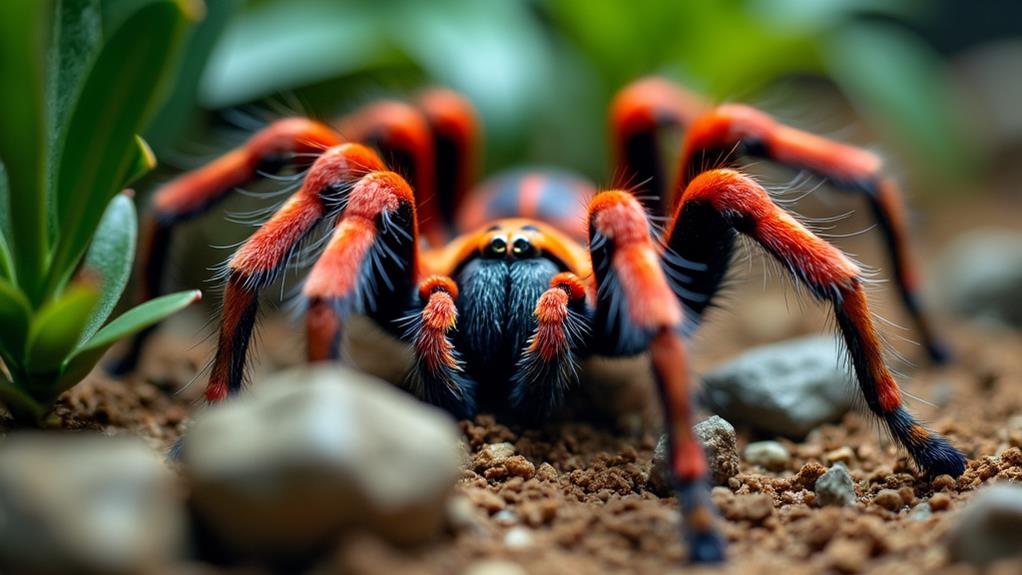
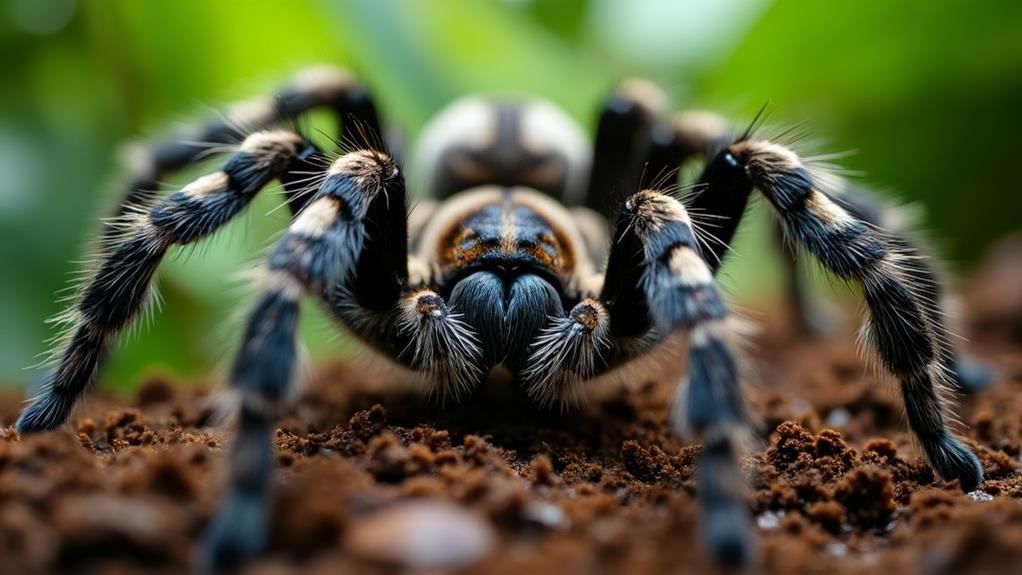
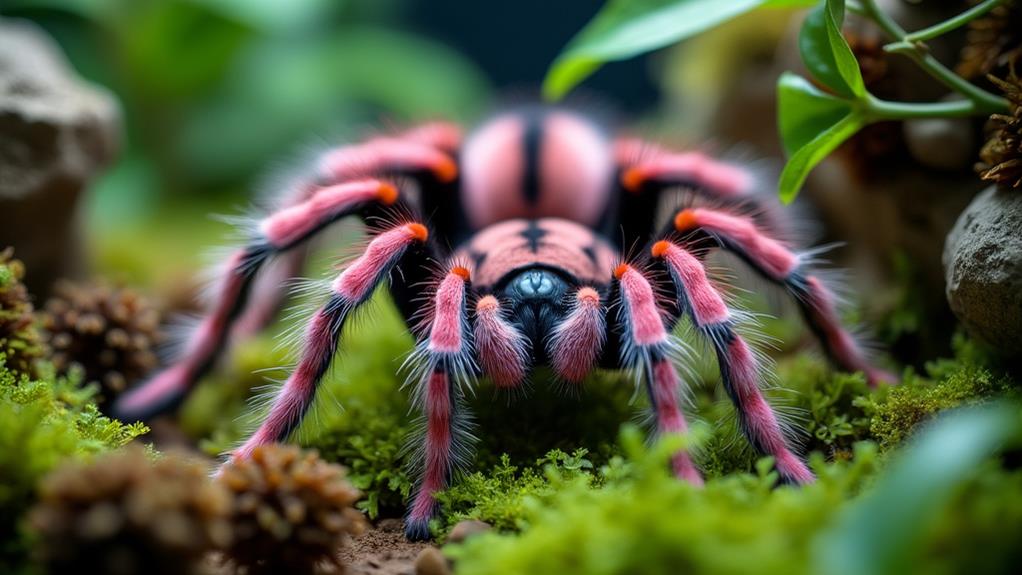
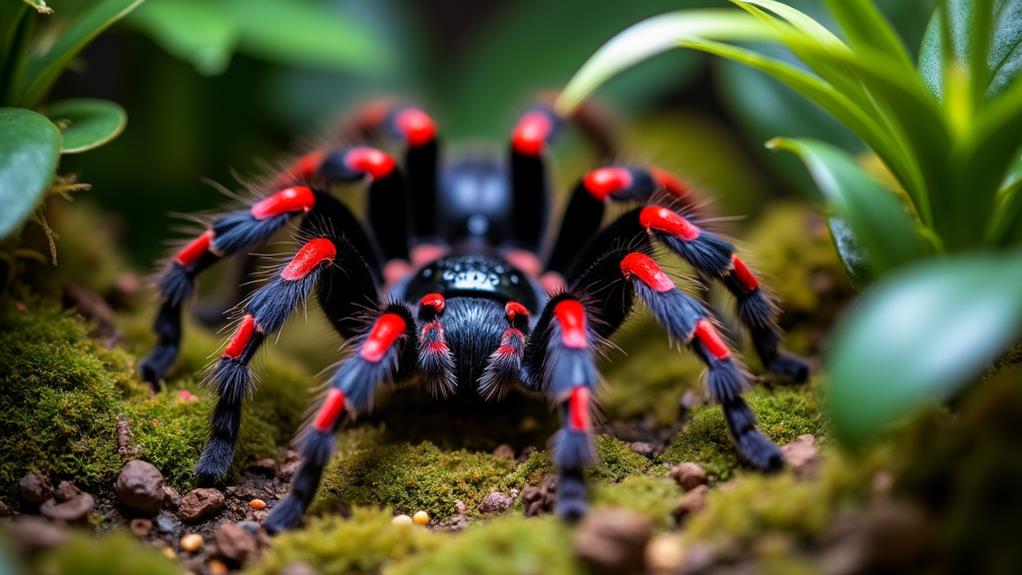
Understanding Pink Toe Tarantulas starts with recognizing their unique characteristics and habitat needs. These medium-sized arachnids, scientifically known as Avicularia avicularia, have a leg span of 4 to 5 inches. They're native to the tropical regions from Costa Rica to Brazil and thrive in arboreal habitats, so you'll need to take into account their love for height and secure climbing structures. Known for their skittish nature, pink toe tarantulas can flick urticating hairs or even jump when startled. However, they're generally not aggressive, and their bites are rare, often compared to bee stings.
In captivity, their diet primarily consists of live insects like crickets and Dubia roaches. To guarantee they receive the best nutrition, you should gut-load these feeders. Maintaining the right environment is vital, with humidity levels between 75 to 85 percent being fundamental for their well-being. Proper ventilation is also necessary to prevent any humidity-related issues, making sure your tarantula stays healthy. Understanding these needs helps you provide a suitable environment, making the pink toe tarantula a fascinating pet for those willing to learn and adapt to its specific care requirements.
Ideal Habitat and Enclosure
When setting up the ideal habitat for a pink toe tarantula, you'll need to prioritize a tall, escape-proof enclosure to suit its arboreal lifestyle and web-building tendencies. A minimum of 10 gallons is recommended to provide ample space for your tarantula's natural behaviors. Since Pink Toe Tarantulas thrive in humid environments, you'll want to maintain humidity levels between 75% to 85%. Achieving this can be done through regular misting and selecting substrates like sphagnum moss or coconut fiber, which help retain moisture.
Proper ventilation is essential to avoid mold and humidity-related health issues. Verify your enclosure has adequate airflow, perhaps with mesh panels or a series of small vents. Given their arboreal nature, Pink Toe Tarantulas will appreciate climbing structures. Incorporate branches or cork bark to encourage climbing and exploration, mimicking their natural habitat.
Don't forget a shallow water dish, which should be available at all times for hydration. Refresh the water daily to prevent contamination and maintain cleanliness. By considering these elements, you'll provide a safe, engaging, and healthy environment tailored to your pink toe tarantula's needs.
Feeding and Nutrition
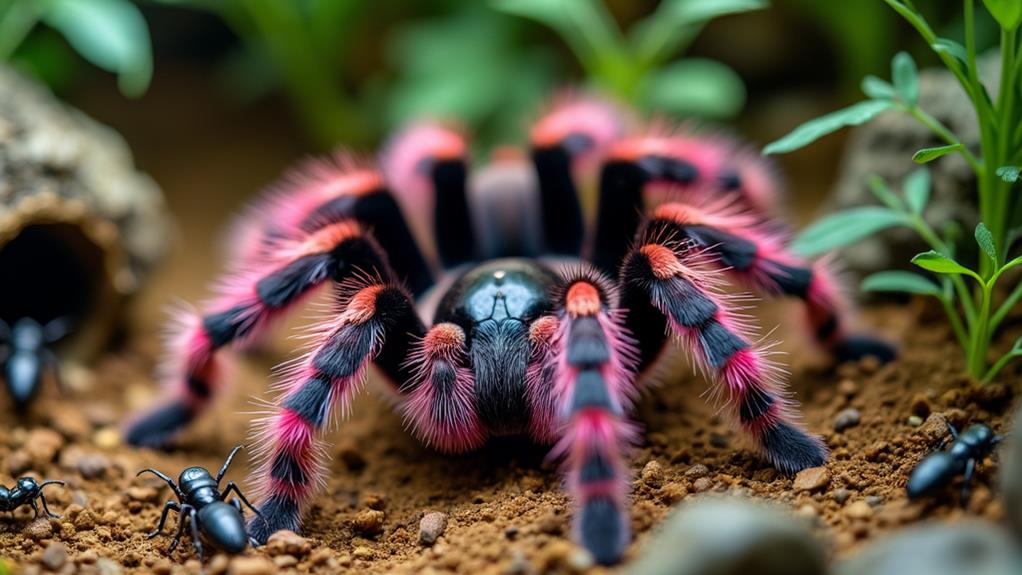
Feeding your pink toe tarantula involves more than just dropping in a few crickets. As an exotic pet owner, you'll need to guarantee the right balance of nutrition and frequency. Pink Toe Tarantulas thrive on live feeder insects like crickets and Dubia roaches. Choose insects that match the size and stage of your tarantula—juveniles need feeding every 2 to 5 days, while an adult tarantula can be fed every 3 to 10 days, depending on its growth and activity levels.
To enhance the nutritional value of these feeder insects, gut-loading is fundamental. This involves feeding the insects nutritious food before offering them to your tarantula. Providing clean water in shallow bowls is also imperative, as hydration plays a key role in maintaining their health. Occasionally, you can offer treats like pinky mice or small lizards, but do so sparingly to avoid overfeeding.
Maintaining enclosure hygiene is important; remove any uneaten prey within 24 hours to prevent stress or health issues. While managing humidity is part of your pet's care, guaranteeing proper feeding and nutrition will keep your Pink Toe Tarantulas healthy and thriving in their environment.
Temperature and Humidity Requirements
For the well-being of your Pink Toe Tarantula, maintaining ideal temperature and humidity within their enclosure is fundamental. They thrive best in a temperature range between 75°F and 82°F, and it's crucial to avoid extremes over 85°F, as this can cause stress. To create the right environment, consider using a combination of heat and UV lighting, such as a Zilla Day Blue 25w Mini Halogen Bulb and Zilla Dual Low Profile Fixture. This setup helps maintain the necessary warmth while providing a natural day-night cycle.
Humidity levels between 70% and 90% are essential for their health. Achieve this by using a proper substrate that retains moisture and incorporate regular misting to keep the humidity high. However, it's equally significant to have well-ventilated enclosures to prevent mold and other humidity-related health issues. Ventilation guarantees that while the air remains humid, it doesn't become stagnant, which can be detrimental to your tarantula's health.
Regular monitoring of both temperature and humidity is important. Fluctuations can lead to health problems, so invest in reliable thermometers and hygrometers. Keeping these conditions stable will secure your Pink Toe Tarantula remains healthy and comfortable in its environment.
Handling and Behavior
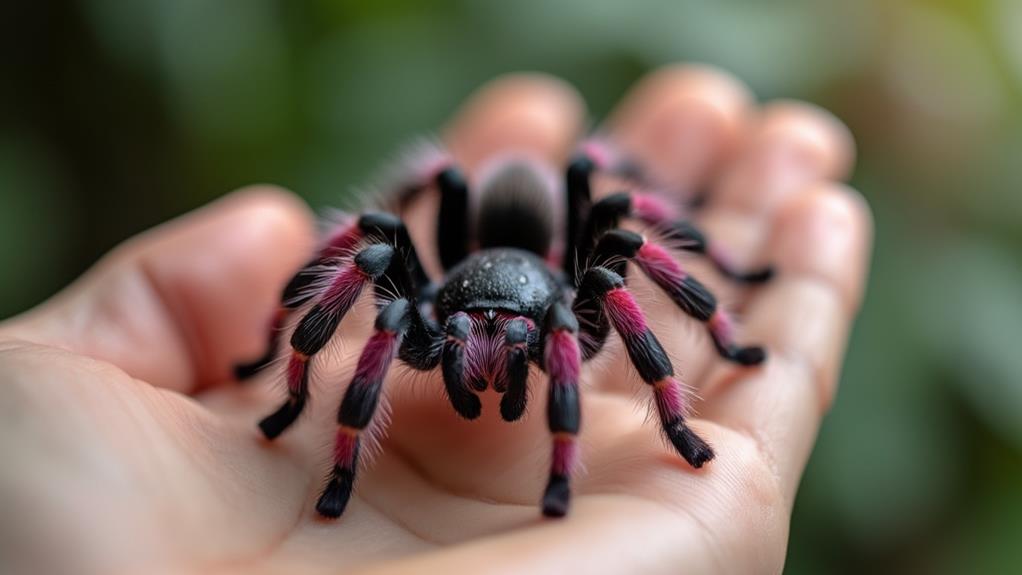
Handling your Pink Toe Tarantula requires careful attention due to its skittish nature and tendency for quick movements. These tarantulas can be unpredictable, often jumping or running when startled. For beginners, this behavior necessitates supervision during handling to prevent any accidents. Though they rarely bite, when they do, the sensation is similar to a bee sting. It's crucial to exercise caution, particularly if you're allergic.
When interacting with your tarantula, aim for short handling sessions, ideally around 5 minutes. This helps reduce stress on your pet, ensuring it remains comfortable and healthy. After handling, wash your hands thoroughly to maintain good hygiene. Pink Toe Tarantulas are generally quiet and spend most of their time hiding, with increased activity during hunting. They're primarily nocturnal, so you might notice more movement at night.
Cost and Maintenance Considerations
Owning a Pink Toe Tarantula comes with relatively low maintenance costs, making it an ideal choice for budget-conscious pet owners. The monthly upkeep costs for these fascinating creatures primarily revolve around their diet, which ranges from $5 to $10 if you purchase crickets. You can save even more by raising crickets at home. Their simple care needs also include periodic substrate refreshment, costing about $10 to $20 every 4 to 6 months. This guarantees your tarantula's environment remains healthy and comfortable.
When planning your budget, consider these aspects:
- Diet and Feeding: Monthly costs of $5 to $10, with potential savings from home-raised crickets.
- Substrate Refreshment: $10 to $20 every 4 to 6 months.
- Health Monitoring: Annual veterinary checkups for preventive care.
- Emergency Medical Care: Costs vary, so it's wise to have a contingency fund.
Don't forget water; Pink Toe Tarantulas need a shallow dish that this species will tolerate well. While their maintenance costs are low, it's crucial to plan for unexpected veterinary visits. In general, Pink Toe Tarantulas are an affordable pet option compared to more demanding animals, making them an attractive choice for beginners.
Related posts