Is a Hahn’s Macaw the Right Pet Bird for You? Everything You Need to Know
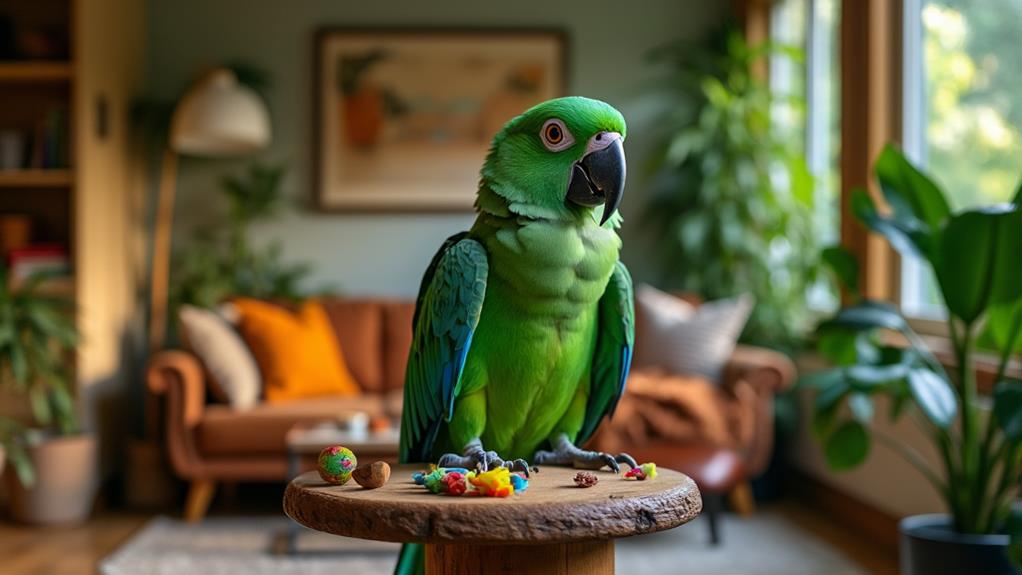
Considering a Hahn's Macaw as a pet? They're intelligent, playful, and enjoy companionship, offering plenty of engagement. These lively birds require a diet of quality pellets, fruits, and veggies, and their lifespan of up to 30 years means a long-term commitment. They're good mimics and quieter than larger macaws, making them suitable for apartments. Mental stimulation through toys and training improves their well-being. Regular vet check-ups and a stimulating environment are essential. With such rewarding companionship comes the need for intentional care and socialization. Explore more about how they might fit into your family and lifestyle.
Key Takeaways
- Hahn's Macaws are intelligent and playful, requiring regular mental stimulation and engagement.
- They thrive on a balanced diet of quality pellets, fresh fruits, and vegetables.
- These macaws are suitable for long-term ownership, with a lifespan of 30 to 50 years.
- Early socialization and training are essential to prevent aggression and territorial behavior.
- They are quieter than larger macaws, making them more suitable for apartment living.
Overview of Hahn's Macaws
Hahn's Macaws, also known as Diopsittaca nobilis nobilis, are popular mini-macaws that many bird enthusiasts adore. Measuring about 12-14 inches in length and weighing around 165 grams, these compact parrots pack a punch with their brilliant colors and lively personalities. If you're considering a Hahn's Macaw, you're in for a delightful companion. Their intelligence shines through their ability to learn vocalizations and perform tricks, making them a joy to interact with. They thrive on the mental stimulation you can provide, so be prepared to engage them with puzzles and toys.
Hahn's Macaws are known for their strong personalities. Despite their smaller size compared to larger macaws, they have a distinct charm that makes them stand out. Their lifespan can reach up to 30 years, so adopting one is a long-term commitment. A balanced diet is essential for their health, so guarantee they have access to quality pellets, fruits, and vegetables.
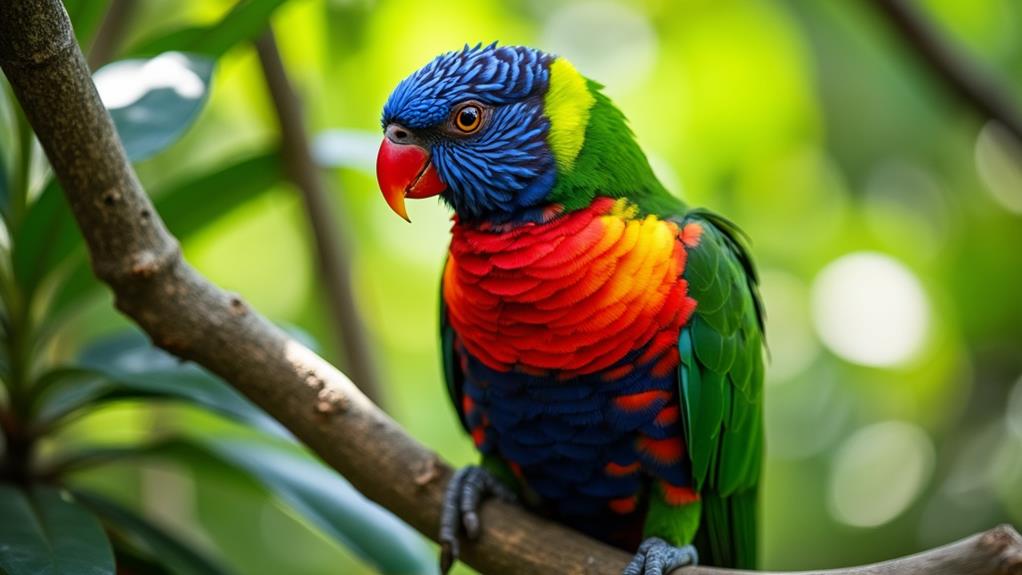
These birds are particularly suitable for families, thanks to their engaging nature. While they don't boast the flashiest colors, their lively plumage and affectionate nature will win you over. Choosing a Hahn's Macaw means welcoming a spirited and intelligent feathered friend into your life.
Native Habitat
Considering their appealing traits as pets, it's intriguing to understand where these lively birds originate. Hahn's Macaws, with their manageable size, are native to north-eastern South America. You can find them in countries like Venezuela, Brazil, Peru, Bolivia, and the Guianas. These regions offer different environments that cater to the natural instincts and needs of these birds. They thrive in tropical lowlands, savanna regions, and swamplands, all of which provide the ample foliage necessary for climbing and foraging activities.
Their native habitat is essential for several reasons:
- Vegetation Abundance: This supports their need for socialization and foraging, critical for their mental and physical health.
- Climbing Opportunities: Fundamental for their physical activity, the natural environment provides countless branches and trees to investigate.
- Adaptable Climate: Hahn's Macaws adjust well to assorted tropical climates, a trait that helps them flourish in their native habitat.
- Diverse Ecosystems: The variety of ecosystems where they live supports their adaptable lifestyle and natural behaviors.
Understanding these habitats gives you insight into what makes these birds such flexible and fascinating companions in our homes.
Care and Feeding
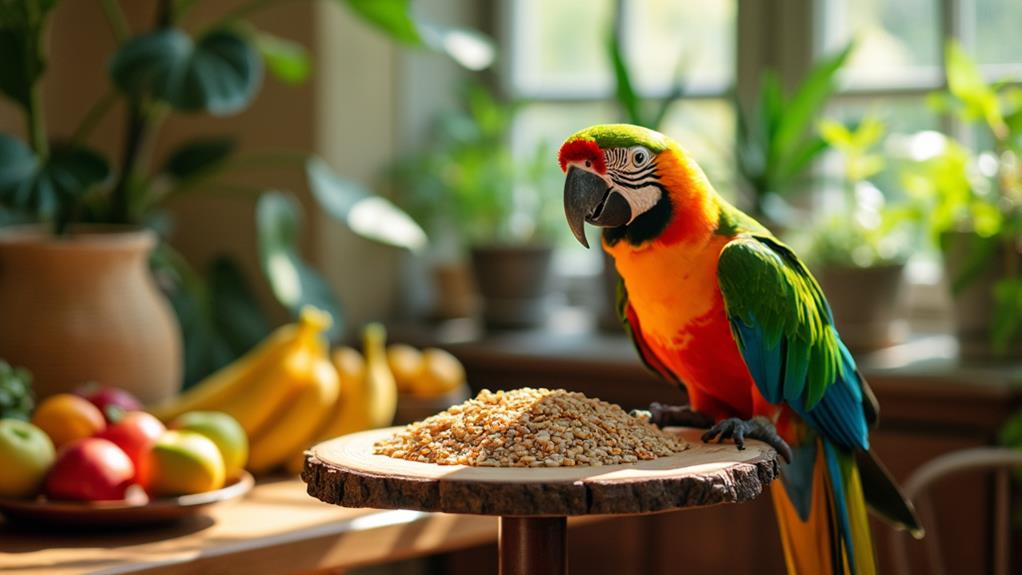
In regards to caring for Hahn's Macaws, a balanced and nutritious diet is vital to guaranteeing their health and longevity. Their diet should primarily consist of high-quality pellets, fresh fruits, and vegetables. Hahn's tend to thrive when you incorporate occasional treats like spray millet and cooked maize, which not only satisfy their taste buds but also provide fundamental nutrients. Avoid cheap fillers and opt for premium parrot mixtures to support their general well-being. These dietary habits are critical as Hahn's Macaws can live up to 40-50 years with proper care.
During nesting periods, supplement their diet with egg rearing food and calcium to support breeding females and their offspring. It's significant to provide your macaw with ample space for exercise to prevent obesity. These birds are naturally active and playful, so they require opportunities for both physical and mental stimulation. Include a variety of toys and engage them in regular interaction to keep them mentally stimulated. Without these, their high intelligence may lead to behavioral issues like neurosis. Remember, maintaining a healthy diet and active lifestyle is vital to guarantee your Hahn's Macaw remains happy and healthy.
Personality and Behavior
With regard to personality and behavior, Hahn's Macaws are a delightful mix of intelligence and playfulness. These highly intelligent birds are quick learners, capable of picking up vocalizations and tricks, which makes them engaging companions. Their active nature means they love climbing and chewing, so they require plenty of space and exercise to stay healthy and prevent obesity. Hand-raised Hahn's Macaws, in particular, are excellent companions, especially for families with children, offering a less intimidating presence than larger macaw species.
To guarantee a positive experience with your Hahn's Macaw, keep the following points in mind:
- Mental Stimulation: Engage them with toys and activities to satisfy their curiosity and prevent boredom.
- Social Needs: They thrive on interaction and can develop behavioral issues if left alone for more than 6-8 hours.
- Body Language: Understanding their body language is crucial for effective socialization and reducing nippiness.
- Environment Exposure: Early exposure to differing people and settings helps them become comfortable and well-adjusted.
Sound and Communication
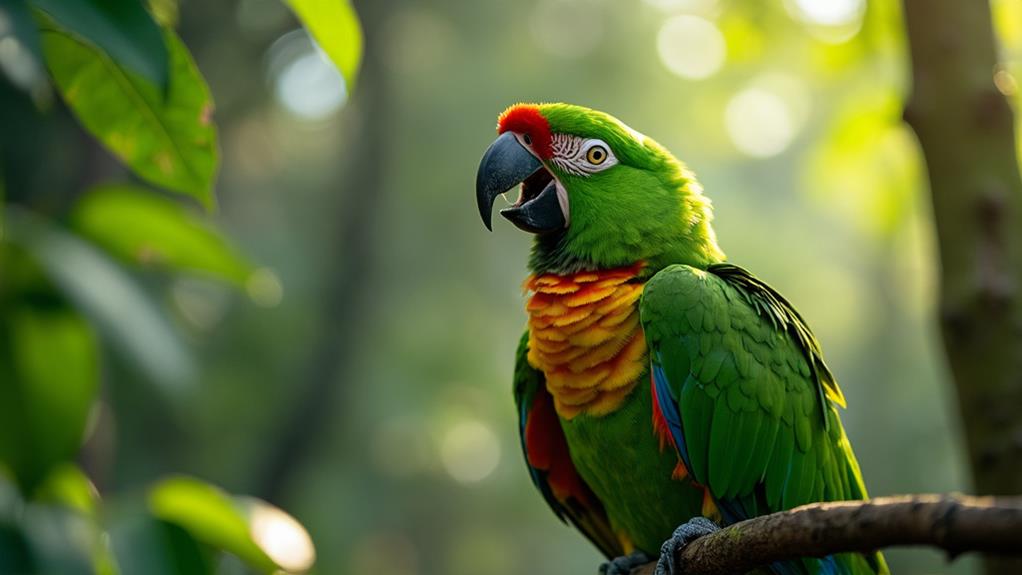
While Hahn's Macaws are known for their playful and intelligent personalities, their sound and communication skills are also remarkable. These small parrots are capable of producing a variety of vocalizations, which can be quite grating if you're not prepared. Their noise level is something to take into account, especially if you're planning to keep more than one. In groups, their chattering can increase considerably, leading to a lively, albeit noisy, environment.
Despite their tendency to be noisy, Hahn's Macaws can learn words and phrases, making them good mimics. They typically excel at whistling but can be trained for speech if you start early. Early speech training helps guide their vocalizations into more desirable communication patterns. This way, you can enjoy their mimicry without getting overwhelmed by incessant squawking.
Compared to larger macaw species, Hahn's Macaws generally have a quieter noise level, which makes them more suitable for apartment living. However, factors like their socialization and surrounding environment play a big role in how vocal they become. More stimulating environments can lead to increased vocalization. By understanding these aspects, you can better manage their sound levels and enjoy their charming communication skills.
Health and Lifespan
When considering a Hahn's Macaw as a pet, understanding their health and lifespan is fundamental for responsible ownership. These lively birds can live from 30 to 50 years, so you're signing up for a long-term commitment. Ensuring their health involves several key responsibilities on your part. Regular veterinary check-ups are critical for early detection of potential health issues. A balanced diet is another pillar of their well-being. High-quality pellets, fresh fruits, and vegetables should make up their daily meals to promote longevity and vigor.
For ideal health, consider these four aspects:
- Diet: Offer a variety of foods to meet nutritional needs.
- Veterinary Care: Schedule consistent health assessments.
- Stress Management: Reduce stress to prevent behavioral problems.
- Socialization and Stimulation: Engage them to avoid neurosis and self-mutilation.
Stress can greatly impact their health, leading to behavioral issues. Providing proper socialization and mental stimulation is fundamental to keep them happy and healthy. Without these, they might develop neurosis and self-mutilation disorders. By managing these aspects, you're fostering a fulfilling and healthy life for your Hahn's Macaw, ensuring they thrive for decades.
Breeding and Availability
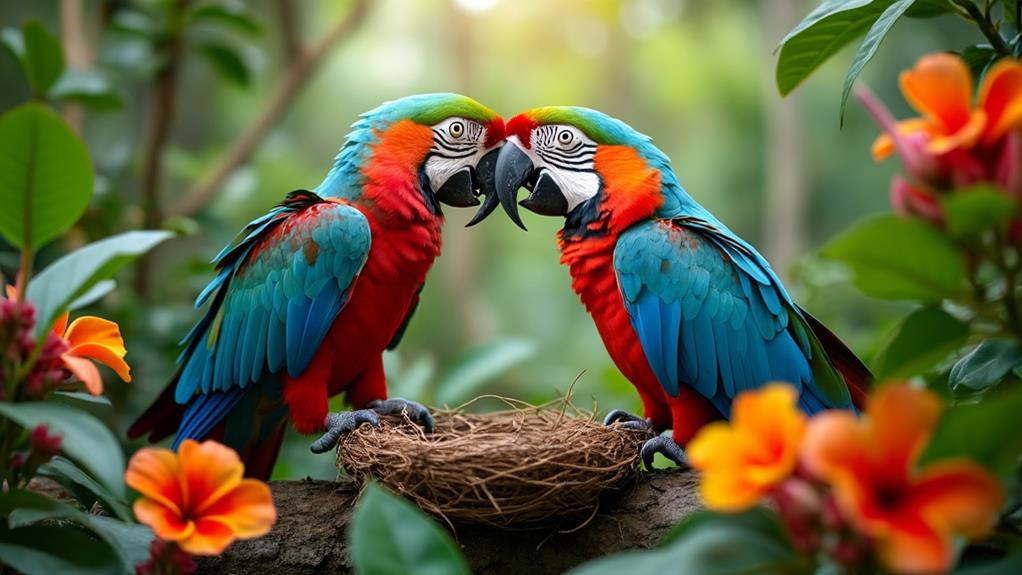
As you focus on maintaining the health of your Hahn's Macaw, exploring their breeding and availability can be equally rewarding. Hahns macaws have been a part of aviculture since the early 1990s, making them relatively accessible as pets. If you're considering breeding them, it's essential to know they typically lay clutches of four to six eggs. These eggs require an incubation period of 24 days before they hatch, and the young macaws are ready to fledge and leave the nest at about 7.5 to 8 weeks old.
When it comes to adopting Hahns macaws, the summer and autumn months are ideal, as hand-reared young are most commonly available during this period. This timing allows you to welcome a young bird into your home when they are most adaptable and ready to bond with you.
For those interested in breeding Hahns macaws, colony breeding is the preferred method. This involves maintaining a stable adult population, as changes in the group can disrupt successful reproduction. By providing a consistent environment, you increase the chances of a successful breeding season. In general, understanding the breeding dynamics can improve your experience with these delightful birds.
Training and Socialization
Training and socialization are vital to raising a well-behaved Hahn's Macaw. Early socialization helps your macaw adjust to diverse people and environments, reducing the likelihood of nippiness. Here's a guide to guarantee your bird's development:
- Early Exposure: Introduce your macaw to different people and settings. This exposure helps them become well-adjusted and comfortable, minimizing aggressive tendencies.
- Consistent Training: Hand-reared macaws can be demanding, so it's important to teach basic commands like "Step up!" This command aids in behavioral management and establishes you as a trusted leader.
- Regular Handling: Allow diverse people to handle your macaw. This practice reduces territoriality and makes your bird more playful and interactive. A socialized macaw is generally happier and more engaging.
- Mental Stimulation: Provide plenty of toys and activities. Mental stimulation prevents boredom, which can lead to negative behaviors like neurosis or self-mutilation.
Patience is vital. Spend time communicating and bonding with your macaw, as the taming process varies with each bird's temperament. By focusing on training, socialization, and mental stimulation, you'll guarantee a harmonious relationship with your Hahn's Macaw.